


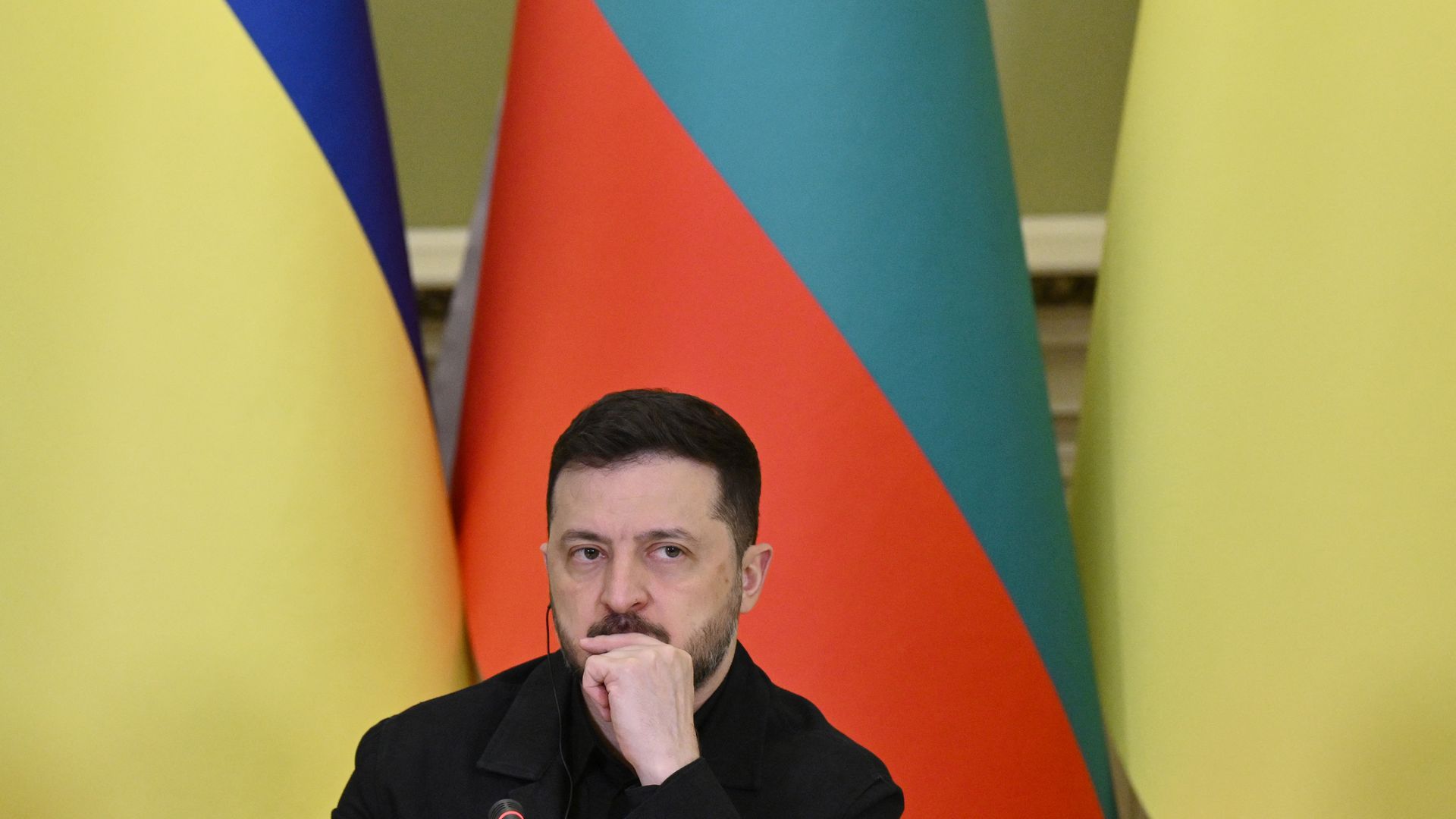
 Ukraine has found itself under the simultaneous influence of military, political, and diplomatic processes shaping a new configuration of the war. Negotiations with the United States are accompanied by signals of possible pressure regarding territorial decisions, raising concerns in Kyiv. At the same time, allies continue their support but are increasingly guided by their own security interests. Against this backdrop, global developments—including those in the Middle East—are affecting both the pace and format of assistance to Ukraine.
Zelenskyy Says U.S. Is Pressuring Ukraine on Territorial Concessions
Ukrainian President Volodymyr Zelensky announcedthat during negotiations in Miami with representatives of Donald Trump, possible scenarios for ending the war were discussed, including options involving territorial concessions by Ukraine. According to him, the American side views such a scenario as a primary path to ending hostilities. Zelenskyy emphasized that the meetings did not yield results and raised concerns on the Ukrainian side. He stressed that Ukraine is not the aggressor and should not be forced to pay with its territory to end the war.
The president also noted that after the conclusion of the conflict with Iran, the United States may increase pressure on Kyiv to reach a compromise with Russia. He warned that such approaches pose risks to Ukraine’s national security and contradict the principles of international law. Ukraine’s position remains unchanged—forced territorial concessions are unacceptable.
Bulgaria to Join PURL Program to Support Ukraine
Volodymyr Zelensky also announcedthat Bulgaria will join the PURL program, which предусматриває the purchase of American weapons for Ukraine. According to him, this is an important signal of support that will strengthen Ukraine’s air defense system. The Bulgarian side confirmed its participation and readiness for further military cooperation.
As part of the agreements, the countries signed a bilateral security agreement. The document includes not only arms supplies but also the development of joint production, particularly in the field of drones. Bulgaria also plans to use the SAFE program to implement such projects. The sides discussed support for Ukraine’s accession to the European Union. The agreement is aimed at long-term strengthening of defense partnership between the countries.
Poland Refuses to Transfer Patriot Systems to the Middle East
The Polish government saidthat it does not plan to redeploy its Patriot air defense systems to the Middle East, despite requests from the United States. Defense Minister Władysław Kosiniak-Kamysz emphasized that these systems are intended to protect Poland’s territory and NATO’s eastern flank. He stressed that national security remains the priority.
The Ministry of Defense also confirmed that the Patriot systems will remain in Poland and continue to perform their functions. These include batteries that reached full operational readiness at the end of 2025. Poland plans further strengthening of its air defense capabilities, demonstrating its intention to retain key defense resources within its own territory.
U.S. Allows Russian Tanker to Deliver Oil to Cuba
The United States has allowed a Russian oil tanker to reach Cuba despite existing sanctions. The vessel, carrying a significant volume of crude oil, has already arrived at the port of Matanzas. Analysts believe this delivery could temporarily stabilize Cuba’s energy situation amid ongoing economic challenges.
U.S. President Donald Trump stated that he sees no issue with the delivery, noting that it would not benefit Russia significantly. He added that if other countries wish to carry out similar shipments, it is not an obstacle. Meanwhile, Russian officials described the cargo as humanitarian and confirmed its delivery.
Ukraine’s MFA Rejects Iran’s Claims of “Co-Involvement” in War
Ministry of Foreign Affairs of Ukraine has rejected Iran’s accusations that Ukraine is allegedly participating in the war on the side of the United States and Israel. MFA spokesperson Heorhii Tykhyi called the claims false and emphasized that Ukraine has not carried out any attacks against Iran.
He pointed out that it is Iran that has supplied Russia with thousands of drones used in the war against Ukraine. According to him, such accusations are part of an information campaign. Earlier, Iran’s representative to the UN claimed that Ukraine had sent specialists to Gulf countries to support operations against Iran. The Ukrainian side denies these statements and stresses that they are unfounded. The MFA reiterated that Ukraine’s actions are solely aimed at defending itself against aggression.
Photo: Genya Savilov / AFP via Getty
Author: Danylo Pievchev