


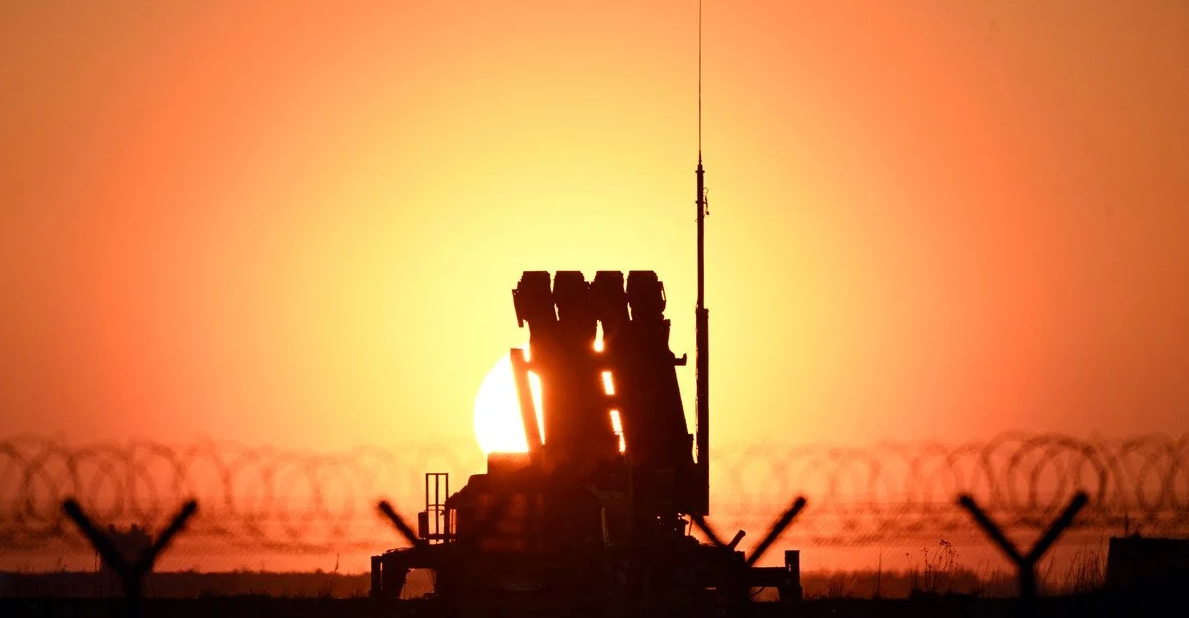
The United States continues consultations on cooperation with Ukraine in the field of defense technologies, although some solutions remain open. In parallel, future military support for Kyiv is being discussed in Washington, and the State Department has announced its intention to intensify diplomatic contacts to find ways to end the war. Against this background, NATO is evaluating options for strengthening nuclear deterrence, and events in the Black Sea are increasing concerns about the stability of world grain supplies.
Trump said that the US has not yet agreed to the production of Patriot missiles in Ukraine
US President Donald Trump said, that Washington has not yet agreed to grant Ukraine permission to produce Patriot interceptor missiles, although negotiations on this issue are ongoing. During a cabinet meeting at Camp David, he emphasized that the transfer of such technologies is a “big step” and requires special caution. According to Trump, Ukraine is also interested in receiving other types of American weapons, but the issue of the transfer of advanced military technologies remains sensitive. He noted that there is no final decision on the license yet.
Earlier, Trump stated his readiness to grant Ukraine a license to produce Patriot missiles, but later his position changed. Against the backdrop of increased air attacks from Russia, Ukraine continues to experience a shortage of interceptor missiles, which remain the only means of destroying ballistic missiles. The Ukrainian side has been seeking an agreement on the joint production of Patriot PAC-3 for a long time, and after Trump's previous statements, Ukrainian representatives are holding consultations with the Pentagon and the US defense industry. Ukrainian Ambassador to the US Olga Stefanishyna also reported that Lockheed Martin is determined to deepen cooperation with Ukraine.
Republican Congressman Criticizes Trump's Position on Patriot in Ukraine
US President Donald Trump's refusal from his previous statement on the possibility of granting Ukraine a license to produce Patriot interceptor missiles has sparked a discussion in Washington about further military support for Kyiv. One of the critics of this decision was Republican Congressman Dan Bacon, who is a member of the House of Representatives Committee on Armed Services. In his commentary, he said, that the White House is sending mixed signals at a time when Ukraine needs additional air defense. According to Bacon, allowing the production of Patriot missiles could help overcome the shortage of interceptor missiles.
“Although 70% of Americans support Ukraine, the White House’s policy creates the impression that it belongs to the 30% who do not. Giving Ukraine the opportunity to produce Patriots would help solve the problem of the shortage of interceptor missiles. I wish the president was more like Reagan or Churchill when it comes to Russia,” Bacon said.
His statement came against the backdrop of new massive Russian strikes on Kyiv, which are increasing the burden on the Ukrainian air defense system. At the same time, the discussion around the production of Patriots reflects different approaches among representatives of the Republican Party regarding further US policy regarding the war in Ukraine.
Rubio announced new US attempts to resume negotiations between Ukraine and Russia
US Secretary of State Marco Rubio announced that Washington plans to intensify diplomatic efforts in the coming weeks to resume the negotiation process between Ukraine and Russia. He said this in an interview with Fox News, emphasizing that the American side seeks to find an opportunity to promote a peaceful settlement. According to Rubio, the United States is aware of the complexity of the negotiations due to the principled positions of both sides. He noted that it is precisely the search for common ground between these positions that will be the main task of diplomatic efforts.
“In the next few weeks, certain efforts will be made to find out whether we can resume negotiations between the two sides (Ukraine and Russia - ed.) and put an end to this war. We also understand that both sides have fairly rigid “red lines,” and until we can bring those “red lines” even a little closer together, we will not achieve the desired result,” Rubio said.
He also emphasized Washington’s readiness to continue working on diplomatic initiatives. “We are ready to move forward,” the US Secretary of State added.
Russian Grain Union says risks to exports due to attacks in the Black Sea
The Union of Grain Exporters and Producers of the Russian Federation said that Ukraine’s attacks on ports and ships in the Black Sea could disrupt grain exports in the near future and affect the global food market. The organization’s statement said that disruptions to shipping could lead to higher wheat prices and create risks for African and Middle Eastern countries. Reuters notes that in recent weeks both sides have been striking port infrastructure and facilities related to agricultural exports. Damage to a large grain terminal in the port was also reported Taman due to attack by Ukrainian drones.
The Russian Grain Union said that if the attacks continue, export routes in the Black Sea may be blocked and supplies of Russian wheat may be reduced by 30-35 million tons. The organization believes that alternative suppliers will not be able to fully compensate for such a deficit, which could lead to further price increases and a food crisis. At the same time, Ukraine's largest agricultural association also previously reported that Russian attacks on shipping near Odessa are limiting Ukrainian exports during the harvest period. Ukrainian President Volodymyr Zelensky said that Russian attacks on shipping in the Black Sea pose a threat to global food security and called on European partners to help counteract this.
NATO Considers Strengthening Nuclear Deterrence in Europe
NATO is working on plans to strengthen the nuclear deterrence system in Europe amid threats from the Russian Federation. According to Deutsche Presse-Agentur, one of the options being considered is the deployment of additional American nuclear weapons in European countries. Potential locations for its deployment include Great Britain, and in the event of a deterioration in the security situation, Poland, Finland and Lithuania. The main focus is on non-strategic nuclear weapons designed to destroy military targets.
NATO Secretary General Mark Rutte did not rule out the possibility of increasing the number of American nuclear weapons in Europe, but refused to disclose details due to the confidentiality of the consultations. According to him, the Alliance is constantly assessing the necessary defense capabilities and is ready to adjust the deterrence system in accordance with the security situation. Experts quoted by DPA believe that the United States may additionally deploy from 100 to 150 non-strategic nuclear warheads in Europe, although they emphasize that no final decisions have yet been made. It is also noted that the French nuclear potential is seen as a supplement to the American "nuclear shield", and not as a replacement for it.
Photo: Getty Images
Author: Danylo Pievchev