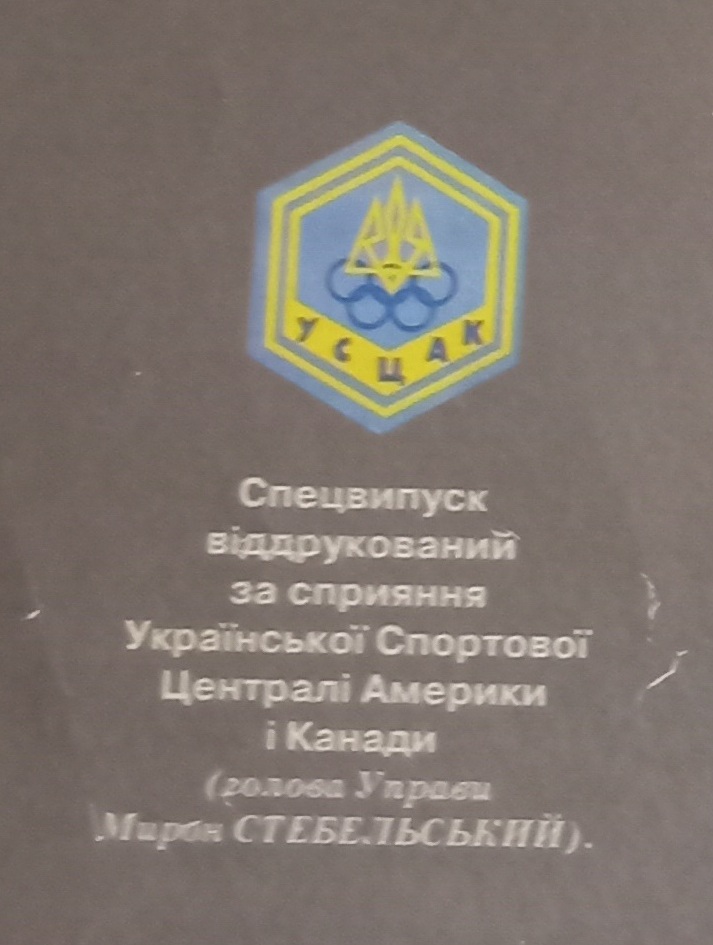
The Ukrainian Sports Federation of the USA and Canada (USCAK) is one of the most respected sports organizations of the Ukrainian diaspora in the world. Naturally, this primarily concerns the United States and Canada. At the same time, USCAK maintains strong and close ties with representatives of Ukrainian sport in different parts of the world.
Since its founding, USCAK’s main mission has been to represent Ukrainian sport abroad. And the organization has fulfilled this mission exceptionally well.
It should also be noted that when Ukrainian sport began developing in independent Ukraine, it was USCAK that came to its aid. During the 1990s and 2000s, the united global Ukrainian community provided Ukraine and Ukrainian sport with substantial financial, material, and moral support.
It was thanks in part to USCAK that Ukrainian athletes were able to participate in international competitions and numerous national sports federations were able to join their respective international federations. Moreover, the first appearances of Ukrainian athletes at the 1994 Winter Olympic Games and the 1996 Summer Olympic Games were made possible, among other things, through the assistance of USCAK activists.
Thus, we can see the consistent support provided to Ukrainian sport by the Ukrainian Sports Federation of the USA and Canada. Among thousands of examples of sincere assistance from the Ukrainian diaspora in the United States and Canada, there is one particularly interesting and unique example: the publication of a special issue of Start magazine in 1996.
Why Start Magazine?
Before turning to the details of the special issue published with USCAK’s support, it is worth learning more about Start magazine itself. So, what do we know about it? According to Wikipedia, Start was a popular Ukrainian illustrated monthly sports magazine, an official publication of the Committee for Physical Culture and Sports, published in Kyiv beginning in 1965 as the successor to Physical Culture and Sport.
Thus, Start began appearing under that name in 1965. Such a long history is truly impressive. At the same time, 1965 did not mark the beginning of an entirely new publication, but rather the continuation of much older traditions of the Ukrainian sports press. It is therefore worth taking a closer look at how the magazine developed.
The magazine was founded as early as 1922 in Kharkiv. At the time, it was called Bulletin of Physical Culture. Unfortunately, Russification in those years affected Ukrainian sport as well, including its mass media.
From 1929 to 1939, the magazine was already being published in Kyiv. At different times, it appeared under different names: from 1931 to 1935 as Physical Culture Athlete of Ukraine, and in 1936 as Sport.
Unfortunately, there was also a period when the magazine was not published for various reasons — from 1941 to 1957. Beginning in 1957, it was published under the title Physical Culture and Sport. Regrettably, Start ceased publication in 1999. Ukraine lost an entire era of sporting life.
To better understand the importance of Start to its readers, I will provide some circulation figures from different years: 50,000 copies in 1965–1966, 68,000 in 1967–1976, 75,000 in 1977, 130,000 in 1978, and between 85,000 and 115,000 copies in 1987–1990.
These figures help us understand just how important this magazine was to Ukrainian sport. It is therefore no coincidence that the Ukrainian Sports Federation of the USA and Canada sponsored the publication of a special issue of Start.
It should also be noted that the Olympic Games were held in Atlanta, United States, in 1996. This also influenced the Ukrainian diaspora’s decision to support Ukrainian sport in this way.
Start on the Ukrainian Diaspora
The Games of the XXVI Olympiad were held in Atlanta, United States. Given that the Ukrainian diaspora in the United States is exceptionally strong, numerous, and united, it was only natural that Ukrainians wanted to help and support the Ukrainian national team as much as possible. After all, this was the first appearance by Ukrainian athletes at the Summer Olympic Games since the restoration of Ukraine’s independence. The Ukrainian diaspora eagerly awaited the arrival of Ukraine’s national team in the United States, hoping to meet their brothers and sisters.
Start was published in Ukraine in tens of thousands of copies. Almost every Ukrainian read it. Therefore, the magazine’s editors decided that the special issue devoted to the participation of Ukrainian athletes in the Olympic Games would also include a great deal of interesting information about the diaspora.
This was extremely important because for decades Ukraine had lived behind the “Iron Curtain,” with censorship and restrictions on information from the free world. Soviet occupation deprived Ukrainians of the opportunity to receive information about their relatives abroad. This time, however, there was an excellent opportunity to tell readers in detail, through the pages of the magazine, about the support that the Ukrainian diaspora in the United States was providing to Ukraine’s national team.
Several interesting articles and interviews were published in the “Diaspora” section of Start. Among them was an interview with Ms. Oksana Foltyn. This is how the magazine described her work: “Ms. Oksana Foltyn, like a true hostess, accompanied the Ukrainian sports delegation all the way to the aircraft after the conclusion of the XXVI Summer Olympic Games. Three weeks of intense, exhausting work, almost around the clock, had taken their toll: fatigue was visible on the face of this kind and pleasant woman. Although she had several assistants, the lion’s share of the workload still fell on Ms. Oksana, whom the Olympic organizers had entrusted with coordinating the work of the volunteers, also known as envoys.”
Such work is truly impressive. It is even more gratifying that the Olympic Organizing Committee entrusted Ms. Oksana with such an important and large-scale area of responsibility. This was genuine recognition of her hard work and responsible attitude toward her duties.
Even with such a demanding schedule, Ms. Oksana found an opportunity to remain close to the athletes from Ukraine. It should also be remembered that she had a family — a husband and four children. Yet in order to be closer to the Ukrainian national team and help it, Ms. Oksana temporarily moved into the Olympic Village.
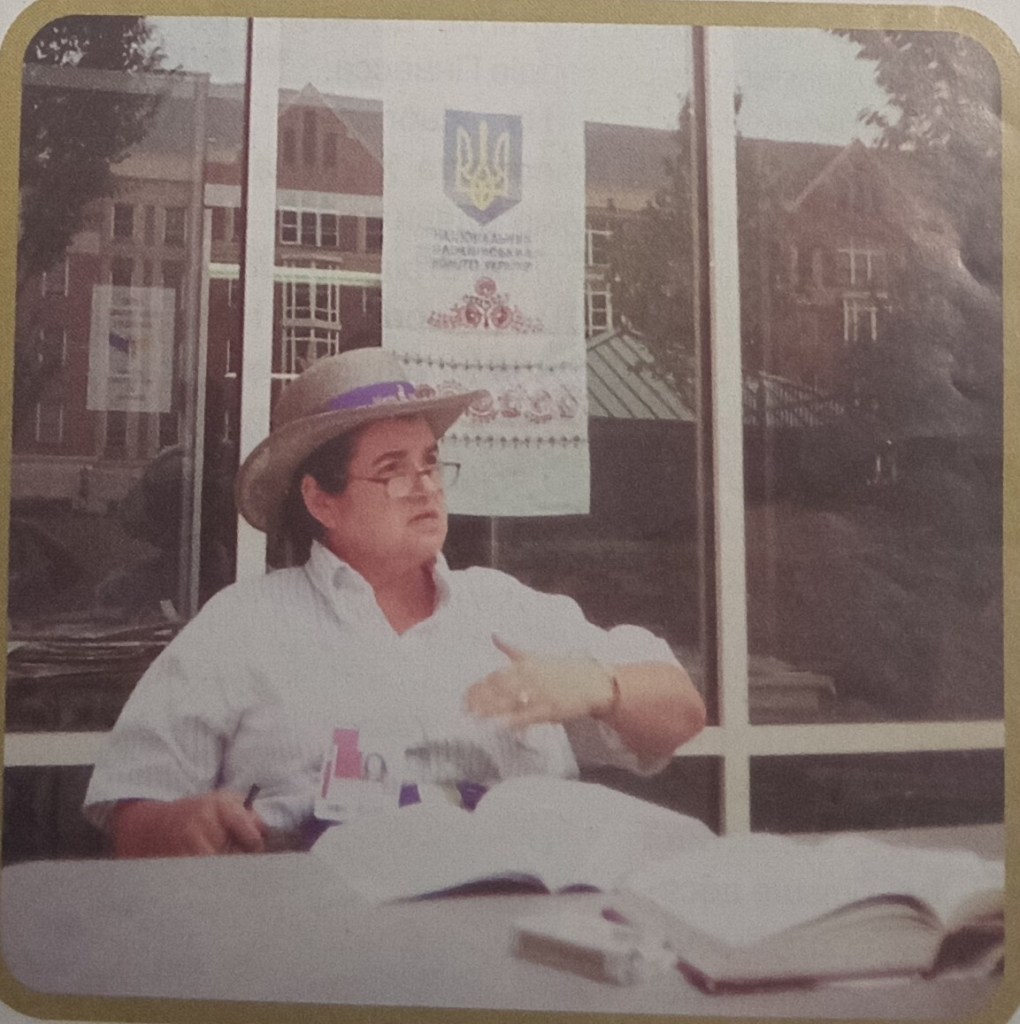
Her interview published in the special issue is particularly interesting. I will quote several excerpts from her story.
— In 1992, competitions were held here, so I was invited to help serve the team. A year later, they called me again. I was offered the position of representative of the Organizing Committee of the 1996 Olympics. I thought it was a very good opportunity to serve Ukraine, even in this small way.
— What impressions did you have from working with the members of the delegation and its headquarters?
— The very best! I do not have the words to describe how it all was. The people are wonderful. Everyone is doing their best. But there was very little time. The language is different, the customs here are different, so it was difficult, but it was easy for me to work with all of you.
— How long have you lived here?
— I am originally from the Turka district in the Lviv region. There used to be a village called Beniova; it was burned down. I have been in America for 37 years.
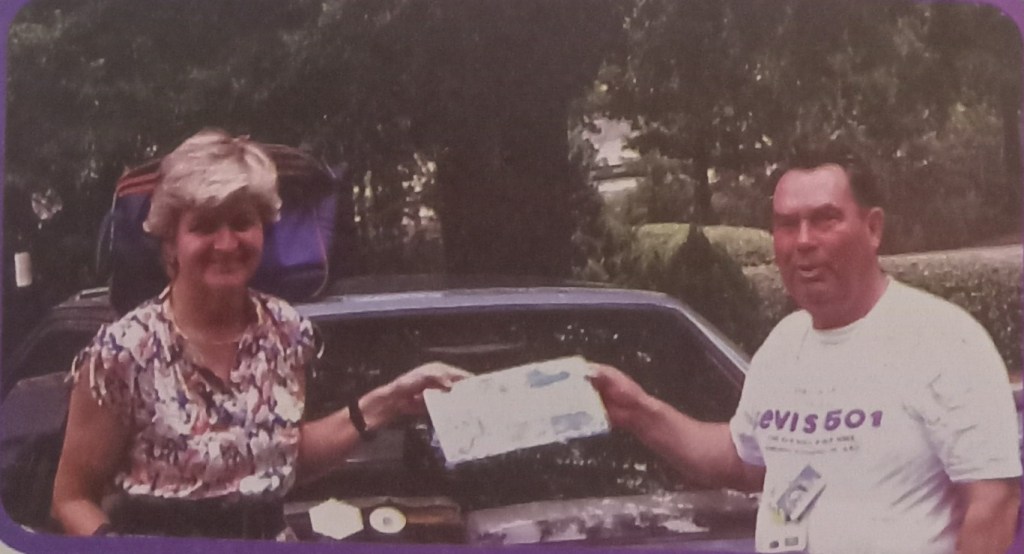
Another extremely interesting and unusual Olympic story, involving genuine adventures at sea, concerns Ms. Olena Boiko. This is how Start correspondent Ivan Hromiak wrote about her in the special issue: “I first heard about Ms. Olena Boiko from Volodymyr Kulyk, First Vice President of the National Olympic Committee of Ukraine. It was in the Olympic Village in Atlanta, several hours before a reception for our Olympians organized by representatives of the diaspora — specifically, the family of Ihor and Diana Prok, with the assistance of Yurii and Yarusia Haiduk, Larysa and Bill Temple, Orysia and Bill Fisher, and Mariia and Yaroslav Marchuk, activists of the local Ukrainian Olympic Committee — at the ‘Ukrainian House,’ tucked away in a quiet corner of the bustling capital of the 1996 Olympics. The author of these lines learned that Ms. Olena Boiko had sailed around the world on her own yacht. Energetic, passionate, and remarkably devoted to sport, she repeatedly visited the Olympic Village afterward, offering her assistance.”
It is truly remarkable to sail around the world and at the same time find opportunities to support Ukraine. I will quote an excerpt from her interview.
— Ms. Olena, what are you doing now?
— I currently work with the Ukrainian Sports Federation of the USA and Canada, headed by Mr. Myron Stebelsky. Since the Winter Olympics in Lillehammer, we have been carrying out a major campaign in support of the local Ukrainian Olympic Committee. Among other things, we took care of accommodations for Ukrainian rowers and helped resolve other problems.
An interview with Volodymyr Kulyk, First Vice President of the National Olympic Committee of Ukraine, was also important for readers. His account directly concerned the Ukrainian diaspora’s assistance to Ukraine’s national team. I will quote an excerpt from Volodymyr Kulyk’s interview.
— Volodymyr Vasylovych, in Atlanta you maintained the closest contacts with representatives of the diaspora who assisted our Olympic team. What did this assistance involve, and whom would you particularly like to recognize?
— It should be said that this assistance began long before the Olympics themselves. The diaspora helped us acquire gymnastics equipment, purchased barbells for weightlifting and equipment for several other sports, and financed the participation of our athletes in competitions held last year in various regions of the United States and Canada for acclimatization purposes. It took care of all matters related to accommodation, meals, transportation, and arranging training facilities. And, as you know, a fax received from Larysa Barabash-Temple evokes particularly warm feelings of gratitude.
This is what Ms. Larysa wrote: “In my conversations with everyone, I sense great pride and joy over the medals that were won. But what is even more gratifying is that everyone who had personal contact with them praises the Ukrainian athletes not only for their sporting achievements, but also for their dignified and honorable conduct. Among active circles of the Ukrainian diaspora, there is great enthusiasm for further cooperation with the National Olympic Committee, and I hope this will continue.”
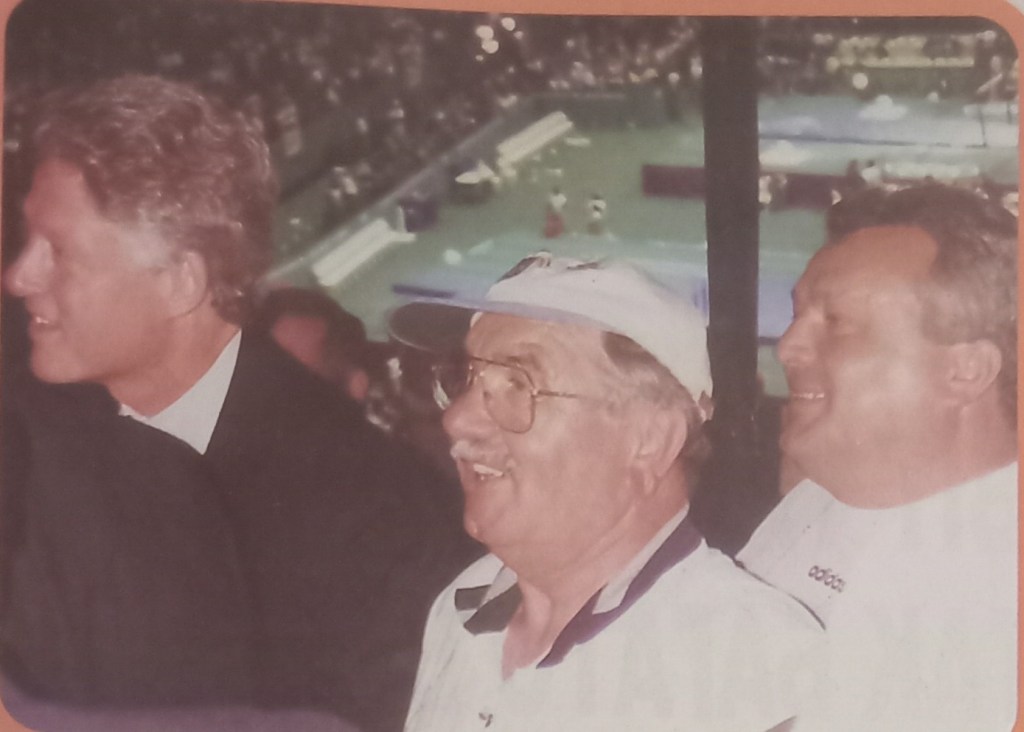
Volodymyr Vasylovych Kulyk noted that he had a nine-page list of those who contributed to helping Ukraine’s national team. Naturally, we would like to see that list in detail. After all, everyone who helped Ukrainian athletes deserves to have millions of Ukrainians learn about them.
Liliia Podkopayeva’s victory in artistic gymnastics generated considerable international attention and became a true sensation for Ukraine. She won the Olympic all-around title. The victory came after an exceptionally intense competition. Among the Ukrainian gymnast’s main rivals were athletes from the United States. U.S. President Bill Clinton came to support them.
This is how Start described those moments: “The Americans Dominique Dawes and Shannon Miller were confidently accumulating points. U.S. President Bill Clinton appeared in the arena with his wife Hillary and daughter to encourage the girls, hoping for their ultimate victory. However, the president proved to be an objective man: he sincerely congratulated the Ukrainian delegation on Liliia Podkopayeva’s brilliant victory.”
Such was this interesting episode during the Ukrainian athletes’ performance. Even the President of the United States congratulated the winner of the artistic gymnastics competition on her brilliant performance.
Other sections of the magazine featured numerous exclusive interviews and articles about the achievements of our Olympic heroes in artistic and rhythmic gymnastics, basketball, handball, boxing, wrestling, sailing, archery, and other sports.
Finally, the pages of Start were already carrying reports about the next Winter Olympic Games in Nagano, Japan, in 1998 and the 2000 Summer Olympic Games in Sydney, Australia.
After the conclusion of the Olympic Games in Atlanta, United States, the Ukrainian diaspora was already preparing to support Ukrainian athletes at the next Olympic competitions. We truly have people and achievements to be proud of — and many people to thank for this support!
Author: Oleksiy Lyakh-Porodko