


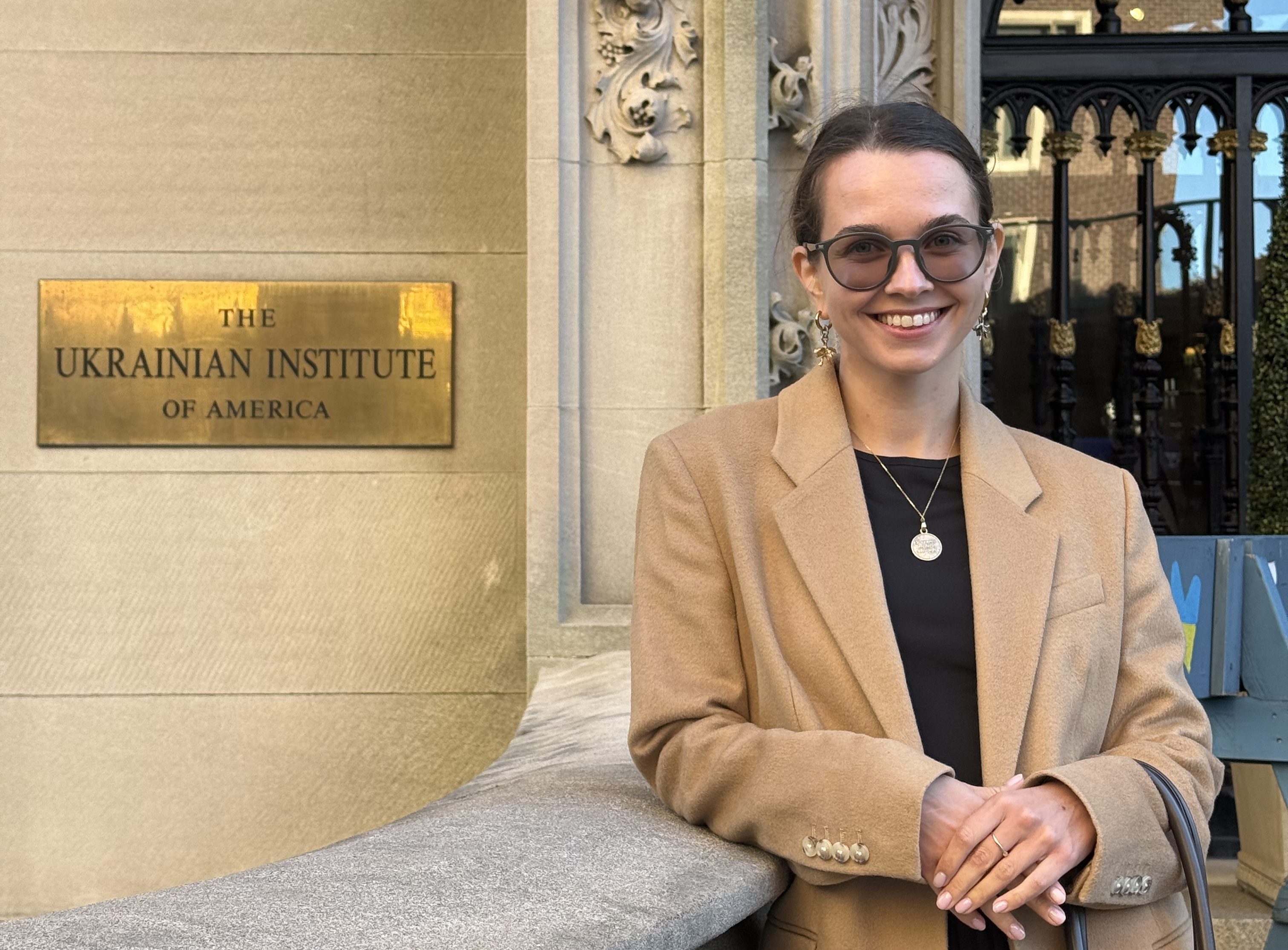
 Uniforms designed for women’s anatomy, equipment suitable for combat missions, a psychologist they can trust, and support after leaving military service — these needs of Ukrainian women defenders are still only partially being met. For more than four years, Kseniya Draganuk, co-founder of the NGO Zemliachky and the War Psychology Institute (WISPR), recipient of the Presidential “Golden Heart” award and a Forbes Ukraine “30 Under 30” honoree, has been working to address them. During this time, Zemliachky has fulfilled more than 31,000 individual requests from women service members. The organization is now sharing the expertise it has accumulated with Ukraine’s Ministry of Defense, while the WISPR team is developing training for psychologists who work with military personnel, veterans, and women veterans.
In early October, Kseniya and the WISPR team visited the United States to present Ukraine’s experience in working with psychological trauma and expand cooperation with international partners. In San Antonio, the team took part in the International Society for Traumatic Stress Studies conference; in Boston, they met with representatives of Home Base; and they also held meetings with the Ukrainian National Women’s League of America. Another area of focus was cooperation with the American women veterans’ community WOVEN. For Ukrainian specialists, these partnerships offer an opportunity to develop assistance for people who, even after returning from the front, continue to live under the threat of attacks.
In an interview with Vilni Media Kseniya Draganuk explained why the introduction of women’s uniforms does not mean that supply problems have been solved, how a negative experience with a psychologist can undermine trust in mental health support, and what difficulties women veterans face when looking for work and returning to civilian life. We also discussed Ukraine’s contribution to research on war trauma, the role of the diaspora in supporting women defenders, and how to maintain the attention of American partners toward Ukraine amid donor fatigue.
– What was the purpose of your visit to the United States this time? What specific results did you expect the trip to bring for Zemliachky and the WISPR War Psychology Institute?
– First of all, we came to the 42nd annual conference of the International Society for Traumatic Stress Studies (in San Antonio, dedicated to working with psychological trauma. For our WISPR team, it was important to share what we are working on in Ukraine and to hear from colleagues from other countries.
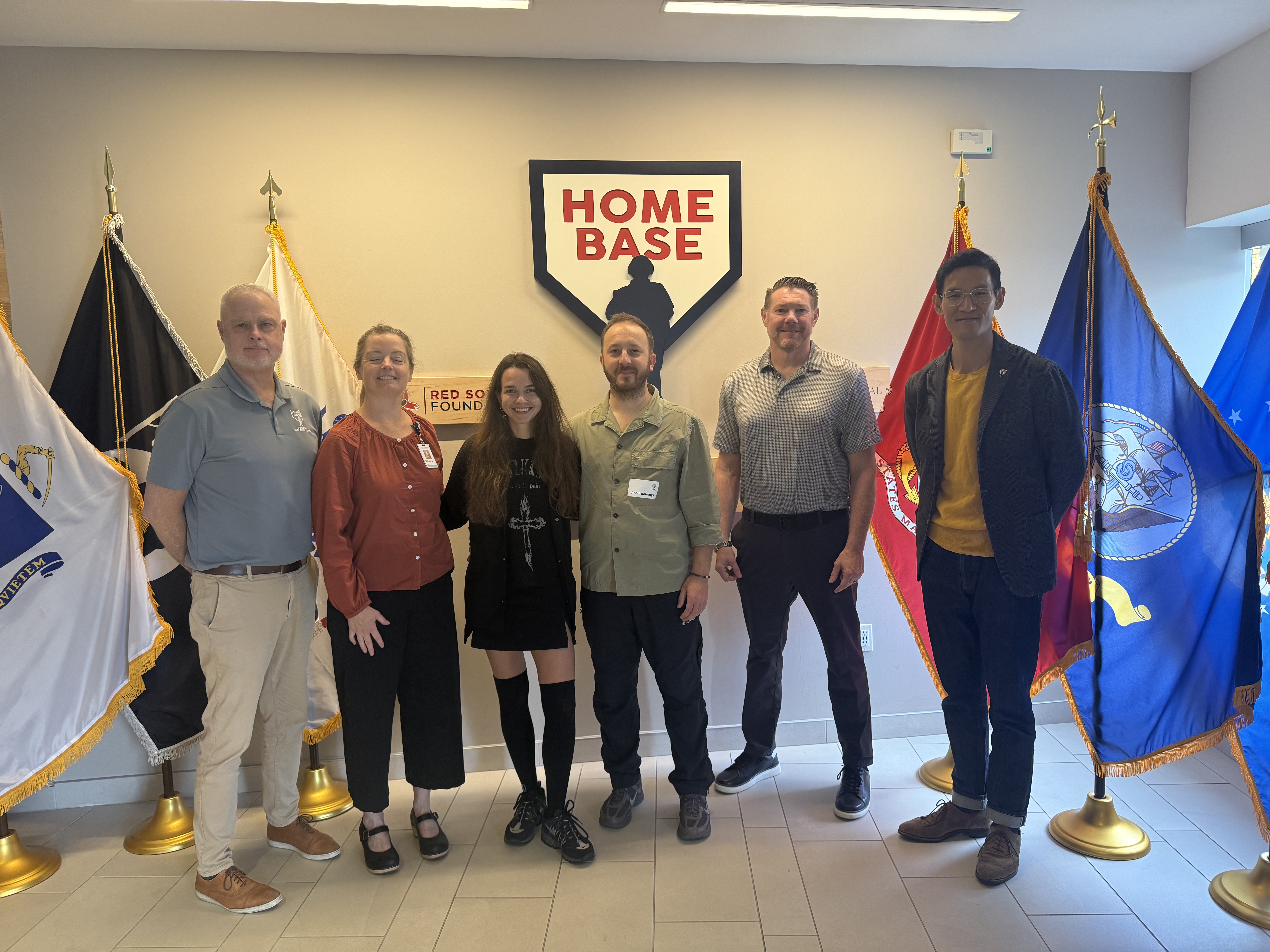
We also used the trip as an opportunity to meet our partners in person. In Boston, we visited Home Base, an organization that supports military personnel, veterans, and their families. WISPR already has a memorandum of understanding with them, and during the meeting we discussed how we would work together and what experience could be adapted for Ukraine.
In addition, we met with our long-term partners, the Ukrainian National Women’s League of America, with whom we have been supporting women defenders for the past three years. The organization helps us provide women service members with what they need and primarily brings together members of the Ukrainian diaspora — American women born into Ukrainian families who pass our culture on to future generations.
Overall, we returned with new partnerships for WISPR and new opportunities to expand support for Zemliachky. We also strengthened existing partnerships. Now our task is to turn all these agreements into long-term joint support for women service members and women veterans, as well as to implement projects that will promote the mental health of Ukrainians both during and after military service.
– In San Antonio, your team took part in an international conference on trauma. What Ukrainian experience did you present there, and what attracted the most interest from your international colleagues?
–The International Society for Traumatic Stress Studies (ISTSS) is one of the important international platforms where researchers and professionals working with psychological trauma come together.
It was important to me that Ukraine be represented there not only as a country experiencing war, but also as a country that already has unique experience in working with its consequences and can share that experience with the world.
Our team presented WISPR’s research and practical experience. In particular, we spoke about recovery under conditions of constant threat and about our rehabilitation programs for women service members and women veterans. We also held a number of meetings with international researchers, psychologists, and representatives of organizations. Among them, we discussed the development of psychological support systems for Ukrainian military personnel, veterans, and their families with Dr. Harold Kudler.
At the conference, we devoted considerable attention to war trauma and Ukraine’s experience. One of its defining features is that a person returning from the front often does not return to safety. They may come home to their family but still have to go down to a shelter at night because of attacks. What they experienced during service is compounded by anxiety for loved ones and the need to continue living under constant threat.
International approaches to trauma treatment are highly valuable, but programs designed for people returning to a relatively safe environment need to be adapted to our circumstances.
We also raised the issue of continuity of care. Service members need a clear pathway to support: who will notice changes in their condition, where they can turn for help, and who will continue supporting them afterward. This support should begin while they are still serving and continue after they return to civilian life. We cannot wait until someone becomes a veteran before beginning to address the consequences of what they have experienced.
These particular aspects of Ukraine’s experience attracted the greatest interest from our international colleagues. We discussed how support can be studied under conditions of prolonged threat and how established approaches may need to change.
There are no ready-made answers to every question, but there are researchers and practitioners who want to look for them together with us. For WISPR, this is an opportunity to combine our everyday experience with international expertise and develop support that meets the needs of Ukrainian military personnel and veterans.
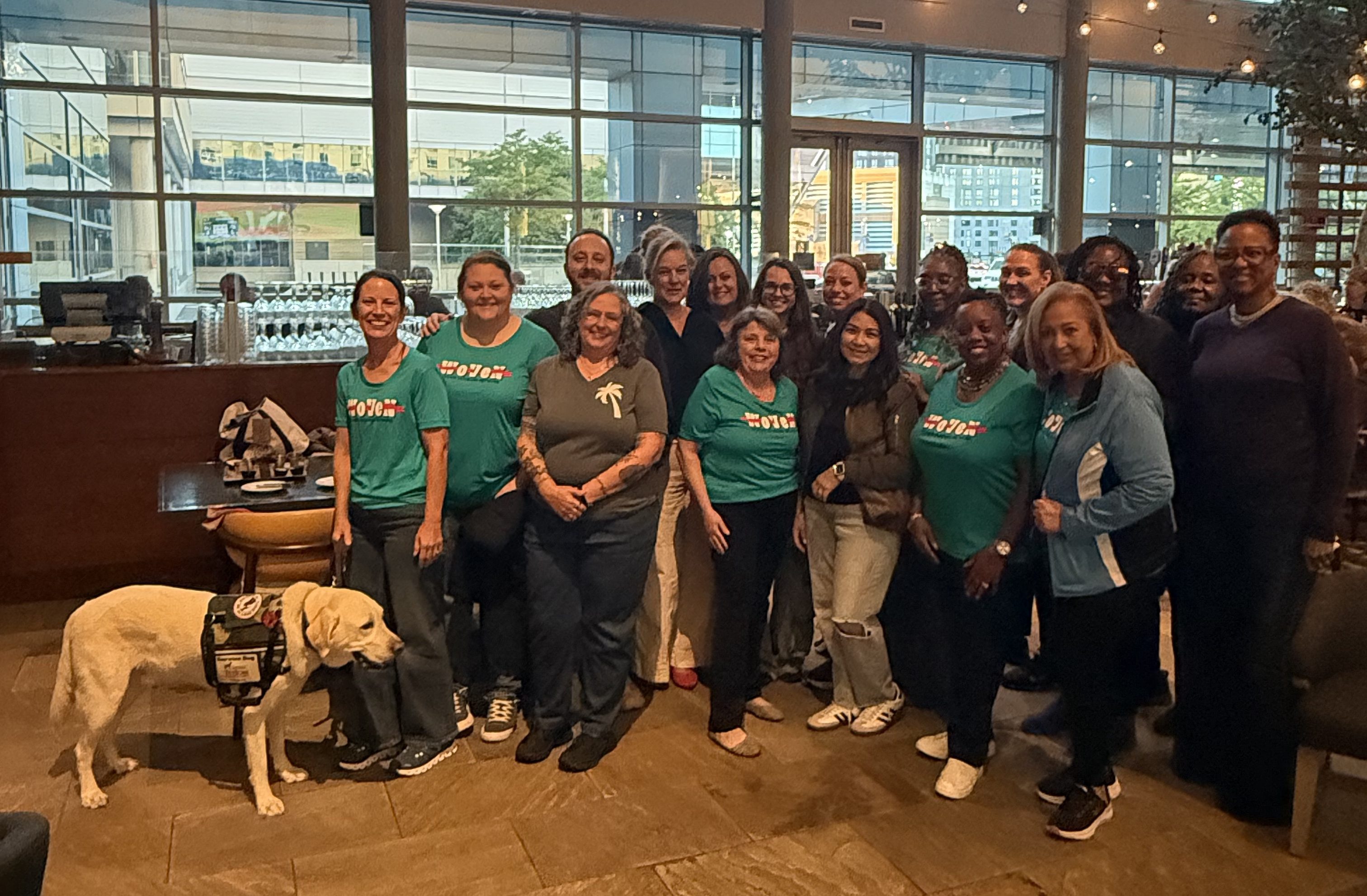 – During the trip, you also met with the women veterans’ community WOVEN. What areas of cooperation did you discuss?
— If we are talking about Zemliachky, one of the main areas of our work is developing communities for women service members and women veterans. Our experience shows how important it is for a woman to have people around her who understand what she is going through — people with whom she can talk about military service, returning to civilian life, and relationships with loved ones. These connections help women support one another and search together for answers to shared challenges.
It is important to us that these communities develop throughout Ukraine — in large cities, small towns, and villages. A woman should be able to find support where she lives. That is why our task is to strengthen local communities and create opportunities for them to exchange experience.
This is exactly what we discussed with the American women veterans’ organization WOVEN. We see great value in enabling Ukrainian and American women veterans to communicate directly, so we have already discussed how such an exchange could be organized.
Our next joint step will be an online conference between WOVEN and Zemliachky, during which Ukrainian women defenders and women veterans will be able to speak directly with American women veterans. It is important for us to create a space where women can talk about what helped them during and after service, what difficulties they face, and how they maintain connections within their communities.
The experiences of our two countries are different, which is why this exchange is valuable for both sides. We want this meeting to become the beginning of long-term cooperation between women’s military and veteran communities in Ukraine and the United States.
– It would also be interesting to understand how the needs of women in the military have changed from the beginning of the war to today.
— The fundamental needs of women in the military have not changed. They need uniforms and equipment that take women’s anatomy into account, are appropriate for the conditions of service, and allow them to carry out combat missions. We receive such requests every day. What has changed is the attitude toward these needs at the state level — they have begun to be recognized and taken into account. This was preceded by years of work by women service members and civil society organizations that drew attention to the problem and proposed concrete changes.
One example is the approval of a women’s summer field uniform. This is an important step, but according to feedback from the women defenders we work with, such a uniform does not always meet their needs during combat missions. A uniform must be comfortable while moving, carrying equipment, and spending long periods in combat positions. It is under precisely these conditions that it becomes clear how well it actually meets a woman’s needs.
For more than five years, our organization has been building a system to provide women defenders with high-quality uniforms and other equipment. During that time, we have fulfilled more than 31,000 individual requests, most of them from women serving in combat zones.
We are now working with the Ministry of Defense to share the expertise Zemliachky has accumulated over the past four and a half years. It is based on feedback from women service members, testing results, and pilot projects initiated by the Zemliachky NGO in partnership with the Ministry of Defense. It is important to us that these practical solutions become available to more women defenders through the state supply system.
So there are now more opportunities to influence change. At the same time, we will only be able to say that the problem has been solved when a woman in her unit receives a uniform in the correct size and suitable equipment on time.
 – What problems faced by Ukrainian women service members remain systemic — in supplies, healthcare, psychological support, or the return to civilian life?
— All of these issues remain unresolved. In terms of supplies, every day we receive requests for uniforms, winter kits, lightweight armor plates, and anatomically designed plate carriers. The appearance of certain models or their distribution in specific units does not mean that the need has been met. In psychological support, there is a shortage both of specialists and of opportunities for specialized training. When one psychologist is responsible for hundreds of service members, they physically cannot devote enough time to each person. At the same time, working with combat experience requires knowledge and skills that general psychology training does not always provide.
Another issue connected to this is trust in psychological support — or, more precisely, the stigma surrounding it. If a person went to a psychologist and did not receive appropriate support or did not feel understood, it becomes more difficult to seek help again. They may carry that experience into civilian life as well. What we hear most often from male and female veterans is: “The psychologist started crying,” “The psychologist doesn’t understand me,” and even, “The psychologist left the room because it became too difficult for them.” This primarily points to inadequate professional qualifications.
To change this system, Zemliachky responds to specific supply requests from women defenders and shares its experience to improve government solutions. WISPR works on additional professional training for specialists in military psychology. We have already conducted “Module Zero,” dedicated to psychological first aid, understanding combatant culture, and the basic principles of working with service members.
We have also developed a professional development program for psychologists consisting of four training modules, supervision, peer consultation, and final certification. Seven leading specialists are involved in the program. Training is free of charge for military psychologists.
Our goal is to scale up the training of specialists who can professionally address the psychological consequences of the war in Ukraine.
– How can Americans and the Ukrainian diaspora as a whole help address these problems?
— American partners and the Ukrainian diaspora can support us in three areas. The first is professional and scientific cooperation. We are open to partnerships with psychologists, psychotherapists, and psychiatrists in the United States who have experience working with war trauma. They can join WISPR’s scientific working groups, help adapt international approaches to Ukrainian conditions, and teach our military psychologists. This is an opportunity to jointly develop practical professional skills and research what kinds of support best meet the needs of Ukrainian military personnel and veterans.
The second area is financial support. We are looking for donors, foundations, and organizations willing to support professional training programs for military psychologists. To conduct comprehensive training, we need instructors, ongoing support for participants, and stable funding throughout the entire program. By supporting the training of one specialist, partners help many people that specialist will work with in the future: service members, veterans, and their loved ones. For Zemliachky, assistance in providing women defenders with uniforms and equipment also remains important.
The third area is contacts and assistance in building cooperation. The Ukrainian diaspora knows local institutions well and has trust within its communities and local businesses. An introduction to a university, veteran organization, foundation, or representatives of government institutions can open opportunities for joint research, training programs, or exchanges of experience between Ukraine and the United States.
 – A separate area of your work is supporting women veterans. What difficulties do they most often face after leaving military service, and which of these problems, in your opinion, are still not discussed enough by society?
— I would say that the main problem today is the gap between how much we talk about supporting women veterans and what a specific woman actually receives after leaving the military. Here I am drawing on the experience of our organization and the stories of the women we work with. This experience does not describe the situation of every woman veteran, but it does show difficulties that repeatedly arise.
The first difficulty is distrust of psychological support because of negative experiences. Women have told us about cases in which specialists were unprepared to work with their experiences, stopped communicating with them, or violated confidentiality. Imagine this: a person finds the courage to speak about something deeply personal, and then the entire unit finds out about it. After something like that, it becomes difficult to trust another psychologist even when help is needed. That is why professional training and adherence to professional standards during military service also matter for later civilian life.
The second challenge is finding work and finding one’s place after service. In the military, a person has a clear role, responsibilities, a shared purpose, and people around them. After discharge, all of this can change at once. They need to restore their health, look for work, rebuild their daily routine, and repair relationships with loved ones. At the same time, the civilian environment does not always understand what they are going through. Gratitude for military service is important, but it must be backed by real opportunities to find employment, receive assistance, and gradually build a new everyday life.
The transition itself from military service to civilian life can be especially vulnerable. A person needs a clear pathway: where to turn, what services are available, who can help navigate documents, treatment, or employment. Support programs exist, but access to them is uneven, and veterans do not always receive guidance at the moment when they need it most.
We see large companies developing veteran programs and helping employees return to work. This is an important practice. But a woman from a small town who worked for a small company before her service may not have access to the same support. Opportunities to return to civilian life should not depend solely on where a person happened to work before.
Another problem is prejudice. We have heard about difficulties in finding work or renting housing because of veteran status. Women also face the devaluation of their military experience. They are forced to prove things that a man in the same situation might not even be asked about. Such reactions intensify the feeling that you are neither understood nor accepted.
From our experience, after leaving the military, women sometimes return to service, and one of the reasons may be difficulties adapting to civilian life. That is why it is important to develop and scale initiatives that help improve communication between military personnel and civilians and reduce the distance between these experiences.
At Zemliachky, we do this in part through our community of ambassadors. Women leaders become supporters and voices for women defenders in their communities, helping strengthen the connection between the home front and the battlefield and reminding everyone that we are all participants in the same struggle.
 – During your trip, you already met with representatives of the Ukrainian National Women’s League of America in Texas. What role does the Ukrainian community in the United States play in supporting Zemliachky, WISPR, and the Ukrainian military more broadly?
— A very significant one, both in terms of financial support and in helping people here better understand Ukraine and continue supporting it. For many families in the diaspora, our struggle has a deeply personal dimension. They know Ukraine’s history and remember forced emigration and attempts to destroy Ukrainian culture and identity. That is why they understand that this war did not begin in 2022 and that it is about our right to exist as an independent state.
At the same time, these people understand American society well: they live and work here, have professional connections, friends, and families. They can explain the Ukrainian experience to those around them and involve local organizations and businesses in providing assistance. A personal conversation with someone you trust often helps you understand more than television news does.
The Ukrainian National Women’s League of America is a very close example of this kind of work for us. For three years, we have supported women defenders together — both through supplies and through mental health projects. Among the women we meet are members of the third generation of the Ukrainian diaspora in the United States. They were born in America, but they speak Ukrainian, know Ukrainian traditions, and do a great deal for Ukraine. They organize events and fundraisers, involve people around them, and help us build important partnerships.
– Can you provide specific examples of how money or assistance raised by the Ukrainian community and partners in the United States changes the lives of Ukrainian women service members and women veterans?
— Of course! Again, one example is our cooperation with the Ukrainian National Women’s League of America. Thanks to their support through our joint projects, we have provided thousands of women service members with essential items. We have also held a number of rehabilitation programs in the Carpathians for women defenders, women veterans, and women released from Russian captivity.
At the same time, this support allowed us to work consistently with women defenders’ requests over several years: to collect feedback, improve solutions, and test them under real conditions of military service. This is how the expertise we are now sharing with the Ministry of Defense was developed.
In other words, community support produces both immediate and long-term results. First, it makes it possible to meet the needs of one specific woman or hundreds of women. Then the accumulated experience becomes the basis for decisions that can improve supplies for a much larger number of women defenders at the state level.
Without partners who funded this work, it would have been impossible to travel this path. So the Ukrainian National Women’s League of America, Ukrainian communities, and the people they engage in supporting us have all made a significant contribution to the results we see today.
Continuing this cooperation is important so that the solutions we have developed can be implemented and so we can continue helping women whose needs remain unmet.
 – Do you feel that attention toward Ukraine or donor fatigue in the United States is increasing today? If so, what helps preserve interest in and trust toward Ukrainian initiatives?
– Yes. During this trip, I felt that keeping attention on Ukraine is becoming harder. The war has lasted for years, other news stories and crises emerge, and we have to explain again why support is still necessary. At the same time, we continue to meet people and organizations that consistently remain by our side.
We understand this fatigue. But Russia is counting precisely on exhaustion — physical, moral, and economic. It is counting on Ukrainians running out of strength and partners losing their willingness to help. That is why reduced support has very concrete consequences for us: fewer opportunities to supply the military, help the wounded, and support those who continue to serve.
For Ukraine, this struggle is about people’s lives. Occupation means danger for those who fall under Russian control: violence, the killing of civilians, looting, and the destruction of homes. The world has already seen what is uncovered after our cities are liberated from occupation. Bucha and Irpin were among the first cities whose images spread across global media. But today, similar things are happening in other Ukrainian cities as well. And we are fighting to stop this and prevent it from spreading across the entire country.
That is why it is important to explain that helping Ukraine today means protecting people — children, women, elderly people, civilians who do not always have the ability or resources to evacuate. Unfortunately, there are cities such as Oleshky where evacuation itself carries a risk to life: Russians do not allow people to leave or permit food and medicine to be delivered. Children and adults remain there even today. That is why supporting the Ukrainian military helps save the lives of people who live under threat every day.
I would like people, when they hear the phrase “Ukraine fatigue,” to remember those who cannot simply put this war aside and return to ordinary life. The woman service member who will return to her position tomorrow. The family waiting for news from the front. The child who wakes every night to the sound of explosions. They are tired too. And they desperately need to know that they have not been left to face this alone.
Photo: Provided by the communications team of the Zemliachky
Prepared by: Inna Mikhno