 At this year’s Burning Man 2025 in Nevada’s Black Rock Desert (USA), Ukraine was represented by several powerful art installations and musical performances. Despite extreme weather — strong winds and rain that destroyed one of the main installations — the Ukrainian presence became one of the most noticeable and emotionally resonant at the festival.
The centerpiece was the “Black Cloud” installation by Ukrainian artist Oleksiy Sai, produced in collaboration with Vitaliy Deynega (founder of Ukrainian Witness and Come Back Alive foundation) and executive producer Mariia Moroz. This marks the team’s third consecutive year at Burning Man, following Phoenix (2023) and I’m Fine (2024).
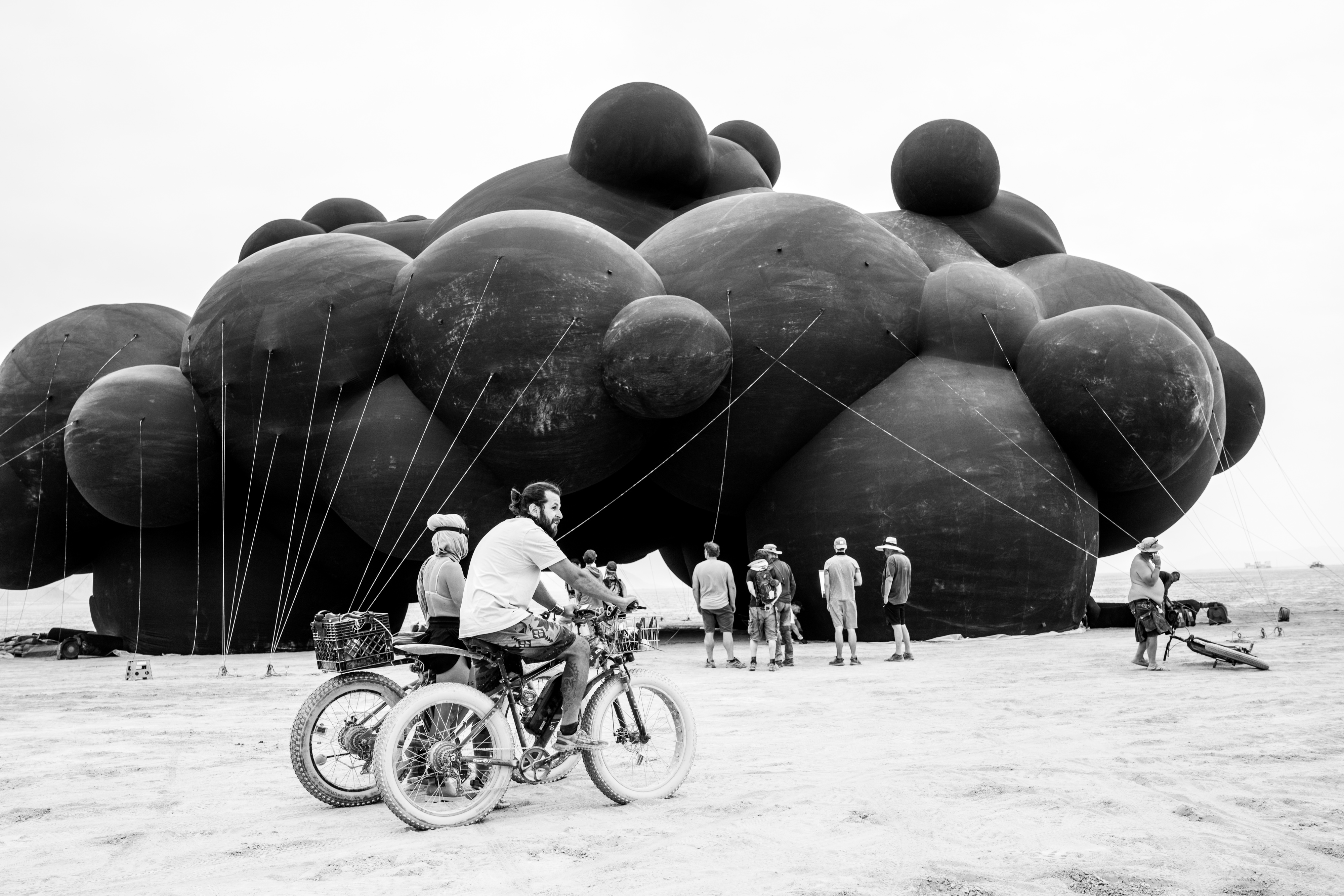
The “Black Cloud” is a massive, 8-ton inflatable thundercloud, 100 feet long, previously exhibited in Kyiv’s Sofiivska Square. Inside it features 20 synchronized lightning flashes and a soundscape of rockets, sirens, and explosions recorded by Denys Vasyliev, recreating the reality of war. The installation is a metaphor for large-scale, invisible threats confronting humanity.
“This is the real voice of war — it echoes for seven days non-stop,” said Deynega.
The mission is urgent and clear: to make the invisible visible, to translate abstract ideas of conflict into an emotional, tangible experience for those who stand under the Black Cloud.
As of July 31, the full-scale invasion by Russia has killed 15,258 civilians, including 640 children, wounded 34,052, and destroyed or damaged over 235,000 civilian infrastructure sites. Over 170,000 war crimes have been documented. The “Black Cloud” transforms these numbers into a global artistic statement.
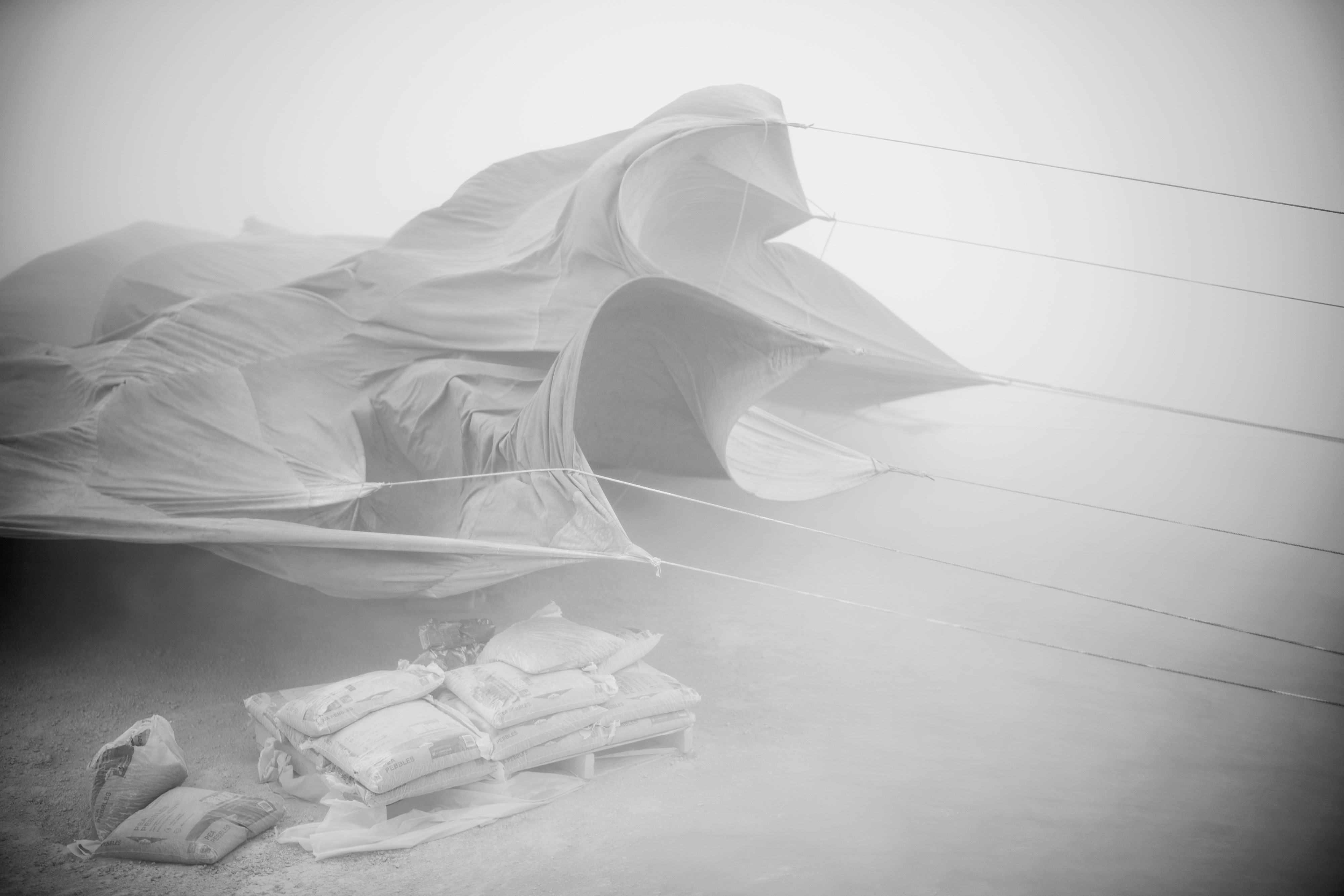
Although the team worked overnight to install the piece on August 24, it was destroyed by the strongest storm in Burning Man’s history. Yet the spirit lived on — a poem by Mykola Khvylovy, “What Do We Care for Darkness!”, became the emotional core of the installation, recited by Ukrainian actor and director Akhtem Seitablaiev, with musical accompaniment from DJ Tapolsky and electronic artist Involver, featuring actual war sound recordings from Zaporizhzhia.


The traditional Ukrainian camp Kurenivka also sustained damage from the dust storm, but stunned festival-goers with its mutant art car “Blue Bull” — a two-story mobile structure with horns and a glowing “crown” inspired by Maria Prymachenko’s folk art. The art car was created by Masterskaya Chudes in partnership with the Ukrainian Burners community. The journey to the desert took almost two months, and the on-site assembly lasted three to four days. However, the weather repeatedly delayed its launch.The Ukrainian music lineup was set to feature performances by legendary band Vopli Vidopliassova, Alina Pash, and other well-known artists. “Point of Unity” by light designer Mykola Kabluka: a meditative space symbolizing unity and community strength. According to the artist, it evokes a moment of connection between sky and earth, human and nature, present and future.
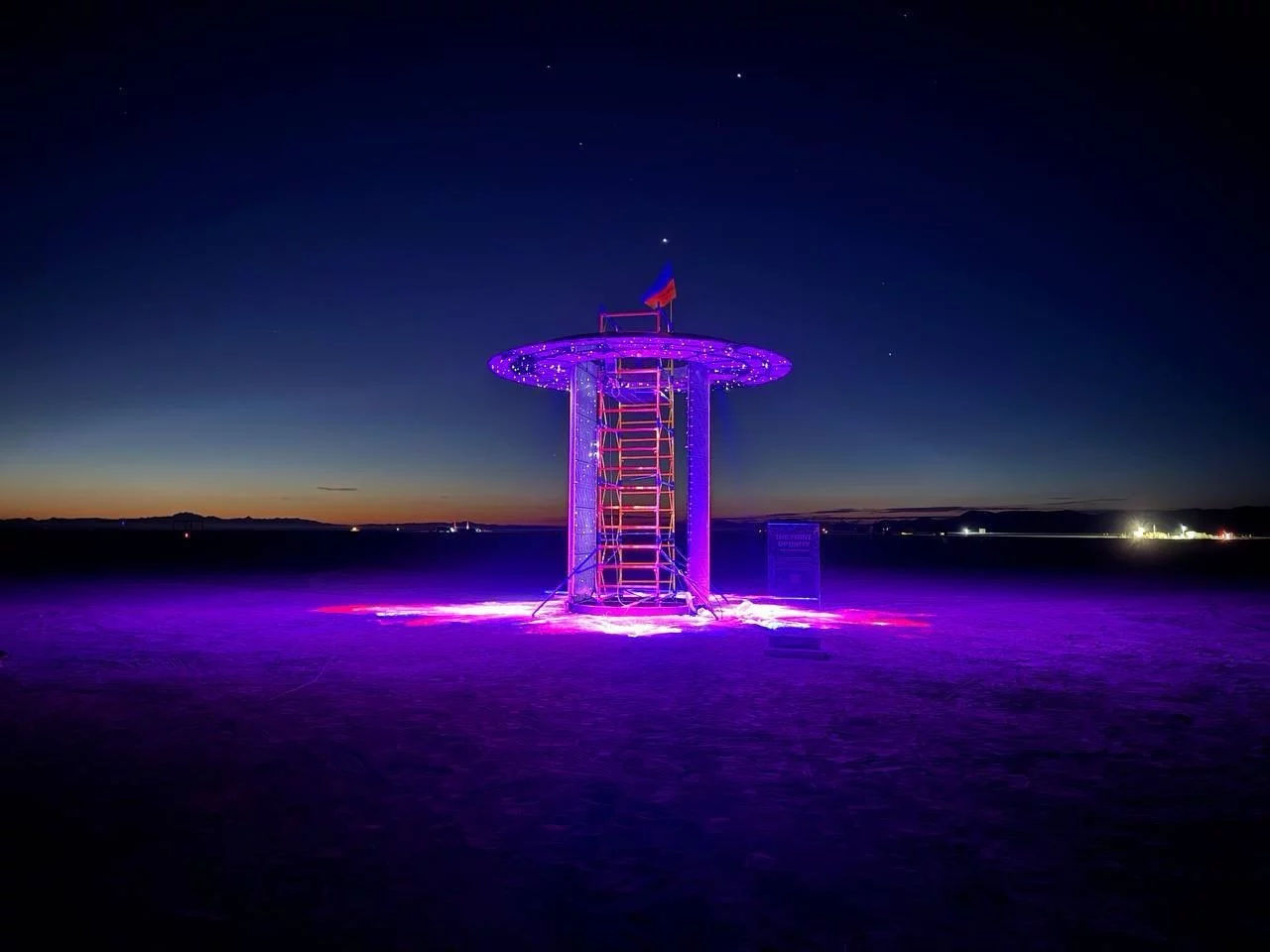

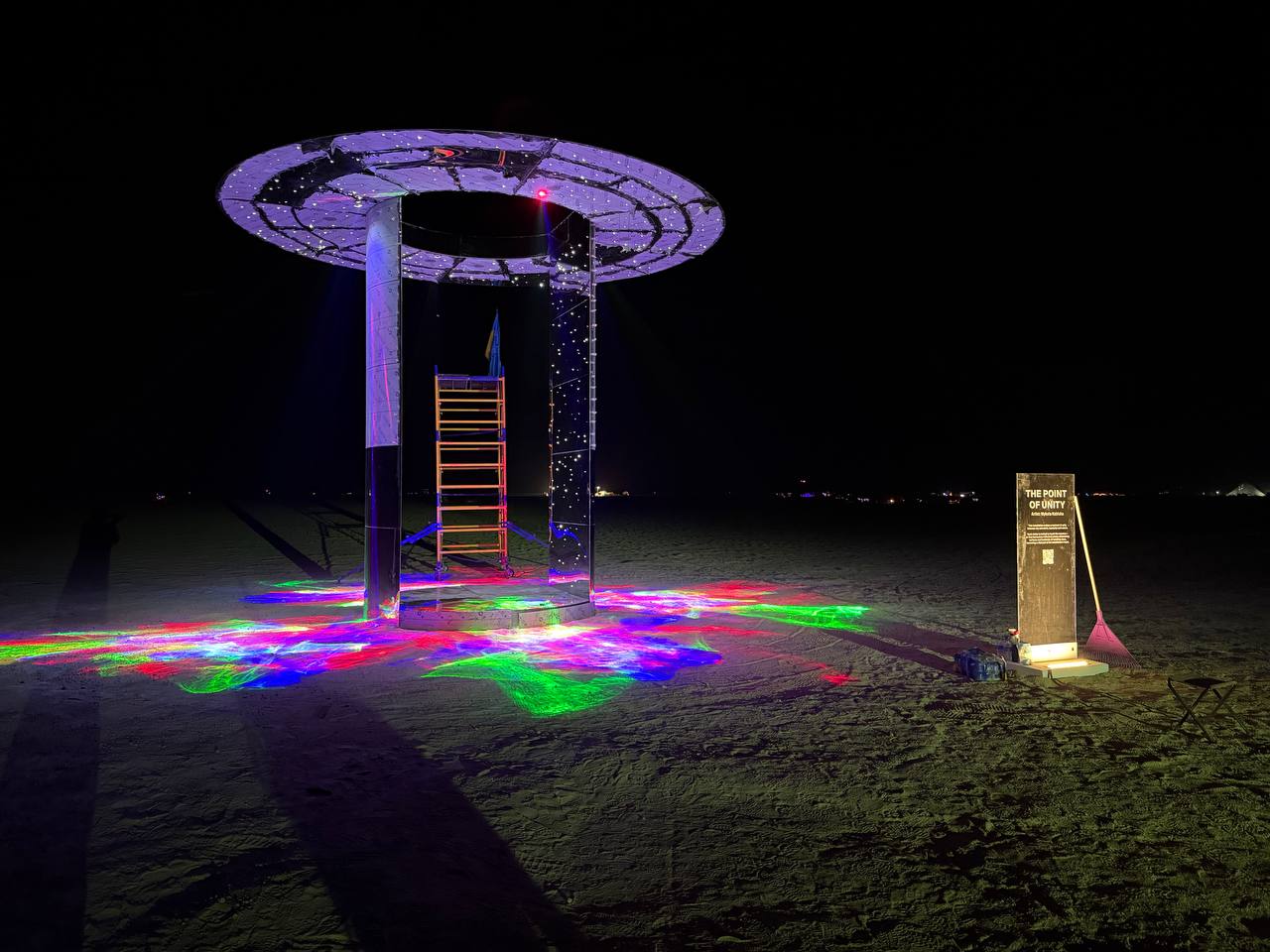

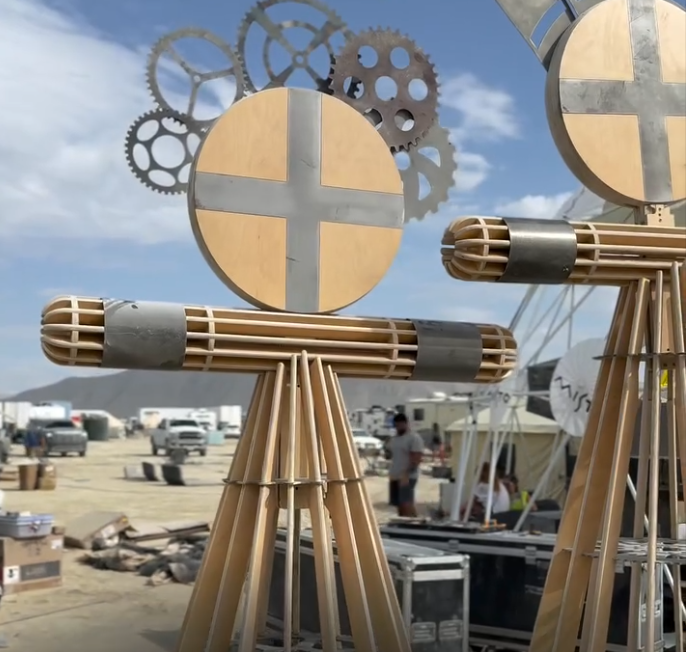
“Mermen” by Andriy Krapyvchenko: a 12-meter wooden sculpture — the first Ukrainian art object to receive an official Burning Man grant. Its journey reflects persistence: for five years it couldn’t reach the desert due to the pandemic, full-scale war, and customs issues. It was displayed in Kyiv near the Arch of Freedom, on the Dnipro riverbank, and even inside a Silpo supermarket. En route to the U.S., the container was stopped multiple times and was likely damaged in port, delaying final assembly until August 26 — just before the desert was hit by rain.

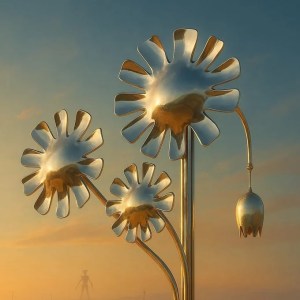 “Futuristic Sunflowers”: 3.8-meter-high metal flowers created by Kharkiv architect and interior designer Volodymyr Ponomarenko using hydroforming technology. Their mirror-like surface reflects the desert, creating a sense of living motion. After a week at Burning Man, the sunflowers will become a permanent exhibit at the new HeyDay venue in Chicago, where they’ll help raise funds for the Rescue Now foundation.
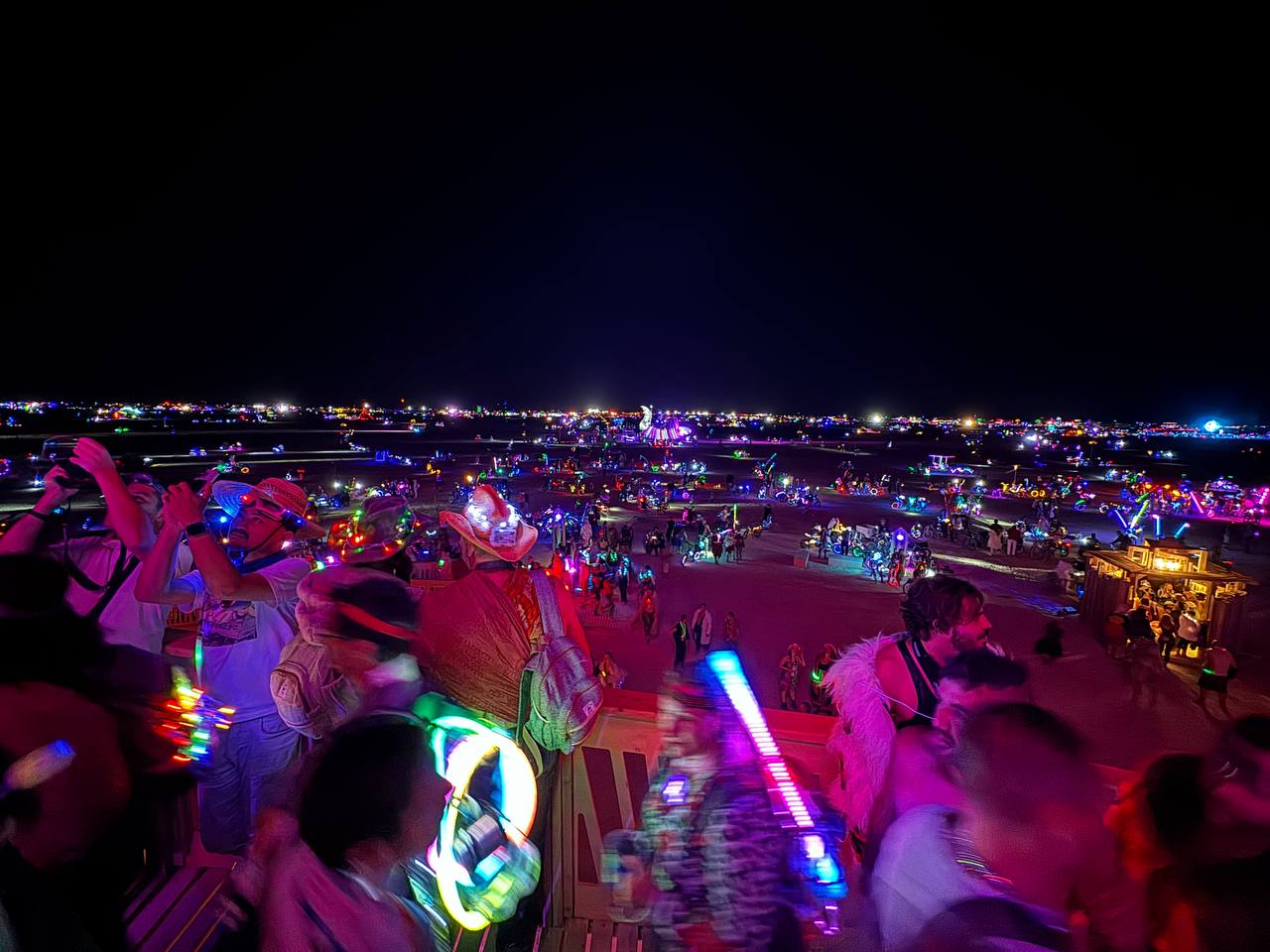
In addition to large-scale installations, Ukrainians organized their own camp, “Misto”, located at coordinates 2:15 & Ellison. Despite the weather, it hosted daily culinary, artistic, and wellness events, such as: Syrnyky tastings (Ukrainian pancakes), Tea ceremonies, Sound healing sessions, Petrykivka painting workshops, Flower crown making, Ukrainian fashion shows, Borscht tastings, “Murzik Party” with cat masks and video installations, “White Night” featuring Ukrainian music “Misto” became a cultural and gastronomic hub for Ukrainians at Burning Man.