


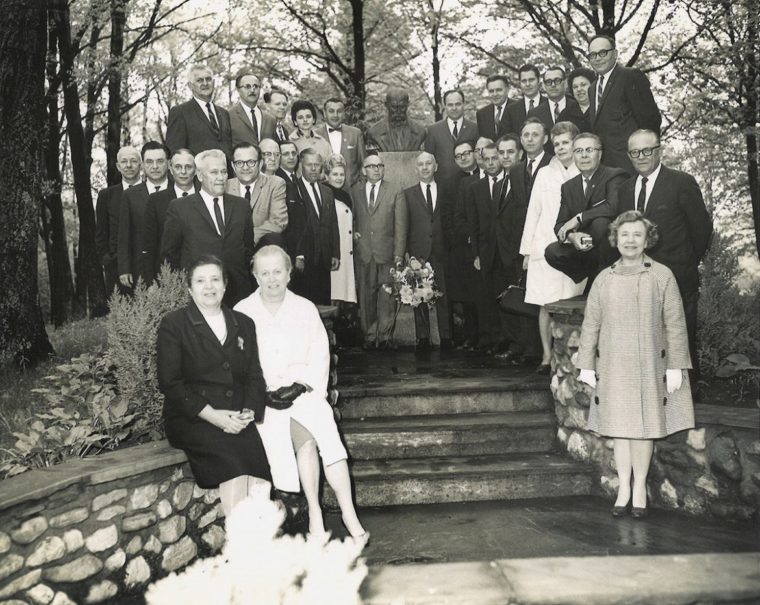
Stepan Kuropas moved to the United States in 1927, where he joined the civic and political life of the Ukrainian diaspora and became one of the first members of the Organization for the Revival of Ukraine. He worked to establish local branches of the organization, organized cultural events and fundraising campaigns to support Ukrainian institutions and the liberation movement. Kuropas also carried out assignments for the Organization of Ukrainian Nationalists (OUN), visited Ukrainian lands, and took part in discussions within the Ukrainian diaspora about relations with the Ukrainian Soviet Socialist Republic (Ukrainian SSR).
Emigration to the United States and First Steps in Civic Activities
Mass emigration from the western Ukrainian lands began in the 1880s. Most emigrants were peasants seeking better material conditions. Members of the first wave gradually settled in Western European countries, the United States, and Canada, and later encouraged their relatives and acquaintances to join them. The second, interwar wave of emigration was driven mainly by political reasons, particularly the defeat of the Ukrainian struggle for independence. Specialized organizations that helped people wishing to move abroad played an important role, as did the Committee for the Care of Emigrants of the Ukrainian Galician Army (UHA).
This was reported by Nataliia Matviichuk..
Under these circumstances, Stepan Kuropas decided to emigrate to the United States. In the late 19th century, U.S. government policy toward migrants began to change. Whereas newcomers had previously been encouraged and offered benefits, the requirements for those wishing to settle in the country gradually became stricter. This led to a decline in migration flows, including from Ukrainian lands. According to data cited in the study, 200,000 Ukrainians arrived in the United States between 1880 and 1891, while 40,000 emigrants from Ukrainian lands moved to the country between 1914 and 1941.

Kuropas contacted the consulate and received permission to travel to the United States outside the quota because he had trained as an agricultural engineer, a profession in demand in the country. On March 7, 1927, he departed from the French port of Cherbourg and arrived in the United States on March 14 through the port of Hoboken, New Jersey.
At first, Kuropas lived with his brother in Grand Rapids, Michigan, and worked at a factory producing automotive parts. He planned to move to Canada, where his acquaintances lived, but eventually settled in Chicago, hoping to find a friend from Prague.
At the time, Chicago was already home to a sizeable Ukrainian community. Between 1920 and 1930, the number of Ukrainians in the city increased from 14,000 to 47,000, largely due to new arrivals. Kuropas found work with the help of a former schoolmate with whom he had studied in Przemyśl and served in the ranks of the UHA.
At the time, Chicago was already home to a sizeable Ukrainian community. Between 1920 and 1930, the number of Ukrainians in the city increased from 14,000 to 47,000, largely due to new arrivals. Kuropas found work with the help of a former schoolmate with whom he had studied in Przemyśl and served in the ranks of the UHA.
Chicago had an organized Ukrainian community whose members developed businesses and civic, political, religious, and cultural associations. It was here that Kuropas began his active civic, political, and cultural work aimed at supporting and uniting Ukrainians in the United States.
The Riflemen’s Circle and Support for Ukrainian Organizations
After World War I, Ukrainian emigrants in the United States represented various political and ideological movements and military formations. This contributed to the creation of numerous associations. In Chicago, Kuropas, a veteran of the UHA, initiated the establishment of the 60th Riflemen’s Circle No. 6 (Ukrainian League Post No. 6).
The Riflemen’s movement in the United States began in 1925, and the first Riflemen’s Congress was held the following year. According to V. Halan, the congress participants decided to build a network of Riflemen’s circles across the United States.
For many years, Kuropas served as chairman and secretary of the Chicago circle. According to his memoirs, despite its small membership, the association carried out extensive work in support of Ukrainians in the United States. Its members marked religious holidays and significant anniversaries, collected donations for the Home for Ukrainian Disabled Veterans, Plast, and museums, assisted organizations in Ukraine, and distributed Ukrainian periodicals.
In the United States, Kuropas also continued his work toward achieving the goals of the Ukrainian Military Organization (UVO). In his memoirs, he recalled a meeting between members of the circle and Yevhen Konovalets. During the meeting, the colonel spoke about the plans of the Organization of Ukrainian Nationalists (OUN) and “asked those present to provide moral and material assistance for events supporting the cause of liberation.”
Ukrainian political figure and historian Petro Mirchuk wrote in his book about Konovalets that the colonel’s personal trip to the United States and Canada helped strengthen the ideological and spiritual ties between Ukrainian emigrants and Ukrainians in their homeland. Ukrainians in North America became active supporters of the OUN’s struggle.

Activities in the Organization for the Revival of Ukraine
Yevhen Konovalets arrived in the United States in 1929 and founded the Organization for the Revival of Ukraine (ORU). Kuropas became one of its first members that same year.
The organization worked to mobilize Ukrainian Americans to provide financial support for Ukrainian institutions, including Ridna Shkola (Native School), Prosvita, and the Society for the Preservation of the Graves of Ukrainian Army Soldiers. It also supported activities aimed at restoring Ukrainian statehood and involved Ukrainians in the United States in cultural events to preserve their national identity. In a speech marking Kuropas’s 70th birthday, O. Hranovskyi, the organization’s longtime leader, called him a founder of the organization in the United States.
The ORU’s official publication stated that the organization’s main goal was to liberate the Ukrainian people “from enemy occupation” and establish an independent Ukrainian state on Ukrainian ethnic lands.
From the beginning of the ORU’s activities, Kuropas served on its Central Executive Board, handling day-to-day work and cooperation with other organizations. He also established ties with Ukrainians in Canada. In a letter to Y. Mastykaш, an active figure in the Ukrainian National Association and the Ukrainian Liberation Fund of Canada, Ukrainian-Canadian civic and religious leader P. Bilaniuk recommended taking advantage of Kuropas’s visit, as he could offer practical advice on the activities of Canadian Ukrainian organizations.
Kuropas initiated the establishment of the ORU’s first branch in Chicago. With his assistance, branches No. 37, 48, 51, and 52 were also established. Together with P. Didyk, H. Semochko, M. Ryza, and O. Senyk-Hrybivskyi, he helped establish the organization’s branches in 63 cities near Chicago.

According to Kuropas, OUN leaders expected ongoing financial support from “Ukrainian America.” The ORU was tasked with collecting funds and uniting Ukrainian Americans in support of the liberation struggle.
OUN figure V. Martynets noted that America had become a financial base for the UVO within a short time, allowing the organization to intensify its activities. In addition to traditional fundraising drives at Christmas and Easter, one-time and recurring campaigns were held to finance specific needs.
Kuropas stressed that the collected funds were “untouchable,” and that only the interest earned on them was directed toward OUN activities. According to him, the main task of the OUN in the United States and Canada was to help liberate Ukraine, and the fund was intended to serve as the material foundation for this cause.
A district executive board was established to coordinate the ORU branches in Chicago and nearby cities. Its structure also included local branches of the Ukrainian Golden Cross and youth associations. Kuropas was elected the board’s first chairman and held the position for many years.
In addition to political, ideological, and civic work, the ORU organized cultural events. Every year, members of the executive board held “Nationalist Days,” featuring theater groups, musicians, and choirs founded by Ukrainians. Numerous performances and concerts organized by ORU members took place in Chicago.
The organization’s main objectives in the United States were to unite like-minded people, inform Ukrainian Americans about the OUN’s activities, and develop positions on political and ideological issues. Financial support for the OUN and other organizations was another important area of work. Kuropas frequently initiated cultural events to raise donations.
OUN Courier and Trip to Europe
In 1930, Kuropas, who was actively involved in the ORU and the Ukrainian nationalist movement in the United States, became an OUN courier. He was to visit Europe and Ukrainian lands to establish contacts for the exchange of information and the provision of financial assistance.
According to Kuropas’s memoirs, carrying out this assignment was complicated by the policies of the Polish authorities. People accused of similar activities could be imprisoned in Bereza Kartuska. Another task was to deliver money concealed in clothing to pay for lawyers representing OUN members charged by the Polish authorities.
Kuropas completed the assignment and returned to the United States in 1933. After his return, some UVO figures began suspecting him of spying for Poland because they knew he had been in Polish-controlled territories but did not know the purpose of his trip. His opponents succeeded in initiating an investigation. It was conducted by O. Senyk-Hrybivskyi, who later refuted all the accusations against Kuropas.
Diaspora Debates Over Visits to the Ukrainian SSR
Kuropas next visited Ukraine 33 years later, in 1963. By then, representatives of the Ukrainian diaspora were engaged in ongoing debates about whether trips to the Soviet Union were advisable.
Some Ukrainians abroad believed that such visits, like trips abroad by Soviet Ukrainians, were attempts by the KGB to divide the diaspora and recruit new agents. Other members of the Ukrainian community believed that mutual visits could be beneficial because they would allow residents of the Ukrainian SSR to learn about democratic values and the human rights and freedoms upheld in other countries.
Ukrainian organizations abroad developed their own positions on such visits and issued documents regulating the issue. The Ukrainian Congress Committee of America (UCCA) opposed visits to the Ukrainian SSR, considering them inadvisable and harmful. Committee members who did not comply with this decision were expelled from the organization.
Kuropas, who was a member of the UCCA, did not support its resolution and traveled to the Ukrainian SSR with his son Myron in 1963. According to his memoirs, there was no consensus within the committee on the issue. Disputes between the Bandera and Melnyk factions of the OUN prevented them from reaching a joint decision.
Kuropas was among those who viewed such visits positively. Another important reason for the trip was a longstanding promise to his son to “show him the beauty and grandeur of his native land.” Representatives of the OUN (B) opposed visits to the Ukrainian SSR, while Kuropas, who belonged to the Melnyk faction, was in no hurry to follow the UCCA’s decision.
Disagreements over visits to the Ukrainian SSR strained relations between different OUN factions in the United States. Kuropas was not the only one to oppose the committee’s decision. Representatives of the Ukrainian National Association and other organizations also objected, including R. Ilnytskyi, Y. Revai, V. Bachynskyi, and Y. Haivas.
According to Kuropas’s memoirs, before World War II, Ukrainians in the United States heard rumors about a split in the nationalist movement, but hoped the conflict could be resolved. After the war, information reached the United States about the situation in Ukraine and its participation in the founding of the United Nations, but information about the state of the nationalist movement remained scarce. In his memoirs, Kuropas attributed this to major disagreements among the organization’s leaders and opposition from forces seeking to eliminate the OUN.
Position on OUN Leadership After the War
Some time after the end of World War II, I. Bilynskyi arrived in the United States. He informed ORU members about the transfer of power “from A. Melnyk to the younger generation, led by S. Bandera,” and proposed welcoming the new leadership of Ukrainian nationalists and joining the continued struggle for Ukraine’s independence.
According to Kuropas’s memoirs, organization members had doubts and many questions about the OUN’s future activities. He proposed waiting for a communiqué from A. Melnyk that would explain the next steps for ORU members, but no such document arrived. Having received no official confirmation that a new leader had been elected to the Leadership of Ukrainian Nationalists (PUN), Kuropas and other ORU members did not recognize S. Bandera’s “transfer of power.”
The situation was partially clarified later by statements from PUN members who had attended a meeting of regional representatives from Western Europe and North America in Venice in 1939. Additional information was provided by newly arrived emigrants from Europe, most of whom supported S. Bandera.
According to Kuropas, some ORU members recognized Bandera as the OUN leader. Kuropas himself remained committed to the ideological positions of the OUN (M) and began working against the activities of the OUN (B) in the United States and beyond.
Awards and Editorial Work
Kuropas received numerous awards for his work in the ORU. His personal archive, held at the Immigration History Research Center at the University of Minnesota, contains certificates from the organization’s branches and central executive board, as well as medals recognizing his contributions to the ORU’s development. The awards recognized his longstanding civic and political activities, participation in the Ukrainian liberation movement in the United States, and his philanthropic and organizational work.
In the opinion of I. Kedryn, after the death of Yevhen Konovalets, Kuropas remained “loyal to the camp of Colonel Andriy Melnyk, the successor to Yevhen Konovalets as head of the PUN.”
Kuropas also worked on the editorial staff of Samostiina Ukraina (Independent Ukraine), the ORU publication in Chicago. He served as its editor-in-chief in 1958–1959 and 1980–1983.
Photo: Nataliia Matviichuk.
Author: Danylo Pievchev