


Before 2022, John Namkung knew almost nothing about Ukraine. But by April, the Korean American had traveled to the Polish-Ukrainian border to help women and children fleeing the Russian invasion. He later sponsored the relocation of two Ukrainian families to the United States and, together with relatives and neighbors, helped more than 35 Ukrainians settle in the country. Since then, John has visited Ukraine three times: baking and delivering bread to frontline villages, meeting wounded service members, and raising money for children’s summer camps. Now, together with the organization Hromada, he is preparing a charity concert for November 13. The goal is to raise funds for Christmas gifts and year-round support for 600 children who have lost one or both parents because of the war. In an interview with Vilni Media, Namkung spoke about how helping Ukrainians became part of his life, what he felt while experiencing shelling nearby, and why a loaf of bread can mean more than food. We also discussed the adaptation of Ukrainian families in the United States and how ordinary Americans can support Ukraine.
— To begin, we would like to introduce you to our readers. Please tell us about yourself: where are you from, what did you do professionally, and what has been a priority in your life?
— I am a Korean American. I was born in March 1948 in Shanghai, China, into a Korean family. I grew up in Japan and immigrated to the United States in 1967. Professionally, I worked in special education. I first worked with children who had learning difficulties and later managed programs for children with various disabilities. I retired in 2009 and since then have been actively involved in a variety of volunteer projects.
My wife, Deanna, and I have been married for 55 years. We have two sons and two grandchildren. Besides my family, one of the main priorities in my life has always been serving people who are suffering and less fortunate than I am. Over the past ten years, helping refugees has become the main focus of my volunteer work.
— Can you recall a moment or an event after which you realized that simply sympathizing with people was not enough for you — that you wanted to take action personally? Why was donating money not enough?
— About 12 years ago, I went through a personal crisis that led me to various spiritual and therapeutic practices. The most important among them became a form of Buddhism — the practice of Loving-Kindness. One of its principles is that all living beings are interconnected, that nothing exists in isolation. So helping people who suffer because of life’s hardships became a personal responsibility and priority for me.
In 2016, millions of Syrian refugees left their war-torn country and began a long journey in search of a new life in Europe. On the news, I saw horrifying footage of families making dangerous crossings from Turkey to Greece in inflatable rafts, boats, and small vessels, desperately trying to reach safety. One day I decided I could no longer sit at home and simply watch. I had to go to Greece and help these people myself. I traveled to Greece alone, without a clear plan, and eventually became a volunteer at a large refugee camp, where every day I helped prepare and distribute soup to thousands of people.
Until then, I had never done anything so spontaneous in my life. My life had always been very predictable and organized, and the very thought of leaving everything behind and heading into the unknown was completely unlike me. I believe the Buddhist practice of Loving-Kindness helped me find the courage to act and help other people with whom I felt a connection and kinship.
Three years later, in 2019, I returned as a volunteer to a camp in northern Greece — this time to help a group of refugees from Iraq, the Yazidis. They had been victims of a brutal genocide committed by ISIS and other Arab groups in 2014, when thousands of people were killed and thousands of women and children were abducted and turned into sex slaves. Those who managed to escape traveled through Turkey and Greece toward Western Europe.
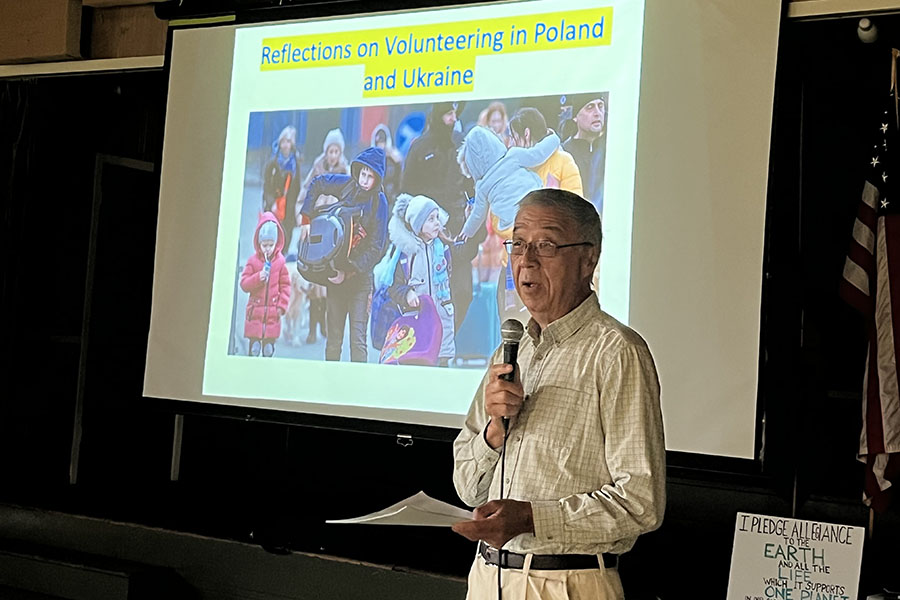
After my experience working in camps with Syrian and Yazidi refugees in 2016 and 2019, it was not difficult for me to decide to travel to Poland and Ukraine in 2022 when Russia launched its full-scale invasion. I helped transport women and children from the Polish-Ukrainian border to safe places in Poland. In 2024, I traveled to areas near the front line to deliver food to villagers, and in 2025 I raised money so Ukrainian children could attend summer camps, visited them myself, and participated in their activities.
All of this work comes from the Buddhist teaching of loving-kindness and compassion. Not passive compassion, but “compassion that goes beyond simply feeling sadness or empathy for another person’s pain; it is a firm commitment and desire to help others become free from suffering.”
— Before February 24, 2022, what place did Ukraine have in your life? What did you know about the country and Ukrainians?
— I knew nothing about Ukraine. I would not even have been able to point it out on a world map.
— By April 2022, you had traveled to Poland and Ukraine to help women and children fleeing the Russian invasion. What thoughts and expectations did you have before the trip? What were your first impressions of Ukraine?
– — I understood that the situation would be chaotic and disorganized because millions of refugees were crossing the border into Poland. After working in similarly chaotic conditions in northern Greece in 2016 and 2019, I was confident that I would be able to adapt.
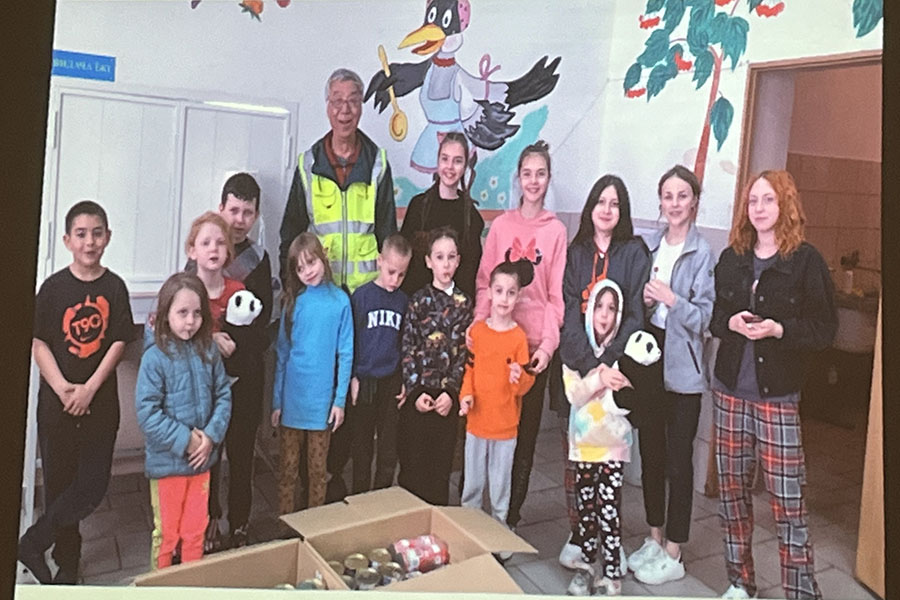
I spent most of my time in border towns and in Poland, meeting Ukrainian women and children and transporting them farther into the country. I spent one day on the Ukrainian side of the border, where I delivered food to an orphanage. The Ukrainians I met were extremely grateful for my support, and I was deeply impressed by the way they were helping internally displaced Ukrainians who had arrived in their city.
— After that trip, you sponsored two Ukrainian families, and together with friends, neighbors, and relatives helped more than 35 Ukrainian refugees settle in the United States. What did that help involve in practical terms? What difficulties did you encounter? What happened to those families afterward?
— I was basically making it up as I went along. I had no idea what I was getting myself into. Here is just some of what I did to help newly arrived Ukrainians: found housing, helped apply for government assistance, arranged health insurance, explained public transportation, taught people how to drive and helped them get driver’s licenses, enrolled children in school, helped people find jobs, complete tax forms, open bank accounts, obtain scholarships for education and summer camps, and apply for re-parole, TPS, work permits, and so on.
The hardest part was that when families had limited English, all of these tasks became very difficult, and we often needed interpreters. Naturally, that slowed down the process and at times caused impatience and frustration.
Virtually all the Ukrainian families and individuals I helped have done very well. The children adapted especially well. When they arrived, most of them spoke little or no English. It was difficult for them to make friends because of the language barrier. But over time they became fluent in English, made friends, and adapted to the American way of life. Most of the adults found jobs and became less dependent on government assistance.
— How did the idea for the проєкту “Bread is Life" project emerge? Why, among all the possible forms of assistance, did you choose bread?
— The grandmother from the first family I sponsored through U4U decided to return to Ukraine after two years. I knew that because she did not speak English, traveling alone would be very difficult for her, so I offered to accompany her.
I decided that while I was in Ukraine I would do some volunteer work, so I contacted a nonprofit organization in Iowa that I had worked with in 2022. Its director told me about their bread project. I decided to raise money and called the project “Bread is Life.”
I chose bread because it is a universal and powerful symbol of life, unity, and community. I knew that Ukraine is one of the world’s largest wheat producers and that bread is an important part of every meal, much like rice in Asian countries.
— At first, you planned to raise a certain amount of money, but the final result exceeded your expectations. Did you expect such strong support from Americans? What do you think convinced people to get involved?
— I live in a very liberal community where support for Ukraine is strong. But even I had no idea just how strong it was. Many Americans were looking for ways to support Ukrainians — either refugees in their own communities or those who remained in Ukraine — but they did not know exactly how to help.
When they heard my story and I assured them that 100% of the donations would go directly to helping Ukrainians, the money began coming in. Others offered to help Ukrainians who were already here: provide housing, help find jobs, organize rides, tutor children, and so on.
One of my first steps was to create a small volunteer group made up of neighbors and friends who met regularly to plan and carry out all this assistance. We called ourselves the Lone Pine Ukrainian Family Aid Group and created a coordinating committee of four to six people that directed the work of the other volunteers. Without the tireless work of this small group, we would not have succeeded.
— What did you feel when you first saw the flour purchased with the money you had raised, and then began baking bread from it with your own hands?
— The most satisfying part of this fundraiser was seeing the entire process: the money raised turned into wheat, then into flour, and then into bread.
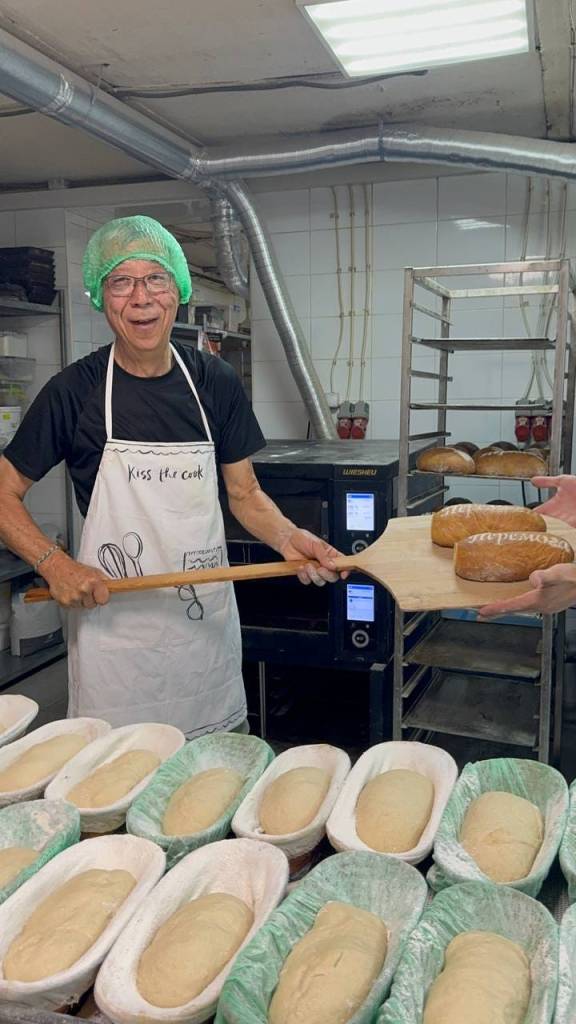
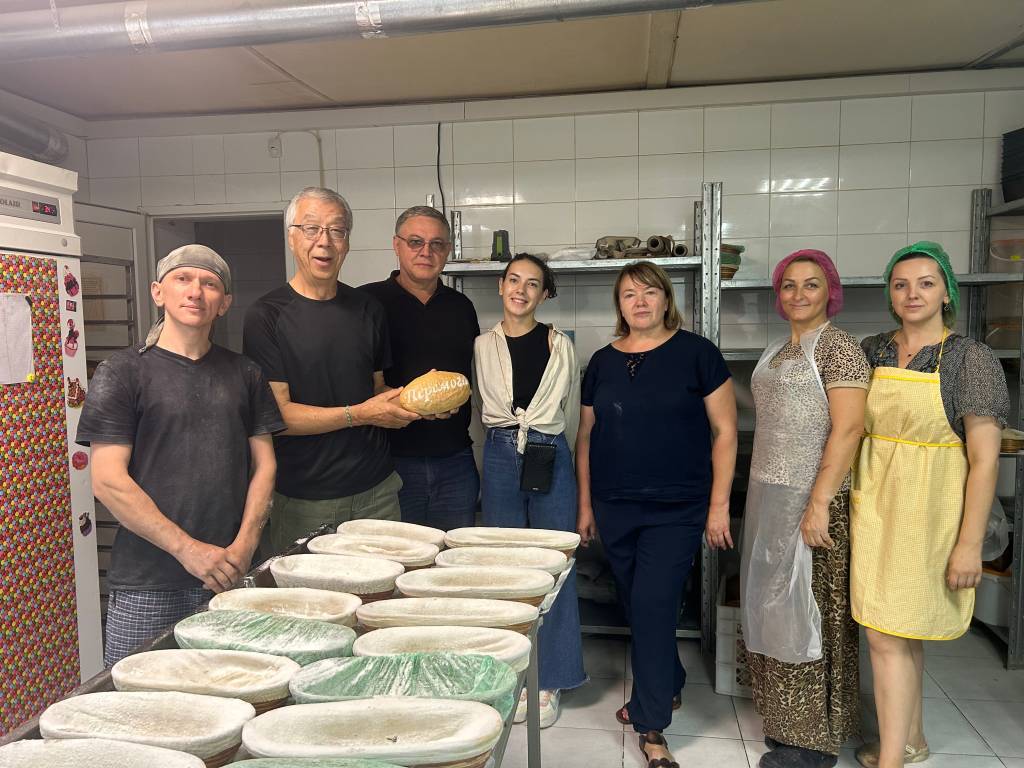
I was incredibly fortunate to see with my own eyes the flour purchased with donations at a bakery in Kyiv, help knead the dough, shape the loaves, and put them into the oven. Over the next several days, I helped distribute that bread to Ukrainians in Chernihiv and near the front line.
Very few people who organize fundraisers get to see the real outcome of their work from beginning to end. That was what gave me the greatest satisfaction in the “Bread is Life” project — the opportunity to feel a direct connection with the people who received help because of others’ generosity.
When I was baking and distributing the bread, I remember thinking how much I wished all the donors could feel what I was feeling — an enormous sense of satisfaction and gratitude.
— You have spoken about hundreds of people waiting for bread and then thanking you. Is there one story from that time that affected you most?
— Ukrainians in general are not especially inclined to openly show affection toward strangers. But I will always remember one elderly woman who unexpectedly hugged me and smiled broadly when I handed her a loaf of bread. All the hours spent fundraising were worth it for that one moment.
— You told Ukrainians that the bread represented more than food — that it meant Americans 10,000 kilometers away had not forgotten them. In your opinion, how important is it for people during wartime to know they have not been left alone?
— It is extremely important because, in addition to the daily struggle to survive in very difficult and often dangerous conditions, people often feel abandoned and forgotten. The government’s primary focus is on military operations, and people are often forced to rely on themselves and on help from others.
Everywhere I went, I told Ukrainians the same thing: I traveled 10,000 kilometers to tell them that the American people have not forgotten them and that we will always support them.
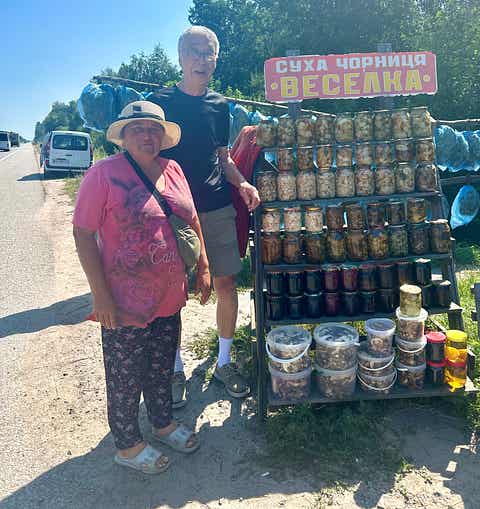
— During one of your trips, you found yourself about a kilometer from active combat. Did that experience change your perception of Russia’s war against Ukraine?
— In villages near the front line, mostly elderly people remained — those who could not or did not want to leave their homes. Because stores had closed, they depended heavily on humanitarian organizations, which provided what was essentially their only source of food.
In addition, their villages were under constant shelling, and they lived without electricity or heat. When I heard and saw the shelling of a neighboring village, for the first time I truly understood what these people experience every day.
No footage of people reacting to shelling and combat that I had seen on television, a smartphone, or a computer could have prepared me for the primal fear I myself felt, even if only briefly.
— You also visited Bucha and Irpin. What does a person feel when places whose names they once saw only in the news suddenly become a physical reality before their eyes?
— It was a very sobering experience to stand in the exact places where Ukrainians had been killed and imagine the final moments of their lives. It was extremely emotional. I cried for them and for their loved ones, whose lives had been changed forever.
But visiting the school basement in Yahidne, where Russians held villagers for 28 days in an overcrowded room where people experienced death, insanity, illness, and severe psychological trauma, had a much stronger emotional impact on me than Bucha and Irpin.
— Wounded Ukrainian service members thanked you for America’s support, and one of them even responded with the words, “Glory to America!” What did you feel in that moment?
— I felt great satisfaction and joy that a wounded service member expressed his gratitude to America in that way. At that moment I was proud to be an American, but I remember thinking that I wished the government were doing more to support Ukraine’s war effort.
— You often speak not only about service members but also about volunteers who bake bread and deliver aid under shelling. Is there one story that affected you most, and why?
— After returning from villages near the front line, where we had found ourselves amid active combat, I asked my friend and guide Serhii how often he made such trips. He said two or three times a week. The fact that he risked his own life two or three times every week deeply affected me. I admired him because he is a Christian who lives out the words of Jesus through his actions every day.
I am not a Christian, and I do not approve of attempts by most Christians to convert me to their faith or impose their morality on others, so it was especially meaningful to meet a Christian whose main priority in life was helping people who were suffering under extraordinarily dangerous conditions.
— You have called your trip to Ukraine one of the most meaningful experiences of your life. Who was John Namkung before Ukraine — and who did he become after returning home?
— John Namkung before his 2024 trip to Ukraine and after returning was essentially the same person — kind, compassionate, and committed to easing the suffering of war victims.
Before the trip, I had only seen Ukraine in television news, YouTube videos, articles, and social media. In Ukraine, I saw and felt the suffering of ordinary Ukrainians, and that only strengthened my determination to continue helping such people.
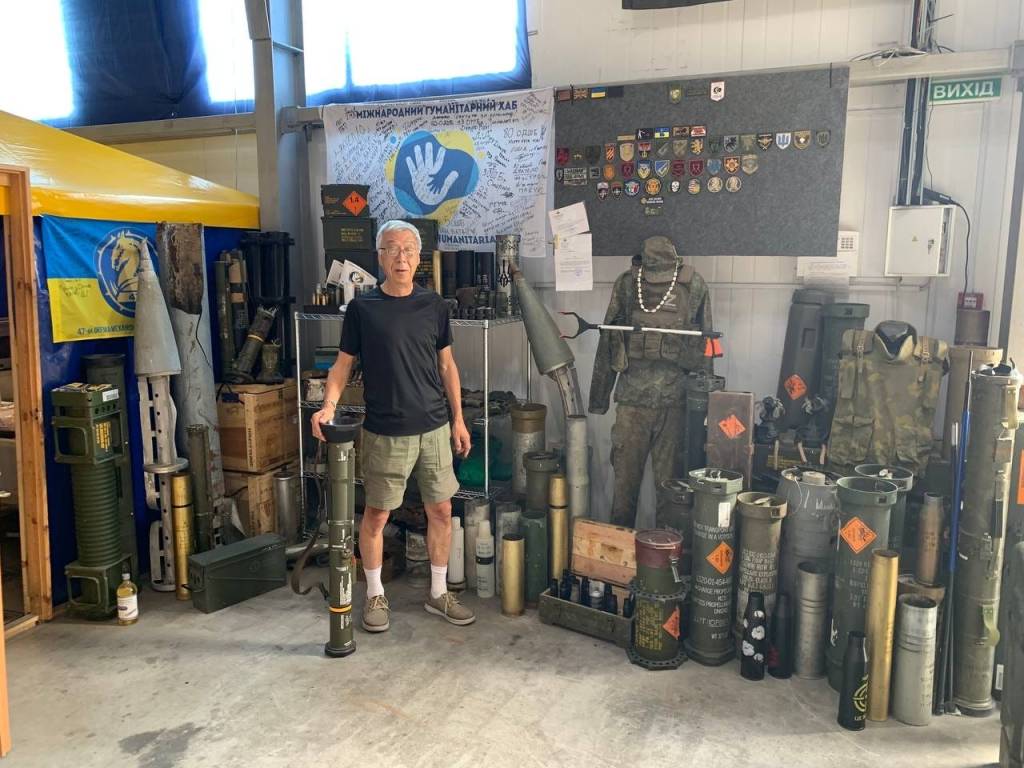
— You have said that the news mostly shows major events but does not always convey how ordinary Ukrainians live day by day. What image of Ukraine would you like to show Americans?
— Ukrainians want exactly the same things Americans want. They want safe and peaceful lives for themselves and, especially, for their children. They want the freedom to make their own decisions about their lives and the opportunity to provide for themselves and their families with dignity.
And when a country is attacked in a way that threatens not only these values but its very existence, as well as the existence of neighboring countries in the free world, it is the duty of all Americans to support freedom and democracy.
— Do you feel that American society is becoming tired of the war today? If so, how do you think people can be reminded of what is happening in Ukraine and why it still matters?
— I do not know whether “fatigue” is the right word to describe America’s attitude toward the war today. I think most Americans are more concerned about their own finances and the cost of living than about a war 10,000 kilometers away that they see as something unrelated to their daily lives.
The best way I can remind people in my community about what is happening in Ukraine is to continue organizing fundraisers, speaking publicly about my trips to Ukraine, and reaching out to the media to share my stories. All of this helps keep attention focused on Ukraine.
— What do you say to people who say: “I’m just an ordinary person. Nothing depends on me”?
— One of the most important lessons I have learned from working with refugees is that every person has the ability to change another person’s life forever.
It is remarkable to realize that at the very moment I met Iryna and her family at the border, drove them to Kraków, and later sponsored their move to America, their lives changed forever — in every sense of the word.
You do not have to travel across an ocean to experience the enormous satisfaction that comes from helping someone in need. Every small act of kindness and compassion toward someone in our own community has the potential to change that person’s life for the better — in ways we may never even know.
— Would you like to return to Ukraine? Where would you like to go and whom would you like to see?
— YES! I am beginning my seventh fundraiser in the past four years to support Ukrainians, and it may be the most important project for me so far because its target group is 600 children across Ukraine who have lost one or both parents because of the war.
I am partnering with a wonderful Ukrainian American nonprofit organization in San Francisco called Hromada — a name that means “community” in Ukrainian — to give these children an unforgettable Christmas season and to provide them with ongoing psychological, educational, and social support throughout the year.
I plan to travel to Ukraine in December — for the fourth time in the past five years — to meet the children, give them Christmas gifts, and tell them that the American people are with them regardless of the distance and that they have not been forgotten.
The winter holidays are a time when the pain of loss is felt especially acutely. That is why Hromada hopes to turn these dark days into a symbol of hope.
To support this effort, Hromada and I have organized a charity concert that will take place on November 13, 2026.

Please come to the concert and bring your family and friends! If you cannot attend but would like to make a donation, there are three options. The first is to scan the QR code on the poster and follow the link. The second is to visit hromada.us/en/events and click “Get Tickets.” You can also write a check payable to Hromada and send it to me at: John Namkung, 1287 Bing Tree Way, Sebastopol, CA 95472 (contact information: jknamkung@gmail.com, 707-322-5448).
Please share this information with family and friends who may be looking for a way to help Ukrainians during this difficult time. I will be grateful to everyone for their generosity and caring hearts!
— After all the people you have met — refugees in the United States, volunteers, service members — what does the word “Ukraine” mean to you today?
– — “Ukraine” means all of this to me: the struggle for freedom and independence, courage, resilience, and resistance.
— If the John Namkung who had not yet met these Ukrainian families or seen the war with his own eyes before 2022 were sitting in front of you now, what would you tell him?
— “Be open to opportunities to help other people in need. Do not be afraid of the unknown, take risks, and step outside your comfort zone. When you help others, you yourself will gain more from the experience than the person you are helping.”
— And if you could tell Americans only one thing about Ukraine — one message they should remember — what would it be?
— History will one day judge us for how we responded to Ukraine’s courageous struggle to defend its homeland from the murderous actions of an autocratic war criminal.
Did America fully support its democratic ally that values freedom — or did it support Putin’s war machine?
This is an existential question of our morality, a choice between good and evil.
And regardless of how our government responded to the crisis in Ukraine, another question remains: what did ordinary Americans do to support the innocent men, women, and children caught in the midst of a devastating war they did not choose?
Main photo: pressdemocrat.com

Prepared by: Inna Mikhno