


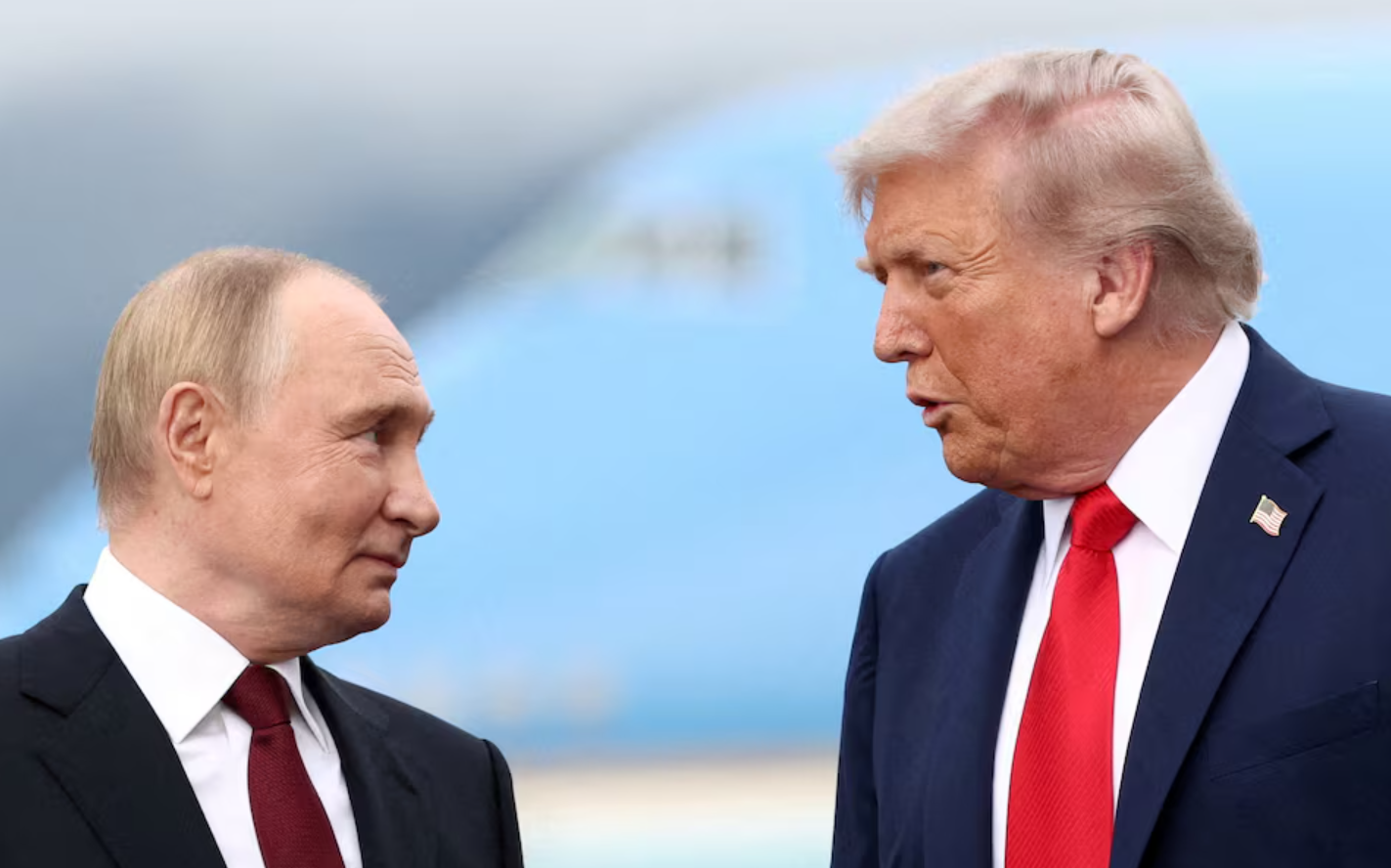
US President Donald Trump has announced the preparation of a major deal that could involve Ukraine and all of Europe, though he did not disclose any details. Volodymyr Zelenskyy has emphasized the need to push for the restoration of $16 billion in US aid that was previously suspended. Meanwhile, security guarantees for Ukraine were discussed in Brussels, while Russia stated that it has no information regarding any potential agreements involving Trump. Ukrainian strikes on oil refineries continue to exacerbate the fuel situation in Russia.
Trump Announces a "Major Deal" That Could Involve Ukraine and All of Europe
US President Donald Trump stated, that a major deal related to Russia’s war against Ukraine could be reached in the near future. According to him, the agreement would concern not only Ukraine but all of Europe.
"There will be a deal. It will be a big deal, and it won't just be about Ukraine... I could even say, perhaps, all of Europe. It will be a big, beautiful deal, and everyone will be thrilled," Trump said.
At the same time, he did not disclose the details of his conversation with Dmitriev.
Commenting on the war, the US President expressed hope that it could be brought to an end soon.
"By the way, we’ll get this all sorted out pretty soon. But 25,000 people are dying every month." "They are fighting day and night, day and night—around the clock," he stated.
When asked whether he had discussed the killing of Ukrainian civilians with the Russian representative, the U.S. President replied that he does raise this issue.
"I always bring it up, but I also bring it up regarding the other side, because people are being killed there, too. Many people are dying," Trump said.
He described the war as a "bloody slaughter" that must come to an end, and reiterated his hope that it would conclude "quite soon, very soon."
Zelenskyy emphasizes the need to push for $16 billion in suspended U.S. aid
President Volodymyr Zelenskyy says, that following the U.S. elections, Ukraine must seek the restoration of $16 billion in aid that had previously been suspended. According to the head of state, Ukraine needs to adapt quickly to the new political landscape in the United States and establish a dialogue with representatives from both parties.
"Ukraine needs to navigate the new political infrastructure in the United States—and do so quickly. We must consolidate the bipartisan support we already have. Given the shift in the balance of power, we need to structure our dialogue effectively. Our chances of securing additional assistance from the United States may now increase," he explained.
Zelenskyy stressed that until the war ends, Ukraine must continue to strengthen its own defense capabilities. To achieve this, he noted, it is essential to work on a new U.S. aid package and address the issue of funds allocated under previous agreements.
"Therefore, we must work on the package from the United States. We need to raise the issue that, under previous agreements and decisions, $16 billion was withheld and never provided to Ukraine. We are grateful for everything that has been provided, but Ukraine must, at the very least, fight to secure these funds," the President noted.
Security guarantees for Ukraine and a new European defense strategy discussed in Brussels
Security guarantees for Ukraine and the development of a new European security strategy were the primary topics of meetings held in Brussels on November 5. Representatives from France, the United Kingdom, Germany, the United States, and NATO participated in the discussions. This was reported by Rustem Umerov, Head of the Foreign Intelligence Service. According tohim, the participants discussed what kind of guarantees the United States and other partners should provide to Ukraine. The parties also examined the future security architecture in Europe.
"Together with representatives from France, the United Kingdom, Germany, the United States, and NATO, we discussed the nature of the guarantees that the United States and other partners should provide to Ukraine, as well as a new European security strategy. We are continuing our work in this area. Further details and next steps will be announced in due course," Umerov stated.
He emphasized that Ukraine is interested in effective security mechanisms. According to him, these guarantees must not remain merely a political declaration; rather, they must constitute a tangible system of protection.
The Kremlin stated that it has no information regarding a "grand deal" by Trump concerning Ukraine and Europe
The Kremlin stated that it is unaware of the details of a "grand deal" previously mentioned by U.S. President Donald Trump. Dmitry Peskov, the spokesperson for the Russian leader, noted that Russia’s special representative, Kirill Dmitriev, has not yet returned from the United States and has not reported on the outcome of his meeting with the American president. Earlier, Trump confirmed that he had spoken with Dmitriev, who had traveled to the U.S. to attend an event featuring First Lady Melania Trump. Following the meeting, the U.S. president announced an agreement which, according to him, could concern not only Ukraine but all of Europe.
Commenting on Trump’s statement, Peskov noted that Moscow has not received any proposals from European countries regarding a discussion on a shared security architecture. At the same time, he stated that the issue of a future security system in Europe—including mutual security guarantees for both Ukraine and Russia—would, at some stage, require the participation of European states. According to the Kremlin spokesperson, European nations have yet to determine who exactly would represent them in such negotiations. Trump himself did not disclose the substance of a potential agreement or the details of his conversation with Dmitriev.
Ukrainian attacks on Russian oil refineries exacerbate fuel shortages in Russia, amid agreements with the US
Ukrainian strikes on Russian oil refineries are complicating the fuel supply situation within Russia. According to Reuters, the Ryazan Oil Refinery—one of the largest in the country—was likely struck on the night of November 5; this is indicated by the agency’s analysis of video footage. If confirmed, this would mark the second Russian refinery attacked within a week, following a strike on a facility in Yaroslavl on Monday night. These attacks have thus resumed after a hiatus that followed agreements to cease strikes on oil-refining infrastructure. Previously, Ukrainian attacks had disabled significant refining capacity in western Russia, triggering fuel shortages that led Moscow to impose export restrictions starting in April.
In October, part of the ban on diesel fuel exports was lifted following agreements between Russia and the U.S. to resume supplies to international markets. According to data from shipping firms Kpler and LSEG, at least six shipments of Russian diesel have indicated plans to cross the Atlantic, while two others—previously bound for the U.S. coast—have changed course. At the same time, no shipments of Russian diesel fuel have arrived in the U.S. since the agreement was reached. The first vessel carrying Russian diesel bound for the United States is expected to arrive in New York this weekend; however, its unloading is not guaranteed due to regulatory, legal, and sanctions-related restrictions. Kremlin spokesperson Dmitry Peskov stated that Russian fuel would find buyers.
"These are commercial shipments, so, naturally, the details cannot be disclosed. All the diesel fuel will find its buyers," he said.
Commenting on a potential legislative ban on the import of Russian diesel into the U.S., Donald Trump remarked: "Then that’s probably a pretty bad law. I’ll take a look at it."
Photo: REUTERS/Kevin Lamarque
Author: Danylo Pievchev