


Volodymyr Zelenskyy has reported that Russia is preparing a new massive strike against Ukraine and urged citizens to heed air raid alerts. At the same time, the President expressed readiness to halt hostilities along the current front line and shift toward diplomacy. Internationally, discussions are intensifying regarding Russia’s military presence abroad, Donald Trump’s relationship with Vladimir Putin, and emerging rifts between the United States and Europe.
Zelenskyy Warns of Russia Preparing a New Massive Strike on Ukraine
President Volodymyr Zelenskyy stated, that Ukraine has received information indicating that Russia is preparing a new massive strike in the coming days. He shared this in his evening video address on November 26.
"Unfortunately, we have information that the Russians are preparing a new massive strike," the Head of State said.
He urged Ukrainians to pay close attention to air raid sirens and warnings of missile threats over the next few days.
"In the coming days, please pay attention to alerts regarding missile threats. And Russia should know that we will rebuild everything that belongs to us, and we will respond to every Russian strike," Zelenskyy declared.
This marks the second such warning from the President within the week. According to Reuters, Russian forces have been attacking Kyiv and other Ukrainian cities almost continuously since September. On the night of November 26, Russian ballistic missiles struck Kyiv, injuring seven people and damaging a shopping center and two other buildings.
Zelenskyy signals readiness for a ceasefire along the current front line
President Volodymyr Zelenskyy has stated that Ukraine is prepared to halt combat operations along the current line of contact and move toward diplomatic negotiations. He made these remarks in an interview with the television channel Al Jazeera English. According to the head of state, this proposal stems from the fact that Putin refuses to withdraw Russian troops from Ukrainian territory. Zelenskyy emphasized that a ceasefire at the current positions would already represent a significant compromise on Ukraine’s part.
"We are prepared to take such steps—to remain where we currently stand. We are talking about a ceasefire along the line of contact. Is this a compromise? Of course—a very major compromise. We understand that he [Putin] does not want to leave our land. That is why we are saying: let us stop here and turn to diplomacy," the President said.
He also expressed hope that Donald Trump would continue to seek ways to end the war. At the same time, Zelenskyy stressed that a peaceful settlement cannot entail concessions solely on the part of Ukraine.
"President Trump will still be the President. He possesses more than enough authority, and there is the Constitution of the United States." "So I hope he continues to find a way to end this war—and not in a way that forces Ukraine to pay the price, because that would be wrong," the Head of State added.
Russian Military Convoy Turns Back in the Mediterranean Following Destruction of Corvette in Libya
A Russian convoy carrying military equipment to Libya changed course in the Mediterranean after Ukrainian naval drones sank the Russian corvette Merkuriy in the port of Benghazi on November 22. This was reported by Reuters , citing three sources within military and security circles. According to the report, the convoy was escorted by the Russian frigate Golovko. It turned back near the Strait of Sicily on the day of the attack on the Russian vessel. A representative of Ukrainian military intelligence and a source within Middle Eastern security structures confirmed that the ships altered their course away from Libya.
The convoy consisted of three Russian-flagged vessels: Maia 1, Lady R, and Lady D. They were transporting cargo or vehicles, and their operators—the Russian companies JSC Sovfracht and MG-Flot—are subject to sanctions by the EU and the U.S. According to Reuters sources, the vessels may have been carrying military equipment for the Russian "Africa Corps"—which operates in West African nations, including Mali—or for the Libyan National Army, commanded by Khalifa Haftar. The corvette *Merkuriy*, which came under attack in Benghazi, was escorting a cargo ship carrying military equipment—a shipment that began loading on October 13. According to sources, some of the vessels in the convoy had previously been used to supply military equipment to the regime of former Syrian President Bashar al-Assad. The Russian Ministry of Defense did not respond to a request for comment from Reuters.
Zelenskyy compares Trump’s friendship with Putin to a relationship with Hitler
President of Ukraine Volodymyr Zelensky labeled Donald Trump’s statement—in which he referred to Putin as his friend—as "strange." In an interview with the BBC, the Ukrainian leader stated that the Russian head of state is an aggressor and a killer, and therefore cannot be a friend to an American president. "He is an aggressor… and a killer. He cannot be a friend," Zelenskyy said in English. He further likened this characterization of Putin to calling Adolf Hitler a friend during the Second World War.
"It would be the same as someone saying during the Second World War that Hitler was a good friend. No, he is not a friend," the President of Ukraine stated.
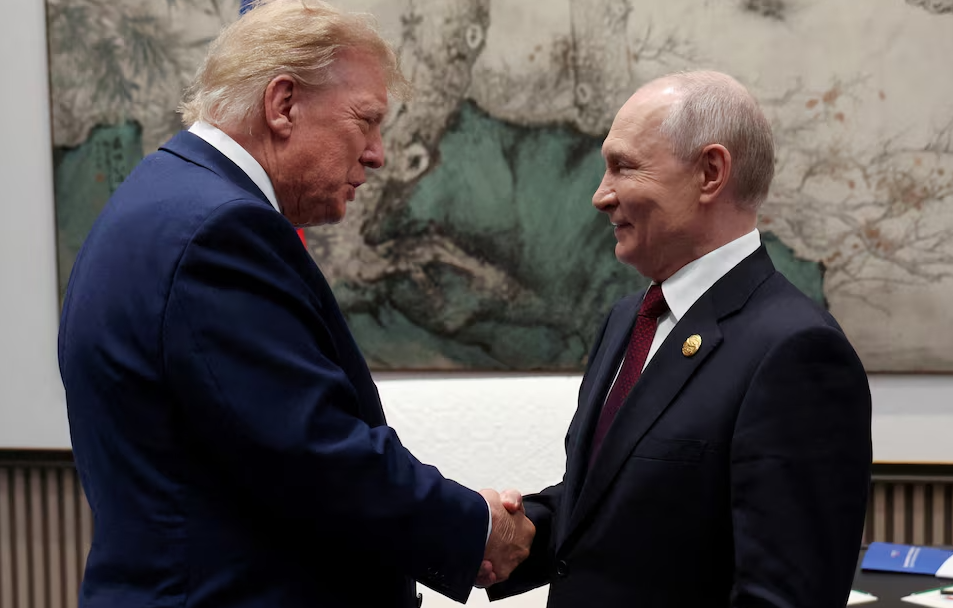
A few days earlier, Trump had posted a photo on the social network Truth Social showing him shaking hands with Putin during a meeting in China, with the caption "My friend." Zelenskyy noted that the American president decides for himself what to say or post, but described such remarks as strange. Relations between Trump and Zelenskyy have remained tense following a public dispute in the Oval Office in February 2025. Subsequently, further disagreements arose between the two politicians, notably regarding Ukrainian strikes on Russian oil refineries and Washington’s stance on military support for Kyiv.
Europe braces for conflict with the US over taxes, defense, and support for Ukraine
Leaders of European Union nations are increasingly acknowledging the possibility of an open confrontation with the Donald Trump administration regarding digital taxes, defense procurement, and the funding of Ukraine, reports Politico. One point of contention is a proposal to introduce a pan-European digital levy targeting major tech companies, including Google, Meta, and Amazon. French President Emmanuel Macron asserted that Europe has the right to implement such a tax, arguing that the US is failing to adhere to international tax agreements. Washington opposes this initiative, viewing it as discriminatory against American businesses.
Another source of disagreement is a proposal to prioritize European manufacturers in defense procurement funded by the EU budget. This approach could limit American companies' access to EU-funded contracts, a prospect that has drawn criticism from Washington. Meanwhile, discussions are underway in Europe regarding an additional €45 billion loan for Ukraine through the end of 2026, as well as continued funding for Kyiv. According to Politico, some European diplomats and politicians believe that EU nations have become less cautious in their dealings with Trump, following trade disputes and disagreements concerning Ukraine. At the same time, member states are not in full agreement: Ireland, Malta, Sweden, and Luxembourg have expressed reservations regarding a digital tax, while Romania advocates for maintaining access to American defense technologies. In September, Washington also warned that imposing restrictions on American companies could undermine the EU’s competitiveness and security.
Photo: Reuters
Author: Danylo Pievchev