During the years of Ukraine’s occupation by the totalitarian Soviet regime, any expression of national identity in the international arena, including in sports, was virtually impossible. This was especially true for Ukrainian athletes. To the Western world, an athlete from the USSR, whether Ukrainian, Georgian, Lithuanian, Kazakh, or Uzbek, was still often considered Russian.
Soviet propaganda was aimed at suppressing national consciousness and glorifying the Russian element not only within the country but also abroad. Unfortunately, “naive” Western media outlets, as well as certain political and sports figures, stubbornly believed this falsification. In other words, consciously or unconsciously, they allowed Soviet propagandists to deceive them.
As a result of this decades-long global foreign policy propaganda campaign, many Western journalists, media outlets, and television broadcasters referred to and identified all Soviet athletes as Russians. Can you imagine the scale of Soviet lies? And the world swallowed the bait like a fish on a hook, believing and even perpetuating this, without exaggeration, appalling erasure of the national identities of millions of people.
Given the oppressive conditions surrounding national self-identification and awareness of one’s ancestry, many athletes silently accepted this with their heads bowed. Of course, experiences varied. Some willingly embraced the situation. Others were outraged but remained silent for fear of persecution.
At the same time, there were athletes who were not afraid to tell the entire world who they were. When they were referred to as Russian athletes, they immediately objected and corrected their interlocutors, declaring that they were Ukrainians!
Just imagine the strength of will and national consciousness it took to say such things not somewhere in the shadows or in a whisper, but publicly, so that the whole world could hear. It was a truly heroic act during the occupation and systematic destruction of the Ukrainian nation.
I will recount three episodes from the lives of Ukrainian athletes who, while competing for the USSR, were not afraid to acknowledge their heritage. These stories contain elements of heroism, resilience, mystery, hesitation, and more.
How Valeriy Borzov Won the Hearts of the Ukrainian Diaspora
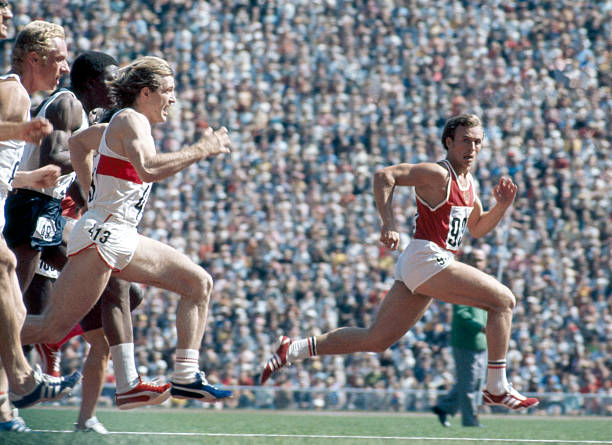
Valeriy Pylypovych Borzov is a legendary Ukrainian track and field athlete, a two-time Olympic champion and multiple medalist at the 1972 and 1976 Olympic Games, a political and public figure, and, of course, a member of the International Olympic Committee representing Ukraine. Serhiy Bubka is also a member of the IOC.
This is only a brief biography, as Valeriy Pylypovych is a multifaceted individual whose life contains many interesting, controversial, and unique episodes. I will focus on one such moment that, in my opinion, may have influenced the rest of his life.
Although this story still contains many unanswered questions, it is remembered exceptionally well within the Ukrainian diaspora. Moreover, people around the world recall with respect and admiration what Valeriy Borzov accomplished during the 1972 Olympic Games in Munich, West Germany.
First, he became Olympic champion in both the 100-meter and 200-meter races. No one could have predicted this, as these events had been dominated for decades by Black athletes, particularly those from the United States.
Second, at a press conference, Valeriy Borzov declared that he was a Ukrainian athlete from Kyiv. And this happened at a time when Ukraine was occupied by the Soviet Union.
There are many strange coincidences, circumstances, factors, stories, and events surrounding his victory, particularly in the 100-meter race. It all gives rise to a certain sense of conspiracy. Or perhaps everything happened exactly as it was meant to happen. Who knows?
His declaration that he was Ukrainian also seems to be well documented, yet there are certain nuances here as well.
From the recollections of Larissa Barabash Temple, an outstanding organizer of civic and sporting life in the Ukrainian diaspora, one of the most active international partners of the National Olympic Committee of Ukraine, and an attaché of the NOC of Ukraine from 1994 to 2002, whom I had the opportunity to interview as part of the Sporting Heritage project, we learn the following: “I remember very well the extraordinary impression that Valeriy Borzov’s brilliant performance at the 1972 Summer Games made on me. Before him, the title of king of sprinting had almost invariably belonged to American and Canadian athletes. But at the Olympic Stadium in Munich, the Ukrainian athlete left both American Robert Taylor and Jamaica’s Lennox Miller behind in the 100-meter race. He then won the 200-meter race as well. I reminded Valeriy Pylypovych of an incident that caused a real sensation among the Ukrainian diaspora in Canada and the United States at the time. During a press conference in Munich, Borzov corrected a correspondent, pointing out that he was not from Russia, but specifically from Ukraine. It was after these words that the fastest man on the planet became a living legend for all Ukrainians living overseas.”
Thus, after Valeriy Borzov corrected a journalist at the press conference and emphasized that he was a Ukrainian athlete, he became a true hero to the Ukrainian diaspora.
Incidentally, many people are eager to find a video recording of that statement so they can once again hear and witness what many perceived as such remarkable courage and defiance of the Soviet regime.
In another, more recent interview, Valeriy Pylypovych himself explained that he had intended no political message in his statement and that he, too, would like to find a recording of the press conference, provided, of course, that it has survived.
Perhaps the following account of his own roots can be regarded as evidence of Valeriy Borzov’s apolitical stance during those years: “I was born into a Russian family; my father was from the Ivanovo region. But I spent my childhood in Ukraine. My earliest years, in fact, were spent in western Ukraine. My father was in the military, so our family was constantly transferred from one place to another. We initially lived in Sambir, in the Lviv region, where you would rarely hear Russian spoken on the streets. Then we moved to multicultural Chernivtsi. So from an early age, I was not only bilingual, but also knew many expressions from certain western Ukrainian dialects, such as the Hutsul dialect. I even knew quite a few Romanian, Moldovan, and Polish words.”
So was this an expression of national consciousness or simply a desire to correct a correspondent? Unfortunately, I have no answer to that question.
Nor do I have an explanation for IOC member Valeriy Borzov’s silence regarding the organization’s actions concerning athletes from the aggressor country, Russia, and its ally Belarus. Perhaps, in his capacity as an International Olympic Committee official, he cannot express his personal opinion. But as a Ukrainian who once dared to challenge the totalitarian Soviet system, he could have stood up for Ukraine before the “esteemed” Olympic community and beyond.
Perhaps back in 1972, the Ukrainian diaspora interpreted the Olympic champion’s words in its own way. Perhaps it heard what it wanted to hear rather than what Valeriy Borzov actually intended to say. Everyone will have to decide for themselves.
There is another interesting detail I have discovered in connection with Valeriy Borzov’s press conference. Today, everyone believes that Valeriy Pylypovych Borzov made his famous correction — “I am from Kyiv, Ukraine” or “I am a Ukrainian athlete,” as different sources offer different formulations — during the 1972 Olympic Games in Munich.
That means it must have happened sometime between August 26 and September 10. However, in the diary of Osyp Zinkevych, who incidentally attended the Munich Olympics himself, I found an interesting entry dated March 10, 1972.
On that day, Osyp Zinkevych visited the FBI office in Baltimore, United States. I will not recount everything he wrote about that meeting, but will focus on one interesting detail concerning Valeriy Borzov.
Here is what Osyp Zinkevych wrote: “Waterol accompanied me to the elevator and on the way told me that he was interested in Valeriy Borzov, who had identified himself as Ukrainian in a television interview. I was surprised that FBI agents were interested in Ukrainian athletes.”
Osyp Zinkevych recorded a truly curious story. After all, if we compare the dates, it is impossible to conclude that Valeriy Borzov made this statement specifically during the Olympic Games.
Or did Zinkevych make a mistake? Although it also seems unlikely that he would have made such a serious error concerning the dates and events of his own life.
How Sultan Rakhmanov Shocked KGB Agents and Impressed the Diaspora
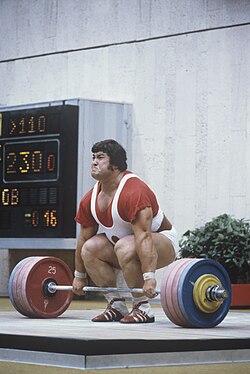
Sultanbai Saburovych Rakhmanov was a legendary Ukrainian weightlifter, the 1980 Olympic champion, a world record holder, and a multiple world and European champion.
Sultan Rakhmanov’s actions were unexpected by everyone. Neither the KGB agents, nor his closest friends, nor his coach could have known what he would do once he became an Olympic champion.
The world was shaken, the Soviet authorities grew uneasy, the Ukrainian diaspora rejoiced, and Sultan himself, I assume, was pleased with what he had done.
So what did this athlete do that was so shocking? He declared: “I am a Ukrainian athlete!”
Yes, he said it openly at a press conference immediately after his glorious victory. The newspaper Svoboda wrote the following about this event: “Despite endless brainwashing ‘lectures’ and threats from the KGB, Ukrainian athletes continue their persistent, albeit cautious, struggle for their rights and their aspiration to represent Ukraine separately. The aspirations of the vast majority of the 93 athletes who competed this year as members of the team of the Russian communist empire at the XXII Olympiad were expressed clearly and unequivocally before sports journalists from around the world by Sultan Rakhmanov from Dnipropetrovsk following his triumphant victory. Competing in the heaviest weight category, he lifted 440 kg, setting a new Olympic record. When this strongman was invited to join a group of international journalists and asked to speak, Sultan’s very first words were: ‘I am a Ukrainian athlete!’ How can that be? You have Eastern features, the international press correspondents asked. Sultan, however, replied: ‘I inherited my heart and tenderness from my Ukrainian mother, whose difficult fate took her to the homeland of my Uzbek father. I inherited my strength and endurance from my father, and my fearlessness from both of them.’”
A true Ukrainian warrior who was not afraid of the pressure exerted by the Soviet repressive machinery against any expression of national identity.
I assume that Sultan Rakhmanov had been waiting for precisely this moment, when the whole world was watching, listening, and hearing that he was indeed a Ukrainian athlete.
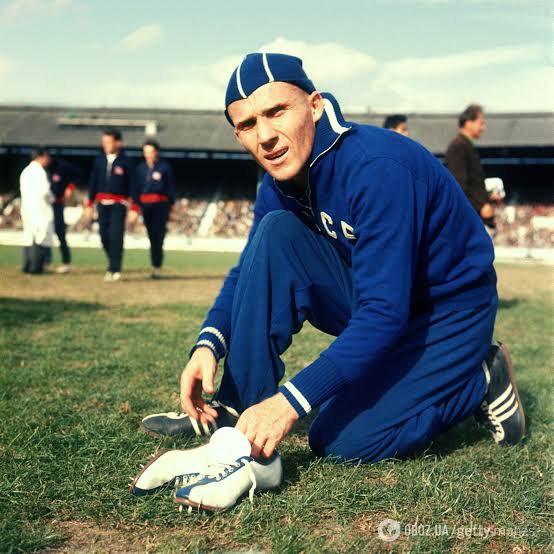
Why Was Volodymyr Kuts Embarrassed by His Ukrainian Roots?
Volodymyr Petrovych Kuts was a legendary Ukrainian long-distance runner, a two-time Olympic champion in the 5,000-meter and 10,000-meter races in 1956, the world’s best athlete in 1956 and 1957, and a multiple world record holder in the 5,000-meter and 10,000-meter events between 1954 and 1957.
An extraordinary incident occurred during the 1956 Olympic Games in Melbourne, Australia. Although Volodymyr Kuts, shall we say, did not entirely consciously acknowledge his Ukrainian origins, I nevertheless decided to write about it in the context of national self-identification and the pressure exerted by the totalitarian Soviet regime.
From Osyp Zinkevych’s recollections, we learn the following: “Volodymyr Kuts was invited to a party by representatives of the Australian press. Knowing how things worked within the Soviet delegation, the Australians requested permission from the Soviet authorities. The authorities granted permission but imposed a condition: Kuts, they claimed, would feel uncomfortable on his own, so he would attend in the company of two other ‘comrades.’ The Australians agreed to this condition, and Kuts arrived at the party accompanied by his ‘guardian angels,’ who never left his side for a moment. Several interpreters were among the Australian journalists. Interesting conversations took place, although they were severely restricted by the presence of the two agents. The journalists asked Kuts about his life. Eventually, the conversation turned to his nationality. He tried to evade the question as best he could. But those present kept pressing him. Backed into a corner, Kuts gave an unequivocal answer through the interpreter: ‘Tell them I am a khokhol.’ The interpreter then began explaining that ‘khokhol’ was a derogatory term for Ukrainians imposed by Russians. The news that Kuts was Ukrainian spread throughout the international press.”
Yet only the day before, the Australian press had described Kuts as a Russian athlete. Suddenly, everything changed, and the world learned the truth. This is how the Western press had been getting things wrong for decades under the influence of Soviet propaganda.
And so, it is important for us to know who we are — Ukrainians; where we come from — Ukraine; and what our heritage is — Ukrainian!
Author: Oleksii Lyakh-Porodko