


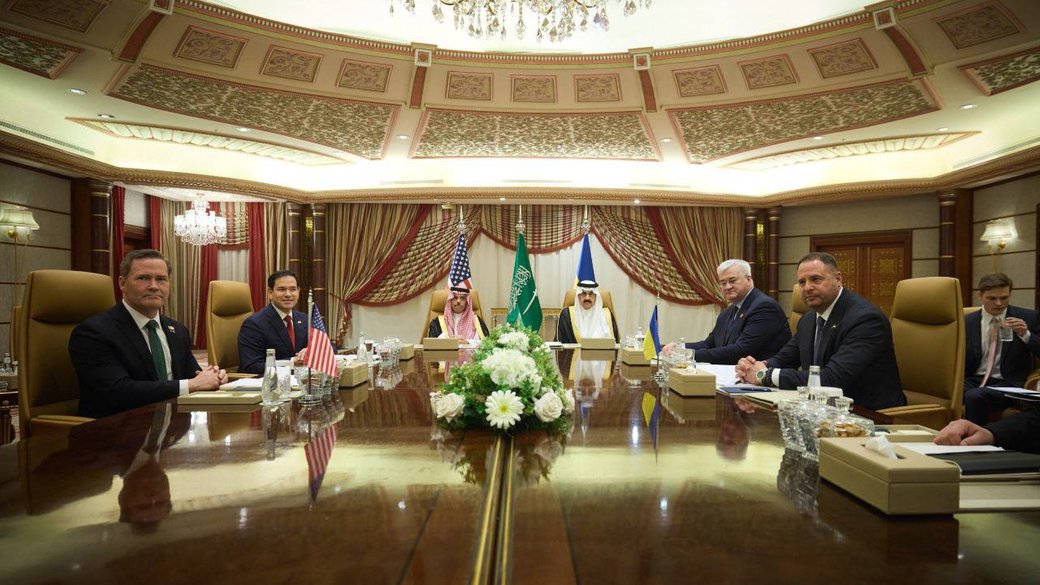
The talks between Ukraine and the United States in Saudi Arabia are taking place against the backdrop of the biggest attack on Moscow by Ukrainian drones. Participants are discussing the possibility of resuming military aid, while Washington is also making proposals for territorial concessions. Is there a chance of a breakthrough in these negotiations, and how will this affect the course of the war?
Ukraine and the United States negotiate in Saudi Arabia: finding ways to end the war
On 11 March, delegations from the United States and Ukraine began held talks in Jeddah, Saudi Arabia, to find ways to end the war with Russia. Ukraine has proposed a partial ceasefire, including restrictions on drone and missile strikes, as well as military action, in order to resume US military and intelligence support previously suspended by the Trump administration.
Zelenskyy in Jeddah: Ukraine offers deal on military aid and resources
Ukrainian delegations are discussing the possibility of resuming military aid and an agreement to use Ukrainian mineral resources as collateral for previous US military assistance. In Saudi Arabia, President Zelenskyi is holding meetings aimed at restoring relations with Washington and finding ways to end the war without Ukraine's complete surrender.
US Senator Rubio discusses possible concessions with Ukraine: Rubio hints at compromise with Russia
US Senator Marco Rubio has said that Ukraine could be forced to cede some of the territory seized by Russia as part of a peace deal. He also stressed the importance of resuming military aid and intelligence sharing, which were suspended by President Trump.
The talks are taking place amid continued mutual attacks between Ukrainian and Russian forces, underlining the difficulty of reaching a peace deal.
Large-scale drone attack on Moscow
Meanwhile, Ukraine has carried out the largest drone on Russia. According to reports, 337 Ukrainian drones were shot down, a record number since the start of the war. The drones flew into Moscow, killing one person and causing significant damage to the transport system.
Author: Danylo Pievchev