


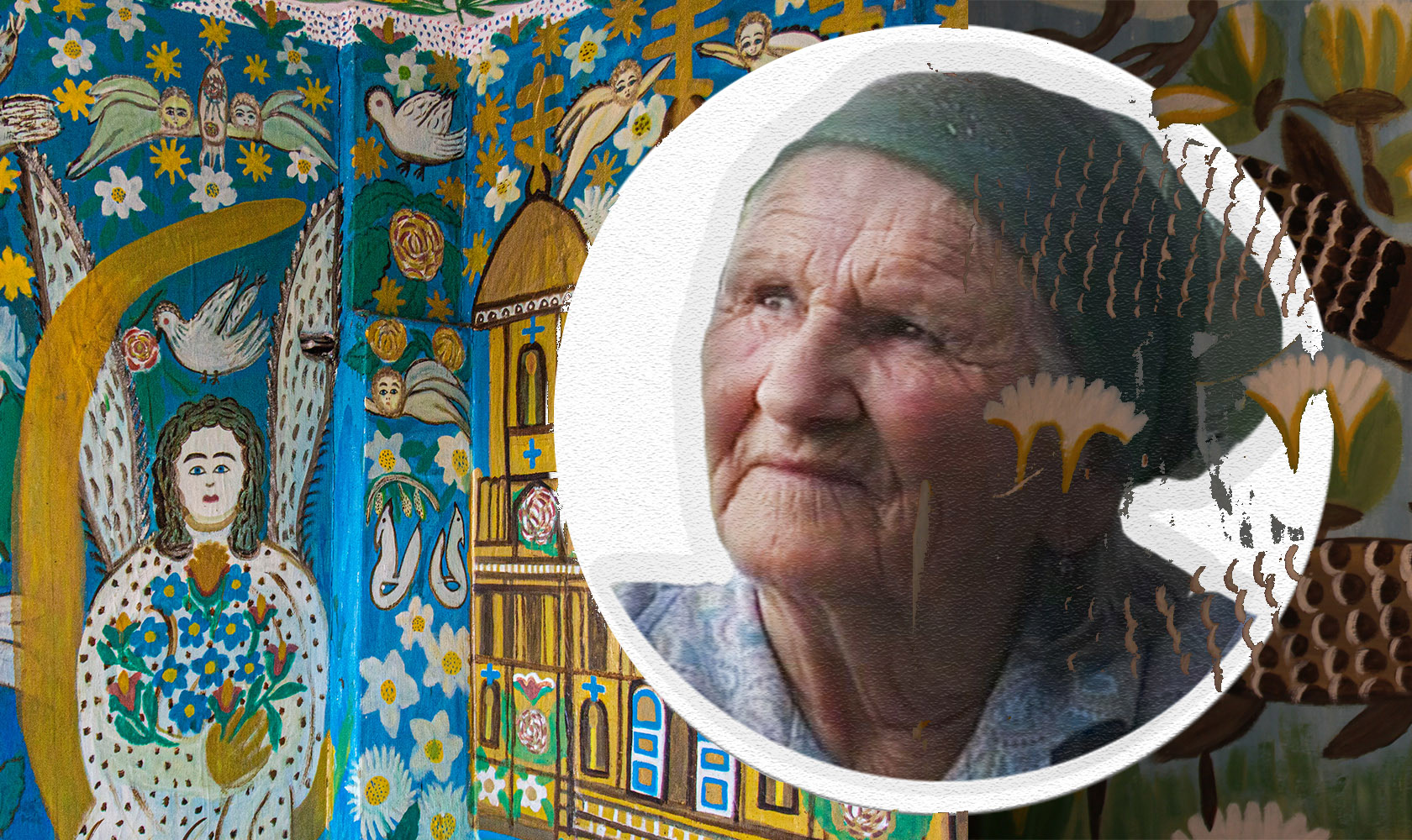
The Chicago Grand Gallery art space hosted the first exhibition dedicated to Ukrainian naïve art and the work of the self-taught artist Polina Raiko. The Ukrainian Daughters Foundation organized the event, "Polina Raiko: Naïve Art," in partnership with Ukrainian artist and curator Yulia Sytnik. The exhibition introduced the American audience to the work of Raiko, a distinctive figure in Ukrainian naïve art from the city of Oleshky in the Kherson region. Visitors could immerse themselves in the frescoes of the artist's destroyed house using VR and AR technologies and participate in creating a collective installation.
This was reported by Ukrainian Daughters Foundation.
The exhibition combined several formats: a 360-degree virtual tour, augmented reality, a live master class, and an open, interactive area. The central motif was the recreated atmosphere of Raiko's painted house, which the artist created in her later years after experiencing personal tragedies. This house became her main canvas.
"The gallery was an intimate, almost mystical space. We connected continents to transport guests to Oleshky in the Kherson region where, through modern technology, they could see Polina Raiko's house, destroyed by the occupiers as a result of the bombing of the Kakhovka Hydroelectric Power Plant in 2023. During the art workshop, creatures from the house literally came to life around us. The augmented reality from the book The Invisible became our reality," said event curator Yulia Sytnik.
The artistic portion of the exhibition included projections of the artist's paintings, thematic installations, and AR compositions featuring angels, fantastic birds, flowers, and sacred images. In a separate area dedicated to therapeutic painting, visitors could create their own works on large tables in the style of or based on Raiko's motifs. Visitors were provided with markers, stencils, pencils, and sheets with fragments of frescoes. Some of the drawings were displayed on the wall, forming an ever-changing collage of images.
Video on Yulia Sytnyk.
A key interactive part of the event was a master class on painting cardboard houses to symbolize Raiko's lost home. Visitors, both children and adults, assembled miniature cardboard models and painted them in Raiko's style with angels, birds, crosses, flowers, and bright ornaments. Yulia Sytnik led the process, helping participants adapt Raiko's motifs to their own interpretations.
Attendees could also take a virtual tour of the house-museum, which was destroyed when the Kakhovka Hydroelectric Power Plant was blown up. According to the organizers, emphasizing the loss of cultural heritage and documenting it were central themes of the event. Some of the funds collected from admission will go to cultural and charitable initiatives.
As part of the exhibition, there was a raffle for The Invisible, an art publication with AR elements dedicated to the concept of "invisible art" that endures despite the war.
Background
Polina Raiko is a self-taught Ukrainian artist from Oleshky, a town in the Kherson region. In her old age, after the death of her loved ones, she intuitively painted religious, fantastical, and folkloric scenes on the walls of her house. Her work is considered an example of "outsider art" in the Ukrainian context. On June 6, 2023, her house was nearly destroyed by bombing during the Russian occupation of the Kakhovka Hydroelectric Power Plant.
Author: Danylo Pievchev