


Computer technologies, artificial intelligence, and the development of new inventions have become part of our everyday lives. They no longer surprise us, attract wild attention, or call into question the limits of our abilities. Over the years, we’ve grown used to instant access to any information, using it daily—asking ChatGPT about simple things we once did automatically, without a second thought; flipping through pages of e-books almost by the power of thought—still believing that our form of existence is the highest link in the evolutionary process. We rarely stop to consider how our inventions will affect the global future. Will a cheerful chat one day become a weapon against humanity? Will politicians be able to brainwash us more effectively? Will we build robots with artificial intelligence that will fulfill our whims? And could they develop emotions and one day become improved prototypes of humans?
Cinema often shows us such scenarios. In the recent blockbuster Tron: Ares, a computer program that travels into the human world eventually begins to develop feelings, to experience emotions. And although we aren’t told why this happens, the viewer is made to understand how small we are—tiny human programs within the universe, helpless and shortsighted. It’s difficult for us to grasp that something deeper, greater, more all-encompassing exists—something capable of triggering development, programming analysis, and forming emotions. And empathy was precisely the main distinction between robots (programs) and humans. But what happens when this trait disappears? If robots can potentially evolve and develop deep feelings, can humans do the opposite—lose them, regressing to the primitive forms of life on planet Earth? Considering some of today’s news, that indeed sounds like a decent science-fiction plot. Only one problem—it’s not part of a script. It’s a description of the recent past.
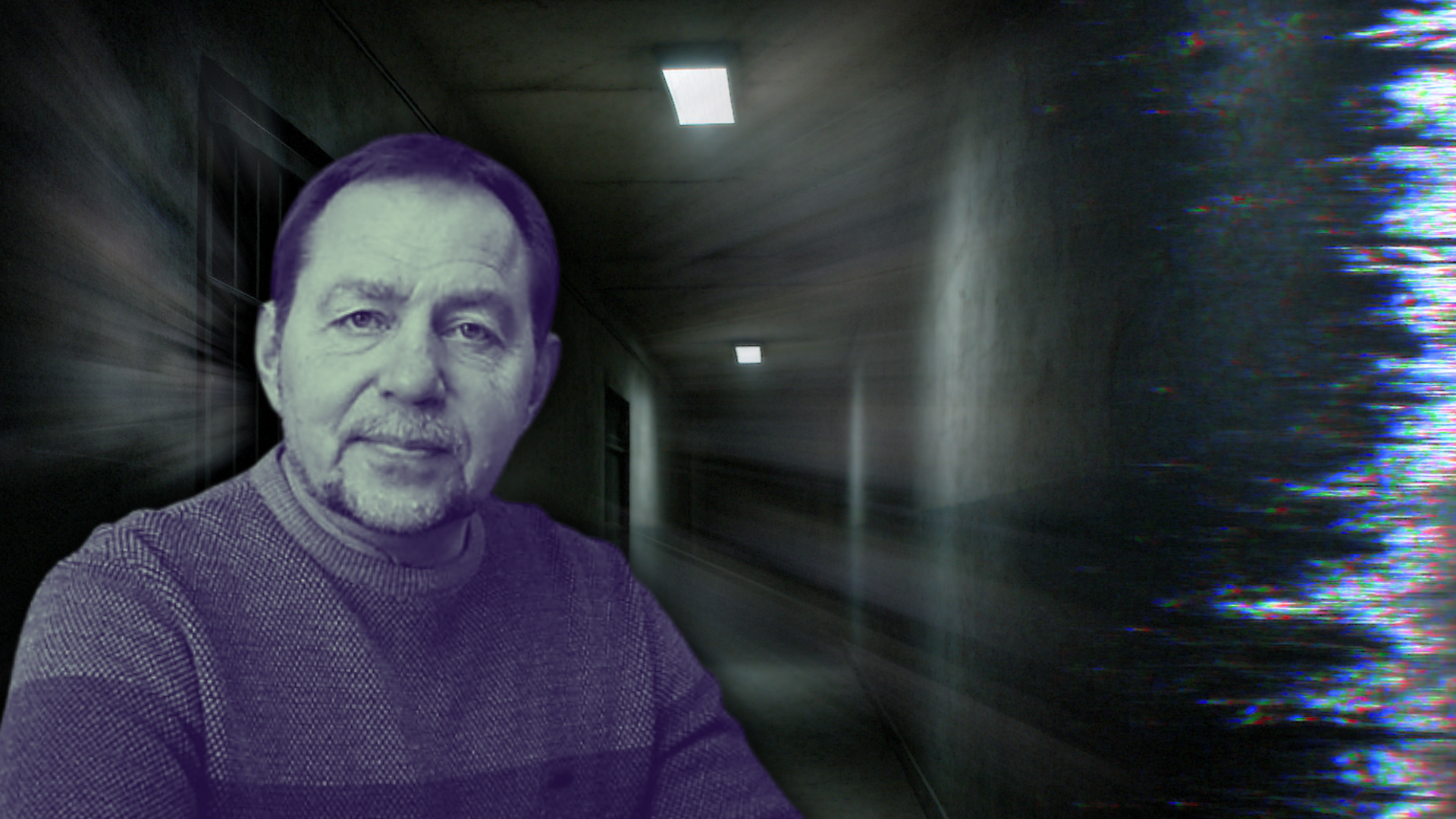
Death has begun to seem like something ordinary when we talk about war. It’s hard to be shocked anymore by the number of dead; the stories of individual people stir us a little less, and the general idea that “modern Russia is hell” no longer seems exaggerated. Yet we’ll probably never get used to the fact that our people are being tortured for their nationality, actions, opinions, or positions. Somehow, such things are once again gaining momentum, almost becoming fashionable. And it seemed only recently that we were discussing the horrific details of the death of Viktoriia Roshchyna, who died fighting for the truth—when news of newly tortured prisoners were already waiting impatiently for their turn. We have learned that the mayor of Dniprorudne, Yevhenii Matvieiev, left our imperfect world on September 7, 2024. He had been in captivity almost since the beginning of the full-scale invasion—two years and eight months—when, after enduring torture and suffering numerous injuries, he died. It happened in pre-trial detention facility No. 3 in the city of Kizel, Perm Krai, Russian Federation—another torture site in the great mighty kingdom of pain and sadism, where, shortly before her death, journalist Viktoriia Roshchyna had also been transferred. The cause of Yevhenii’s death was blunt chest trauma with multiple rib fractures, lung damage, and injury to the pleura.
But a human being is more than the story of their end. We all would like to be remembered also for our life. Returning to the beginning of Yevhenii’s chronicle, we find ourselves in 1960, in the city of Novokuznetsk in the southern part of Western Siberia. There we see scenes of childhood, school years, youth, first conscious thoughts, not-so-thought-out actions, mistakes, victories, and losses. Then the picture changes, and we move to the more familiar Kharkiv, where, in 1984, the future mayor graduated from the Polytechnic Institute with a degree in electrical engineering. Student years filled with cheap coffee and cigarettes, new acquaintances, seminars, lectures, notebooks, and the first steps toward independent adult life. His biography also includes a note about “the army”—restrained times under control—and after his service, Yevhenii worked at a construction-finishing machinery plant, and later at a cheese-making plant in Dniprorudne. Later, fate brought him to the Zaporizhzhia Iron Ore Plant as a power engineer. At that point, everything already seemed serious, conscious, and deliberate.
Yet from time to time we all want something new, something greater—one level higher! In 2006, Yevhenii was elected mayor of Dniprorudne for the first time, later re-elected. He last secured the position in 2020, representing the now-banned party “OPZZh.” Time passed, power held, life moved in ups and downs, from top to bottom and back again. But two years later, the full-scale invasion began, and the Russians occupied the city. Despite the not-entirely-pro-Ukrainian reputation of the OPZZh party, Yevhenii refused to cooperate with the uninvited guests—and paid for it with his life. Unfortunately, this is not a story about a quiet death in a room surrounded by family—no. It’s about torture, transfers, torment, and a bitter death in confinement, in blood and pain. During that time, the Ukrainian side didn’t know where he was held until, in December 2024, the Zaporizhzhia Regional Military Administration reported his death. And that was the end of Yevhenii’s chronicle, his script, his manuscript—call it whatever you like—his life.
Cruelty has always posed a threat. It is and has been the main driving force of any story about good and evil, defining the boundary between the two. And there’s no escaping it. Yet how hard it is to realize how close this infection creeps—like a computer virus capable of devouring any program with a single sweep. They say it’s all about power. A short-sighted pseudo-human, having received the illusion of his own importance, his cosmic weight, a hint of uniqueness, independence, omnipresence, resilience—loses every trace of empathy once embedded in his pitiful personality. To him, violence seems like a solution; anyone whose opinions, gender, sexual orientation, faith, or nationality differ from his worldview doesn’t deserve humane treatment. They play gods, hiding behind crosses on their bellies and Bibles in the drawers of old Soviet cabinets, forbidding people to be, first of all, human. It’s an imitation of a universe of kings playing to the false melody of a serial killer drunk on bloodlust—atrocities that could even astonish Hannibal Lecter. Only his hands are not officially stained; they remain clean for future “peace” handshakes. They are the interconnected mechanisms of a rotten system, driven by what seems—on one side—natural, and on the other—artificial and hollow: a sense of cruelty.
Of course, the world will never become perfect. It will continue to drown in waves of pain, occasionally gasping for air during moments of calm. Humanity’s desire to play god is accelerating, and now we have computers that can perform any task—and soon we will meet a nearly controlled subspecies of robots that will eventually surpass their creators. These steel—or perhaps plastic—programs, systems of coded algorithms, will first learn to see us, humans; they will watch, listen, analyze, and synchronize our requests. Will robots be able to listen to Ozzy Osbourne’s records and cry over the song “I See You on the Other Side”? Will they be moved by a film starring Audrey Hepburn? Will they grasp the whirlwind of feelings in photos of tiny kittens? Will they try to summon imagination after reading a novel by Stephen King? Will they remain indifferent after learning the story of humankind? And ultimately—will they develop empathy, feelings? We may continue to philosophize, to speculate. We may guess and dream, for now—it’s all just a new, unexplored experience. It’s the future, and luckily, it remains unknown to us.
As for humanity, no bizarre machine with artificial intelligence is needed to see that we are heading the wrong way. Having gained evolutionary advantages—carrying with them the baggage of science, knowledge, and capability—we are slowly reverting to the primal subspecies once ruled by hunger, fear, and the instinct of survival. This is no longer adaptation to present conditions, no longer the only way to survive, no longer a path of awareness informed by the past. No. Today we are turning into a degraded, defective version of robots—programs whose mission is determined by whoever breaks a primitive code locked with the clasp of a cheap notebook. Whether everything is lost—we do not know. But even without a magnifying glass, it’s impossible not to notice regression. It’s small, almost weightless—deadly bright and drowned in blood—a colorless bacterium with the power to destroy humanity, bringing it back to the initial session of a computer mode called civilization. And only we can decide whether we will evolve again—or leave the planet to suffer from our presence further.
About Author:
