


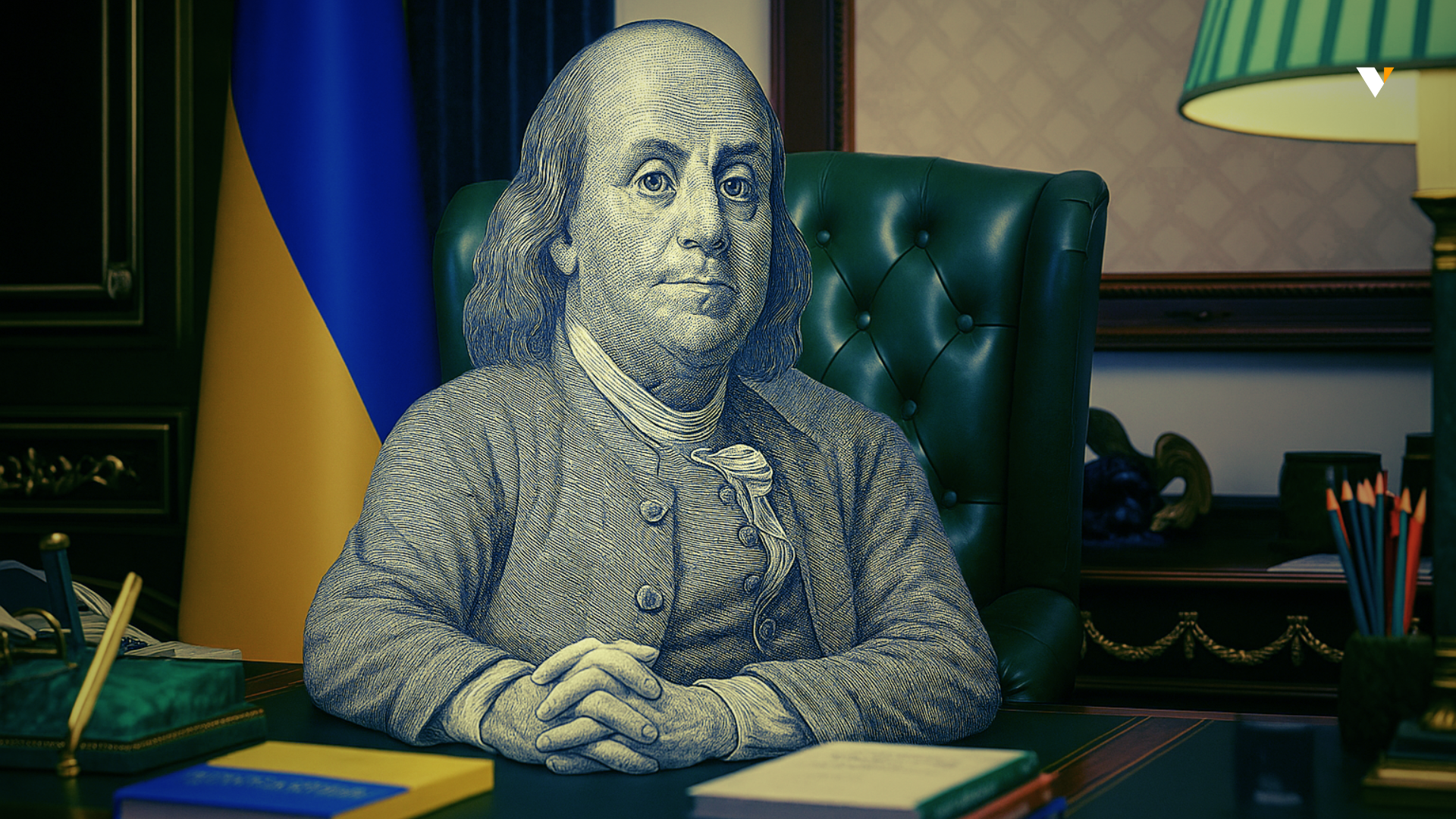
The corruption scandal that has exposed the nerves of the Ukrainian state in recent weeks has revealed what had long been swept under layers of optimistic narratives. The current war has not erased old pathologies, burned away institutional flaws, or washed off habits formed over decades. It has only illuminated them with a harsh light in which every fracture becomes visible. And multiplied them.
At a critical fork in reality, the country for some reason took the path where corruption stopped being a bad practice or a deformation of the system and became the system itself. This may sound blunt, but it is more accurate than any delicacy. A significant part of the Ukrainian state machine is built upon a simple principle: power is an asset, a position is an investment, and public resources are private income. This principle did not disappear with the start of the full-scale invasion. It merely adapted to new conditions. Such scale hardly exists in the United States or Europe, and Western citizens do not fully grasp that it is even possible.
The scandal in the strategic energy sector, revealed through Operation “Midas,” became not just the exposure of a complex corrupt architecture but a demonstration of how deeply shadow logic has penetrated the body of the state. That logic made the blow so painful. The system that must keep the country alive under missile attacks turned out to be vulnerable not so much to Russia’s strikes as to internal shadow networks capable of blocking and distorting entire sectors while serving their own interests.
The West sees a paradox in this. On the one hand, the very existence of an investigation, raids, audio recordings, and indictments is a sign that Ukraine has not turned into a feudal enclave. The anti-corruption institutions are functioning – a rare occurrence for a state fighting a full-scale war.
On the other hand, the sheer scale of the scheme shows that the metastases of systemic corruption have not receded even after the country endured Bucha, Mariupol, Kharkiv, Kherson, thousands of deaths and hundreds of thousands of losses. If even under such conditions opportunities for enrichment exist in strategic sectors, this suggests that institutional culture and political reflexes remain far from a true reboot.
The West is not blind to this. In Washington and Brussels, there is a clear understanding of how Ukraine’s shadow politics operates. They know who controls which sectors, where the money flows, which offshore structures service which groups, and why certain decisions are made the way they are. This is why the reaction of the U.S. and the EU appears neither scandalized nor theatrical, but cold and selective.
It may seem that the West is speaking more softly than it could. This impression is misleading. The United States does not humiliate an ally during a war not because it fails to see the problem, but because it understands that excessive public pressure could undermine confidence in Ukraine itself – a risk that potentially threatens its survival. Instead, targeted oversight, assistance in gathering data, financial intelligence, confidential conversations, and consistent signaling produce far greater effect. It is not indifference. It is strategic firmness without theatrics.
them. Avoiding military service becomes a commodity; an official deferment becomes a liquid service that can be purchased. War ceases to be a shared struggle and turns into a lottery where the price depends on wealth. This strikes directly at the foundation of national defense.
Under such conditions, statehood is upheld not because “everything is fine,” but because institutions still exist that attempt to cut through the darkness. The NABU, the SAPO, investigative journalists, and civil society organizations are the structures that prevented the system from sealing itself off in silence. Their work is the defense of the internal front.
This front would be significantly stronger if Ukraine’s political leadership – constrained by a single-party majority – did not repeatedly attempt to manipulate the information space. The communication style built over years on simplicity, light imagery, and the substitution of complex concepts with personalized formulas proved helpless before a reality that requires honesty, complexity, and acknowledgment of mistakes. Withholding information, delaying responses, and trying to control narratives through loyal channels are not acts of protecting the state. They multiply distrust – and distrust during wartime is more dangerous than any criticism. This is a clash between the approach of “politics as show” and the necessity of “politics as statecraft.” The first works in the short term; the second – painful, lengthy, and demanding – is the only one capable of ensuring a future.
Ukrainians in the U.S. diaspora feel this tension particularly acutely. They serve as intermediaries between Ukraine and American public opinion – and must speak truthfully, even when it is uncomfortable. America respects Ukraine not for perfection but for transparency, resilience, and the ability to recognize its own weaknesses without destroying the belief in victory.
Corruption will not disappear tomorrow or after one high-profile verdict. But each such scandal is a point of growth for the state. Only what is rotten burns away. And what remains has a chance to become a foundation.
Shaking society today is dangerous, but forcing it into silence is no less so. The path of a state maturing lies between these poles. This is precisely where Ukraine stands now – a country that must simultaneously hold the front, transform its political culture, and remain worthy of the trust of those who help it endure.
In the end, the strength of a state does not lie in whether it has corruption. Its strength lies in the ability to uproot old practices even when the burden of war rests on its shoulders. And the current scandal is a reminder that only when truth becomes public does the possibility arise for a new – not grand, not idealized, but real – stage of national development.
About Author:
