


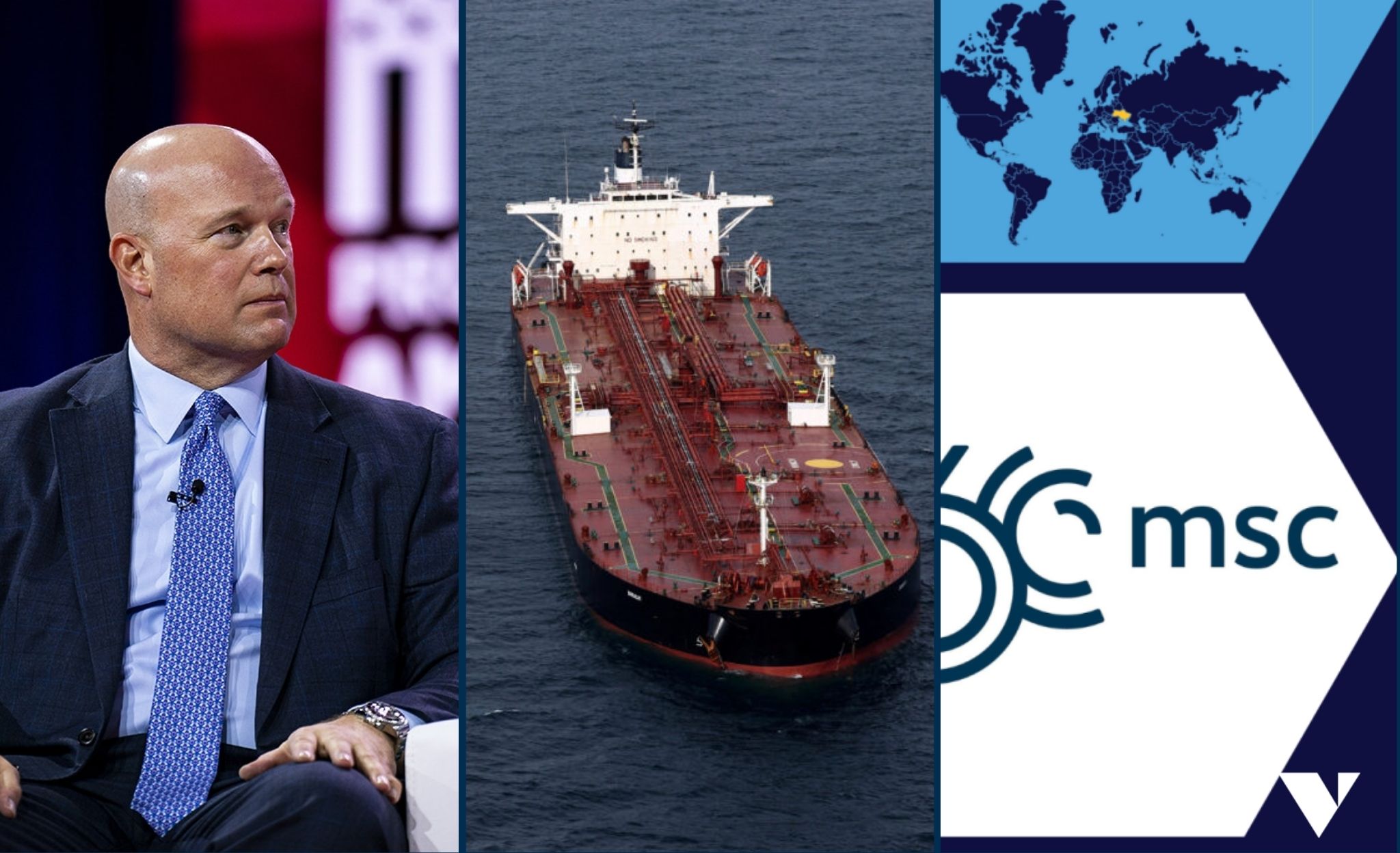
 The United States is simultaneously reaffirming its commitment to NATO and transferring key command functions in the Alliance to Europeans. Against this backdrop, the Munich Security Report records a crisis of the international order that Washington itself built after 1945. At the same time, the Ukrainian people are receiving symbolic support from the West, while the U.S. military is demonstrating its readiness to harshly punish Russia’s “shadow fleet.”
U.S. Ambassador to NATO: Trump Is Not Weakening the Alliance but Demanding Greater European Responsibility
U.S. Permanent Representative to NATO Matthew Whitaker saidthat the administration of Donald Trump has no intention either of leaving Europe or of dismantling the North Atlantic Alliance. According to him, Washington seeks to strengthen NATO through a fair distribution of the security burden among allies. He emphasized that the demand to increase European defense spending to 5% of GDP is aimed at making the Alliance itself stronger. Whitaker underlined that it is strength, not political declarations, that guarantees deterrence and peace.
The American diplomat also noted that the United States remains the main nuclear umbrella for NATO, but expects Europe to play a larger role in the continent’s conventional defense. Separately, he criticized economic relations between the U.S. and the EU, calling them unfair due to Europe’s significant trade surplus. According to Whitaker, Donald Trump seeks to revise rules that were formed in the postwar period. At the same time, he remarked that Europeans often make many promises but are slow to move to practical action.
U.S. to Hand Over Key NATO Command Posts to Europeans – Reuters
The United States plans to hand over two strategic command posts in NATO’s structure – in Naples, Italy, and Norfolk, Virginia – to European military officers. This was reported by Reuters with reference to sources familiar with decision‑making in the Alliance. At present, both commands are headed by U.S. admirals, but as part of new rotations they will be replaced by European officers. This will be one of the most visible redistributions of influence in NATO’s command system in recent years.
At the same time, the U.S. will retain control over three other commands – air, maritime, and land – which play a key role in operational planning. According to Reuters, the decision is directly linked to Donald Trump’s demand that European allies assume more responsibility for their own security. NATO officially explains the changes as standard rotation planning. However, the agency’s sources acknowledge that the political context played a decisive role.
Ukrainian People to Receive Munich Security Conference Award
The Ukrainian people will become the laureate of the Ewald von Kleist Award of the Munich Security Conference in 2026. This has announced by the Conference Chair, Wolfgang Ischinger, during the presentation of the Munich Security Report. According to him, the decision to award the prize not to an individual but to an entire people is a deliberate political signal. It is meant to draw the world’s attention to the fact that Russia is merely imitating readiness for negotiations while continuing its terror against Ukraine’s civilian population.
Ischinger also said that, for the first time, a “Ukrainian House” dedicated to the issues of war and security will operate alongside the conference venue. It is expected that, as in previous years, the Ukrainian delegation will be headed by President Volodymyr Zelenskyy. The Ewald von Kleist Award has been presented since 2009 for contributions to peace and conflict resolution. In this case, the organizers are highlighting the resilience and resistance of Ukrainian society.