


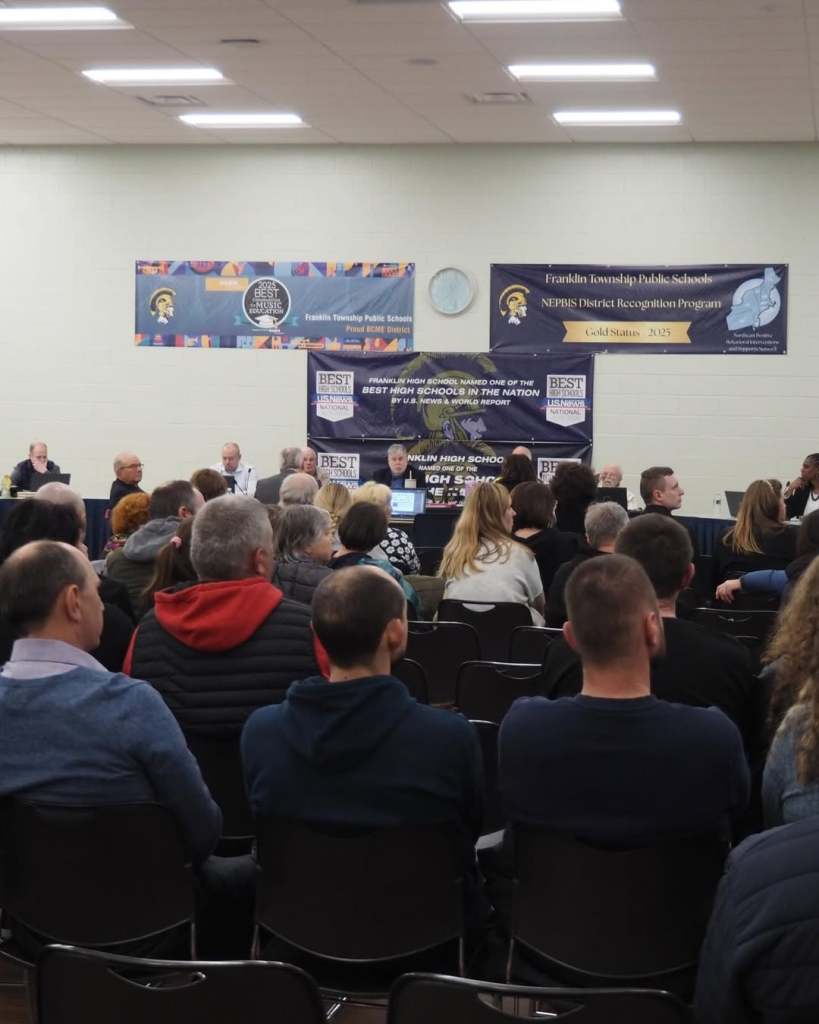
A third rezoning hearing on the land on which the historic Ukrainian Cultural Center is located has been held in Somerset, New Jersey. Community representatives are announcing their intention to continue to resist plans to sell part of the St. Andrew’s complex, where they say a large commercial warehouse could be built.
This was reported by the Svitanok organization and representatives of the organization.
“We have a clear intention to do everything in our power to prevent the sale until a joint solution is found and a constructive dialogue begins in any acceptable format,” said New York activist and Svitanok NYC member Oleksiy Taran.
The Ukrainian Cultural Center in Somerset is reportedly part of the historic St. Andrew’s complex. On its territory are located the Pantheon of Heroes of Ukraine, a cemetery with over 8 thousand burials of fighters for the independence of Ukraine, St. Andrew's Church, the theological seminary of the UOC-USA and the central office of the church structure. The community emphasizes that this place is one of the key centers of the spiritual, historical and cultural presence of Ukrainians in the United States.
It is noted that the complex was built over decades thanks to the efforts of the community and at the initiative of Metropolitan Mstyslav Skrypnyk. The cultural center itself, according to the authors of the appeal, was built in 1987 with public funds as a space for the preservation of Ukrainian culture, history and Christian heritage.
It is also noted that the building and land plot were once registered with the UOC-USA, since the community believed in the safe preservation of property in the hands of the church and relied on the statutory guarantees of open consultations before a possible sale. That is why the current situation is particularly indignant among those who consider the center not just real estate, but part of the collective memory of the Ukrainian emigration.
“The sale will not solve the problem. It will only deepen the pain, distrust and internal division in the community,” Taran emphasized.
Read also: Crucial Hearing on the Future of the Ukrainian Cultural Center in Somerset, New Jersey
According to their organization, in early 2025, local resident Halyna Yasinskykh approached Svitanok with a request to help with the planned sale of the cultural center. Later, the activists found out that it was not only about the building itself, but also about a plot of land, which is approximately five times larger than the area of the center and includes the adjacent territory. It is there, according to their information, that they plan to build a large commercial warehouse.
The appeal indicates that the leadership of the UOC-USA explains its intentions by the lack of resources to repair the building and the difficult financial situation. At the same time, the community insists that the sale is not the only way out, and the process itself should take place publicly, with the involvement of people who were historically involved in the creation and support of the center.
It is separately emphasized that during the hearing on March 5, community representatives officially handed over a letter to the lawyer of the Ukrainian Orthodox Church of the USA with a proposal for dialogue. It discussed the possibility of finding alternative solutions, in particular with the participation of potential investors or sponsors who could help with the restoration of the center and its further functioning.
Against the backdrop of this discussion, calls for further action are also appearing on social networks. In particular, one of the users drew attention to a possible violation of the charter and the lack of public discussion, voting and referendum on the future of the cultural heritage of the community. In response, activist Taran stated that mechanisms to stop the process exist and the community, if necessary, is ready to take further, tougher steps, although the priority for now remains to initiate dialogue.

“The only beneficiary of the splits in our community is Russia. And we, Ukrainians, whether in church vestments, suits, or embroidered shirts, have no right to give the enemy pleasure from our inner weakness,” Taran concluded.
Photo: @terrreza.sftd
Author: Inna Mikhno