


This year, at the 64th Ann Arbor Film Festival, the oldest festival of experimental and avant-garde cinema in North America, in Michigan, Ukrainian films not only participated in the programs, but also won key awards. For the first time, the festival allocated a special weekend for Ukrainian films, with short film blocks “FIC 10 – Ukrainian Films”.
This was reported on the winners’ page of the 64th Ann Arbor Film Festival.
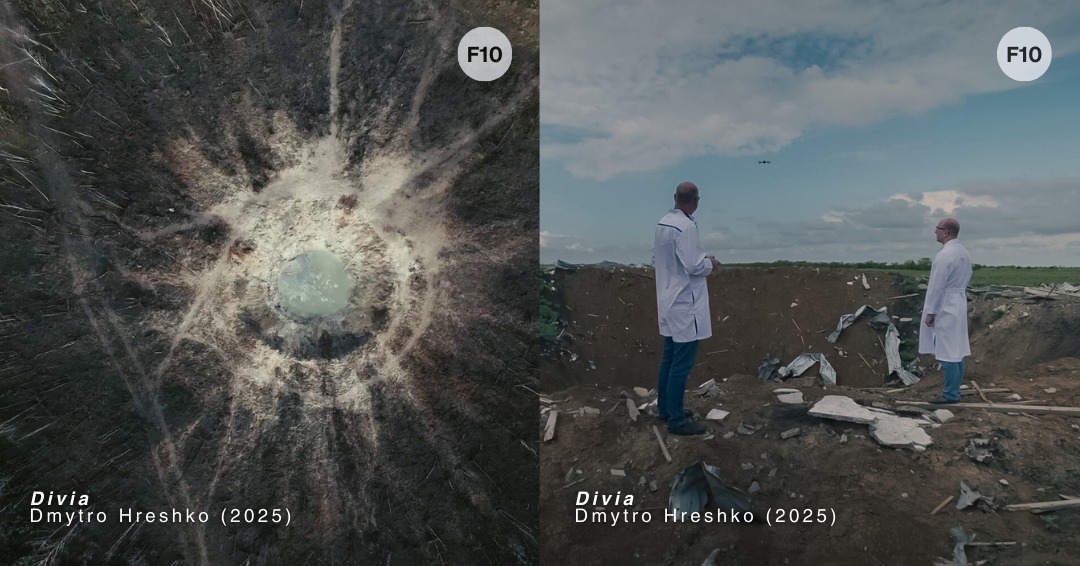
In particular, the Ukrainian documentary “Divia” directed by Dmytro Greshko was recognized as the best documentary film and awarded the Tom Berman Award. The award was personally received by the film’s producer Polina German and executive producer Dan Frank.

The observational documentary “Divia” tells about the catastrophic impact of Russian aggression on the nature of Ukraine. Work on the film began in the spring of 2022. Filming took place both near the front line and in Ukrainian reserves. The film includes footage from the deoccupied territories of Kyiv, Chernihiv, Kharkiv, Donetsk, Luhansk, Mykolaiv, Zaporizhia and Kherson regions.
A special place in the film is occupied by footage of the consequences of the explosion of the Kakhovka hydroelectric power station. The creators managed to film the flooded territories of the Kherson region, the rescue of animals and the scale of the ecological tragedy immediately after the explosion of the dam. The film also uses archival materials about Ukrainian nature before the full-scale war, in particular from the Ukraïner team - from the Oleshkivski Pisky National Nature Park and Crimea.
The short film “I died in Irpin” by director Anastasiia Falileieva won the Leon Speakers Award for Best Sound Design. The film is based on Anastasia’s personal story. On the first day of the full-scale invasion, the director and the boy went to Irpin to be with his parents. She notes that the clear sequence of events was erased from memory, because the experience blocks the brain, but each subsequent day in the city became more difficult.
The film “I Died in Irpin” has already collected more than 25 awards at international festivals. Six of them are Oscar-qualifying: Clermont-Ferrand Short Film Festival, Cinanima, Fest Anča, BIAF, Manchester Animation Festival and Animest.
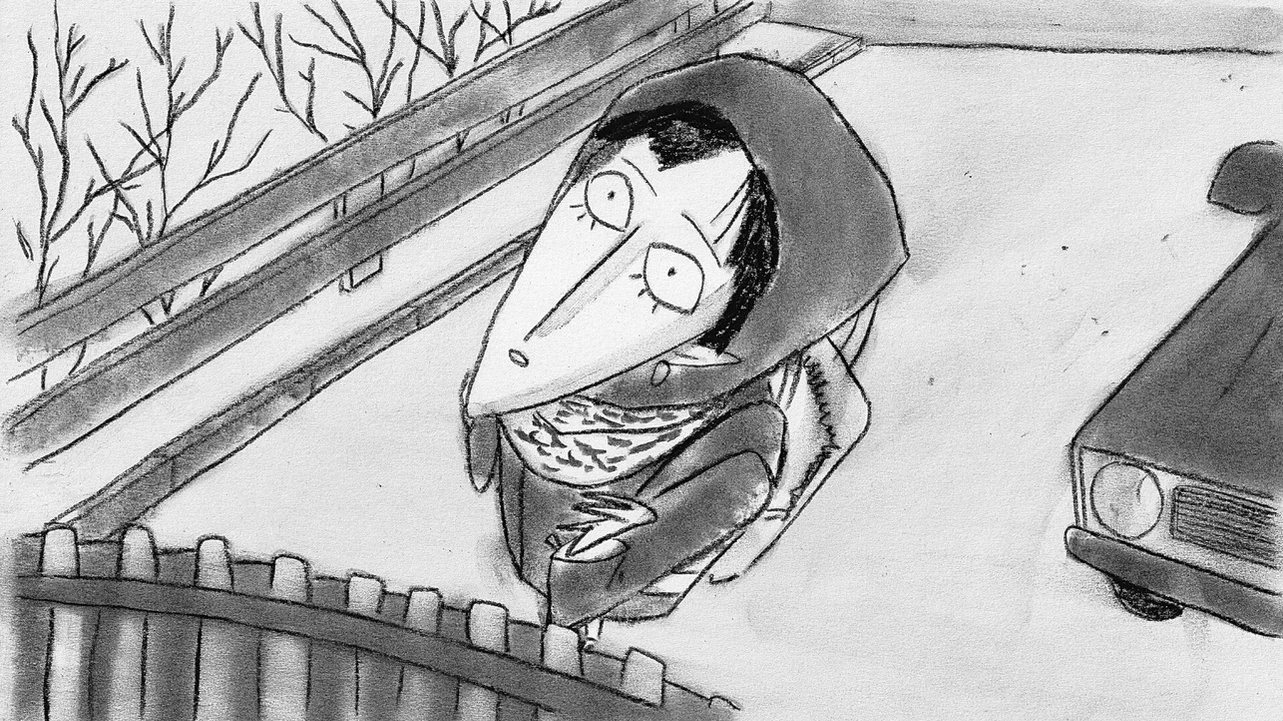
And the film “Grandma Galya and Grandpa Arkadiy” by Anna Kipervasser received a distinction from the jury. The film consists of cheerful and dreamy reflections on love and the passage of time. And also about what we hold on to and how we maintain a connection with home, with ourselves.
The Ann Arbor Film Festival also presented a special section of Ukrainian cinema. The competition program included six short films by Ukrainian directors. Among them were “Self-Preserving Nudity” by Nelly Shilova, “Home 1117 km” by Marta Smerychynska, “Flowers of Ukraine” by Adelina Borets, “White Rocks of Vinnytsia” by Karolina Usakovich, and “Shrimp, a Switch, a Cigarette Butt and a Small Bottle” by Olga Pyrozhnyk.
The films touch on the themes of war, loss of home, memory, family ties, and the search for identity. Some of the films were created in international co-productions with European countries.
Also, the VR installation “Is War Near?” took place in the lobby of the Michigan Theater. (Is the War Close?” by Joseph Andrew Sywenkyj. This room-scale virtual reality work transports viewers to a Kyiv home during a massive Russian drone and missile attack, offering a visceral, first-hand experience of the closeness of war.
The festival celebrated Ukrainian cinema as a symbol of resistance, with an emphasis on the experimental and avant-garde. Overall, Ukrainian films were prominently featured among more than 150 programs. It is worth noting that the W. M. Weiser Center for Europe and Eurasia covered the application fees for all Ukrainian films this season. In addition, Ari Weinzweig, co-founder of Zingerman’s Delicatessen, wrote an essay on Ukraine and cultural survival that appeared in the festival program.
The Ann Arbor Film Festival ran from March 24 to 29, and is now continuing online through April 13.
Photo: Ann Arbor Film Festival
Author: Inna Mikhno