


 Ukraine is once again proposing a ceasefire, but Russia continues strikes on energy infrastructure and civilian targets, demonstrating a lack of willingness to compromise. Against this backdrop, allies are searching for diplomatic formats, yet even within Europe there are conflicting signals regarding the assessment of the war. At the same time, ongoing hostilities and technological constraints are creating new challenges for defense.
Ukraine–Syria Talks: Outcomes
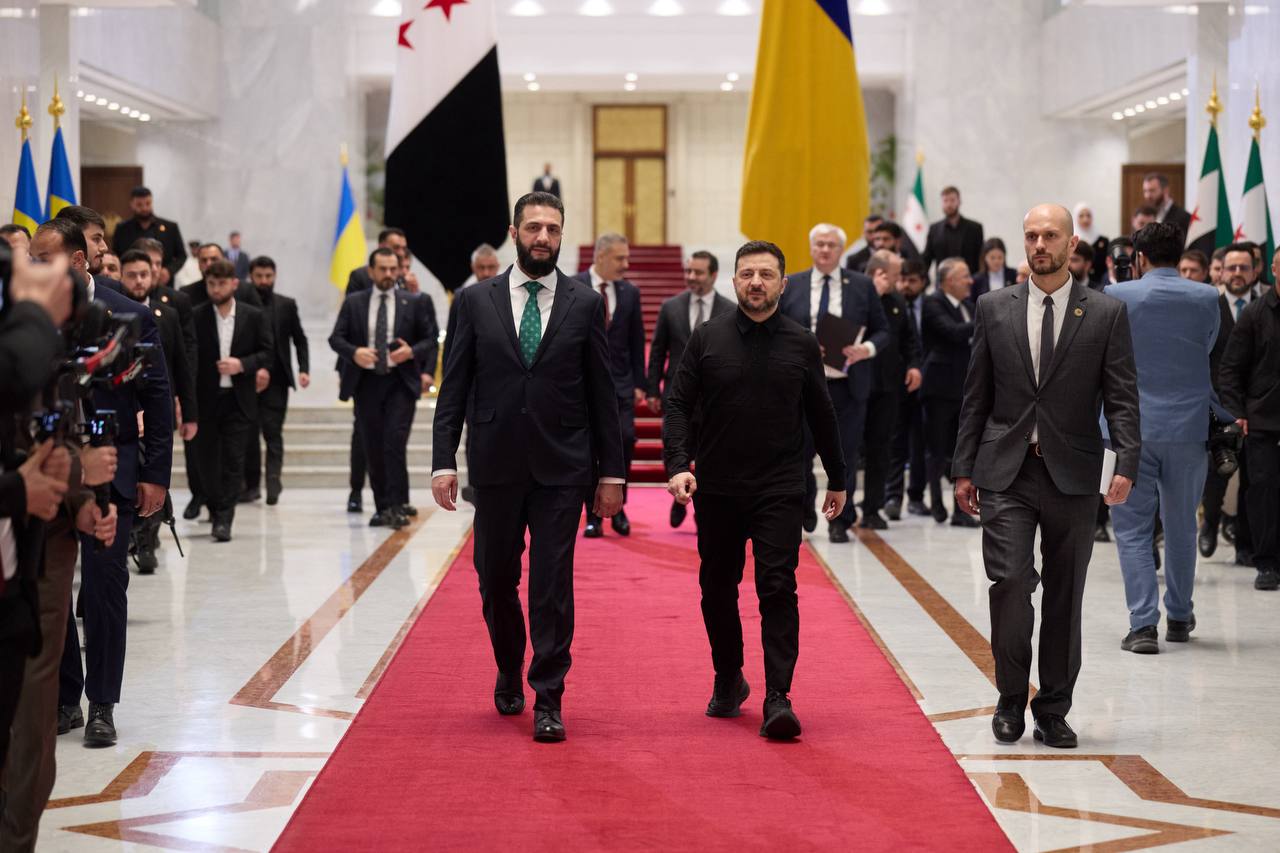
Ukrainian President Volodymyr Zelensky paid a visit to Damascus, where he held talks with Syrian President Ahmed al-Sharaa and participated in bilateral and trilateral formats involving Turkey. The parties discussed the regional security situation, Russia’s war against Ukraine, and opportunities for exchanging military experience. Following the meetings, they agreed to deepen cooperation to strengthen security, support economic development, and expand diplomatic relations.
Special attention was given to food security, as well as Syria’s energy and infrastructure challenges, and Ukraine’s role as a reliable supplier of food. Zelensky emphasized that Ukraine supports Syria’s stability and recovery after the fall of Bashar al-Assad’s regime and is ready to further develop partnership. The talks also addressed overcoming the consequences of war and the broader negotiation process regarding Russian aggression, which, according to the president, opens new opportunities for cooperation between the countries.
Zelensky Insists on a Ceasefire
Ukrainian President Volodymyr Zelensky saidthat Ukraine remains ready for a ceasefire if Russia stops attacks on energy infrastructure. According to him, this proposal was conveyed to Moscow via the United States, while negotiations on security guarantees with Washington continue. He stressed that such guarantees are a key element for achieving a sustainable peace. He also mentioned Ukraine’s initiative for a ceasefire during Easter.
“If Russia is ready to stop strikes on our energy infrastructure, we will be ready to respond in kind. This proposal was passed to the Russian side through the Americans.” However, following new attacks, including on Odesa, Zelensky stated that Moscow is not ready for such agreements.
“We have repeatedly proposed a ceasefire to Russia, at least for Easter… But for them, all days are the same. Nothing is sacred.” According to the president, the continued use of drones after such proposals only confirms the Kremlin’s position.
Zelensky emphasized that Ukraine seeks to achieve a cessation of hostilities, but real steps from Russia are absent. He also noted that ongoing attacks indicate unwillingness even for a temporary reduction in the intensity of the war. Ukraine continues working with partners to advance diplomatic initiatives, while discussions on long-term security mechanisms are ongoing.
Orbán and Vance Discuss War Without Calling Russia the Aggressor
U.S. Vice President J.D. Vance visited Hungary, where he met with Prime Minister Viktor Orbán ahead of parliamentary elections. During a joint press conference, the sides touched upon Russia’s war against Ukraine but did not refer to Russia as the aggressor. Orbán described the conflict as a war between “two Christian countries” and emphasized the importance of U.S. policy under the Trump administration. He also accused Ukraine of allegedly forcibly mobilizing ethnic Hungarians.
“The United States before President Trump supported this war. For us, the current position of the United States is truly valuable because it is fundamentally pro-peace.” Vance stated he had no information about any threats from Zelensky toward Orbán.
The U.S. vice president added that Hungary plays an important role in understanding the positions of the sides in the conflict and noted that the war remains difficult to resolve diplomatically. However, no concrete mechanisms for achieving peace were outlined.
Shortage of Mini Jet Engines Slows Ukrainian Drone Development
Ukraine is facing limitations in producing strike drones due to a shortage of mini jet engines. European manufacturers are trying to increase capacity, but demand far exceeds supply. These engines are critical for high-speed drones used for long-range strikes and are cheaper than cruise missiles, making them a key element of modern warfare.
“Europe has a serious bottleneck in the production of mini jet engines,” said researcher Fabian Hoffmann.
A Ukrainian defense industry source noted that the shortage is “likely the main factor limiting the number of missile drones produced.”
Industry representatives confirm shortages of both engines and materials for their production, creating a systemic constraint on scaling output.
Manufacturers, including the Czech company PBS, have already increased production several times and plan further expansion, though even these efforts do not meet Ukraine’s growing demand.
Drone Strike Halts One of Russia’s Largest Refineries
One of Russia’s largest oil refineries, NORSI, has ceased operations following a Ukrainian drone strike. According to sources, the facility stopped work on April 5 after a fire caused by the attack. Local authorities confirmed damage to infrastructure, including energy installations and buildings. The refinery is a key element of Russia’s oil processing system.
The plant can process up to 16 million tons of oil annually and is the country’s second-largest gasoline producer. Following the strike, Lukoil halted fuel sales from the facility. According to exchange data, supplies may be suspended at least until the end of the month, creating additional pressure on Russia’s energy sector.
The attack is part of a broader series of strikes on Russia’s energy infrastructure affecting export capacity and the domestic market. Earlier attacks targeted terminals in the Black and Baltic Seas. The shutdown of NORSI may increase instability in the sector. No official comment from the company has been provided.
Russian “Safaris” in Nikopol and Kherson
Russian forces have carried out a series of attacks in southeastern Ukraine, killing at least eight people and injuring more. Civilian objects were the main targets, including buses in the Dnipropetrovsk region. In Nikopol, an FPV drone struck a bus approaching a stop, killing four people. Another bus was attacked in a nearby community, causing additional casualties.
“When such terror against people and their lives happens every day, blocking new sanctions against Russia, attempts to weaken existing ones, and trade with Russia look strange,” said .
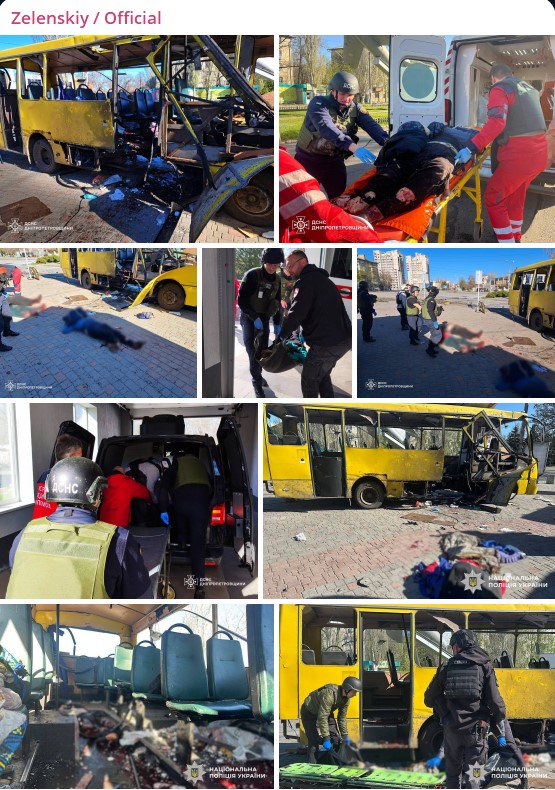 In Kherson, four more people were killed and seven injured during shelling of a residential area. The attack lasted about half an hour and targeted civilian infrastructure. Local authorities report that such attacks are systematic.
“In Kherson, civilians are effectively subjected to constant so-called ‘safaris,’ and there are victims every day,” the president noted.
Ukrainian authorities and human rights organizations state that these are deliberate attacks on civilians using drones. Russia denies these accusations despite numerous confirmed cases. The shelling continues amid the absence of ceasefire agreements.
Photo: Zelensky’s public page
Author: Danylo Pievchev