


Osyp Stepanovych Zinkevych is a unique figure in the history of Ukraine. His life path shocks and amazes. He is an example of resilience and steadfastness even in the most difficult times. The national consciousness of Osyp Stepanovych is a vivid example of love for Ukraine. He carried this love through all the years and hardships, ups and downs, pain and joy.
Let me provide a brief background on Osyp Zinkevych. Thus, Osyp was born on January 4, 1925, in the village of Mali Mykulyntsi during the occupation of Ukrainian lands by Poland. By the way, Osyp’s father was a soldier of the Ukrainian Sich Riflemen Legion. In the early 1940s, Osyp joined the Organization of Ukrainian Nationalists. Therefore, it is not surprising that throughout his life Osyp Zinkevych fought for the freedom of Ukraine. After World War II, fate took Osyp from country to country. First to Germany, then to France, and in 1956 — to the United States.

The Ukrainian Olympic Committee in the United States
It was in the United States that Osyp Zinkevych was formed as a leader and a guide of the Ukrainian community. It was also in the United States that he realized another of his long-standing dreams — the separate participation of Ukrainian athletes in the Olympic Games. As we know, during 1952–1988 Ukrainian Olympians were forced to compete as part of the team of the country that occupied Ukraine — the USSR. It is unfortunate that even today the Ukrainian Olympic establishment adheres to the Soviet narrative and propaganda that the Olympic movement in Ukraine began in 1952. I regret to note that this pro-Russian version still remains on the official website of the National Olympic Committee of Ukraine!!!
It was against such an occupation of the Ukrainian Olympic movement that Osyp Zinkevych fought throughout his life. I also regret to note that this aspect of his activity somehow receives little attention. I would even say that it is either ignored or deliberately silenced.
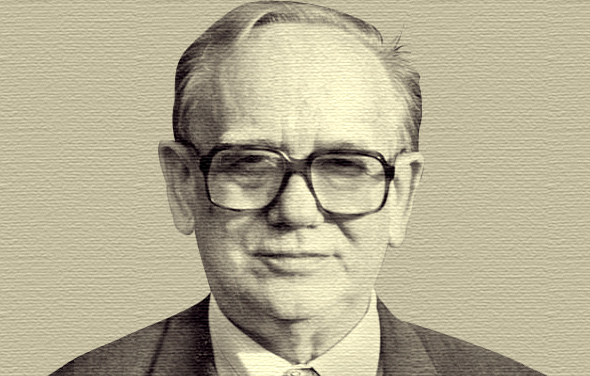
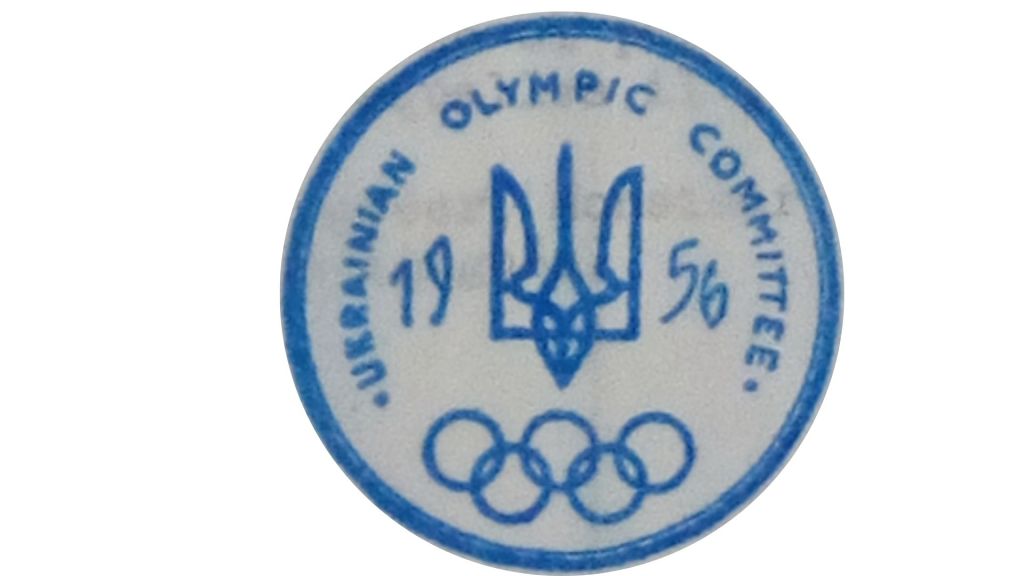
In 1956, Osyp Zinkevych founded the Ukrainian Olympic Committee in exile. His energetic work united around the Olympic idea like-minded people from the Ukrainian diaspora from different parts of the world (USA, Canada, Australia, Argentina, France, Germany). Within just one year of fruitful work, the Ukrainian Olympic Committee achieved recognition from the International Olympic Committee of the right of Ukrainians to compete as a separate team at the Olympic Games! Can you imagine that??? It was a real victory for Ukrainians.

But this is the IOC in all its “glory,” with its supposed apolitical stance and “rose-colored glasses.” Having recognized the right of Ukrainians to self-identification on the international Olympic stage, it simultaneously demanded the creation of a National Olympic Committee in Ukraine. This requirement could no longer be fulfilled by the diaspora. After all, Ukraine was occupied by the USSR. The terrorist власти of the Soviet Union would in no way have agreed to allow Ukrainians to create their own national Olympic committee.
Osyp Zinkevych had to wait for decades for the creation of the National Olympic Committee of Ukraine. But this was not simply waiting. It was daily hard work with international sports organizations, international sports federations, national Olympic committees, various public organizations, political organizations, and figures. It included organizing Ukrainian actions, press conferences, and demonstrations at every Olympic Games and Winter Olympic Games, personal meetings with the leadership of the International Olympic Committee, leaders of the Organizing Committees of the Olympic Games, attending Olympic competitions, and more. And this is only a small part of Osyp Zinkevych’s titanic work in the field of liberating the Ukrainian Olympic movement from Soviet occupation.
1992 in Ukraine
In 1992, Osyp Zinkevych was in Ukraine from January 18 to February 1. Already on February 6, in the United States, he wrote a detailed report about his trip. The title of this report was telling — “Information by Osyp Zinkevych on Olympic affairs in Ukraine.” Thus, at the very beginning of 1992, Osyp Zinkevych went to Ukraine in order to directly arrange matters concerning the Olympic future of Ukraine.
Zinkevych positively summarized his visit to Ukraine: “During my two weeks in Ukraine, I managed to hold a number of meetings and settle a number of Olympic matters, in my opinion, very successfully.” Indeed, it was a successful visit with such important and relevant Olympic issues addressed in Ukraine.
Although Osyp himself evaluates the trip positively, it should be noted that not everything turned out as he had hoped. There was another side to this interaction — the nomenklatura, bureaucratic, official system of governance and functioning of sports and Olympic sport in Ukraine, which had not yet rid itself of Soviet influence. Therefore, the goals set by Zinkevych were slowed down both here in Ukraine and from Moscow, whose officials did not want a free Ukraine and a free Ukrainian Olympic movement. They did everything to prevent Ukrainian Olympians from competing as a separate team.
Osyp Zinkevych divided his report into 11 points. Therefore, I suggest taking a closer look at certain materials and what he managed to accomplish in Ukraine over those two weeks.
In point 1, Osyp Zinkevych writes that while transferring at the airport in Brussels (Belgium), he read in a newspaper that the International Olympic Committee had recognized the National Olympic Committees of Croatia and Slovenia and invited them to participate in the 1992 Olympic Games in Barcelona (Spain). Why was this so important for Mr. Osyp and for Ukraine? Because if the IOC had recognized the National Olympic Committee of Ukraine, then Ukrainian athletes could have participated in the Olympic Games as a separate team. But that is not what happened. Ukrainians were forced to join the Unified Team under the Olympic flag. All of this was the result of pressure from the рашисти on the IOC and their attempts to influence Ukraine in order to keep Ukrainian sport within the bounds of their tyrannical influence.
It can be assumed that upon learning this news, Osyp hoped that the Ukrainian Olympic establishment of those years would become more active and likewise secure a place in the Olympic family. However, subsequent history showed that in Ukraine they either did not want to, or could not, or did not know how to do this. The answer still does not exist to this day.
In point 2, Osyp Zinkevych mostly focuses on describing Valerii Shutyi. Why did he pay such close attention to him? Because Valerii Shutyi initiated the creation of the Ukrainian National Olympic Committee in 1991 and thus was ahead of officials and well-known Olympians who, for various reasons, delayed the establishment of the NOC of Ukraine. He also mentions a conversation with Andrii Vlaskov, who arranged a meeting with Valerii Borzov (at that time the Minister of Sport and President of the NOC of Ukraine).
So, what did Zinkevych write about Shutyi: “Upon arriving in Kyiv… I also called Valerii Shutyi, president of the UNOC, and proposed a meeting. First of all, I wanted to meet with him… Shutyi invited me to his place… We traveled to Shutyi for a long time by trams, and then walked even farther. My impression of Shutyi: young, about 26 years old, extremely intelligent, nationally conscious, with no signs whatsoever of ‘Banderism,’ easy to talk to, not stubborn, willing to compromise, listens attentively and, after listening, easily agrees with the proposed ideas. It is absolutely untrue that someone ‘bought’ him for large sums of money. I met with him about 5–6 times. We walked around Kyiv, visited churches, the Saint Sophia complex, had lunches and breakfasts together. I saw absolutely no psychological problems, although he took great pleasure in recounting how he literally ‘terrorized’ Borzov with his speeches at various meetings and one-on-one with his tape recorder, which Borzov was terribly afraid of.”
This was a brief description of the relationship and the impression Valerii Shutyi made on Osyp Zinkevych.
In addition, they discussed the work of the UNOC, its relations with the NOC of Ukraine, and the issue of Ukrainian athletes’ participation in the 1992 Olympic Games in Barcelona as a separate team. Here is what Mr. Osyp wrote about this: “Valerii informed me about the latest Olympic matters, handed over some documents, and clarified his positions. After speaking with me, he agreed once and for all to dissolve the UNOC. We agreed that until April 1992 he would declare a moratorium on the external front and would not send any appeals or letters abroad. If necessary, and if the NOC and Borzov did not take a clear position, he would speak out with criticism in the press and on television.”
So, what do we learn from the above? That the UNOC founded by Valerii Shutyi was more determined in the struggle for a free Ukrainian Olympic movement than Minister Borzov and the NOC of Ukraine, which he himself headed. This indecision led to the IOC not granting Ukrainian athletes the right to participate in the Olympic Games and represent their country.
In point 3, Zinkevych describes a preliminary meeting before meeting Borzov, and it is quite interesting: “On Tuesday, January 21, V. Borzov sent his white ‘Volga’ with a driver for me. Serhii Fesenko and Andrii Vlaskov came for me… We arrived at the Ministry of Youth and Sport half an hour early. We met in Vlaskov’s office, where several ministry employees had gathered. We had a very frank conversation: their positions were clear and firm, they were entirely in favor of Ukraine’s independent participation in the Olympics. Borzov hardly informs anyone about this, works closed in on himself… In their opinion, Borzov’s centrist stance and his indecision gave rise to Shutyi.”
Point 4 is very detailed in Osyp Zinkevych’s recollections, as it describes his meeting with Valerii Borzov. Here are some excerpts: “Exactly at 10 o’clock we went downstairs to Borzov. We entered the waiting room and informed the secretary. She went into the office and a minute later came out and said: ‘The Minister invites only you, Mr. Zinkevych.’ I immediately felt a strange Soviet bureaucratic attitude in behavior and relations.”
Already at this stage of communication, Zinkevych truly felt what was visible on the surface, and, regrettably, such a feeling still exists today.
Let me cite an excerpt of what Valerii Borzov told Osyp Zinkevych during the meeting: “Borzov began speaking first, very concretely and in a businesslike manner, in good Ukrainian (although Russian dominates everywhere in the ministry). He spoke for about half an hour, showing very confidential documents about Yeltsin’s directive to remove all sports equipment from Ukraine and other republics, documents from meetings in Minsk and Moscow, decisions signed by the presidents of NOCs that at the Winter and Summer Games athletes would compete not for the CIS, but as a ‘Unified Team.’ Under this document is Borzov’s signature with a handwritten note: ‘This applies only to the Winter Olympics, not the Summer.’”
That is, it turns out that during discussions of important Olympic matters among different countries, Valerii Borzov advocated that the “Unified Team” should exist only at the Winter Olympic Games. But no one listened to him, and Ukrainians were forcibly drawn into the Summer Games in Barcelona as well! Or was this merely an attempt to manipulate reality in front of Zinkevych?
Continuing these Olympic “battles” on both the external front and the internal arena, we should turn to Zinkevych’s recollections of another extremely important meeting during his stay in Ukraine in 1992. Thus, I quote: “On January 24, I was a member of the Ukrainian diaspora delegation meeting with the President of Ukraine, L. Kravchuk… The allotted time for the conversation — one hour — had expired, and I very much wanted to raise the Olympic issue at this forum. Drach, who chaired the meeting, did not want to give me the floor, as our time was already up. But Kravchuk himself raised his hand toward me and said: ‘Go ahead, speak — what else do you have?’… I said that I had received information in Kyiv that the centrist position of the NOC was not so much Borzov’s position as that of the Cabinet of Ministers and Fokin. Kravchuk at that moment smiled somewhat strangely and said he would clarify this shortly. I appealed to him and to Pavlychko (head of the Foreign Relations Commission) to personally intervene in this matter and to do everything possible so that Ukraine could participate independently in the Olympic Games in Barcelona.”
As we learn, Osyp Zinkevych discussed this crucial matter of his entire life even with the President of Ukraine — that is, at the highest political level. He sought help and support in Ukraine from Ukrainian sports, political, and state figures. Osyp Zinkevych asked them to defend the honor of Ukraine on the international Olympic stage. He fought for a free Ukrainian Olympic movement and believed he would gain the support of his Ukrainian brothers. However, the subsequent history of Ukrainian athletes’ participation in the 1992 Olympic Games in Barcelona turned out not in favor of Osyp Zinkevych and the entire Ukrainian diaspora. Ukraine was forced to join the Unified Team and remain in Olympic “occupation,” despite having already regained Independence.
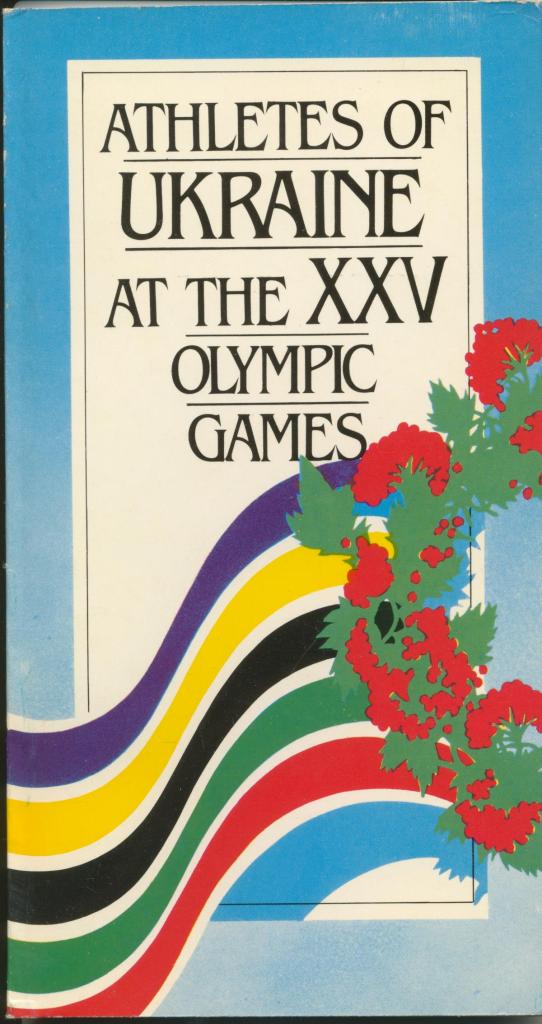
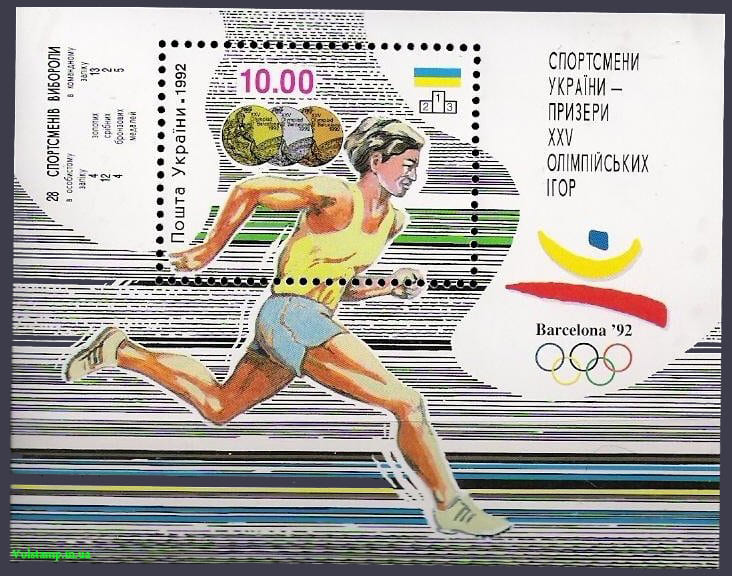
It is also worth adding that athletes from Latvia, Lithuania, and Estonia were granted the right by the IOC to compete in the 1992 Olympic Games representing their independent countries. Ukrainian athletes had to wait until 1994 (Winter Olympic Games) and 1996 (Olympic Games) for this. Why it happened this way — perhaps we will one day find out!?
Author: Oleksii Lyakh-Porodko