


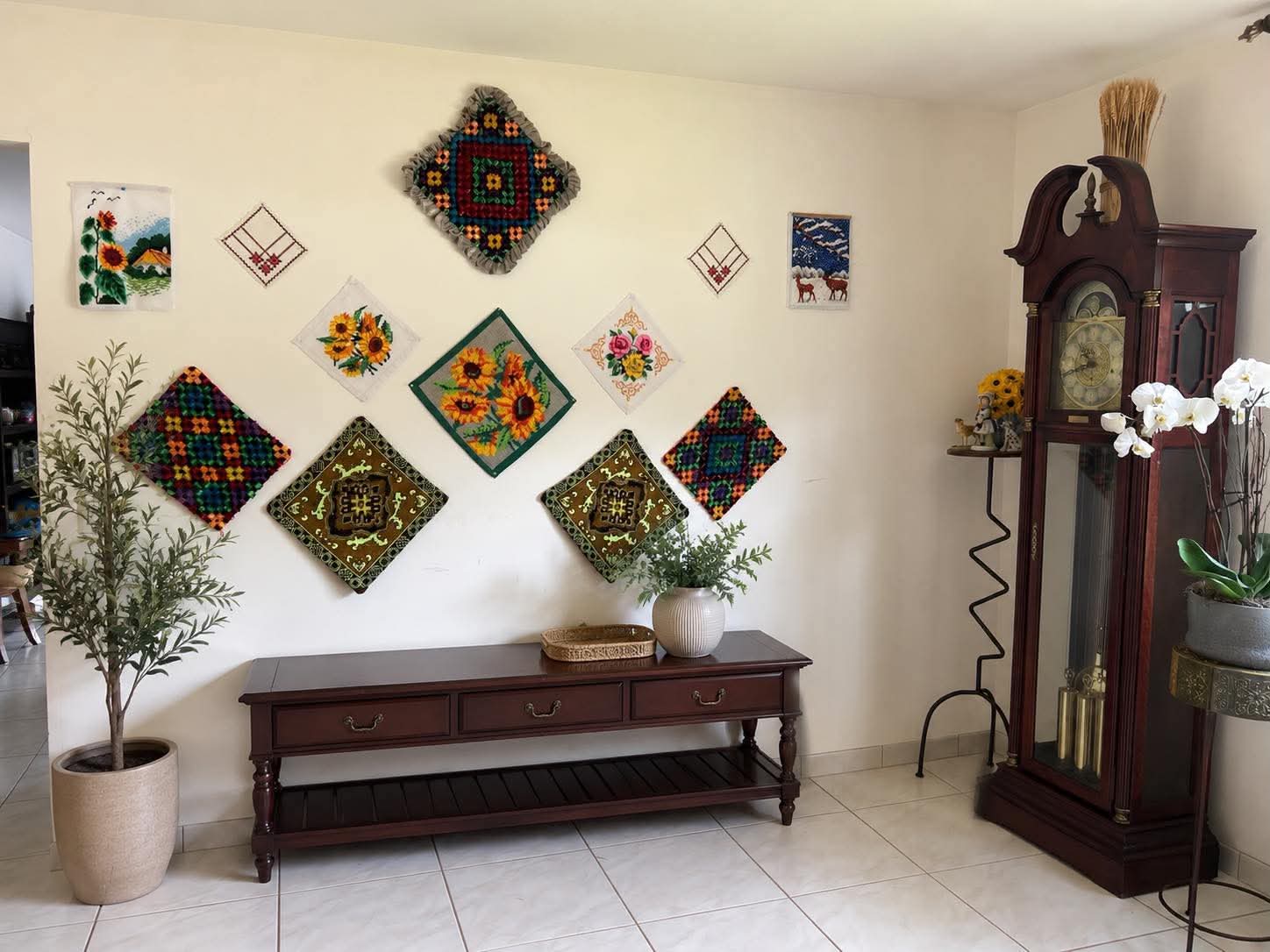
 In the home of Maryna Vlasiuk in Manalapan, New Jersey, Ukrainian objects are not decorations.
Old embroidered shirts, rushnyky, pillows, woven textiles, a wooden chest, motanka dolls. Some belonged to grandmothers and great-grandmothers, while others appeared later, already in America. Behind each one is a particular person and a story of its own.
Maryna does not call this place a museum. Nor was the collection ever created deliberately. It simply grew — one object at a time. Maryna brought some things from Ukraine herself. Others were passed down by relatives. Some items were sought out later in the United States — for Ukrainian photo projects, exhibitions, and a Vertep Christmas performance.
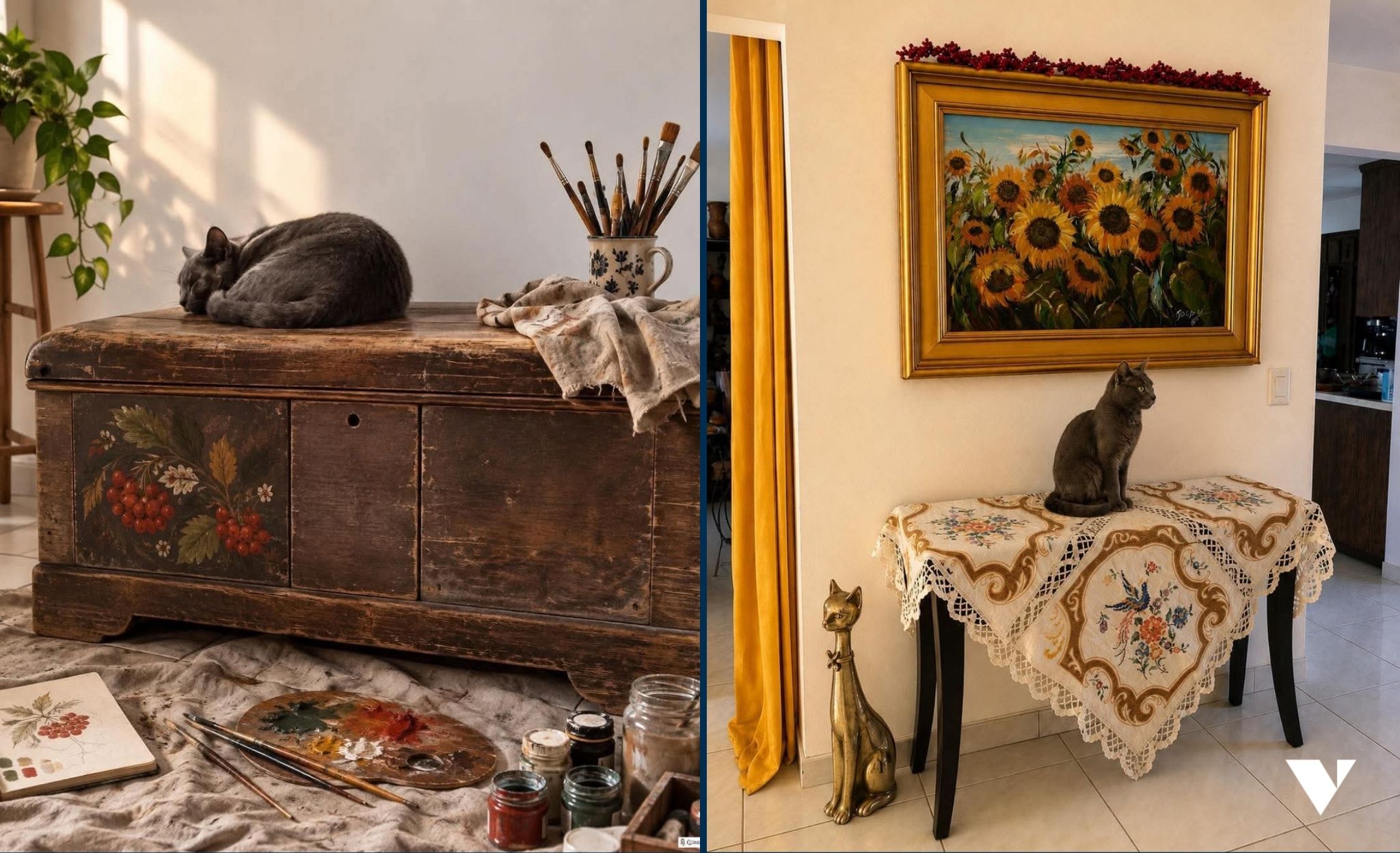 But for her, it is not enough simply to preserve an old embroidered shirt or rushnyk. What matters is knowing whose hands created it. The family remembers the names of the women who embroidered, wove, and sewed them. Grandmothers, great-grandmothers, mothers. Once, these objects were simply an ordinary part of the home. Today, thousands of miles from Ukraine, they carry an entirely different weight.
 But for her, it is not enough simply to preserve an old embroidered shirt or rushnyk. What matters is knowing whose hands created it. The family remembers the names of the women who embroidered, wove, and sewed them. Grandmothers, great-grandmothers, mothers. Once, these objects were simply an ordinary part of the home. Today, thousands of miles from Ukraine, they carry an entirely different weight.
There are many stories like this here. A large woven rug was made by her grandmother Marusia, who mastered various handicraft techniques. The motanka dolls, which have already grown into an entire collection in the house, are made by Maryna’s mother, Svitlana.

 After the beginning of the full-scale war, the number of items grew. Maryna Vlasiuk heads the USA Stands with Ukraine charitable foundation. For the Photo for Ukraine project, which included photo sessions in Ukrainian clothing, embroidered shirts, headdresses, and accessories were needed. Some were found in America, while others were sent from Ukraine. Ukrainian artisans in New Jersey helped recreate individual elements of traditional dress.
 Then came the Vertep. Once again, clothing was needed. Once again, people began searching, asking around, and bringing things in. In this way, the family collection gradually became much larger than the story of a single family.
But it all began much earlier. About ten years ago, Maryna moved to the United States with her two children. Her life had to fit into suitcases. Among the things she decided to take with her were embroidered shirts and her grandmother’s pillows.

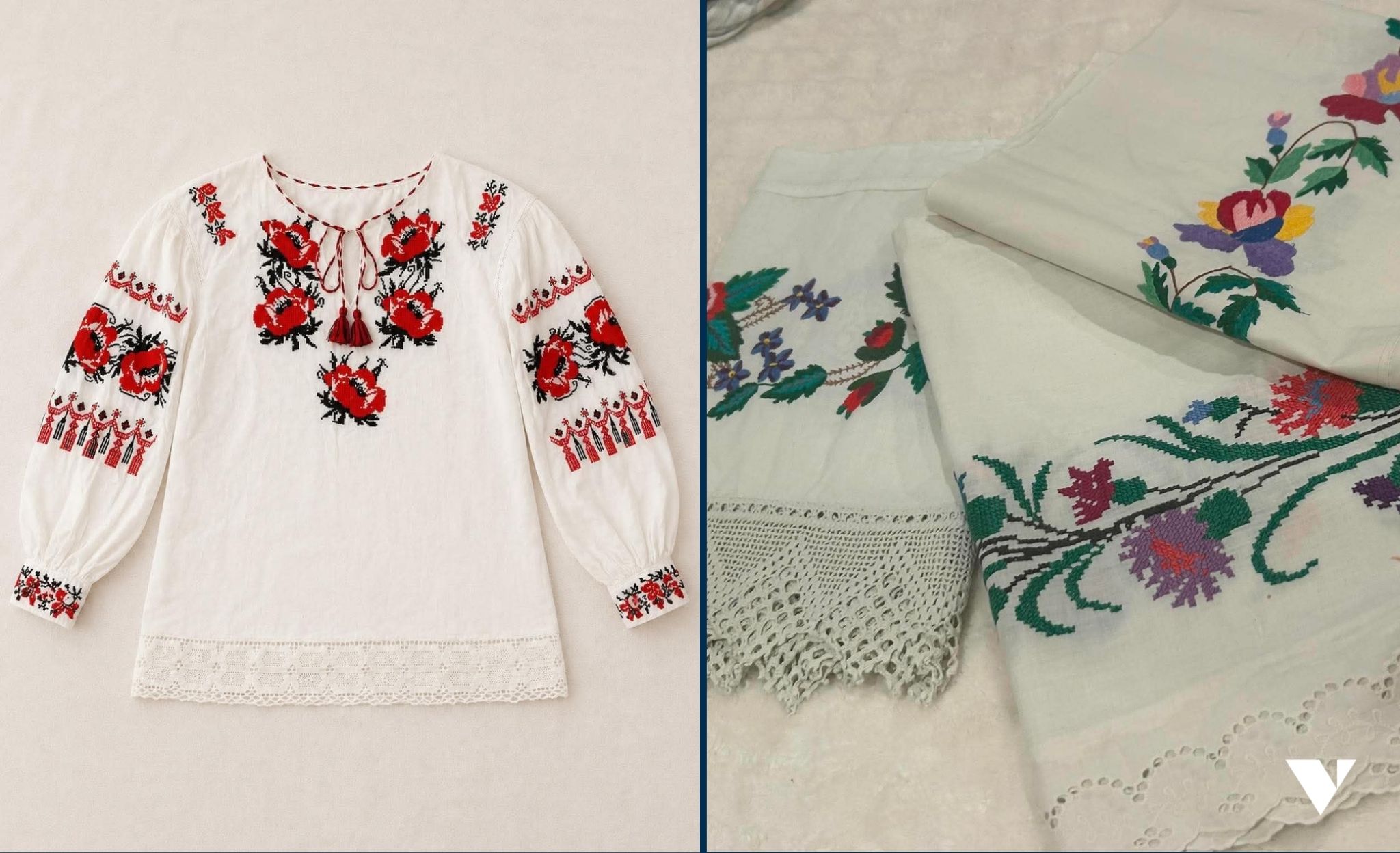 And this is perhaps the most interesting part. In Ukraine, such a pillow might simply lie on a bed. A rushnyk might hang in the house. An embroidered shirt might wait for a holiday. In America, those same things begin to serve a different purpose.
And this is perhaps the most interesting part. In Ukraine, such a pillow might simply lie on a bed. A rushnyk might hang in the house. An embroidered shirt might wait for a holiday. In America, those same things begin to serve a different purpose.
Sometimes an object lives a strange second life.
Something a grandmother made decades ago for her own home is now being shown by her grandchildren to children in America. And perhaps the most important thing here is not even preserving the rushnyk or embroidered shirt itself.
What matters is not losing the name of the person who once held the needle in her hands.

 Author: Tamara Zayats
