


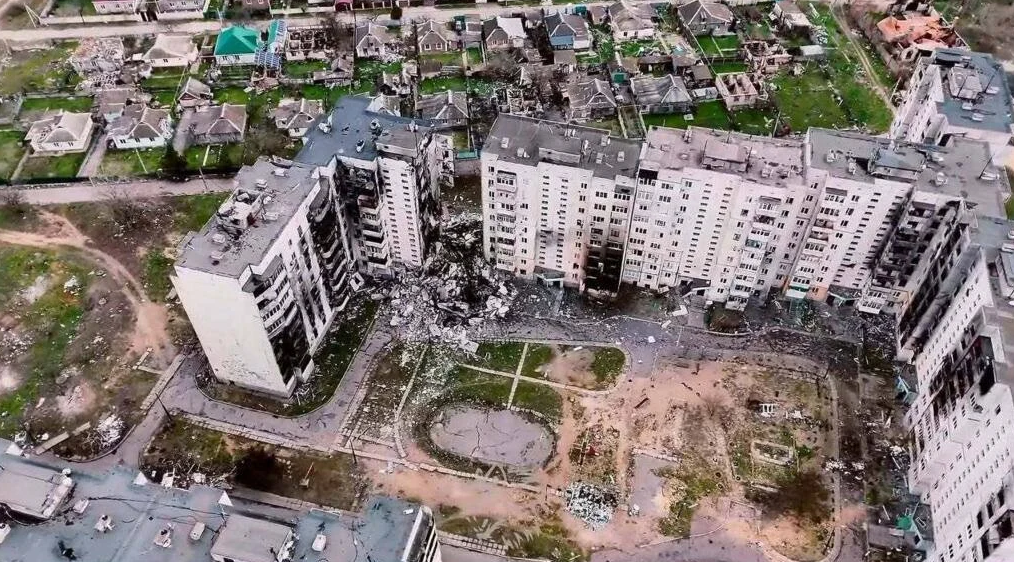
Russia has occupied Oleshky in the Kherson region for over four and a half years. Now, the city is on the brink of famine. The humanitarian catastrophe in the occupied city has become a topic of discussion at the UN level this week; Foreign Minister Andrii Sybiha called for demands that Russia open humanitarian corridors, while the Ukrainian Congress Committee of America (UCCA) appealed to the permanent missions of UN member states, urging immediate international action.
This was reported by the Ministry of Foreign Affairs of Ukraine and The Ukrainian Congress Committee of America (UCCA).
On the opening day of the high-level general debate of the 81st session of the UN General Assembly, the UCCA sent an appeal regarding the situation in occupied Oleshky to 191 permanent missions to the United Nations. Russia and North Korea were excluded from the list of recipients, as Ukraine has severed diplomatic relations with these states.
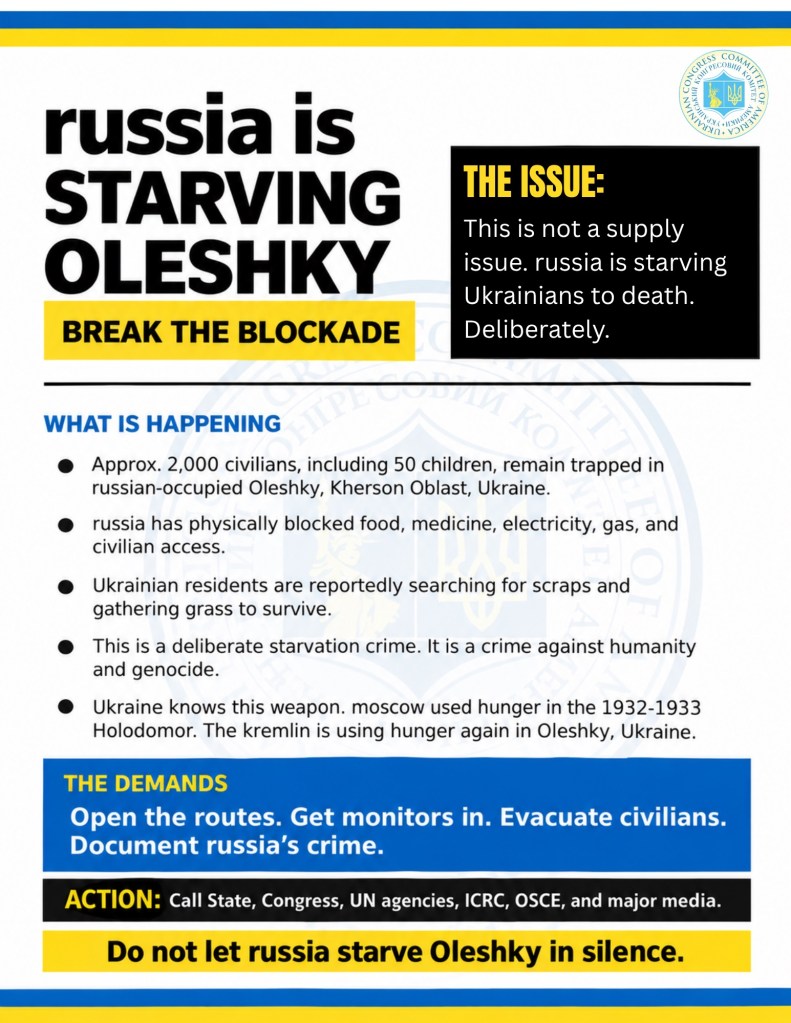
According to data provided by the UCCA, approximately 24,000 people lived in Oleshky prior to the Russian occupation, whereas current estimates suggest that only about 2,000 civilians—including around 50 children—remain in the city. The organization reports an acute shortage of food, medicines, and other essential supplies, a lack of electricity and gas, and the obstruction of humanitarian aid deliveries.
"The crisis in Oleshky is caused not by a lack of humanitarian resources, but by a deliberate blockade by Russia and the obstruction of the delivery of vital aid," the UCCA emphasized.
On an information leaflet released by the organization, the campaign’s message is stated succinctly: "Russia is starving Oleshky. Break the blockade." The UCCA also asserts that residents are forced to scavenge for food scraps and gather grass to survive.
In its statement, the organization draws a historical parallel to the Holodomor of 1932–1933, when millions of Ukrainians perished from an artificial famine caused by the policies of the Soviet regime.
The situation in Oleshky was also raised on September 23 during a high-level UN Security Council meeting on maintaining peace and security in Ukraine. Ukrainian Foreign Minister Andrii Sybiha devoted a specific part of his address to the situation in the town.
"Let us take just one town—Oleshky and the Oleshky community on the occupied left bank of the Dnipro. They are effectively under siege. Food, medicine, electricity, and gas—everything has been cut off. As winter approaches, Russia is deliberately making life there impossible," Sybiha stated.
According to him, international organizations currently have no way to reach the people remaining in the occupied community. The Minister also shared the story of an Oleshky resident named Alia who, according to the data he presented, is surviving on tea with honey, given that food supplies last reached the city before the start of summer.
"If you remember only one thing from this meeting, remember Oleshky. Hear their cry for help. Demand that Russia open humanitarian corridors," the Ukrainian Foreign Minister urged the Security Council members.
For its part, the UCCA called on the UN and its member states to secure immediate, safe, and unhindered humanitarian access to Oleshky. The second step must be the establishment of safe and voluntary evacuation routes under international supervision.
"Immediate humanitarian access, independent monitoring, safe evacuation routes, and holding those responsible accountable are essential," the statement reads.
The UCCA also calls for granting access to independent observers to assess the situation of the civilian population and document reports of starvation, loss of life, and the obstruction of humanitarian aid. If physical access to the city remains impossible, the organization proposes collecting and preserving evidence through remote monitoring and eyewitness accounts.
The fourth demand is an end to the blockade and an investigation into potential international crimes. UCCA emphasizes that reports of the deliberate deprivation of the civilian population of food require an international investigation, and that legal classification and accountability must be based on established evidence.
Photo: armyinform.com.ua

Author: Inna Mikhno