


US negotiators have proposed economic incentives to Russia in exchange for a partial ceasefire in Ukraine. Donald Trump urged Ukraine to change its president, accusing Volodymyr Zelenskyy of being unwilling to strike a deal. Meanwhile, Estonia advocated for additional military aid to Ukraine, and the US Congress announced plans to block purchases of Russian oil.
US Proposed Economic Incentives to Russia in Exchange for a Partial Truce with Ukraine
In late September, US negotiators Jared Kushner and Steve Witkoff offered Moscow three economic incentives intended to persuade Russia to agree to a partial ceasefire. The proposals concerned a potential truce regarding energy infrastructure or maritime operations. One option considered was unfreezing billions of dollars in Russian sovereign assets held in the West; this move was intended as an incentive to agree to the truce, rather than a reward for adhering to it.
Another potential incentive involved the sale of some assets belonging to the Russian oil company Lukoil as part of a multi-billion-dollar deal involving Middle Eastern investors. A third proposal entailed allowing Belarus to resume exports of potash fertilizers. The US side effectively revisited an idea discussed last year, which involved unfreezing up to $100 billion in Russian assets. Kyiv did not immediately reject these proposals but insisted on safeguards—specifically, reciprocal payments to Ukraine or guarantees of additional military aid in the event of a truce violation.
Trump stated that Ukraine should change its president due to the lack of a deal with Russia
US President Donald Trump stated, that he recommends Ukraine change its leader, as he believes President Volodymyr Zelenskyy is unwilling to reach an agreement. Trump claimed that Zelenskyy could have ended the war sooner but failed to do so. He also asserted that the war would not have started had he been US president. Separately, the American president accused Ukraine of attacking Russian diesel production facilities and linked these attacks to supply issues for the resource on the global market.
"Zelenskyy could have ended this war many times. But he chooses not to. This war would not have started if I were president. He wants to create problems for the world and for our farmers by attacking diesel plants," Trump stated.
He also said that the US had allegedly asked Ukraine not to attack Russian oil refineries that produce diesel fuel. "They can do whatever they want, but not attack those plants," the American president said.
Later, Trump reiterated his call for a change in Ukrainian leadership: "I recommend that Ukraine change its leader to someone who will make a deal. For some reason, Zelenskyy doesn't want to make a deal. It is time for Ukraine to get a new president."
On the same day, he also stated that Zelenskyy should hold elections in Ukraine.
Estonian Prime Minister seeks to discuss additional aid for Ukraine to strike Russian oil refineries
Estonian Prime Minister Kristen Michal criticized the US decision to strike a deal with Russia regarding diesel fuel supplies. He stated, that he plans to raise the issue of additional aid for Ukraine at the European Council meeting. According to Michal, support for Ukraine should help maintain pressure on the Russian oil industry. The Estonian Prime Minister also emphasized that the agreement with the US contradicts the West's previous policy aimed at reducing Russia's energy revenues.
"This is a serious miscalculation, as deals with dictators are a path to hell. Innocent people are being killed using money from gas and fuel sales. And it is quite likely that the fuel being counted on will never actually arrive," Michal noted.
He recalled that the US had previously urged allies to move away from Russian fuel. "The US previously persuaded its allies to give up Russian fuel—and we did so," the Prime Minister said.
He also stated: "We should discuss—both in Estonia and at next week's European Council meeting—whether we can quickly provide Ukraine with additional aid so it can completely destroy Russian oil refineries."
Donald Trump explained the decision regarding Russian diesel supplies by citing the need to lower fuel prices, which had risen after Iran blocked the Strait of Hormuz amidst its conflict with the U.S. According to him, Russia agreed to immediately supply 300,000 tons of diesel to the global market and subsequently increase supply volumes under a temporary U.S. license valid until April 7, 2027.
Mike Pence urged Trump to reverse the decision on Russian diesel
Former U.S. Vice President Mike Pence spoke out against the Donald Trump administration's decision to temporarily ease sanctions on Russian diesel fuel. He stated, that this move contradicts the efforts of the late Senator Lindsey Graham, who had advocated for tougher sanctions against Russia. Pence also criticized the decision in light of Russian attacks on civilian targets in Ukraine. In his view, easing restrictions would help finance Russia's war effort.
Pence wrote that Trump's decision "makes no sense" and called it a "betrayal of the legacy and leadership of the late Senator Lindsey Graham." He stated that during a visit to Ukraine in September, he became convinced of the Ukrainian forces' ability to withstand the Russian army, noting that Ukrainian drones are carrying the fight into Russian territory. "Putin doesn't want peace. Putin wants Ukraine," Pence wrote. He urged Trump to immediately scrap the deal with Putin, return to a stricter sanctions policy, and impose restrictions on countries that purchase Russian energy. Furthermore, the former vice president called on the U.S. and its allies to provide Ukraine with the military support needed to counter the Russian invasion.
U.S. Congress Prepares Bill to Ban Russian Oil Purchases
U.S. Congress Prepares Bill to Ban Russian Oil Purchases stated plans to introduce a bipartisan bill aimed at blocking purchases of Russian oil. The document is set to be named the "Ronald Reagan Peace Through Strength Act." According to Fitzpatrick, the bill is to be forced to a vote in the House of Representatives using a special procedure. This mechanism allows the measure to be considered without the consent of the Speaker or the relevant committee.
"It will be forced to a vote via a discharge petition and will pass with an overwhelming majority," Fitzpatrick wrote on X. To trigger this procedure, the petition must be signed by at least 218 of the 435 members of the House of Representatives. The congressman did not specify exactly when the bill would be introduced, which Democrats would join in drafting it, or what specific mechanisms the document would entail to restrict purchases of Russian oil.
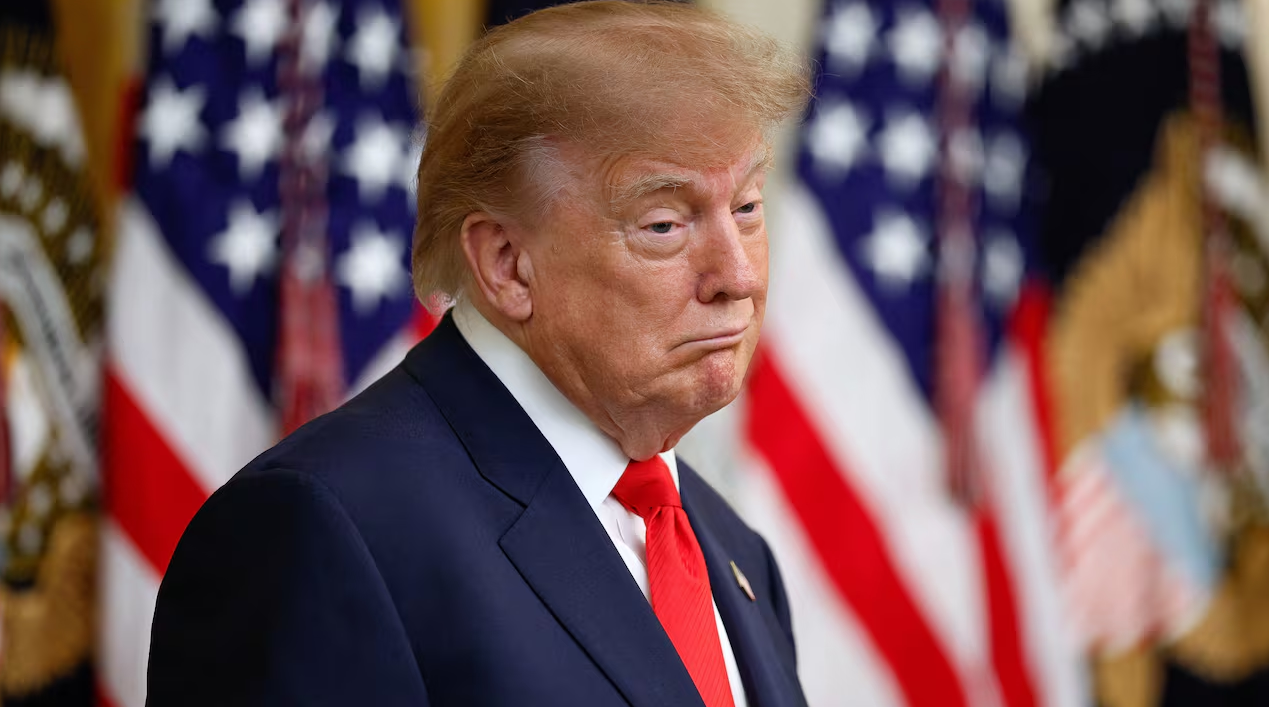
Photo: Evan Vucci/Reuters
Author: Danylo Pievchev