


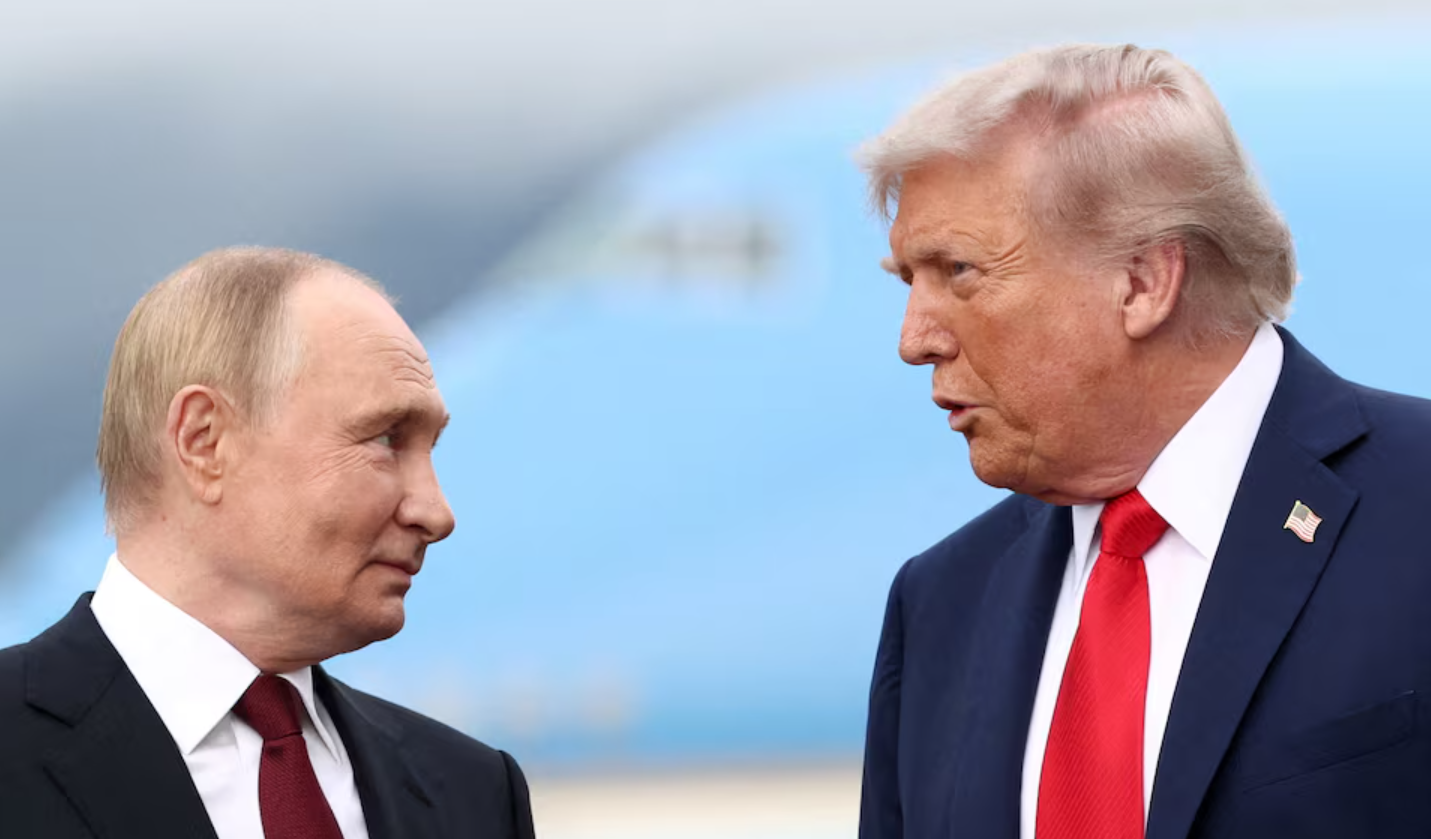
US President Donald Trump has suspended the application of tariffs and sanctions against buyers of Russian energy resources in order to assess the potential economic consequences of these restrictions. Secretary of State Marco Rubio explained the administration's position, stating that a final decision regarding the sanctions has not yet been reached. Meanwhile, a bill has been introduced in the US Congress opposing a deal with Russia concerning diesel fuel, and Volodymyr Zelenskyy has highlighted the risks associated with the return of frozen Russian assets.
Trump Suspends Sanctions on Buyers of Russian Energy
US President Donald Trump has suspended the application of tariffs and sanctions mandated by the legislation sponsored by Lindsey Graham, which was enacted in September. An executive order to this effect was released on Friday. Trump exercised a provision within the legislation that grants the President the authority to waive the application of the restrictions it outlines.
"I am suspending the application of the sanctions, restrictions, and tariffs stipulated by the Graham Act. I have submitted confirmation to Congress that waiving their application at this stage serves the national interests of the United States," the US President stated.
While the executive order formally establishes the tariffs mandated by the law, it simultaneously suspends their enforcement.
The law mandated the imposition of 100% tariffs on goods from the five countries that purchase the largest volumes of Russian oil, as well as sanctions against a number of Russian entities and 500% tariffs on Russian energy imports to the United States. The deadline for implementing these provisions was October 18. At the same time, the law allows the President to waive these restrictions, provided he submits written confirmation to Congress stating that such a decision is in the U.S. national interest, along with a report explaining the rationale. The document does not provide for the lifting of previously announced sanctions. The suspension of the tariffs comes against the backdrop of an agreement between Trump and Putin regarding the supply of Russian diesel fuel to global markets and may draw criticism from members of Congress, particularly Republicans.
Rubio explains why Trump paused sanctions against Russia for 60 days
U.S. Secretary of State Marco Rubio stated, that Donald Trump plans to use a period of up to 60 days to assess the potential consequences of sanctions against Russia—and tariffs on countries that purchase Russian energy—for the global economy and the United States itself. According to Rubio, Washington needs to analyze the impact such measures would have on the global economy and the U.S. economy.
"I think the President wants to use this 60-day period to analyze, so to speak, what the consequences of imposing both sanctions and tariffs would be for the global economy, and even for the U.S. economy," the Secretary of State noted.
Previously, Trump signed an executive order suspending the application of key sanctions and tariffs mandated by the legislation proposed by Lindsey Graham, which concerns Russia and countries that import its energy resources.
Rubio cited the example of India, which has diversified its energy sources but remains heavily dependent on Russian oil. He also defended a separate U.S. agreement with Russia aimed at increasing the supply of diesel fuel to global markets and stabilizing prices—prices that had risen due to a war with Iran and disruptions in energy supplies.
"That diesel is going to get sold one way or another. The only difference is how much of it the United States would get," Rubio said.
According to him, conflicts in various regions of the world influence one another, creating additional challenges for managing global energy supplies. "These conflicts around the world are beginning to intersect," he noted. For his part, Trump stated that he has not yet reached a final decision regarding the sanctions and tariffs.
Rubio stated that Ukraine does not have access to Starshield
U.S. Secretary of State Marco Rubio stated, that Ukraine currently lacks access to the Starshield satellite system, which is used by the U.S. military. He explained that while Starlink is a commercial product, Starshield is designed for defense and military purposes.
"I mean, this [Starshield] is something used by the United States military." "Currently, this is not available to Ukraine, and the matter is under discussion. Discussions are ongoing regarding exactly how they would like to use it," said Rubio.
He also noted that Ukraine had requested access to Starshield, specifically for the purpose of conducting strikes deep within Russian territory.
Rubio denied any involvement by U.S. authorities in the throttling of Starlink speeds in Ukraine.
"We had nothing to do with it. No one ordered that Starlink speeds be reduced. It just happened somehow. But, as I understand it, the speeds have been restored—everything has returned to its previous state. They were using Starlink for their drones," the Secretary of State stated.
Responding to a question about the potential provision of Starshield to Ukraine, he emphasized that this system is a separate product linked to a contract with the U.S. military.
"Starshield is a completely different product. Starshield is a contract with the United States military. It has nothing to do with Ukraine. I know that Ukraine wants access to Starshield. They requested access to it in order to carry out strikes deep within Russian territory. Currently, they do not have access to it," said Rubio.
Zelenskyy stated that Russia seeks the return of frozen assets
President of Ukraine Volodymyr Zelensky stated, that the recovery of frozen Russian assets is one of Moscow's objectives. According to him, Ukraine is interested in securing these funds before Russia can succeed in getting them back.
"In my view, regarding the frozen assets, our key message is that Russia must not have the ability to influence these assets later on. We know for a fact that they are very keen to get these assets back. These assets are one of the Russian Federation's objectives. Therefore, in one form or another, Ukraine would like to obtain these funds before Russia is able to do so," Zelenskyy said during a press conference in Brussels.
The Head of State also noted that, following Donald Trump's agreement with Russia regarding diesel fuel, Moscow might seek other types of deals. He suggested that such arrangements could potentially involve the frozen assets as well. Zelenskyy emphasized that it is crucial for Ukraine to prevent Russia from exerting any influence over the future fate of these funds. He further reiterated his position that Ukraine should secure these funds before the Russian side can manage to have them returned.
Bill Introduced in U.S. Congress Opposing Trump-Putin Deal on Diesel Fuel
On October 16, Gregory Meeks, a Democrat on the U.S. House Committee on Foreign Affairs, introduced a bipartisan bill aimed at opposing an agreement between Donald Trump and Putin regarding the purchase of Russian diesel fuel. The legislation calls for the revocation of sanctions exemptions granted by the U.S. Department of the Treasury, a ban on the U.S. International Development Finance Corporation investing in the Russian energy sector, and a mandate for the administration to impose sanctions. The bill, titled "Prohibiting Corrupt Oil Deals with Russia," has been submitted to the House of Representatives. It is co-sponsored by 17 other members of Congress: 16 Democrats and one Republican, Don Bacon.
Meeks stated that the deal would not help lower costs for Americans—who, according to him, are already bearing the financial consequences of a U.S. war with Iran. "It will provide Putin with millions of dollars to continue slaughtering Ukrainian civilians with impunity," the congressman said. He urged Washington to increase pressure on the Kremlin and accused Trump of striking deals that, in his view, benefit the Russian leadership rather than supporting Ukraine. "This runs counter to everything the United States stands for. Congress must act," Meeks declared. The bill provides for the revocation of existing general licenses issued by the U.S. Department of the Treasury’s Office of Foreign Assets Control—which allow for transactions that would otherwise be subject to sanctions—as well as a prohibition on the issuance of new licenses of this kind.
Photo: REUTERS/Kevin Lamarque/File Photo
Author: Danylo Pievchev