


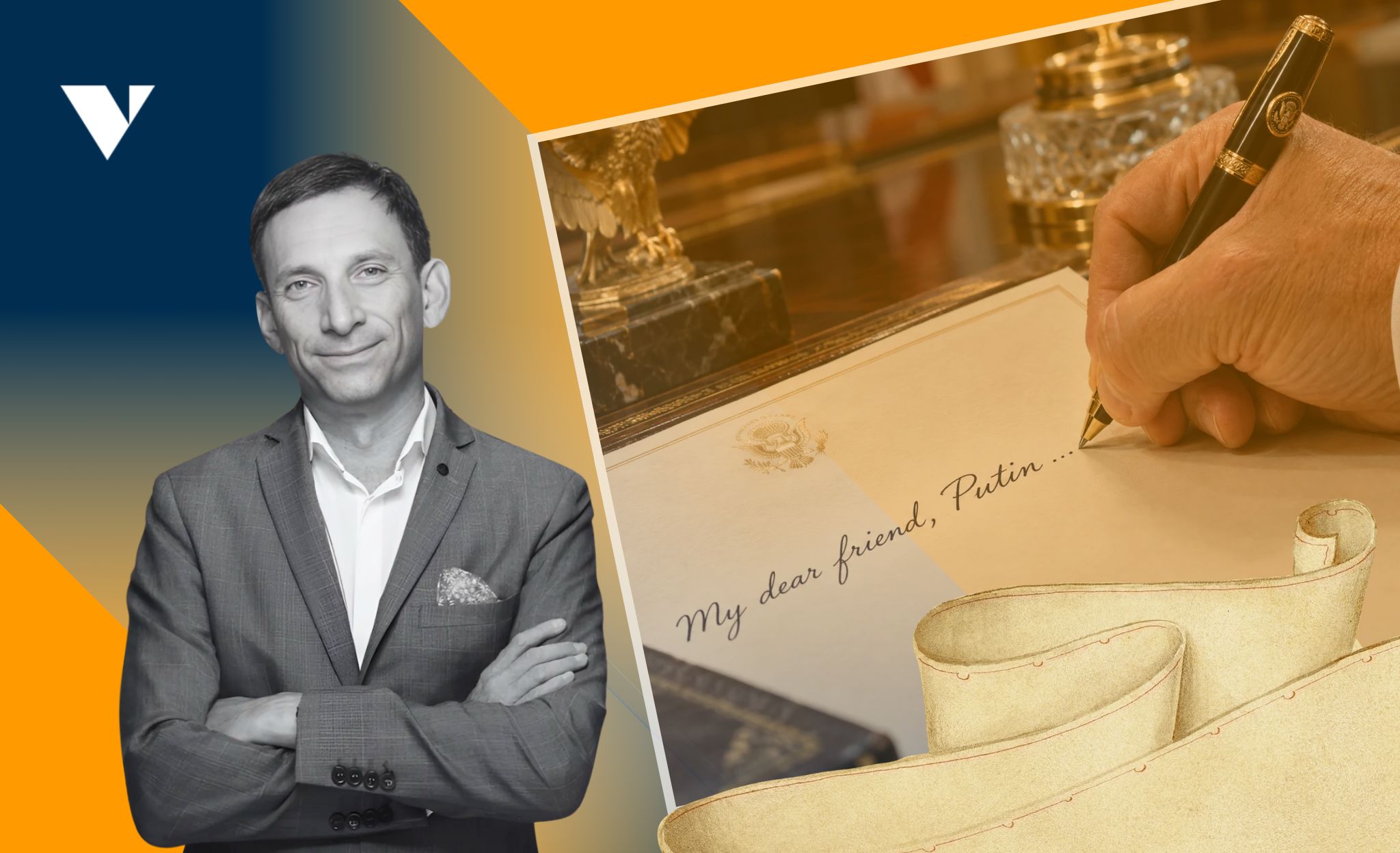
Donald Trump’s description of Putin as his friend provoked an extremely emotional reaction in Europe, Ukraine, and the United States itself. Yet if we look at these words without unnecessary emotion, we will recall that practically from the very first days of his political career, Trump spoke warmly about Putin and tried to maintain contact with the Russian president. In fact, the American president is now speaking about his friendship with Putin with remarkable precision. He refused to confirm that Putin is a friend of America. But he insists that he personally has warm relations with Putin.
And this brings us to the search for an answer to one of the central questions of modern politics. Can an American president be a personal friend of a man who is not only an enemy of his country but who, through his alliance with Iran, contributes to the deaths of American service members, the destruction of American bases, and the suffering of American allies? Can an American president proclaim a meeting with a man an achievement when, the very next night after this historic summit, that man launches yet another massive bombardment of Ukrainian cities? And what will actually remain in history: the summit or the series of Russian bombings that Trump could find neither the words nor the time to condemn? Incidentally, this lack of reaction to acts of destruction against civilians will also remain in history. But the more important question is this: whose reputation will it stain — Donald Trump’s or that of the United States of America?
There is no need to resort to conspiracy theories about the true nature of the romantic relationship between the American and Russian presidents, but something else is worth noting: the transfer of business approaches into politics. After all, this is precisely what Donald Trump has always taken pride in. And in business, you can indeed compete ruthlessly, try to take over a rival’s company and even drive that rival into bankruptcy during the day, and then meet in the evening over a drink at a private club or an exclusive party.
But such approaches do not work in politics. Politics is defined first and foremost by values, not by private interests and personal relationships. And if you forget that, or deliberately try to ignore it, you lose.
That is exactly what is happening in the relationship between Trump and Putin. Putin gets from this friendship what he needs: the continuation of the Russian-Ukrainian war without effective new U.S. sanctions and without large-scale assistance to Ukraine. A breakthrough from the diplomatic isolation in which the dictator found himself after 2022 — isolation achieved precisely through the efforts of President Joe Biden’s administration. The opportunity to sell oil for hard currency. The role of one of the three “masters of the world,” a status the Russian president clearly does not merit. The ability to intimidate Europe, whose leaders are now far from certain that the United States would stand with them in the event of Russian aggression.
And what does Trump get, apart from reputational risks in a country where the overwhelming majority of citizens do not support Putin? What does America gain from these warm relations and handshakes?
The answers to these questions are well known. Something else is also clear: Putin is not only no friend of America — he is no friend of Trump either. He is not friends with Trump. He is using him, while making no concessions whatsoever.
So why should the American president describe this brazen exploitation as friendship?
Author: Vitaly Portnikov
