


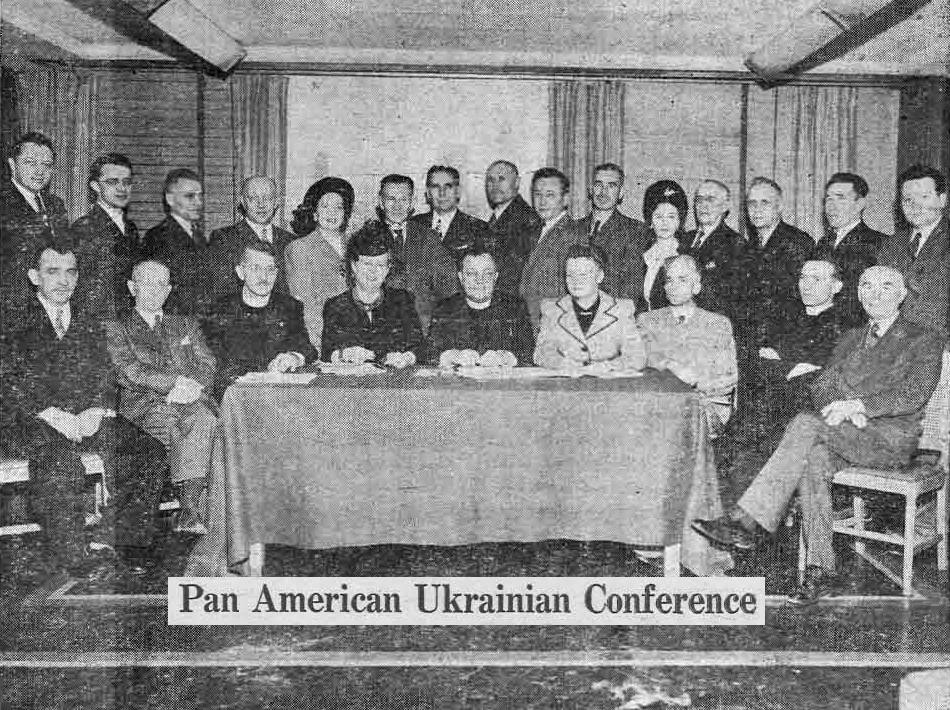
Today is Labor Day, a national holiday in the United States. The purpose of Labor Day in the United States is not only to relax, but also to honor the work of workers who have contributed to the prosperity of the American economy. Ukrainians have become an integral part of American society and have made a significant contribution to the economic development of the country.
This is stated in a ukrainianpeople.us and the international humanitarian association "We Are Ukrainians"
The process of labor integration of Ukrainians in America had its own waves and peculiarities.
Evidence of the first Ukrainians in North America dates back to the 17th century. Ukrainians began to move to North America in large numbers in the 1870s - this was the first wave. Ethnic Ukrainians from Galicia and Zakarpattia, then under the rule of the Austro-Hungarian Empire, sought a better life across the ocean. Because of the mountainous terrain, the inhabitants lived on the edge of subsistence, with small-scale farming, herding, and seasonal labor on the plains.
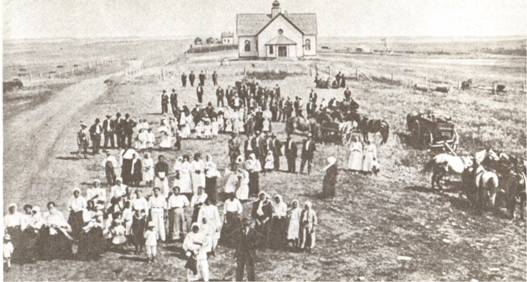
The future "Transcarpathian Americans" arrived in New York and, after registering, immediately tried to find work. The newcomers settled in the northeastern and central states. They found work in the coal-mining and metallurgical regions of Pennsylvania, in industrial plants in New York, and in oil refineries in New Jersey. They lived near their workplaces in apartment buildings and were quite miserable and poor due to insufficient income. Despite all the difficulties, the emigrants helped their relatives back home.
After 1899 the number of Ukrainians in North America was 200,000-255,000. Most of them settled in the following states: Pennsylvania, New York, New Jersey, Ohio, Connecticut and Illinois.
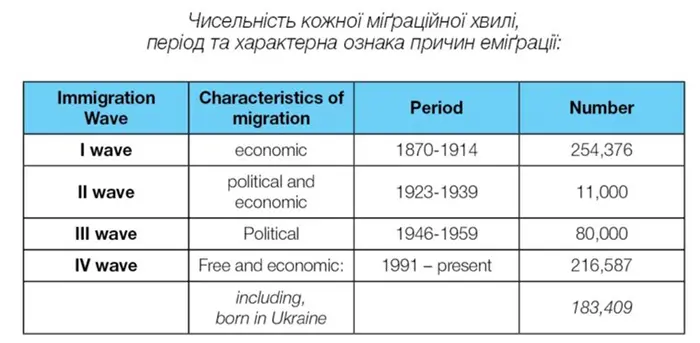
The brutal Soviet regime established after the Bolshevik coup led to mass repression, forcing people to flee the country. This was the second wave - both workers and intellectuals fled, often illegally. According to various estimates, between 70,000 and 150,000 Ukrainians were resettled. Many Ukrainians worked hard in agriculture, construction, and industry.
In the Lviv newspaper Svoboda, Ivan Boikiv, a simple Ukrainian peasant, commented on the conditions of emigration to North America as follows: "An unfortunate emigrant looks for work for one or two months, and by the third month he no longer has the strength to suffer so much...".
The third wave of emigration, which covered the period from the end of the Second World War to the 1980s, is called the "political" wave. The main representatives of this wave were anti-revolutionary groups, prisoners of war and dissidents. Most of them were intellectuals who fled from the return of the Red Army and settled in Canada. At first, they often had difficulty finding work because America needed workers, so they worked as common laborers. However, it was at this time that they began to create public organizations, cultural centers, schools and churches to preserve national identity. Their investments became the basis for the creation of Ukrainian centers, including the Ukrainian Village in Chicago. The immigrants took with them documents, libraries, photographs, and most importantly, their memories, which helped preserve the memory of the past.

The fourth wave (1990-2014) of "migrant workers" was the largest in the history of Ukrainian immigration to the United States, exceeding 216 thousand people. The fourth wave is very different from the previous three. Most of them left because of the difficult economic conditions after the collapse of the Soviet Union. Most have university degrees or technical specialties and speak English, which allows them to find work in America. The organized Ukrainian diaspora in the United States assists fourth-wave Ukrainian immigrants in finding jobs, housing, business contacts, etc. A Ukrainian diaspora classifieds website has been created for this purpose.
"The Fourth Wave changed the demographics of the Ukrainian diaspora in the United States. Without the 4th Wave, we would have only 7% Ukrainian speakers today, and thanks to the 4th Wave, the presence of the Ukrainian language has increased. At the same time, we observe a paradoxical situation that no other ethnic community has: almost half of the new immigrants speak Russian at home. However, this is not so much their personal fault as it is a consequence of the long-standing Russification of the Ukrainian population and a reflection of the linguistic realities in Ukraine itself," notes Vasyl Lopukh (New York), a researcher on this topic in the United States.

Currently, the largest Ukrainian communities are concentrated in metropolitan areas: New York, Chicago, Philadelphia, and Portland, Oregon, where about 1/4 of all Ukrainians live. Another 50% of Ukrainians live in Delaware, Maryland, New Jersey, New York, Pennsylvania, Washington, Virginia, West Virginia, Illinois, Indiana, Ohio, Wisconsin, and other states.
Author: Inna Mikhno