


The world is constantly changing – every year, every day, every hour. It is transformed by people through their work, actions, dreams, and ideas. Today, these changes are happening at an incredible speed, unlike anything seen before. I remember, 50 years ago, there were no mobile phones, only landlines, and even then, not everyone had one. Most importantly, there was no internet or the conveniences associated with it. Electric cars didn’t exist. Now, in San Francisco, driverless taxis are on the streets. Incredible! What comes next?
If you ask what changes the world the most, the answer is undoubtedly "discoveries and innovations." Since the dawn of humanity to this day, I identify ten pivotal discoveries that have followed one another:
- Fire
- Iron
- The Wheel
- Steam Engines
- Internal Combustion Engines
- Electricity, the Telephone, Radio, Cinema, Television
- Jet Propulsion
- Nuclear Reactions
- Computers, the Internet, Mobile Phones
- Robots, Artificial Intelligence
And these are just in the field of physics. There are also chemistry, biology, and medicine, where new discoveries have significantly changed human lives: advanced materials like polymers and plastics, DNA, vaccines, new medications, and medical devices. This list could go on and on. What’s striking is that the time between one discovery and the next has consistently shortened. While centuries passed between points 1, 2, and 3, the gaps between the most recent discoveries have shrunk to decades, years, or even months. Time seems to be compressing.
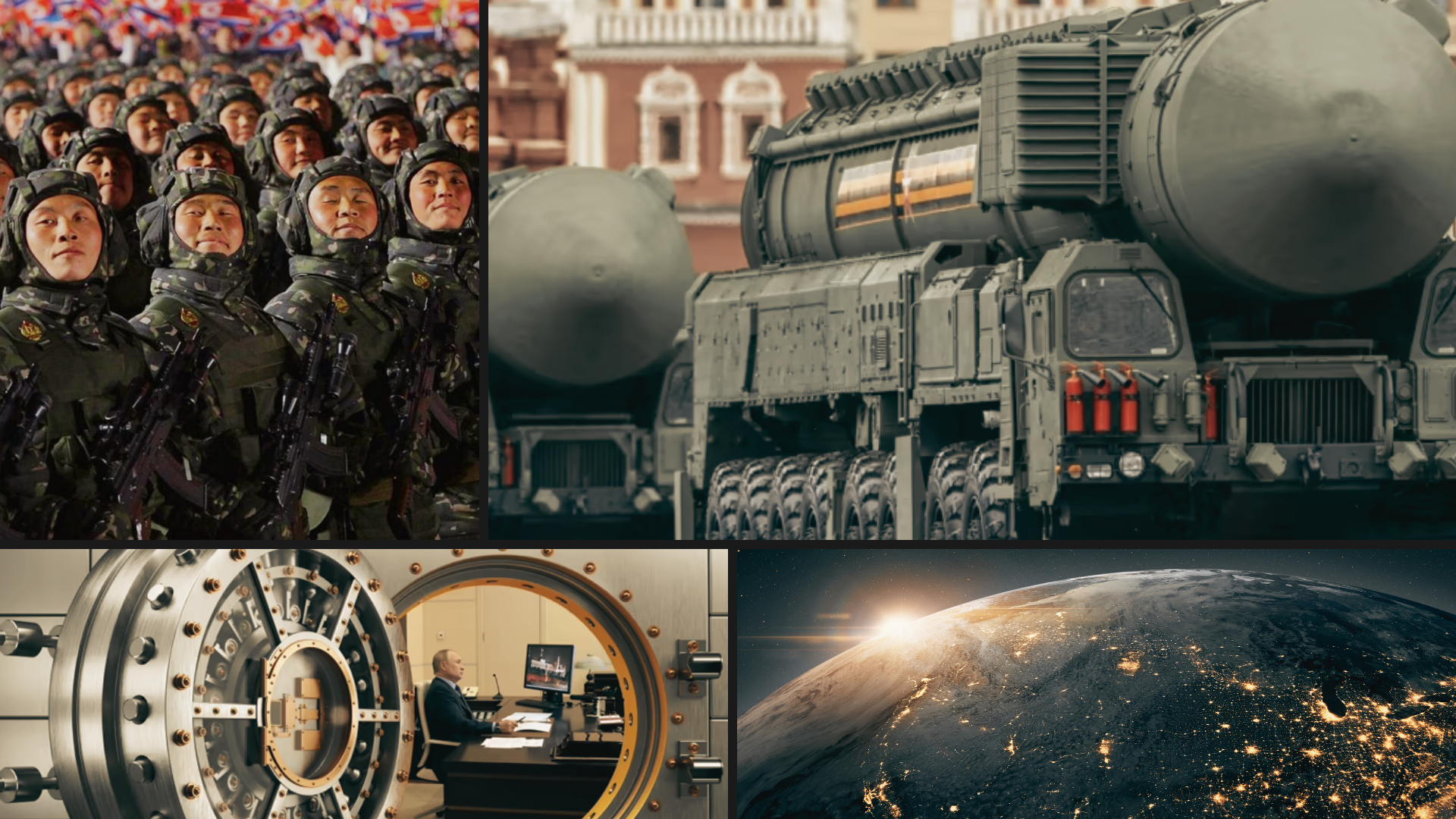
What comes next? Could it be an explosion? And if so, what would it unleash – literally? The discovery of the nuclear chain reaction led to the creation of atomic bombs, which demonstrated their devastating power in the Japanese cities of Hiroshima and Nagasaki. The "Pandora’s Box" opened by Italian-American scientist Enrico Fermi remains unclosed, threatening humanity with annihilation. The nuclear arms race that followed has ebbed and flowed but is now escalating again. As a result, nuclear-armed states – there are 11 of them – have amassed enough weapons to destroy the entire planet three times over. Madness! Once is more than enough. Imagine the immense resources, funds, and energy wasted on self-destruction. These could have been invested in science, education, infrastructure, and improving people's lives. A true waste of potential.
In Halychyna (Galicia), there’s a distinct word – varyat (a reckless or mad person). It describes someone who acts impulsively, irrationally, without awareness of the consequences. Unfortunately, in some countries, people like this are increasingly found in the highest positions of power. The most prominent varyat currently sits in the kremlin, reveling in his madness and the blood of innocent victims. For no apparent reason, he launched a war against Ukraine, aiming to seize its territory, erase its people, language, culture, traditions, and even the memory of Ukraine itself. He destroys Ukrainian cities and villages, plunging them into darkness and cold, kills adults and children, and crushes freedom and human dignity in his own country. He kills and wounds Ukrainian defenders while sacrificing hundreds of thousands of his own soldiers, calling it "dvizhukha" (chaos or activity). He proposes a "duel" to Western countries: he’ll launch his ballistic missiles, the "Oreshnik" (a type of nut, likely symbolic for its shell-like nature), at Ukraine, daring them to intercept. Is this not madness? Worse still, through relentless propaganda, he has turned the majority of his compatriots into equally mad individuals. He threatens to use nuclear weapons against Ukraine and reduce the world to nuclear ash.
Will there not be someone in this world who can stop him, lock him behind bars, in an iron cage, or at least in an asylum? There was hope in Biden, but he turned out to lack resolve. Now, the hope shifts to Trump. If the president of the world's most powerful nation, one that has always stood for freedom, justice, law, and democracy, cannot handle this monster, then we may indeed say the world has "gone mad." For now, let us hope this does not happen. For the world, given to us by God, is truly beautiful and unique, and it is meant to remain a happy home for our children and grandchildren for a long time to come.
Author: Myroslav Grekh