


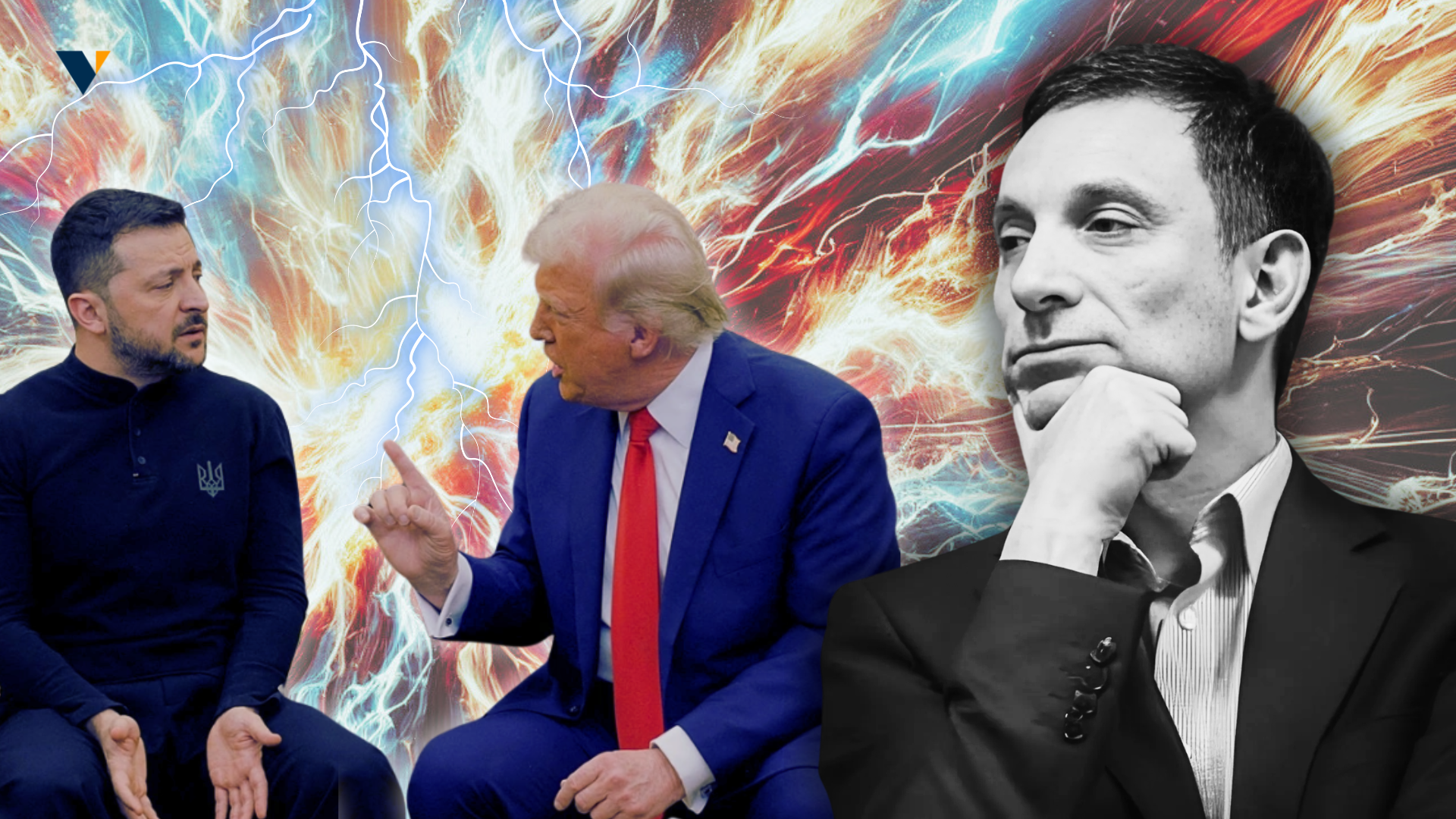
The initial emotions following the truly historic meeting between the Presidents of Ukraine and the United States have somewhat subsided. No one has ever witnessed anything like it in the Oval Office – at least not in a public setting. President of Ukraine Volodymyr Zelensky insists on the need to maintain ties between his country and the United States. Meanwhile, U.S. President Donald Trump has left Washington to spend the weekend at Mar-a-Lago, but members of his administration are calling on the Ukrainian president to remedy the situation that arose after his public spat with Trump and U.S. Vice President J.D. Vance. No one can say today what the final conclusions in Washington and Kyiv will be. But it is clear that both countries need each other.
Ukraine’s interest in cooperation with the United States needs little explanation. Ukraine continues to fight against unprovoked Russian aggression. And regardless of what Zelensky and Trump may say, there is no sign that Russian President Putin is genuinely interested in a ceasefire or an armistice. What’s more, Putin is determined to continue the war, regardless of what the American administration thinks. In this situation, Ukraine is critically dependent on U.S. military assistance, because without it, the country risks not only losing territory but also jeopardizing the lives of its servicemen and civilians. Even after the war ends – whenever that may be – the restoration of territories remaining under the control of Ukraine’s legitimate government will require investments and the participation of economically developed states.
However, U.S. aid to Ukraine is not just a matter of charity; it is also a matter of America’s own security. History shows that when the United States fails to maintain a balance of security in Europe, war sooner or later reaches America as well. This is what Zelensky tried to convey to Trump and other members of the American delegation. It may have surprised the American president, but the history of global conflicts undeniably proves this. And history does not bow to presidents – it unfolds according to its own script.
Are the United States not interested in supporting Ukraine? But they are interested in ending the war and engaging in dialogue with Russia. If the U.S. stops assisting Kyiv, it will lose the last real leverage it has in that dialogue. In that case, the strong negotiating position would not belong to Trump, but to Putin. Then how could one even talk about distancing Russia from China?
Europe’s almost unanimous support for Zelensky is obvious. And that comes from countries with which the U.S. seeks to maintain close cooperation – such as the United Kingdom, France, and Germany. The lack of American support for Ukraine could significantly weaken U.S. influence throughout the European region.
But the spat in the White House is also a serious test for Europe itself. After the Munich Conference and the sensational speech there by Vice President J.D. Vance, it became clear that the Trump administration is not interested in the traditional Euro-Atlantic security model that was formed after World War II. The dialogue between Trump and Zelensky is a logical continuation of this trend, from which Europe must draw conclusions.
Europe must learn to defend itself if the American administration continues to insist that the United States should move to the periphery of world politics. If Europeans manage to form an effective security model, they can wait for the time when the U.S. returns from this political periphery to the center of the international arena. But this will require not just high-profile statements, but concrete actions: increasing defense budgets, creating a nuclear defense system independent of the United States, and adopting a tough stance against Russia – one that would deprive Moscow of the chance at its own economic recovery even in the event of a possible deal between Trump and Putin.
The coming weeks will show how willing European leaders are to make decisions that will truly strengthen Europe’s role in global politics. This is not only about the European Union, but about the interests of all countries on the continent, including the United Kingdom and Ukraine. The very fact that European leaders are meeting in London – the capital of a country that has exited the EU – with the participation of the President of Ukraine and the Foreign Minister of Turkey proves that such a model of collective security is beginning to take shape.
And despite everything, one would hope that the United States would remain a significant part of this model.
Author: Vitaly Portnikov