


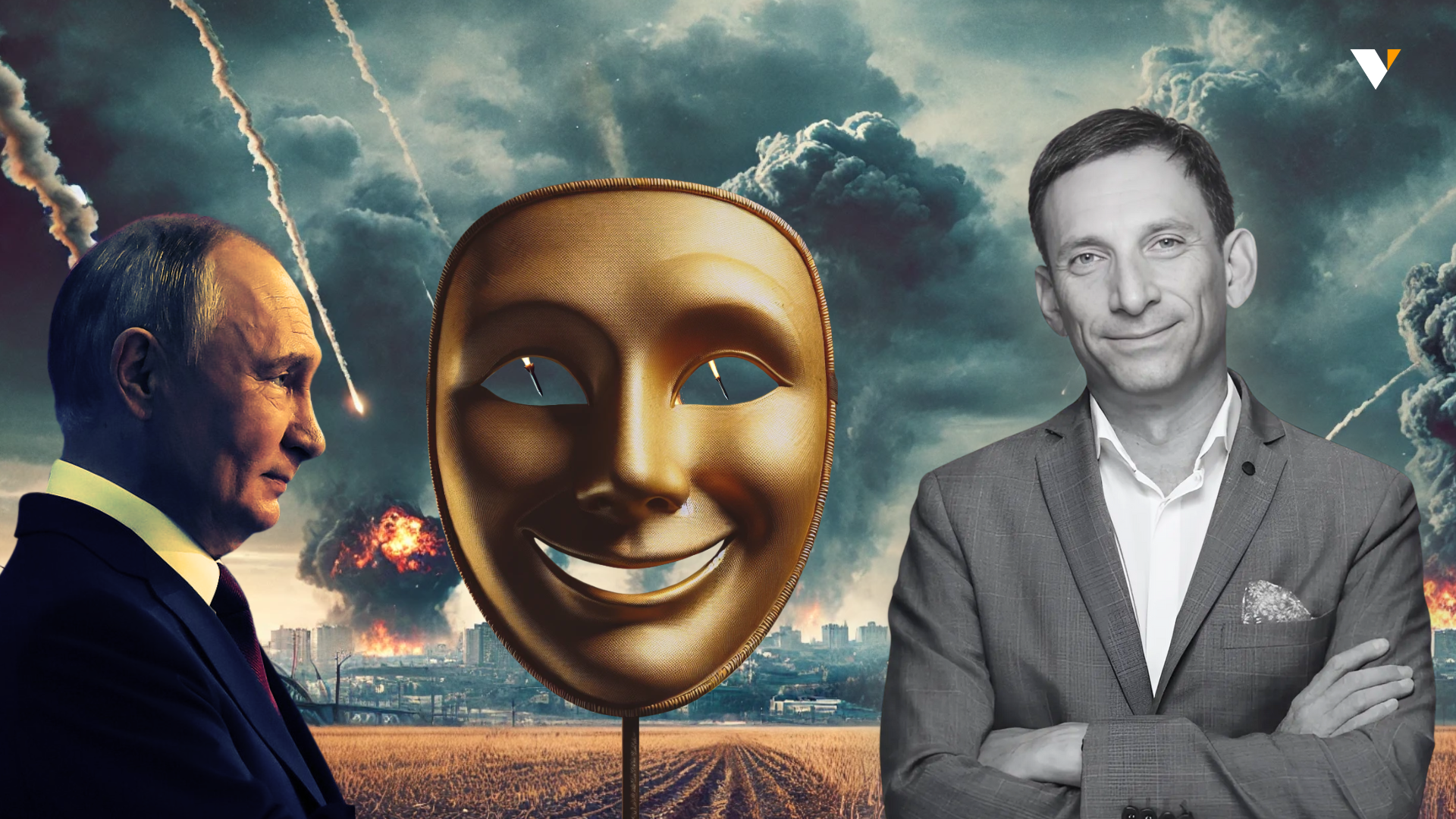
The commemoration of the eightieth anniversary of the Victory in the Second World War has become a backdrop for attempts to end another war—the largest in Europe since 1945: Russia’s war against Ukraine. The leader of the People's Republic of China visited Moscow to celebrate the significant date together with the president of Russia, while the leaders of leading European countries—France, the United Kingdom, Germany, and Poland—arrived in Kyiv to deliver an ultimatum to the president of Russia on May 10. European leaders, together with Ukraine, demand a ceasefire starting May 12, threatening the Kremlin with new sanctions if Putin does not accept this proposal. Given that the European leaders and Zelensky had a conversation with the president of the United States during their meeting in Kyiv, it can be assumed that the sanctions initiative is coordinated with Donald Trump.
However, Putin acts according to his own agenda. Several hours after the visit of the European leaders, he appeared before Russian journalists—and notably, during the nighttime, which corresponds to prime time in the United States—to effectively reject the idea of a ceasefire, instead proposing Russian-Ukrainian negotiations in Istanbul already on May 15.
Thus, both sides remain entrenched in their previous positions. Trump has long tried to convince Putin to agree to a ceasefire in order to begin negotiations on conditions for a lasting peace. Putin rejects this proposal and insists that negotiations should take place while active combat operations continue. It can be assumed that the Russian president is simply trying to exploit the American leader’s preference for diplomacy in order to gain time, continue military actions on Ukrainian territories, and maintain aerial terror against the civilian population.
And now the key question is how Donald Trump will respond to this situation. European leaders and Zelensky clearly demonstrated to him the non-constructiveness of Russia, Putin’s unwillingness to cease fire, and his obvious interest in continuing the war. Even Turkish President Recep Tayyip Erdogan, whom Putin called after his statement to journalists, linked the possibility of negotiations in Istanbul with a ceasefire.
But Putin is giving Trump an illusion of choice, demonstrating an apparent willingness to negotiate. And precisely what course the president of the United States chooses in the near future will determine the further course of events.
It is important to understand the main point: this is not so much a matter of a ceasefire—Putin does not intend to comply with it and is offering only short-lived truces to convince Washington of his supposed constructiveness. Nor is it primarily a matter of sanctions—due to cooperation with China, Russia is capable of partially neutralizing their impact and continuing the war for years.
Above all, this is a question of military assistance to Ukraine from the United States and European countries. If this assistance continues, if Ukraine receives new weapons and capabilities to destroy Russian invaders and their equipment, and to strike military and energy facilities within Russia itself, then Putin will be forced to reconsider: his war of attrition is turning against him, undermining the resources and stability of his own regime.
But if this assistance stops—which will become clear after the exhaustion of the assistance package approved during Biden’s administration—Russia will gain new opportunities for aerial terror and advances on the frontline.
Herein lies the answer to the question of how this war can end. Because, in reality, its outcome is determined neither by diplomacy—which Moscow has always used as an instrument of propaganda and destabilization—nor by sanctions, which Russia still withstands due to authoritarian allies. The end is determined by the flames consuming Russian airfields, oil refineries, and military equipment.
About Author:
