


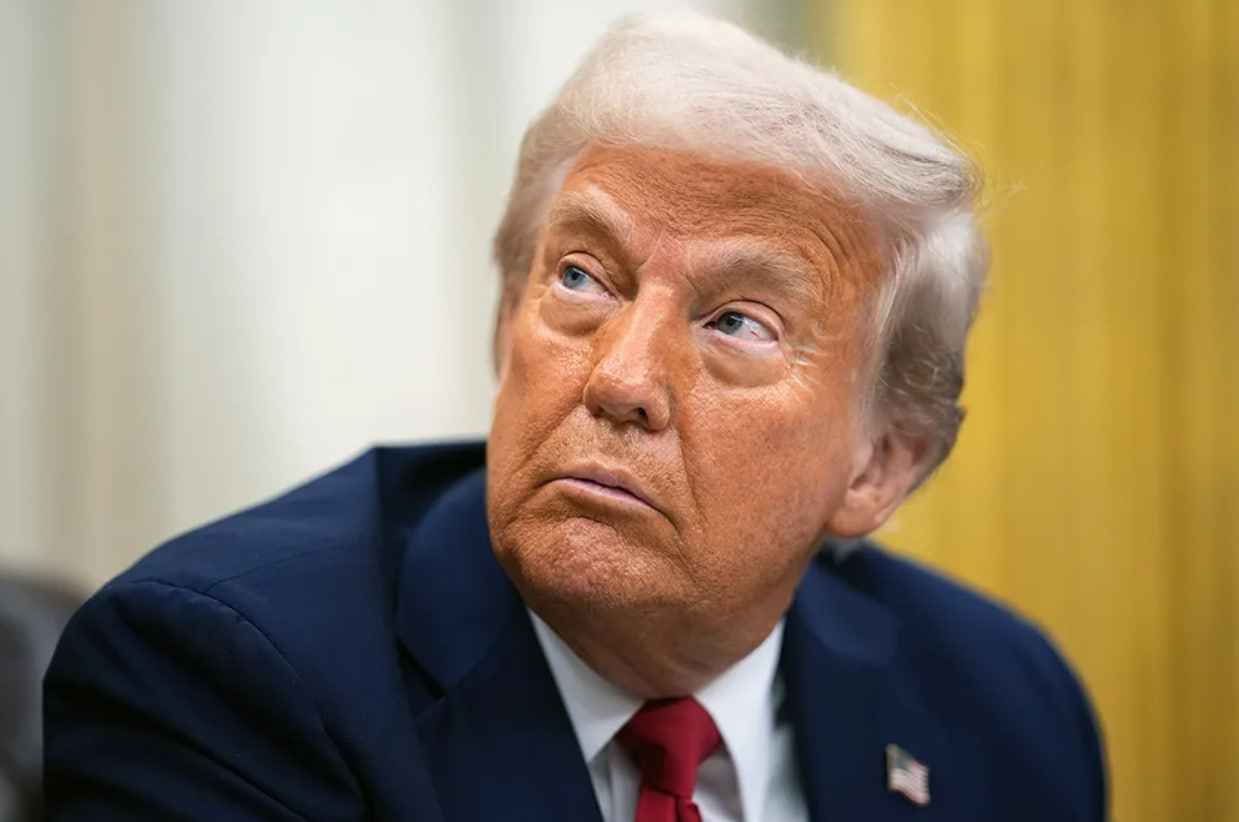
The Trump administration is demonstrating a shift towards rapprochement with the Kremlin, reducing military cooperation with partners and promoting "peace" initiatives without Ukraine's participation. At the same time, US veterans are sharply criticising this course, calling it a manifestation of weakness and a betrayal of democratic values. In Italy, there is growing political pressure on the government to support Ukraine, and in the United States there is outrage over the removal of Russia from the sanctions list. Ukraine is preparing a diplomatic visit to Washington, D.C., in an effort to maintain support amid backroom negotiations between the US and the Kremlin.
"Trump is a coward" - US military
Former US military personnel who fought on the side of Ukraine (often as volunteers) have criticized Trump for his willingness to compromise US strategic interests for short-term gains. They call him a coward and stress that moral and tactical support for Ukraine should be a principled position, not a political tool. Their words underline the growing frustration among veterans who believe that the current White House policy runs counter to the interests of democracy and justice.
Split in the Italian coalition over Ukraine and EU armaments
Italian coalition split over Ukraine and EU armament Italian Prime Minister Giorgia Meloni is facing internal pressure from coalition partners opposed to excessive support for Ukraine and spending on EU armament. There is pressure disagreement within the government over the supply of weapons to Kyiv, which could lead to a government crisis. Conservative forces in Italy are increasingly appealing to 'war fatigue' in favour of agreements with Russia.
Trump's special envoy: "Peace is near"
Trump's special envoy for Ukraine, Steve Witkoff, stated, that Kyiv and Moscow are "getting closer to a ceasefire". This is a gradual freezing of the conflict on terms that do not include a complete withdrawal of Russian troops from the territories. Vitkoff emphasised a "pragmatic compromise", which has raised serious concerns among Ukrainian politicians and experts, who see such statements as an attempt to consolidate the occupation.
Russia beyond tariffs and sanctions - a scandal in Washington
As the United States imposed trade restrictions on China and the EU, Russia was unexpectedly taken off the sanctions list. This coincided with a visit to Washington by Russia's "investment czar", a key Kremlin negotiator. The Trump administration explained this as a "goodwill gesture" as part of a peaceful dialogue. This position provoked a wave of outrage from Congress and NATO allies.
Steve Witkoff explained, that sanctions against Russia could be "modernised" by targeting technology exports, rather than new tariff restrictions. His rhetoric has already been characterised as giving the impression of a gradual normalisation of relations with Moscow in exchange for 'peace guarantees'.
Putin's special envoy meets Vitkoff in Washington
An unannounced meeting between the Kremlin's representative and US negotiator Steve Vitkoff also took place in Washington. According to sources, they discussed "areas of responsibility" in southern Ukraine, a humanitarian pause until Easter and the status of Crimea. No Ukrainian officials were present.
Ukrainian delegation plans visit to the US
Ukrainian officials are expected to travel to Washington this week for another round of talks. The agenda will include financial assistance, security coordination and an attempt to neutralise the political risks associated with the 'resumption' of US-Russian contacts. He is expected to meet with Republican and Democratic congressional leaders.
US Secretary of Defense will not come to Ramstein
US Secretary of Defense Pete Hegseth will not attend the next meeting in the Ramstein format. This has caused concern among allies. Although the official explanation for his absence is a 'busy schedule', unofficially Washington is relying on parallel diplomacy with Moscow rather than military coordination with its partners.
Trump's assessment of “peacekeeping” with Ukraine and Russia
In a recent commentary, Trump stated, that his approach to the war in Ukraine was "the most effective possible". He reiterated that "the war will be over by the end of the year" and emphasised the Kremlin's "pragmatism". The Ukrainian side reacted cautiously, stressing that no direct agreements had been reached.
Environmental consequences of the war in Ukraine - destroyed environment
The NYT has published a major investigation into how the war is destroying Ukraine's natural environment. Soil contamination, chemical emissions, destruction of water and forests are already having long-term effects on human health and ecosystems. Experts point out that recovery could take decades and will require international involvement and investment.
Author: Inna Mikhno