


The annual Association for the Study of Nationalities (ASN) global convention took place in New York from May 22 to 24, bringing together students, graduate students, and researchers from Ukraine, the United States, and Europe. As part of the Ukraine on Campus program, participants received travel scholarships and had the opportunity to present their research, give lectures, organize panels, and discuss current issues related to Ukraine.
This was reported by the Ukraine on Campus initiative, which is supported by Razom for Ukraine.
"Representatives from Crimea, Luhansk, Lviv, and Kyiv are just some of the scholarship recipients we supported this year to participate in the ASN Convention at Columbia University. From Montana to Maryland and from Berlin to Mykolaiv, our community of scholarship recipients is shaping the global conversation about Ukraine in classrooms, at conferences, and in their communities," said the organizers of the Razom for Ukraine initiative.
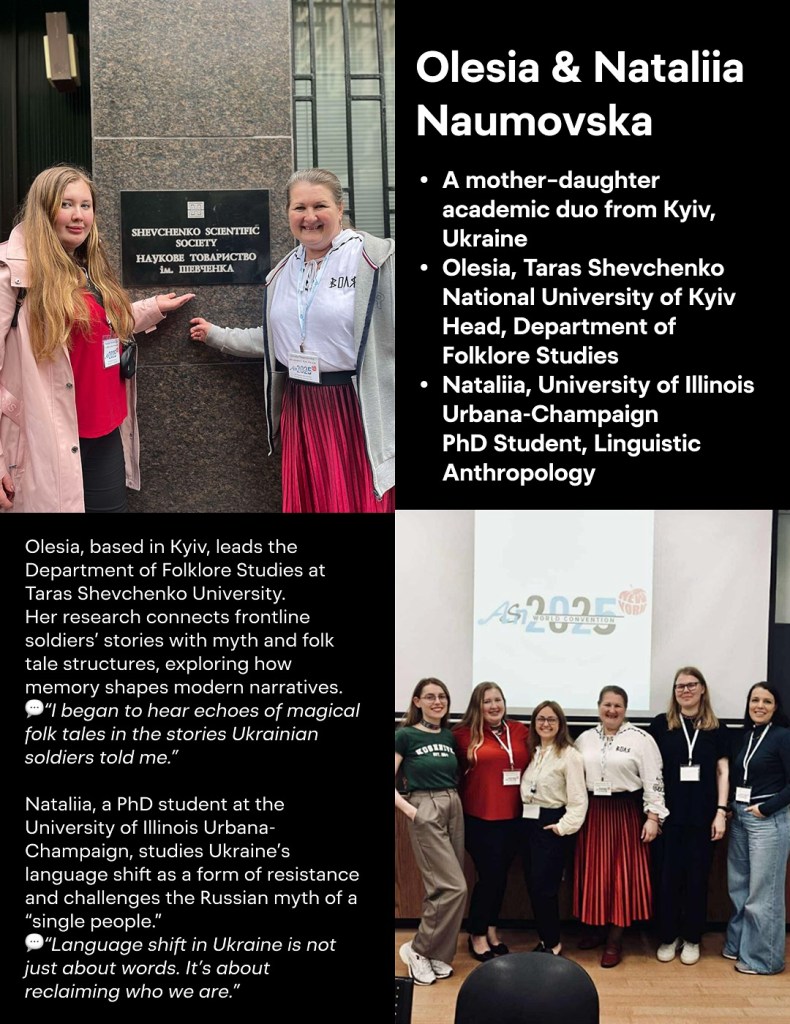
Among the participants are Olesya and Natalia Naumovskiy from Kyiv. Olesya is the head of the Department of Folklore Studies at Taras Shevchenko National University of Kyiv. Her daughter, Natalia, is pursuing a Ph.D. in linguistic anthropology at the University of Illinois at Urbana-Champaign. Olesya studies how war narratives intertwine with folklore, while Natalia challenges the Russian myth of a “single people.”
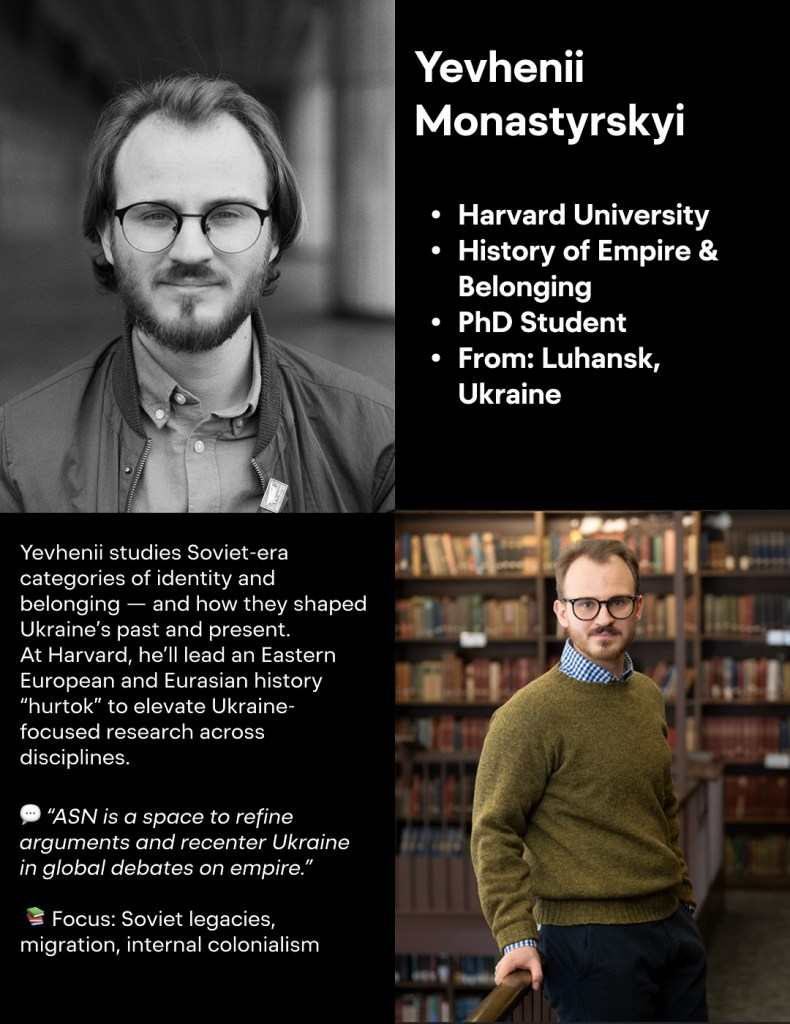
Yevhen Monastyrsky, a Harvard University graduate student from Boston, is originally from Luhansk. His research focuses on the legacy of the USSR, identity, migration, and colonialism. At Harvard, he shares Eastern European and Eurasian stories to raise awareness of Ukraine-focused research in various disciplines.
"ASN is a space where you can rethink empires and center Ukraine in global discourse," he says.
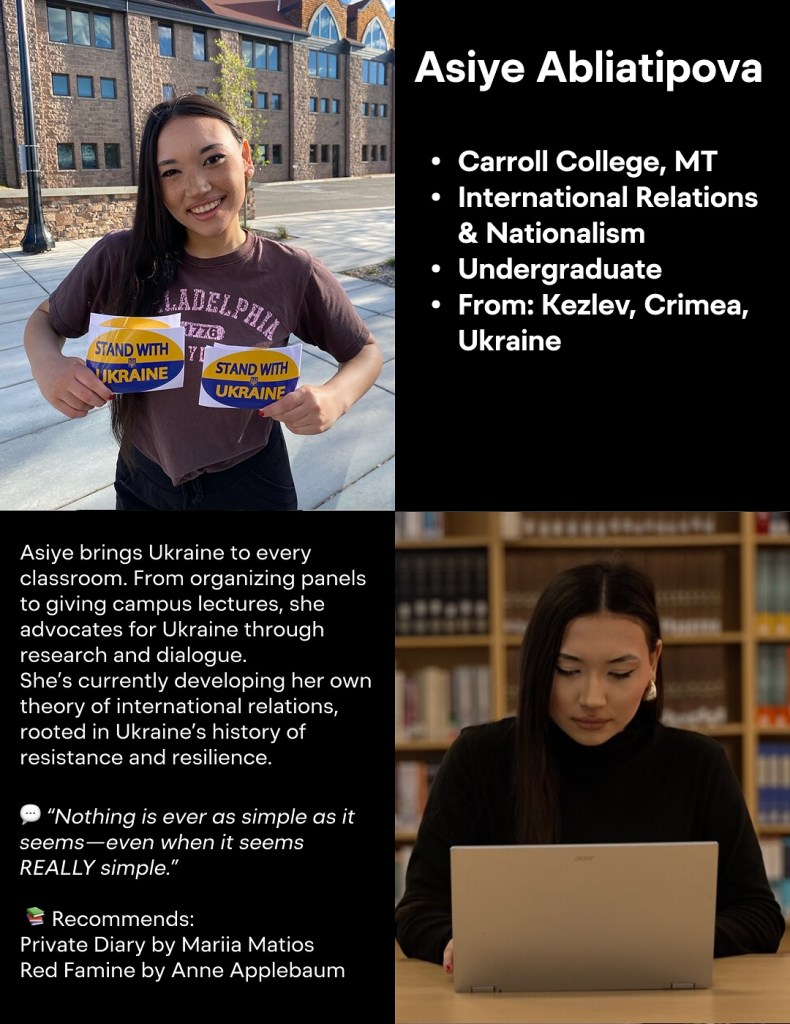
Асіє Аблятіпова, студентка з Кезлева (Крим) вчиться у Карролл коледжі (Монтана). Вона читає лекції на кампусі про Крим і розробляє власну теорію міжнародних відносин, що ґрунтується на історії опору та стійкості України.
“Nothing is as simple as it seems, even when it seems very simple,” Abliatipova says.
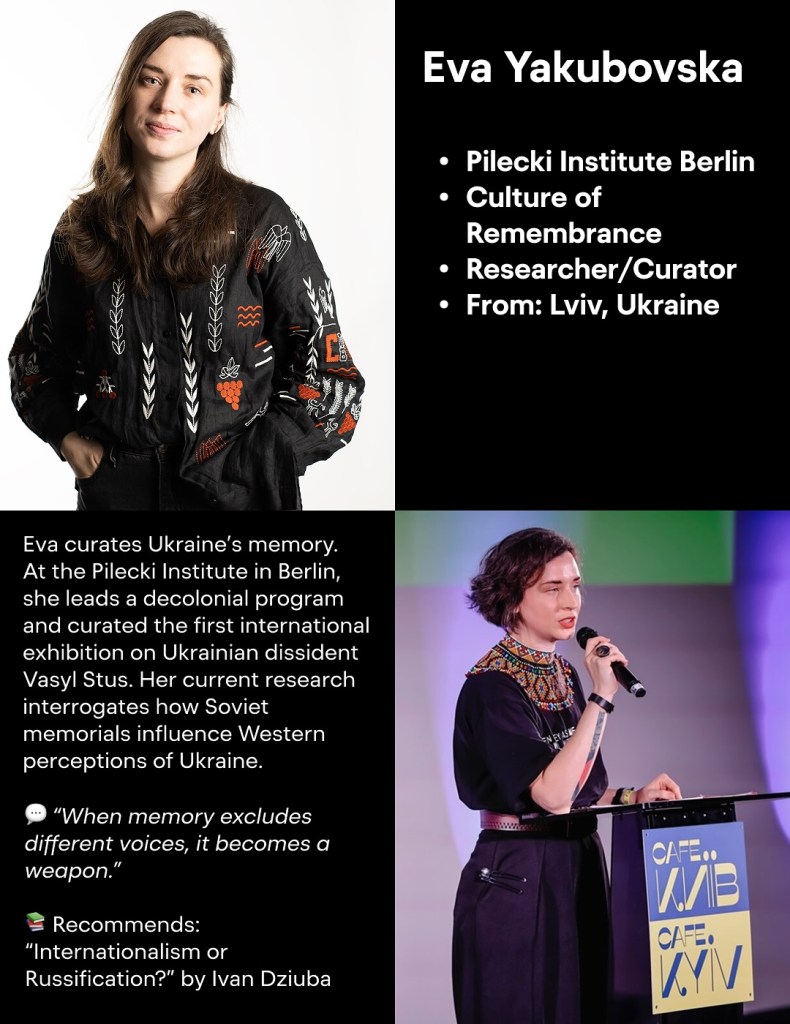
Eva Jakubowska, from Lviv, works at the Pilecki Institute in Berlin, where she oversees memory projects. She organized the first international exhibition about Vasyl Stus and is researching how Soviet memorials shape Western perceptions of Ukraine.
"When memory excludes different voices, it becomes a weapon," Jakubowska believes.

The Ukraine on Campus initiative brings together students and researchers who promote Ukrainian voices in the global academic space.
In 2025, we awarded travel stipends to an exceptional group of student leaders and scholars. Historians. Chemists. Linguists. Folklorists. Researchers. Activists. "In the spaces where global perceptions and decisions are formed, they raise their voices in defense of Ukraine — both as international students at Harvard and as teachers in Ukraine," Razom for Ukraine noted.
Photo: Razom for Ukraine.
Author: Inna Mikhno