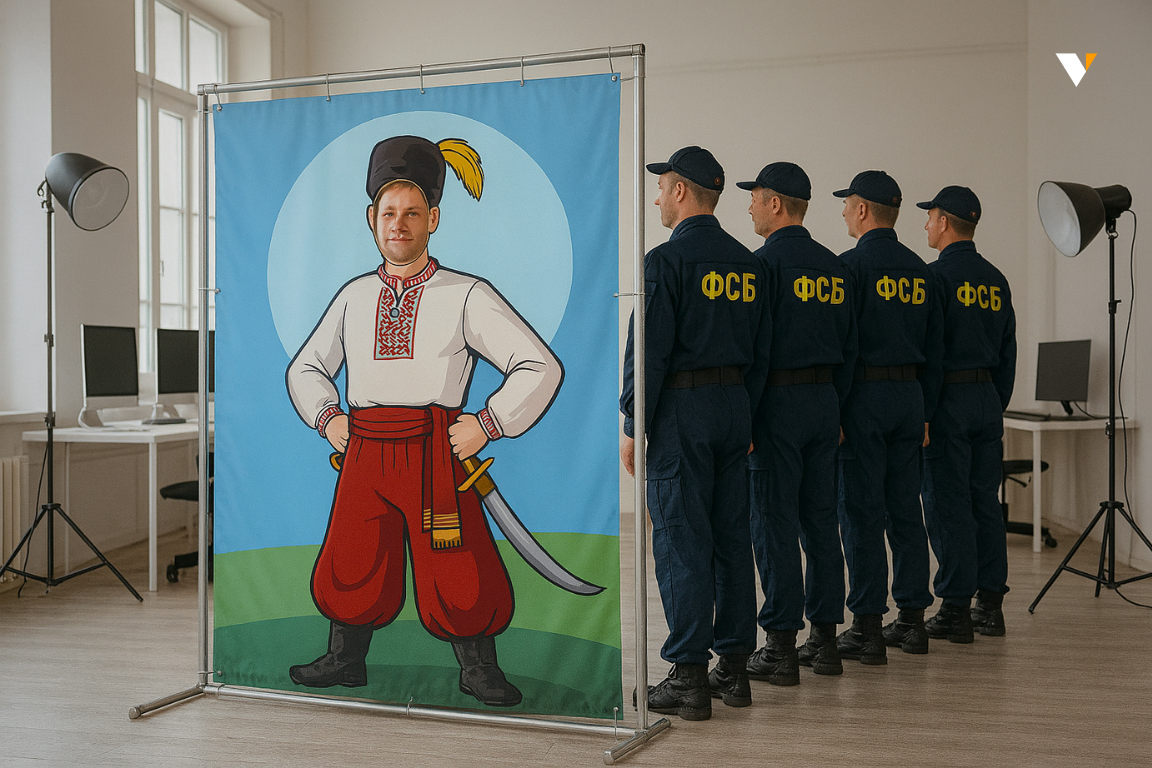
Sometimes it seems that war is only about bullets, tanks, drone attacks, and endless reports from the General Staff of the Armed Forces of Ukraine. But in reality, it has long been waged not only in the trenches. The war of the 21st century has many fronts — informational, emotional, symbolic. And on each of these fronts, Ukraine, without choosing to, has become the object of constant scrutiny by the entire world. It is being watched, judged, sympathized with, or — no less importantly — an image is being created of it. An image that sometimes strays further from the truth than any shell.
From the very first days of the full-scale invasion in 2022, the whole world started talking about Ukraine. People began supporting us, making films about us, writing songs, changing profile pictures and the colors of their logos. And yes, this was necessary. Symbolic support had its power — it kept the informational framework on the side of truth, awakened consciences, influenced the decisions of governments around the world and global corporations. But at the same time, it opened up a new dangerous zone — a zone of simulation.
Over these years, we have witnessed a new form of “patriotism” — decorative, convenient, algorithmic. This is not classic fakes or outright disinformation. It is a hybrid of truth and falsehood, something between sincerity and fabrication, which outwardly looks like support for Ukraine but in fact is merely media manipulation.
Edited clips about Ukrainian children crying to the national anthem, actually filmed in another country. TikTok “volunteers” who have never been to Ukraine but “deliver aid” with emotional appeals to millions of followers. YouTube channels that publish daily “frontline reports” compiled from old footage from Iraq, Afghanistan, Syria. All of this is not just unethical. It is dangerous.
Because fake support is not neutral. It is a negative. It doesn’t just fail to help — it causes harm: it diverts attention, exhausts empathy, and discredits the truth. And in today’s world, where trust is the most scarce currency, any falsehood is a lost opportunity to be heard.
This article is not about technology. It is about responsibility. About how easy it is to simulate participation, and how hard it is today to preserve sincerity. About why some people choose popularity over action, tears over deeds, hype over real involvement. And about how supporting Ukraine is not about a format or a profile picture. It is a choice — to stand by not for appearances, but for action.
Because sometimes — silence with respect and a modest donation without cameras — carry more power than hundreds of “viral” videos.
What is deepfake patriotism?
Today, after more than three years of full-scale war, Ukraine remains in the focus of global attention — on political, humanitarian, and media levels. But alongside sincere support, real initiatives, and deep empathy, a new phenomenon has emerged — decorative, simulated involvement. Its main goal is not to help, but to create the illusion of help. This very phenomenon, which increasingly appears in analytical reviews by media experts, journalists, and disinformation researchers, can be conditionally called deepfake patriotism.
Unlike classic technological deepfakes, which manipulate faces or voices of public figures, this type of fabrication operates with emotion, symbols, and trust. It is not always technically complex but is psychologically calculated. In the space of social media, we are seeing more and more videos, posts, and accounts that imitate participation in supporting Ukraine: overly emotional videos with music, images of children against the backdrop of ruins, calls to “stand with Ukraine” without any specifics or connection to real initiatives. Some of them are outright exploitation, others are content generated for the sake of popularity or profit.
The common feature of all this content is simulation: using the Ukrainian theme as a tool to achieve other goals — monetization, self-promotion, audience engagement, where instead of action there is a symbol, instead of help — a performance, instead of truth — an image constructed to evoke emotion.
Particularly dangerous is the use of visual deepfake content — when photos of “Ukrainian victims” turn out to be generated by artificial intelligence, and “frontline” videos are edited from footage of other conflicts. As a result, viewers who either cannot or do not know how to verify information begin to lose their sense of orientation: where is the truth, and where is its spectacular imitation?
At the level of public perception, this leads to a loss of trust — not only in specific materials but in the entire subject matter. When emotion becomes a product and war turns into a backdrop for media content, real voices, true stories, and authentic initiatives risk being drowned out.
The phenomenon of deepfake patriotism is a symptom of an era in which compassion has become a visual form, and information — a component of competitive struggle for attention. That is why it is important to recognize its manifestations — not to expose individuals, but to protect the truth. Because today, truth itself is a target.
How the Deepfake Patriotism System Works: Mechanisms, Algorithms, Examples
The information space today is a complex ecosystem, where every post, video, or photo passes through numerous filters and influences. Deepfake patriotism does not arise by chance. It is the result of deliberate actions that use modern technologies and social media mechanisms to achieve maximum audience reach.
First of all, it is important to understand the role of algorithms — they determine what content appears in a user’s feed. Videos with slogans like “Stand with Ukraine,” accompanied by emotional music, bright colors, and simple slogans, receive more attention from algorithms because they trigger an instant emotional reaction. These emotions increase engagement time — likes, comments, shares — which the algorithm “interprets” as a signal of importance.
Next, bots and networks of fake accounts come into play, actively spreading and amplifying such posts. This creates the illusion of mass support, which draws in real users. Often, these accounts are automated or managed from a single point, making it possible to deploy a large-scale campaign in a short period of time.
An important element is the creation of content with a strong emotional charge but without depth of meaning. These are simplified messages that do not require much thought, are easy to remember, and quickly spread. Videos, photos, texts — all of it works to create an effect of “patriotism” without real involvement.
On specific platforms, the mechanisms differ, but the essence remains the same. YouTube uses recommendations based on viewing history, so channels with dramatic videos about Ukraine easily appear in the feeds of users interested in the topic. TikTok is about a moment of attention: short videos, dynamic editing, trendy music. Facebook and Instagram offer broad opportunities for audience targeting and the creation of support groups.
Thus, the deepfake patriotism system is a combination of technology, human emotions, and marketing strategies. It creates an atmosphere of “shared experience,” but is often devoid of real substance and action.
One of the key tools is the use of bot networks — automated accounts that massively like, comment on, and share specific content. They create a “viral” effect, forcing algorithms to promote materials further. Often, bots are controlled from a single point, sometimes even from abroad, with the aim of manipulating public consciousness.
For example, YouTube channels that publish edited videos using footage from other wars receive thousands of views thanks to bots and mass reposting. YouTube’s algorithms take popularity into account and recommend this content to new users, creating a “loop” of distribution.
TikTok and Instagram use a different strategy — videos with emotional messages, fast-paced editing, and trendy melodies succeed there. Short clips with “volunteers” or “patriotic” songs instantly gain millions of views, even if there is no real substance behind them. Networks of accounts also operate here, massively liking and commenting, contributing to trends.
Another important mechanism is targeted advertising and promotion. On Facebook, Instagram, and Twitter, there are tools that allow content to be shown based on interests, location, and age. This tool is used to hit precisely the audience most susceptible to emotional reactions. In this way, micro-communities are formed that feel like “special” participants in an event, even though in reality they are simply being drawn into a simulation.
No less important is the role of platforms and their moderation policies. While social networks actively fight against disinformation, the scale and complexity of the phenomenon often outpace the ability to respond quickly. New deepfake and generative AI technologies are evolving rapidly, and even detecting a fake can be difficult, allowing it to circulate in the network for a long time.
As a result, the system of deepfake patriotism is a complex, multi-layered network of technological tools, psychological triggers, and social strategies. It uses the most modern methods to create the effect of “deep engagement,” which is often mere imitation without genuine support.
Here are a few real-life cases of deepfake patriotism:
1. Deepfake video of the President of Ukraine, Volodymyr Zelenskyy (March 2022). The first months of the full-scale war were marked by intense informational confrontation. Already in March 2022, a video appeared online in which President Volodymyr Zelenskyy supposedly addresses Ukrainians, calling on them to surrender and cease resistance. The video was created using deepfake technologies — deep learning techniques that allow the synthesis of images and voices that closely resemble the original.
Investigations by leading fact-checkers and journalists (Bellingcat, The Guardian) confirmed it was a fake. The video aimed to demoralize Ukrainians and undermine trust in the government, as well as to influence Western audiences by weakening support for Ukraine. At the same time, this case became a signal to the global community: war is waged not only with weapons but also with disinformation technologies.
2. Fake volunteer accounts on TikTok and Instagram (2023). In 2023, journalistic investigations by the BBC together with OSINT communities uncovered hundreds of accounts presenting themselves as volunteers from the USA and Canada, supposedly delivering aid to Ukraine. The videos from these accounts consisted of standard emotional clichés: crying children, flags, patriotic songs — without specifics or proof of real activity. The main goal was monetization through donations or the promotion of personal brands.
This phenomenon contributed to the devaluation of genuine volunteer work and also created a false impression of the scale of support, which ultimately can divert resources away from effective channels.
3. Artificially generated faces and stories — AI disinformation (2024). Analysts from Graphika, DFRLab, and EU DisinfoLab discovered that pro-Russian networks and individual actors were using generative artificial intelligence to create fake faces, names, and stories of “Ukrainian volunteers” and “victims.” This content was spread across Facebook, Reddit, and YouTube, creating the illusion of numerous testimonials and widespread support.
These fabricated testimonies carried strong emotional overtones but were not corroborated by any independent sources. The result was the displacement of genuine information, increased confusion, and growing doubts about credibility. This undermines trust in actual victims and real volunteers.
4. Use of archival footage from other conflicts as “Ukrainian” (2022–2024). Over several years, OSINT researchers and journalists have identified dozens of YouTube channels and social media pages that disseminated videos edited from footage of wars in Syria, Iraq, Nagorno-Karabakh, and other conflict zones. These videos were supplemented with Ukrainian symbols and music, creating a false impression of events from the Ukrainian front.
This practice misleads audiences, diminishes trust in media and authentic reports, and contributes to overall informational noise, making it harder to objectively understand the war.
Consequences of Deepfake Patriotism: Why Fake Support Harms More Than Indifference
Despite its outward resemblance to genuine support, deepfake patriotism has a number of serious negative consequences that often go unnoticed or underestimated.
First, it leads to a loss of trust. When audiences encounter numerous instances of fake content, even well-informed users begin to doubt the authenticity of any information related to the war. This creates a general atmosphere of distrust, harming both the media and real activists and volunteers.
Secondly, deepfake patriotism diverts resources and attention. People who could be supporting real initiatives often fall into the trap of superficial emotion that does not translate into action. This results in crucial donations and volunteer work receiving insufficient support.
Thirdly, this form of “support” undermines the morale of those directly affected by the war. When genuine stories are overshadowed by staged scenes or fake testimonies, victims feel invisible or manipulated.
Moreover, deepfake patriotism creates informational noise that makes it harder to find and disseminate truthful news. This can delay responses from the international community, complicate decision-making, and weaken the effectiveness of humanitarian aid.
Ultimately, the most dangerous consequence is the distortion of Ukraine’s real image and struggle. Instead of building a strong image of a country bravely defending freedom and democracy, we get a kaleidoscope of superficial illusions, which can lead to skepticism and indifference.
That is why it is important not only to recognize deepfake patriotism but also to support genuine, conscious engagement — where it truly makes a difference.
How to Recognize Fake Support: Simple Criteria for Complex Times
The main strength of deepfake patriotism lies in its emotional persuasiveness. On the surface, it looks very similar to genuine support: the same words, the same flags, the same tears. But without substance, connection to reality, or an intention to act, such “support” becomes an empty shell. That is why society needs clear tools for identification.
The first criterion is checking the source. Who is sharing the content? Are there links to real organizations, verified volunteers, reputable media outlets? If the author is an anonymous account with no history, and the video evokes excessive emotion without details, this is a red flag.
The second criterion is specificity. Genuine help always includes concrete actions, names, figures, reports. If a message consists only of vague phrases like “Ukraine is suffering, help her!” — without any mention of who exactly is being helped and how — it is more likely emotional manipulation.
The third criterion is analyzing visual and language elements. Artificially generated images have telltale signs: unnatural eyes, strange-looking hands, blurry details in the background. In texts, there are clichés, a lack of authentic details, and repetitive slogans.
The fourth criterion is the impossibility of verification. If a story has no confirmation whatsoever — not in the news, not on social media, not from any of the mentioned charitable organizations — there is a high probability it is fabricated.
The fifth criterion is the reaction to questions. Genuine initiatives are not afraid of clarifications; they explain how exactly they operate and what results they achieve. Fake ones either ignore inquiries or immediately resort to emotional pressure.
It is also worth mentioning “patriotic hype” — when popular bloggers, musicians, or even brands use the Ukrainian theme merely as a backdrop for self-promotion. Here, too, one should ask: does this action hold value for Ukraine, or only for the performer?
Ultimately, the best criterion is time. Genuine support doesn’t disappear after a trend wave. It continues — in silence, in everyday life, without cameras. It is precisely such actions that change the course of history.
The Role of the Ukrainian Community in the USA: How We Can Counteract Simulation
The Ukrainian community in the United States holds a unique position. It is simultaneously a part of the democratic world with access to powerful informational resources — and a bearer of the truth about what is happening in Ukraine. That is why Ukrainians abroad can and must play an important role in countering fake support, especially in the space of social networks, public opinion, and media.
First and foremost — is informing. Every member of the community who speaks English and has access to local or national platforms can become a source of verified information. This is not only about major speeches or interviews — even short posts on Facebook or talks at a local school are important. At a time when emotional fakes spread in mere minutes, real information is a form of resistance.
Secondly — supporting genuine initiatives. In the USA, there are dozens of verified foundations, volunteer platforms, and Ukrainian organizations that systematically provide assistance. Talking about them, sharing their reports, explaining why they deserve support — this is a way to strengthen trust in the real, not the fabricated.
Third — fostering informational resilience within communities. This can include organizing lectures, seminars, public readings, or media literacy courses for youth. For example, Ukrainian community schools can hold lessons on topics such as “How to Tell Fake from Truth” or “What Is Responsible Support.” This is especially important in an era when children and teenagers are the primary audience on TikTok, YouTube, and Instagram.
Fourth — engaging in dialogue with local media and politicians. Ukrainian communities can serve as “entry points” for those who want to learn the truth. Inviting journalists to Ukrainian events, writing personal letters to members of Congress, participating in local initiatives — all of this helps to form a positive, truthful image of Ukraine that does not require simulation.
Fifth — rejecting simplified images. Often, Ukrainians abroad themselves unconsciously spread clichés: images only of tragedy, tears, and ruins. In reality, it is important to also talk about strength, dignity, will to live, culture, language, and education. It is precisely this complete picture that fosters lasting respect, not pity.
The Ukrainian community in the United States is not just a group of emigrants. It is an informational bridge connecting Ukraine to the world. And the strength and honesty with which we speak the truth determine whether the world will hear it.
ПSupport as Action, Not Image
In a world where information no longer simply informs but constructs reality, responsibility for the truth lies with everyone — from journalists to ordinary viewers. Deepfake patriotism is not merely a media phenomenon, but a mirror of our time, where support has become a form rather than substance.
The danger lies in the fact that fake compassion dulls sensitivity to real pain. When we get used to sentimental videos, fabricated stories, and artificial images, we lose the ability to respond to actual tragedies. This is not just informational fatigue — it is moral exhaustion that leads to indifference.
But at the same time — therein lies hope. Because as soon as we start to recognize the difference between what is real and what is constructed, we regain our ability to act. Support is not a post on social media. Not a slogan. Not a song under a video. It is a choice. Conscious, specific, sometimes invisible. It is a donation to a verified foundation. It is a letter to a congressman. It is a lesson in a school. It is a conversation with a child. It is — truth.
And as long as there are voices speaking the truth amidst the flood of simulations — the war is not yet won, but neither is it lost.