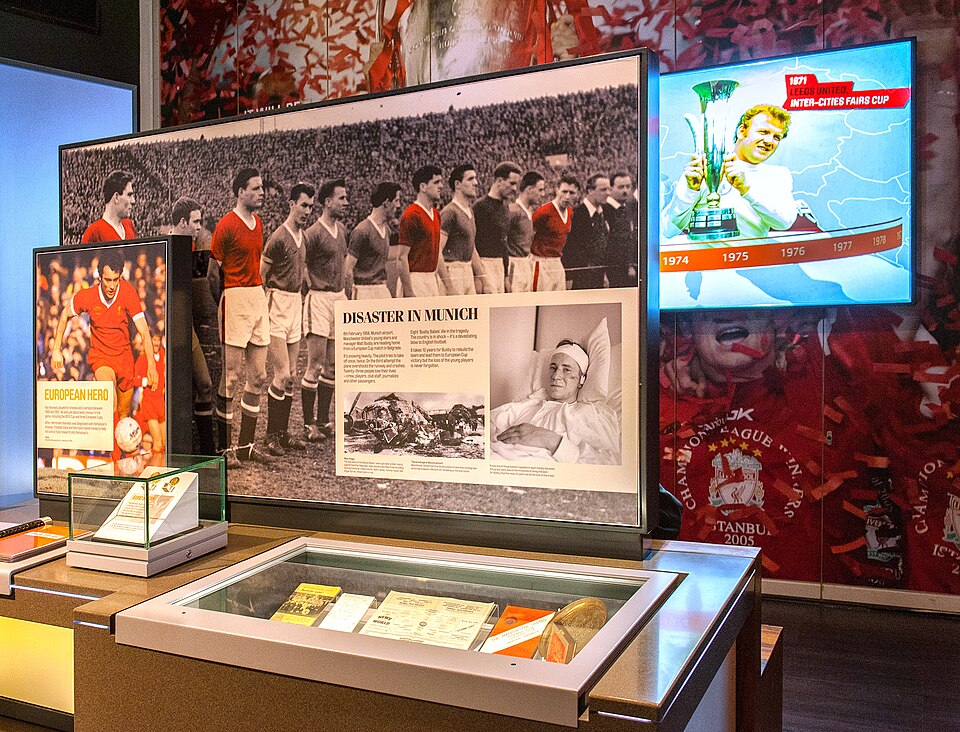
The “Busby Babes” was the name given to the players of England’s Manchester United Football Club who were developed under the legendary coach Matt Busby. The tragedy of 1958—an air crash that killed most of the team and left the other players and their coach with severe injuries—left a profound legacy of grief.
The Background to the Tragedy
Who was Matt Busby, and who were the “Busby Babes”? Before discussing Manchester United’s 1960 tour of the United States, it is worth examining and understanding the events of the preceding years. Those events had a decisive impact on the team, its coach, supporters, society, and the international community.
In the mid-1950s, major developments were taking place in European football that would have a chain-reaction effect on the 1958 Manchester United tragedy in Munich, Germany. In April 1955, the Union of European Football Associations established a new tournament—the European Champion Clubs’ Cup. Under its rules, only the champion clubs of countries affiliated with UEFA were eligible to participate. In England, however, Football League officials had mixed reactions to the initiative. Many opposed it. As a result, League secretary Alan Hardaker prohibited the English champions of the 1955–56 season from entering the competition. The reason given was “to protect the interests of English football and football as a whole.”
It was an interesting justification, considering that by the mid-1950s football had become highly globalized, was played in countries around the world, and already had a World Cup. The wording of the refusal therefore appeared to represent a rather weak position. At the same time, the history of conflicts and misunderstandings between English football officials and FIFA or UEFA must also be considered. Once one learns more about that history, there is little doubt that they would act in precisely this way. That, however, is my subjective opinion. At the same time, the secretary’s decision could have radically changed the fate of the Manchester United players. Can you imagine that? Indeed. Had they not taken part in this tournament in the following years, they would not have found themselves in Munich, and the air disaster would not have occurred. At first glance, Alan Hardaker’s decision provokes outrage, but subsequent events turn the entire story upside down. Perhaps he knew something, sensed something, or… do you have your own explanation?
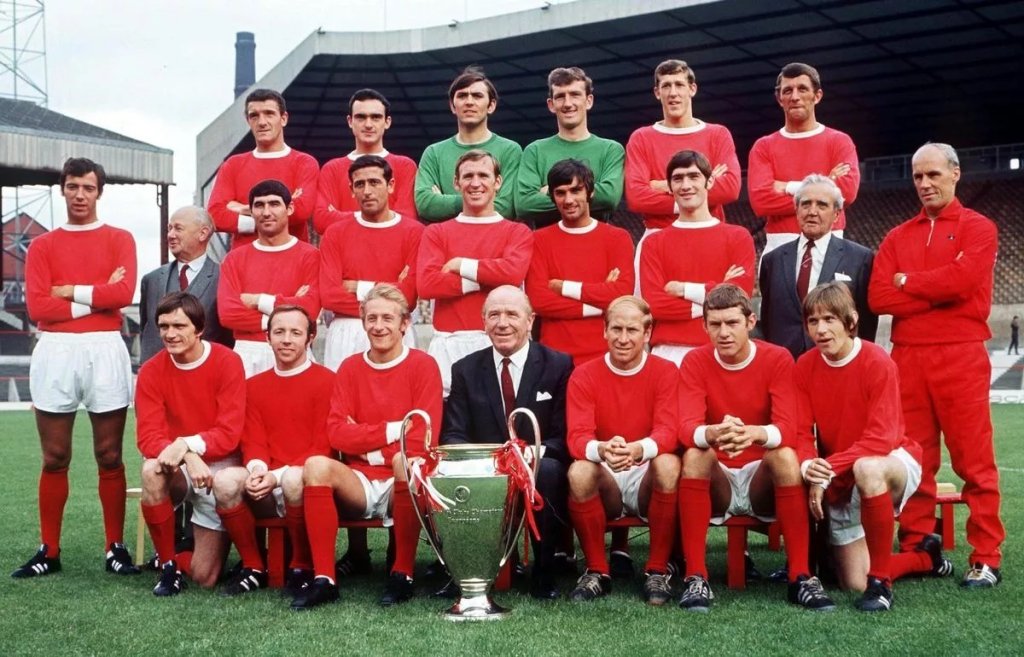
The following season, Manchester United became the champion of England. The team was coached by Matt Busby. Naturally, after winning the national championship, the ambitious coach wanted international recognition. Participation in the UEFA Cup could have helped achieve that. However, the Football League had already prohibited the English champion from participating in the tournament and therefore rejected the club’s request to reconsider its decision. It seems the officials were right after all. But then the factors of personal connections, influential acquaintances, and similar considerations came into play. Matt Busby and Manchester United chairman Harold Hardman secured the support of Football Association chairman Stanley Rous. Manchester United thus became the first English club to participate in this European tournament. It was, of course, a historic achievement—but was it worth human lives? Unfortunately, very little time remained before the tragedy. The course of fate had already been set in motion.
In my opinion, one major online resource presents a rather cynical analysis of the situation. It states: “The risk taken by Manchester United’s management was justified. The team, known as the ‘Busby Babes’ because of the players’ youth, reached the semifinal of the 1956–57 competition, where it lost to the eventual champions, Real Madrid. Defending the league title guaranteed Manchester United a place in the next European Champion Clubs’ Cup, and following its successful performance in the 1956–57 season, United was regarded as one of the favorites in the 1957–58 competition. Domestic league matches were played every Saturday, while European Cup matches took place in the middle of the week. Although air travel was rather dangerous at the time, it was the only possible option if United wanted to play all its league fixtures on schedule—which, in turn, was critical in light of Alan Hardaker’s position.”
What should we note in this quotation? First, the club management’s risk was supposedly justified. Naturally, had the tragedy not occurred, the risk could have been considered justified. But under the circumstances, such a statement demonstrates complete disrespect for the dead. Second, everyone understood that air travel was dangerous in those years. In other words, the coach, the club’s management, and the chairman of the Football Association were all fully aware of the risks, yet still approved participation in the tournament. Regrettably, we must acknowledge that the air crash was unpredictable, although it might perhaps have been avoided. There are assumptions and facts concerning the days preceding it: a crowded match schedule, frequent flights, delays, weather conditions, human error, and a convergence of circumstances—all of which ultimately resulted in tragedy.
The Tragedy That Shook the World
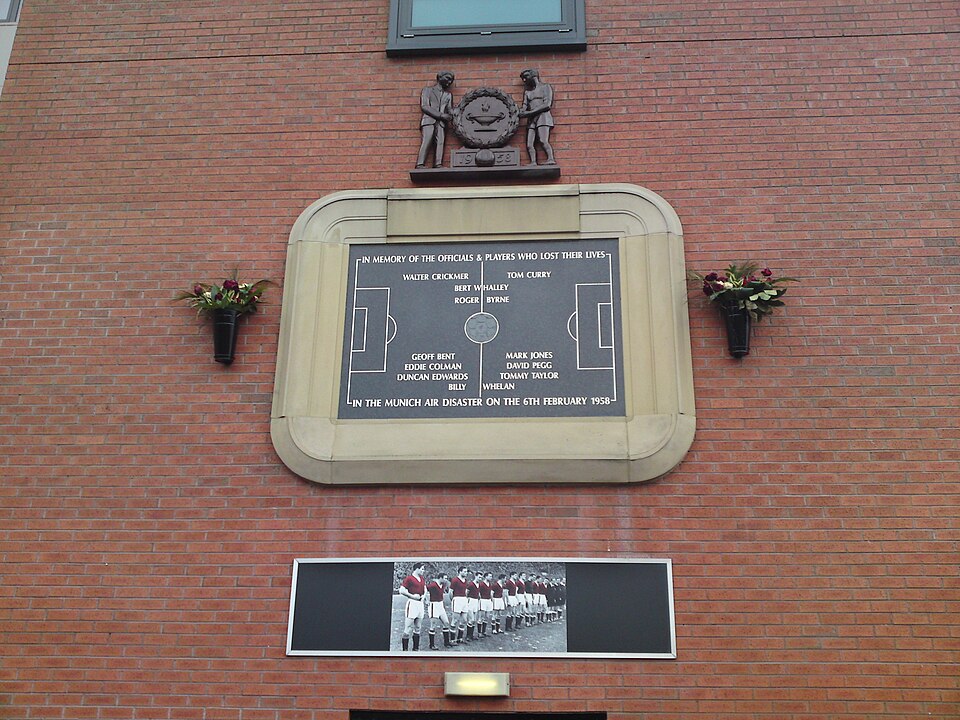
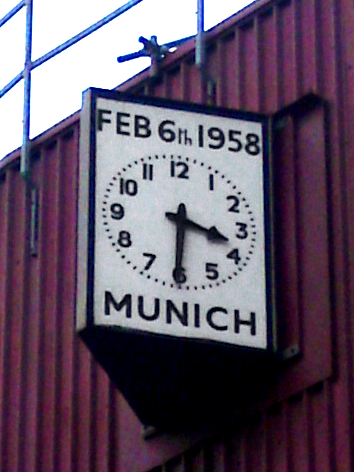
Roman Dublianytsia, a prominent Ukrainian sports figure and journalist in the United States, described the horror as follows: “On February 6 of this year, the world press reported another aviation disaster… aboard the British aircraft that crashed near Munich, Germany, was the famous English football team Manchester United, which was returning from a European Cup match… On that tragic day, out of a total of 44 passengers, 21 were killed. Among the dead were seven players from the team, including team captain Roger Byrne and the well-known England international Tommy Taylor. Seven sports reporters were also killed. This terrible disaster reminds us of the unforgettable Turin tragedy nine years ago, as a result of which Italy, having lost seven of its international players, has still been unable to recover its former footballing identity or overcome the crisis caused by that immense loss.”
It was truly a tragedy not only for the English club but for the entire football family. The details of the 1958 Manchester United air disaster in Munich have long been known. A lengthy investigation reconstructed the event second by second. It established who did what, where, when, why, and how, and examined the motives, actions, and recollections of everyone connected with the tragedy. Its consequences inevitably affected the team. The shock and depression experienced by the survivors might have broken them, but fortunately, that did not happen. Football—the game itself and the emotions it brought—became their consolation.
A New Stage in Manchester United’s History
The Manchester club was to pursue new horizons during another overseas tour. The United States was a country where European football developed quite actively during the 1950s and 1960s, due in part, of course, to the Ukrainians who had settled there. After watching the New York Americans play against an Italian team—the American side included players from the Ukrainian Sports Association Tryzub of Philadelphia: Mykhailo Noga, Kravets, Elay, and Rach—Matt Busby highly praised the Ukrainian players’ abilities and compared Noga and Elay to English footballers.
During this tour, Manchester United played, among other opponents, a Ukrainian team. In addition, after one of the matches, Matt Busby gave an exclusive interview to the Ukrainian newspaper Svoboda. An American journalist of Ukrainian descent was perhaps the only person able to conduct an interesting interview with the legendary coach. He also managed to go behind the scenes—into the dressing room occupied by the English players—and speak with members of the team. The Ukrainian journalist described his meeting with Matt Busby as follows: “The three of us, representatives of the press who stopped the Manchester club’s manager for an interview, were greeted by this former Scotland football representative with a smile and his characteristic gentlemanly openness. His words about his club reflected his faith in the strength of ‘his boys,’ as the members of his club had come to be commonly known, and his confidence that these players were holding Manchester’s banner high and worthily defending its glorious football traditions. After introducing myself to Mr. Busby as a representative of a Ukrainian daily newspaper, I asked him a series of questions and received some rather interesting answers.”
It was therefore a genuinely exclusive interview for a Ukrainian newspaper in the United States. Here is an excerpt from the interview with Manchester United coach Matt Busby:
Question: In your opinion, has football in the United States made any progress since your previous tour, and what impression did today’s opponent make on you?
M. Busby: I believe there has been progress in football in the United States, but it is difficult for me to be certain on the basis of this one match. Our opponents today had an easier task because we were exhausted from the journey from England and last night’s flight from Toronto, where yesterday we played a difficult match against the Scots. Today, I liked the American League all-star team that played against 1860 Munich. It has good players, although they have not yet become accustomed to playing together. The defense was particularly good. (The American League all-star team included Tryzub players Rach and Elay in defense, and Noga and Chaika in attack—note by the author of the interview.)
Question: How did you rebuild your football team following the tragic deaths of eight players in the February 1958 air disaster in Munich?
M. Busby: We had many well-trained young players at our club, and they were the first group I turned to when looking for players for the first team.
Question: Did you not try to find better and more experienced players and purchase them from other clubs?
M. Busby: Although we were financially capable of doing so—Manchester United is considered one of England’s wealthiest football clubs, according to the interviewer’s note—we “purchased” only two expensive players from other clubs following the 1958 tragedy.
Question: Do your players earn their living through any work other than football, and what are their professions?
M. Busby: Professionally, they are footballers and nothing else. Throughout the season, which lasts nine months, each of them does nothing but play football, both in daily training sessions and in matches every Saturday.
Question: What are the prospects for the American representative in this league?
M. Busby: The New York Americans will certainly be strong opponents for the league’s foreign teams. I believe that after seeing your all-star team play against 1860 Munich, and I know that this squad will be considerably strengthened.
The conversation then continued with the participation of the entire team. The coach invited the correspondent into the dressing room. Incidentally, the author of the article “Matt Busby and His Boys” signed it only with the initials V. S. I assume that this may have been Volodymyr Sokhan, a well-known Ukrainian sports activist in the United States. In the dressing room, the interview was continued by Manchester United leader Albert Quixall, the most expensive football player of his time. His transfer from Sheffield United cost $135,000.
Here is an excerpt from Albert Quixall’s interview with the Ukrainian newspaper Svoboda in the United States:
Question: How many spectators attend Manchester matches on average?
A. Quixall: Sometimes there are between 60,000 and 65,000, but the average, including matches played in both good and bad weather, is 45,000. Admission ranges from 30 cents to one dollar, depending on the seat.
Question: Apart from their wages, do the players receive any percentage of admission revenue, commissions, or similar payments? And did he, Quixall, receive any one-time payment for his expensive transfer from one club to another?
A. Quixall: A player is paid only £20 per week, and that is all. During a transfer, the player receives nothing because it is a business transaction between the clubs. The player can only express his wishes or refuse the transfer—but would that necessarily turn out well for him? I was happy to move to Manchester United because this club plays much better football.
These were the answers received from the legendary coach Matt Busby and the well-known footballer Albert Quixall. In England, modern football was becoming increasingly professional. In the United States during the same period, however, football remained largely semi-professional.
Summing up the interview, the Ukrainian journalist reached the following conclusion: “Both Mr. Busby and his players expressed the hope that football would soon become more popular in the United States.” In their view, America also needed to enter the broader football arena, as football was the most popular sport in most countries around the world.
It was sound advice. Considering that the Ukrainian diaspora in the United States possessed a powerful footballing presence, European football in the country naturally developed at a tremendous pace. It should be noted that the Ukrainian football diaspora in the United States also deserves considerable credit for its immense and painstaking work connected with the country’s hosting of two FIFA World Cups—in 1994 and 2026.
Author: Oleksiy Lyakh-Porodko