


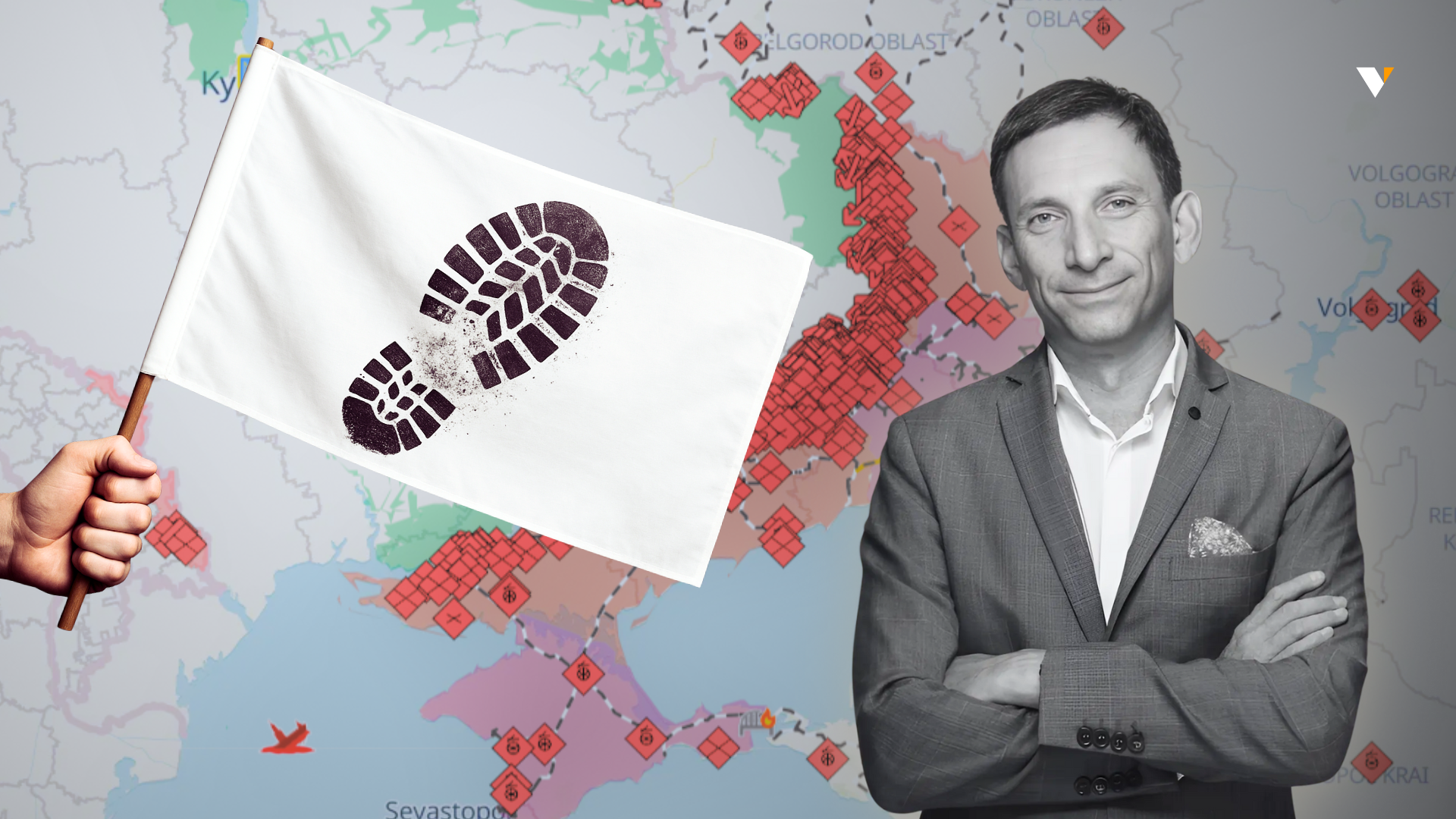
Neither the fate nor the final content of the new “peace plan” proposed by U.S. President Donald Trump is clear. Negotiations between American representatives, the Ukrainian delegation, and the Europeans are only just beginning. It appears that this plan came as a real surprise to Ukrainian President Volodymyr Zelenskyy and his office—despite Washington’s claims that the proposals had been discussed with the Ukrainians. But the only foreigner with whom Trump’s representative, Steve Witkoff, may have spoken during the preparation of the plan remains Russia’s special envoy Kirill Dmitriev.
However, Dmitriev was sent to Washington not to work with Witkoff on peace proposals, but to lobby for the cancellation—or at least postponement—of sanctions against Russia’s largest oil companies, Rosneft and Lukoil. Dmitriev failed in this task. Not only did Trump implement the sanctions, but he also promised to introduce new, harsher ones. Yet Dmitriev’s plan was received positively at the White House, and they decided to work with it. As had already happened in Witkoff’s previous contacts with the Russians, the special representative of President Trump mistakenly concluded that Putin was determined to end the war because he was frightened by American sanctions. It is no coincidence that the leak of the American plan to the media almost perfectly coincided with the final implementation of sanctions against Rosneft and Lukoil. The idea was: Putin will come to us asking for the sanctions to be lifted in exchange for ending the war, and we will offer him comfortable peace conditions that President Trump has long been proposing—along with Ukraine’s agreement to these terms. Voilà!
In the end, both presidents ended up making fools of themselves—both the Russian one and the American one. Putin is left with sanctions that threaten him with serious budgetary losses. Trump is left without Putin’s desire to end the war in exchange for lifting those sanctions. And now, for the American president, there is no sense in trying to pressure Ukraine into accepting humiliating peace terms that in reality resemble conditions of capitulation. Imagine that Trump “pressured” Zelenskyy and forced the Ukrainian president to agree to terms that would not be accepted by the majority of Ukrainians and that are unclear in their legal form. And then Putin, predictably, refused to accept the U.S.-Ukrainian agreement.
But Zelenskyy is also in a difficult situation. For the Ukrainian president, it is crucial not to agree to the American—or rather Russian—terms that undermine Ukrainian sovereignty and do nothing to prevent a new round of aggression, while at the same time not alienating the President of the United States and risking a cutoff of intelligence support or military aid. That is why the coming days will be primarily devoted to solving this difficult dilemma. But Zelenskyy should take comfort in the fact that he is not alone in this labyrinth at all.
If we look at the situation realistically, we can see that this is not a plan by Trump, but a plan for Trump. Steve Witkoff put together this unprofessional document to prove his effectiveness to Trump—something especially important amid the potential collapse of the peace process in the Middle East. Marco Rubio is trying to stay involved to preserve the president’s favor. The same motivations also drive Vice President J.D. Vance, who barely hides his ambition to become Trump’s successor and wants to demonstrate his effectiveness: to distract public attention from the “Epstein files” scandal with a loud victory in the style of Trump the peacemaker. Meanwhile, both Vance and Witkoff have virtually no understanding of what they’re doing, while Rubio fully realizes that their approach will not work but cannot demonstrate or even articulate this, fearing Trump’s anger. After all, for the American president, this is not only about peace in Ukraine but also about the Nobel Prize, which—after his return to the Oval Office—has for reasons unknown become an obsession for Trump.
So does this mean that peace in Ukraine cannot be achieved in the foreseeable future? No, it does not. The degradation of Russia’s energy and economic potential will sooner or later limit its ability to continue the war, and both Western sanctions and Ukrainian strikes on Russian energy facilities can play a role in this. But peace plans that humiliate Ukraine and reward Russia for its brutal and unprovoked aggression only encourage Putin to continue the war.
About Author:
