Bandura, piano, the Ukrainian choir “Dumka” – a group of Ukrainian artists gathered on Manhattan to weave their art into the performance 24.FREEDOM, which was heldin New York on Ukraine’s Independence Day. Among the audience were Ukrainian soldiers, who received several minutes of standing ovations, different generations of Ukrainian-Americans, and American friends of Ukraine – all of them came together to rethink Ukrainian freedom in the 34th year of its attainment.
On the evening of August 24, near the Ukrainian National Home in New York, every second person wore a traditional embroidered shirt (vyshyvanka). In the East Village, a line formed to enter the Ukrainian National Home for a performance where art invited people to reflect on independence and freedom. As each person waited their turn and took their seat, the space was filled with silence, broken only by the brief opening words of the organizers.
“Today is not about celebration,” said Dmytro Topchiy, one of the co-organizers, catching his breath. The pause was eloquent – those few seconds spoke more loudly than all the words that followed. This phrase and pause resonated with everyone in the hall, for it expressed what is constantly in the mind of any Ukrainian far from their homeland, where for the fourth year a bloody war has been raging, taking the lives of the best – terribly and mercilessly.
“We are not celebrating today. We have gathered here to remind each other of the price we pay for Independence,” Dmytro repeated, finishing his short introduction. The lights went out, and the performance began.
“To be born” – this is the word that best describes the process of creating something great and meaningful. To be born fully requires much time, effort, strength, inspiration, attempts and failures. No one guarantees that this process will happen without pain, suffering, and despite all odds. Birth can come through sacrifice; its meaning grows deeper when, for example, the sacrifice is the kitsch imposed by Moscow propaganda.
Ukrainian art is living through a time of rebirth in music, theater, singing, literature, fashion… The list could go on, but the meaning is clear – we are becoming different, and this resonates with everyone. This is now especially palpable in Ukraine, where every event is a piece of meticulous craftsmanship. One need only recall the recent “Vyriy” Festival in Kyiv, the musical You Are Romantic, or “ChekaFest” in Lviv. The list could be extended further – and that can only bring joy.
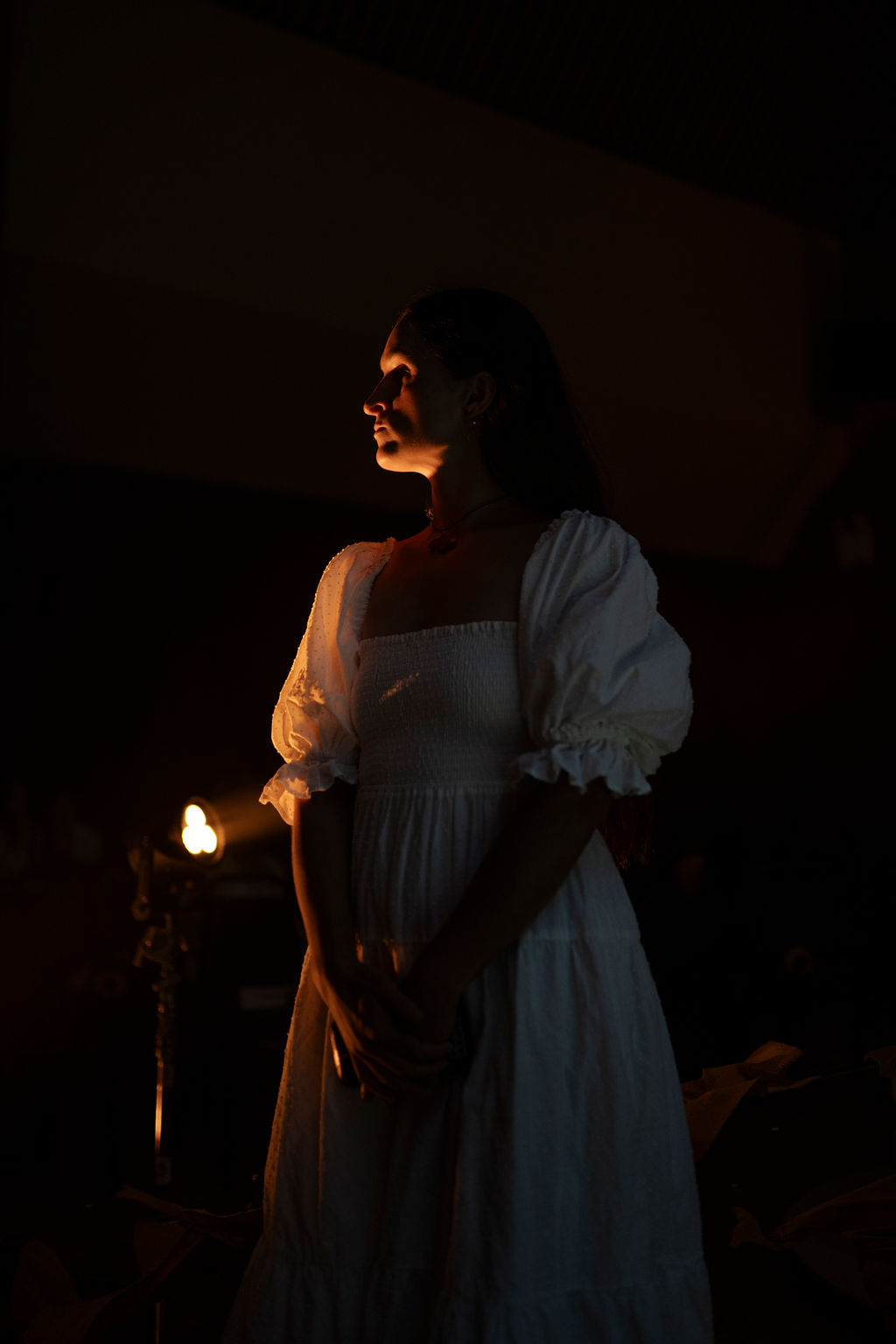
It was within this sense of transformation, inspired by such events, that the performance 24.FREEDOM was born. It combined instrumental music, improvisations on both contemporary and ancient songs, choral traditions, visual art, and a deeply human dance. All of this – within one hour. From different corners of the stage, the art spoke in its special language through those who created it: Pavlo Gintov, Oleksii Pryrodnyi, Fima Chupakhin, the “Dumka” Choir, Valeria Vovk, Angelina Stateva, Hanna Datsko, Jared Cavazos, Markiian Krysa, Daria Baranko, Ivan Prymak, and Nataliia Kureshova.
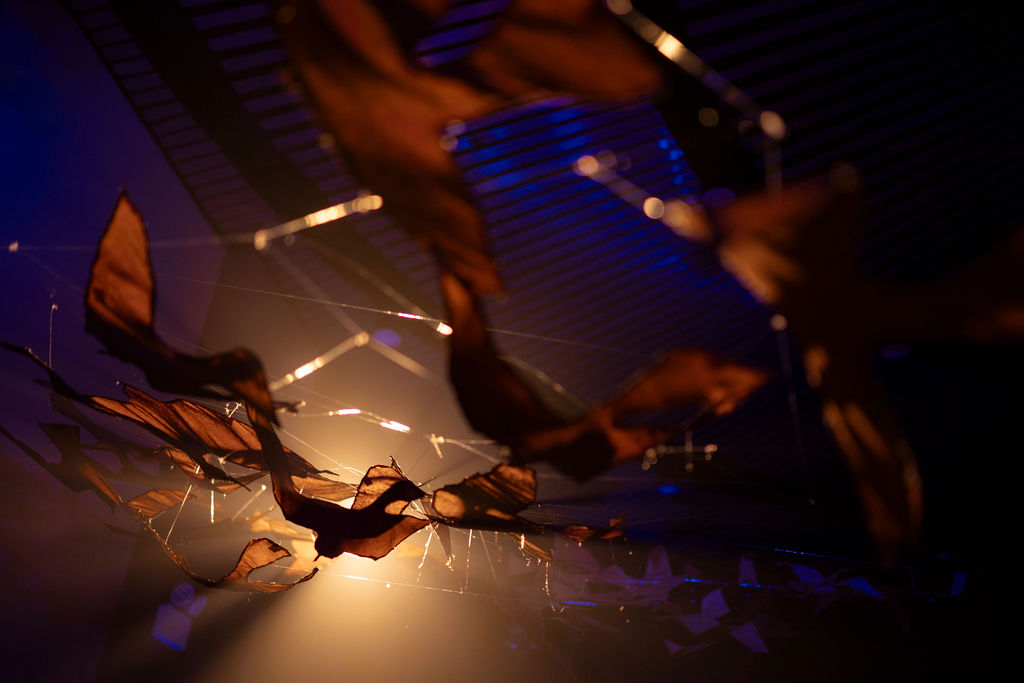
Above the stage, the central element spoke: a large-scale art object in the form of birds, created by Khrystyna Yesypchuk – a symbol of resilience, flight, and freedom. Ukrainian defenders often call FPV drones “little birds,” for they are vital to them. This added even more metaphorical depth, especially since the event aimed to raise funds for drones.
Adapting to something new and adjusting to a new way is difficult, resource-intensive, and sometimes frightening – will the audience accept something unfamiliar? Or should one simply leave everything as it is, because the new is so unknown? Unknown, but interesting – to the old, the young, and even the very young.
Generations of Ukrainian-Americans – first, second, and third – sat in silence, holding their breath, carefully watching the performance. Beside me sat a man in dark glasses. Subjectively, it seemed he might have been blind, yet his facial expression conveyed admiration. It was as if he was marveling at everything around him, as though he saw it all with his soul, living through each moment.
The first chords of Plyve Kacha (The Duckling Swims) evoked a pain-filled fear that one feels instantly – today, in Ukraine, almost every family has lost someone to the war; nearly everyone lives with a fear that is hard to articulate or sing through. It was striking that the performers began the song but stopped after only a few chords. This seemed the most appropriate decision at that moment, for Plyve Kacha brings everyone back into the deepest depths of loss and painful emotions. It felt as though everyone in the hall shared this feeling.
Among those present were Ukrainian defenders undergoing prosthetics and rehabilitation in the U.S. They watched the performance breathlessly, and when I asked one of them, Viktor, about his impressions, he replied: “It was very beautiful; at moments we had no words to express our admiration.”
At the close came the words of Hanka Smirnova, founder of the Rebirth.Ukraine platform, who directed the entire evening: “In the song Ptakha (Bird), which inspired me to create this performance, there are words – ‘We will still return what we have lost; the main thing is that the birds remain winged.’ We must remain winged and act,” said Hanka, adding: “I wanted each person during the performance to reflect on what freedom means for them, and to realize: freedom is action, a verb, it is constant movement.”
Organized by the Rebirth.Ukraine platform and the Liberty Ukraine Foundation, the evening became a space of light. One had to pause and simply be in the moment – to feel the art growing all around. It hurt. It cut into wounds – and at the same time healed them. It gave strength to go on. Strong. Yes, that word most precisely describes what took place at the Ukrainian National Home in New York. Strongly played. Strongly painful. Strongly makes one want to live, to fight, to remember.