


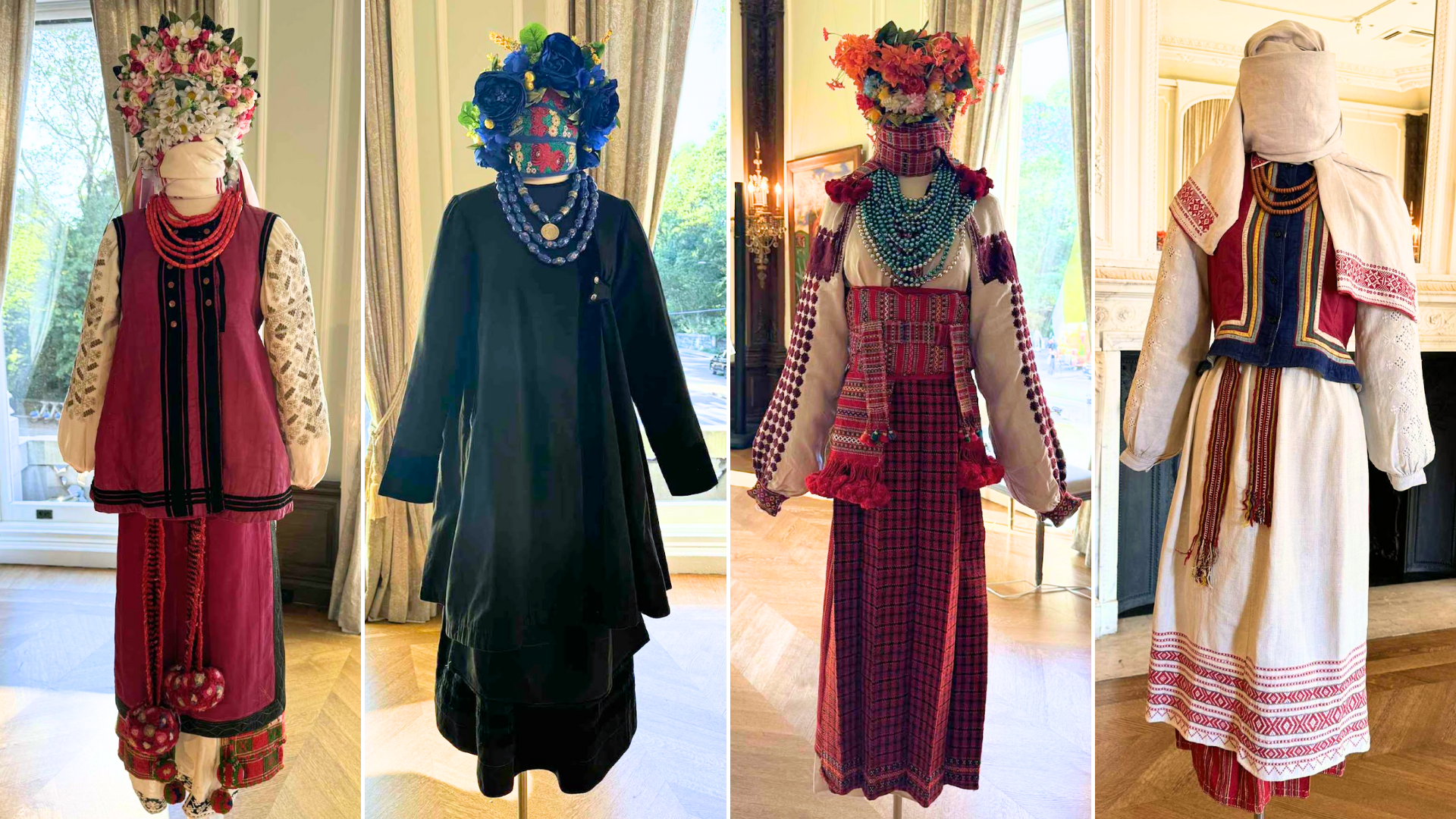
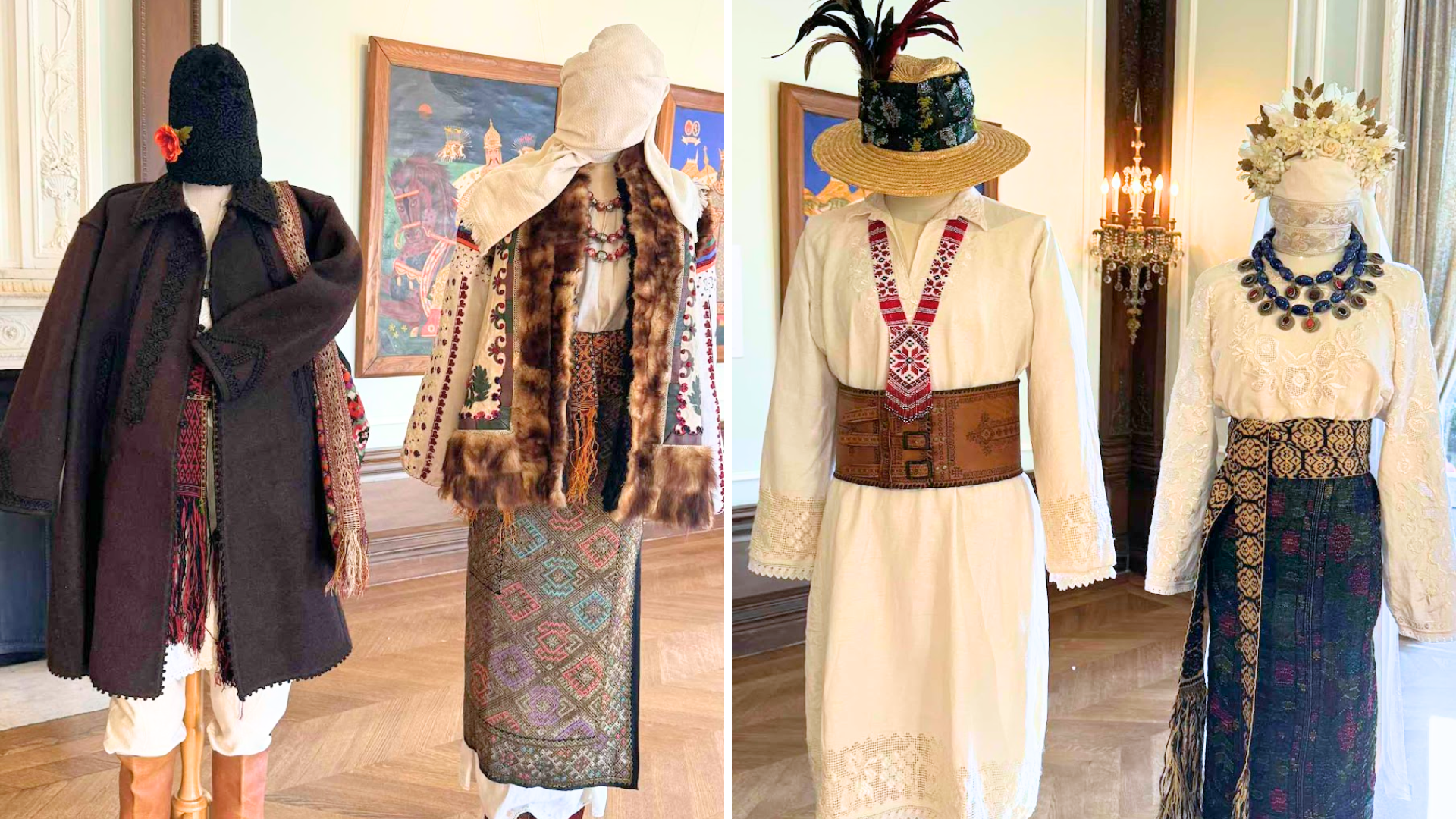
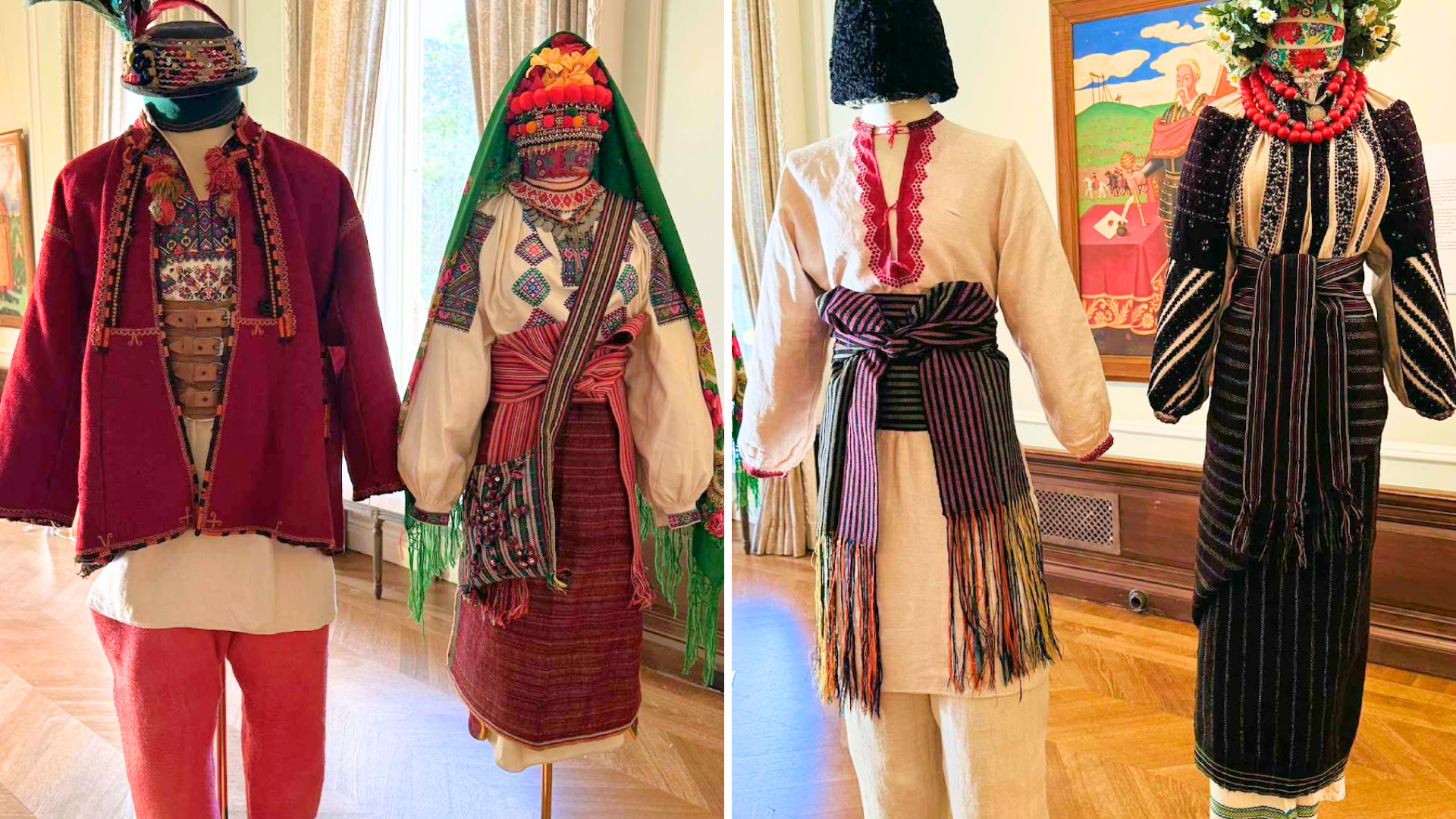
In the very heart of New York, in the elegant halls of the Ukrainian Institute of America, an exhibition has opened that transports visitors to the late 19th and early 20th centuries. On the mannequins are 22 authentic outfits from different regions of Ukraine: men’s and women’s, festive and everyday, casual and ceremonial. They are all stories of generations, encoded with memory, faith, love—and also pain.
The collection belongs to Halyna Bagan. For several years now, this woman has been gathering and preserving unique examples of Ukrainian heritage, striving to show the beauty of embroidery to the whole world while creating cultural bridges with other ethnic groups. We spoke with Halyna about her path to collecting, the symbolism of patterns, and what a person feels when putting on a vyshyvanka.
Halyna, how did the idea for this exhibition come about, and why was it timed specifically to Ukraine’s Independence Day?
I wanted to make a gift to Ukraine and at the same time to the American audience. The vyshyvanka is a universal language through which we can tell the story of our people. Independence Day became the perfect occasion to emphasize once again: Ukrainian culture is alive and also relevant in the world. This exhibition is our way of showing that we truly have something to be proud of.
From which regions do the outfits in your collection originate?
The geography is very wide: Podillia, Pokuttia, Poltava region, Hutsul region, Bukovyna, Chernihiv region. Each region has its own signature: color palette, embroidery technique, cut. It is enough to compare a shirt from Poltava with one from the Hutsul region to understand how rich the palette of our culture is. For me, this diversity is proof that Ukraine has always been a country with a rich inner life and deep traditions.
Each outfit is not just a garment, but a human story. Do you feel these stories?
This is probably the most moving aspect. Most fabrics were made by hand. I sometimes imagine how women embroidered shirts for their husbands and children in the evenings, how brides prepared their wedding attire, how mothers wove prayers and protective charms into the patterns. These shirts hold human destinies.
A special place belongs to the Borshchiv shirts. They are black. Legend has it that after the Tatar raids of the 17th century, when the men of that region were exterminated, the women vowed for seven generations to embroider only in black—as a sign of mourning. And, if this is true, they kept their word. It is striking.
How long will the exhibition remain open, and do you plan to show the collection elsewhere?
In New York, the exhibition will remain for a few more weeks. There is no exact closing date. But then I plan to take the collection on a tour of America—to other cultural centers and museums. This is a wonderful opportunity to tell the world about the richness of Ukraine in the language of art.
Which outfit is dearest to you personally?
Probably the Podillia shirts. I was born and raised in Ternopil, and this style is native to me. They have simplicity and restraint, but at the same time strength and depth. It is like the character of Ukrainians: tenderness alongside resilience.
Collecting is not an easy hobby. How did it happen that you began doing this, and why specifically the vyshyvanka?
For me, embroidery has always been a symbol of home and roots. As a child, I first saw in family photographs a Ukrainian wedding in Canada, and I was fascinated. My grandmother also embroidered, and since then a love for this art has lived within me.
After moving to America, my family and friends inspired me to fulfill my dream — to organize a showcase of authentic outfits in New York. In 2023, I brought this dream to life by organizing a grand event, “Celebration of Ukrainian Culture,” where part of my collection was presented for the first time — at that point, still the collection of Ivan Bernatskyi.
The greatest honor for me was that Ivan Bernatskyi — People’s Artist of Ukraine and founder of the Ukrainian Dramatic Theater in New York — entrusted me with a significant portion of his unique collection. To continue his mission and present these outfits to the world is both a great responsibility and a profound source of pride for me.
What have you discovered in the vyshyvanka since you began studying it?
First and foremost — the incredible diligence and refined taste of women of past generations. They not only wove and embroidered clothing with their own hands, but also infused it with sophistication, grandeur, and love. It is also striking that even in those distant times, brocade and velvet from Alexandria and coral necklaces made their way to Ukraine — and all of this was incorporated into the traditional attire.
Another discovery is the boundless diversity of the outfits. Sometimes the differences are noticeable even between neighboring villages. Variations appeared in everything: in the cut, the techniques, the adornments, the headpieces. It is a true “language of details”: the placement of embroidery on the collar, cuffs, or inserts, the density of stitches, the selection of threads and fabrics — all of this clearly “told” the story of the region, social status, occasion, and even the personality of the craftswoman.
And perhaps most importantly: women’s work is an archive of memory, preserving family histories, faith, daily life, and the aesthetics of the era.
Did the patterns always carry protective meaning?
Yes, the ornaments were talismans. Most often they were placed near the throat, on the shoulders and wrists—where the body is “open to the world.” The rhombus symbolized a field and fertility; the Tree of Life—the continuity of the family line; solar rosettes and stars—light and the cycle of life; the cross—a protective sign.
How did everyday shirts differ from festive ones?
The everyday ones were simpler: made of hemp cloth, embroidered with cross-stitch or plain seams. Festive shirts were made of fine linen, adorned with openwork, satin stitch, gold threads, beads, sometimes even silk. The festive attire was complemented by belts, tassels, and buttons. It was a true adornment.
Today people often say the vyshyvanka is the “code of the nation.” Do you agree?
Absolutely. Our values, beliefs, and history are encoded in the ornaments. It is like a person’s passport: even before you hear any words, you can understand a great deal about its wearer from the shirt. And the fact that now we have such a variety—from ancient vyshyvankas to modern designer ones—is a great blessing.
You speak with many people: what does a person feel when they put on a vyshyvanka?
It is a feeling of pride and belonging. You seem to put on not just clothes, but the history of your lineage. It is cultural diplomacy that you carry to the world. For me it is always calm and, at the same time, strength.
Additional: Interesting facts about the vyshyvanka
— The earliest examples of ornaments are found by archaeologists on clay figurines of the Trypillian culture (5th–3rd millennia BCE).
— The vyshyvanka was always considered a protective garment. That is why ornaments were placed on the collar, sleeves, and chest.
— Each region had its own symbols and colors: white-on-white embroidery in Poltava, red-and-black motifs in Podillia, bright greens and yellows in the Hutsul region.
— Men’s shirts were more restrained, but also had protective power.
— The symbolism of colors: red—life and love, black—earth and fertility, blue—water and sky, green—youth.
— Today the vyshyvanka inspires world-class designers—from Valentino to Gucci.
— Every year on the third Thursday of May, Ukrainians around the world celebrate Vyshyvanka Day.
About Author:
