


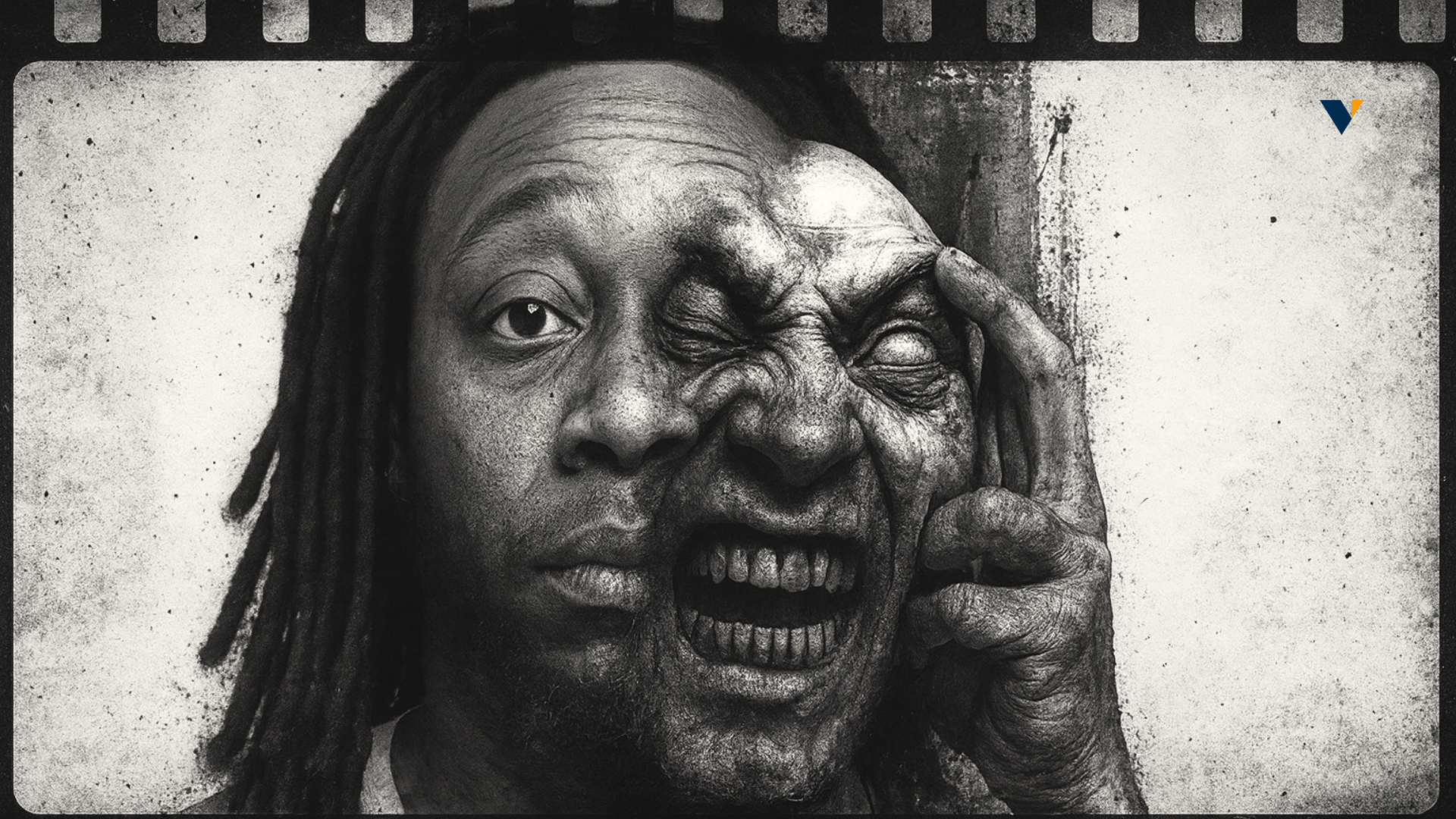
Every season has its own mood. Winter is a magical time of wonder and gifts, when every dream comes true against snowy landscapes. Spring is the beginning of renewal, when greenery bursts forth everywhere. Summer is a period of lightness, warmth, salty water and sweet ice cream, freckles and sunburns. And then comes autumn. So secretive and cool, gray and crimson at the same time. It is the time of spiced lattes and sinister smiles carved on pumpkins, of black cats and bats, vampires and Beetlejuice. There is hardly a better moment to watch cult horror films under a warm blanket next to your loved ones. Or alone, depending on what you prefer! The aroma of popcorn, ginger cookies, and hot coffee fills the house, while on the screen Jack goes after Wendy with an axe in the Overlook Hotel, Beetlejuice tries to marry Winona Ryder, and Pennywise the clown chews up the last remnants of fear from his latest victim. Everything feels so real and magical at the same time—scary, and yet not too scary, because you are home, where danger cannot linger.
But there are horror films that etch themselves into memory for a long time. Usually, they are not about something magical or otherworldly, like a voice speaking from the sewer at night, a made-up ghost standing by the light switch (blink-blink), or even a terrifying vampire outside the window. No. What is truly frightening is when the story is painfully simple: the victim does not suspect the danger, and the attacker has no intention of announcing his plans in advance. There is no off-screen voice or suspenseful music, no screams behind the scenes, and, most importantly, no script or computer graphics. That is when horror floods our very cells, reaching into the subconscious and awakening animal instincts of self-preservation.
One evening, as we sit down in the subway or commuter train, we do not expect to become the protagonist of a horror film. Perhaps a comedy, a sitcom, or a story of wild success. But certainly not a horror plot. No one dreams of encountering a stranger, a predator, Patrick Bateman, or Terrifier. People are not that complicated by nature—we do not need much. We simply plan to get through the day, to return home a little earlier than usual so we can have more time for TikTok, our beloved cat, and a cup of chamomile tea. So we sit down in the carriage, put on music through our headphones, and ride, gazing out the window, daydreaming about a magical future and the lead singers of 2000s bands. But then suddenly, everything is cut off. First comes pain, then the realization of its source. A few more minutes of nightmare, and it all ends. The song on the phone, the smell of public transport, strangers’ perfumes, and the noise of the night city… Streetlights stop shining, the morning sun will no longer greet you, and your thoughts forever cross into another world, one where pain does not exist.
And what is this, if not the script of a horror film? What if it could happen in real life? They say the more plausible the story, the scarier it is for the audience—and considering that, we should be shivering so hard our teeth grind down to the roots. Because one August evening in the U.S. state of North Carolina, 23-year-old Iryna Zarutska was sitting in a commuter train at the “South End” station when a man attacked her with a knife. And no, he did not turn on creepy music, did not slowly stand up and turn away from the viewer, hoping the blood pack would burst at the right time. Everything happened quickly and for real.
There were real spectators, equally unprepared for death in their evening train car, real human blood running down the killer’s pocketknife, a dark August night, and a light breeze stirring the green leaves on the trees. Life pulsed through the metal carriage—until there was one life less. And it happened in just a few minutes, in a single take, with no stuntmen and no editing. So simple, and so unbearably hard at the same time. Someone managed to call the police, but sadly, for Iryna it was already too late. She found herself in the wrong place at the wrong time, while to her killer it seemed the opposite. He must have seen it as his star moment, the leading role in a film edited by a diseased mind.
Iryna Zarutska was 23 years old, with dreams and a will to live. She had come to America, fleeing the war, hoping to begin a new chapter in her story. Meanwhile, 34-year-old Decarlos Brown Jr. had at least 14 prior arrests, a diagnosis of schizophrenia, and somehow a ticket to the free world without chains or bars. Two different systems of coordinates, colliding for the last time. And if you believe in a better world, you can be sure—these two now stand on opposite sides of the barricade. For the better.
A video has spread across the internet—footage of the tragic murder of a young Ukrainian woman, alive just moments before, simply riding the train. Of the strange man behind her, who simply decided to kill. But beyond that, the footage also captured the passengers nearby. Those who turned their heads away when they saw the attack. Those who did not help the girl who collapsed, bleeding out with hot blood. Humanity keeps talking about love, peace, and helping one another, yet at the same time kills, ignores, and turns away from those who need our attention. Of course, no one can truly know how they would act in such a situation, but somehow, we would like to imagine ourselves not as passive bystanders, even in moments when we are terribly afraid. Everyone wants to save the world, but no one wants to die—and that is easy enough to understand. But it does not quite work. The soul still believes in something bigger, a stronger feeling of fearlessness. Or perhaps it is just the simple wish to feel like a hero?
Unfortunately, we are all familiar with fear. It is something so natural and known, inseparable from our very essence. We feed it by watching scary films, provoke it by walking empty streets at night, soothe it by hugging a favorite stuffed toy. Everyone wants a bit of adrenaline from time to time, everyone finds it interesting to dig up stories of true evil so as to learn how to distinguish it from good. On autumn evenings, it feels perfectly normal to plan a Halloween costume, choosing a character from films who killed left and right. We do not think about death seriously—it seems like something distant, something that can be rewound, predicted, or even changed. But evil does not live only on the screens of computers, TVs, or tablets. It seeps endlessly into wider realms, flowing from the real world into the imagined one, leaving behind a slippery trace that can easily latch onto our very DNA. And still, one wants to believe that the Decarlos Browns Jr. of this world will remain confined in space—not on the television screen, not in the train carriage, but in the good old maximum-security prison, where salvation lies within.
About Author:
