


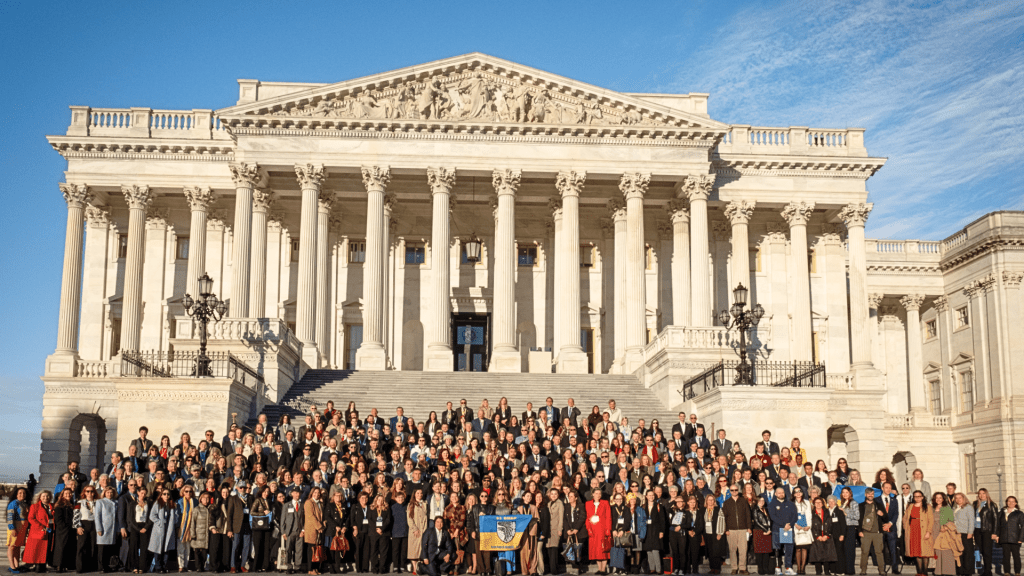
More than 700 participants and five days of work — that is the agenda of the Ukraine Action Summit. The meeting takes place at a moment when the war in Ukraine remains one of the top priorities on the White House foreign policy agenda, while in U.S. domestic politics tensions in Congress and a potential federal government shutdown dominate the headlines.
“Because of the shutdown, many people were asking whether the Summit would happen,” says Marianna Tretiak, Chair of the Board of Directors of the American Coalition for Ukraine (ACU). “We had quite a tense week deciding what to do. But lawmakers and their aides continue working in their committees and holding meetings. Under such circumstances, it was important for us to bring people here to Washington so that their voices could be heard. We cannot advocate for Ukraine only when it’s easy. We must continue to make every effort to ensure that we are heard.”
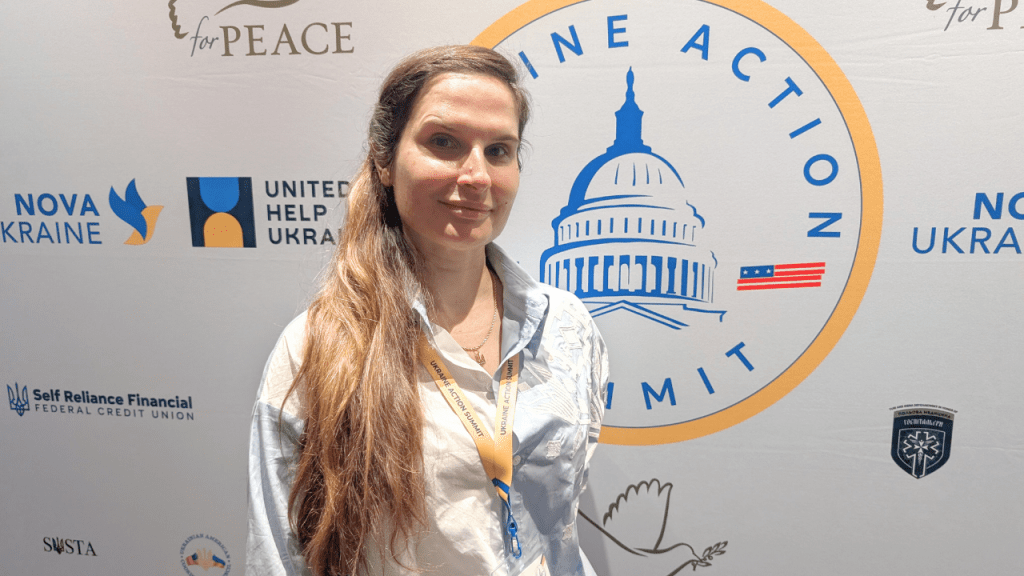
Erin E. McKee, CEO of Nova Ukraine, former U.S. Ambassador and USAID Assistant Administrator for Europe and Eurasia (2022–2025), explains the political and diplomatic turbulence and the challenges currently facing Ukraine: “I think the difference now is that, unfortunately, we have almost four years of war behind us. And now there needs to be a different tone, a different character to the stories we tell in order to keep America’s attention on the importance of supporting Ukraine. Obviously, support remains, but we must constantly remind Americans what Ukraine is fighting for — and how their support can help win the war and, even more importantly, win the peace. We must remind them that this is also good for America. It’s good for American business.”

To better prepare the delegates, the first two days of the Summit include panel discussions with leading experts and a day of advocacy training, followed by two days of meetings on Capitol Hill.
“We now count about 45 organizations that are members of our coalition — and importantly, they represent most U.S. states,” says Maryna Baydyuk, a longtime organizer of the Summit and now Chair of the Membership and Sponsorship Committee. “Delegates, some of whom are Americans without Ukrainian roots, understand that Ukraine’s struggle is also a U.S. concern. The main goal of the Summit is to create the best conditions for three days of advocacy work. The central question is — what messages will delegates bring to their representatives?”

Several bills related to the war are currently under consideration in Congress. Delegates on Capitol Hill are advocating for the use of frozen Russian assets to benefit Ukraine, calling for stronger sanctions against Russia, urging the return of Ukrainian children abducted by Russia, and emphasizing the importance of security guarantees for Ukraine.
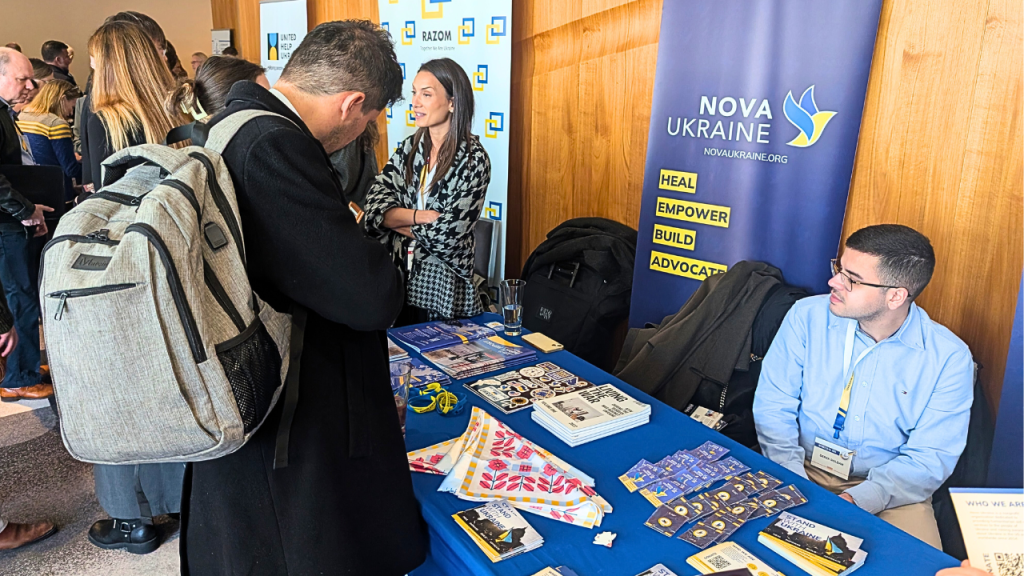
U.S. policy toward Ukraine is currently shaped by President Donald Trump, who pursues his own track. This raises the question: if the White House rarely consults with Congress about Ukraine, why meet with congressmembers?
“We see, for example, that the White House’s views on Ukraine are evolving,” says Marianna Tretiak. “The White House listens to some members of Congress. It’s essential to provide information primarily to those politicians who have close ties to the administration — they can convey our messages directly.”
Communicating with members of Congress should follow the logic of the White House — demonstrating how Ukraine benefits the United States and proving that it is a valuable partner, not merely a recipient of aid. This idea was underscored during a Summit discussion by Daniel F. Runde, Senior Advisor at DevTech Systems and Non-Resident Senior Advisor at the Center for Strategic and International Studies (CSIS): “One of the conclusions we can draw from our meeting is that Ukraine should be viewed as an asset, as an ally. When you talk to people in Congress, many are moved by the humanitarian side of the war. But when you speak with elected officials, it is crucial to position Ukraine not as a charity case, not as a recipient of aid, but as a valuable asset.”

Trump’s policy toward Ukraine can shift drastically, even within a short period. This year, the administration temporarily paused intelligence sharing, changed decisions regarding arms deliveries, and moved to a strategy of selling weapons funded by Europe. Despite these fluctuations, Ukrainians have continued their advocacy — including for tougher sanctions on Russia — and that persistence paid off.
“We’ve been asking for sanctions against Russia for a long time, including at previous Summits,” says Maryna Baydyuk. “Just a week ago, the Trump administration imposed some of the strongest sanctions yet — against Russia’s two largest oil producers. That’s a huge step forward.”
The White House sanctions against major Russian oil companies will reduce energy sales and cut the Kremlin’s revenue for sustaining the war in Ukraine, notes Ambassador William B. Taylor, former U.S. Ambassador to Ukraine. Drawing on his years of experience, he advises emphasizing the message that Ukraine will not lose this war.
“The key message is that Russia will not win this war. Ukraine will not lose this war. Ukraine can even win this war — and I truly believe that. I think President Trump now understands that, too. This realization likely prompted his recent support for Ukraine. He has come to see that Russia cannot achieve its goals. Perhaps earlier he thought otherwise, but now he knows the situation is different. Zelensky holds strong cards. It’s important that Congress recognizes this,” he said.
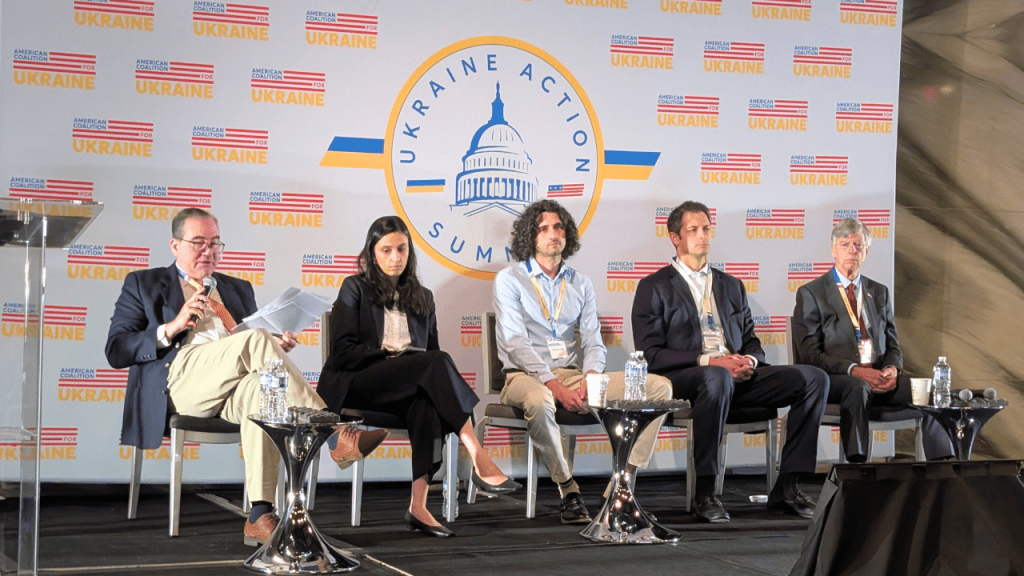
At the same time, not everyone in Congress supports Ukraine or this approach, cautions Daniel Runde: “Among the people you’ll meet will be those who hold views different from yours — and you must begin those conversations fully aware of that fact. These individuals have significant influence over everything that happens regarding Ukraine. In some cases, you won’t change their minds. You won’t convince everyone. It’s crucial to understand that. Some people in this room may share your view, others may not — but engaging with all of them matters.”
Erin McKee also offers communication advice to delegates, drawing on her diplomatic experience: “Diplomacy is an art — as are negotiation and advocacy in Congress. Lawmakers respond best not to pre-written talking points but to heartfelt, authentic stories. The Ukrainian diaspora in America — regardless of generation — speaks from the heart. They can share real experiences, stories of their relatives in Ukraine. What matters is humanity, not numbers or slogans. Strength does not equal justice. We must continue supporting the struggle for freedom, sovereignty, and independence.”
Advocacy begins with communication with staffers — aides and experts who organize a legislator’s office. One of them, speaking off the record, shared his formula for success in meetings with Congress: “Ninety percent emotion, ten percent information.” He explained that before meeting with a congressmember, you must do your homework — both before and after the conversation.
“Say: we want you to know that we see Ukraine as an ally and a valuable asset. Ukraine can win. We ask that your boss continue supporting Ukraine, as several key bills are pending. Mention the bill number — staffers are busy, and you’ll make their work easier.”
The staffer speaks in detail about etiquette — the kind that demonstrates a delegate’s professionalism and helps build relationships with a legislator’s office.
“I hold 400 meetings a year. After them, half of the people don’t even send a follow-up email with a summary of the meeting and the necessary information. My advice to you — send a handwritten note. That’s how you’ll stand out. And most importantly — thank every member of the staff.”
The importance of gratitude is also emphasized by Daniel Runde: “Especially at meetings with Republicans, your first message should be gratitude. Thank them for the Javelins, thank them for opposing Nord Stream. We’re grateful to the Trump administration for taking these steps.”
And it is extremely important to maintain communication with legislators constantly, emphasizes Maryna Baydyuk. Regular informing makes a legislator’s office knowledgeable about Ukrainian issues. It is important to do this not only during advocacy on the days of the Summit.
“Our delegates leave information for the staffers (the legislator’s assistants), which they then show to their congressman or senator. This ongoing communication is very important — it begins here at the Summit but must continue in the future. Yes, staffers and members of Congress will hear personal stories from our delegates today and tomorrow, but this needs to happen on a weekly or monthly basis. We are talking about personal meetings, when a person comes to the office here in Washington, or can also go to the local office of their representative — whether in Wisconsin, Alabama, or any other state. There are open-door hours, or a person can arrange a time, come, and talk about the issues that concern them,” explains Maryna Baydyuk.
Marianna Tretiak emphasizes that legislators are interested in communicating with voters from their own districts — with those Ukrainians who have the right to vote. That is why the Committee increases each year the number of congressional districts from which Ukrainian delegates come to the Summit.
“If someone lives in Pennsylvania and goes to a congressman not from Pennsylvania, why should they listen to that person? We need to work with those districts where Ukrainians live. Not everyone can come to the Summit in Washington. One person may come from a district but bring with them letters or petitions signed by hundreds of people from their city. So this person can say: I’m not alone in the room — I represent my community,” explains Tretiak.
Myroslava Shtefanyak Rubin from San Diego says that in California Ukrainian communities are active in 95 percent of congressional districts. They plan to bring that number to 100 percent.

Speaking about how to establish long-term cooperation, Myroslava gives the example of Congressman Scott Peters. She managed to establish contact with a staffer responsible for defense issues. Over time, that assistant was promoted and now manages the congressman’s office. “He climbed that career ladder to the top. We’ve been communicating for three years now. As a result, that office itself now promotes bills to support Ukraine. And since we already have such good relations, he writes to me: ‘Yes, Mira, what do you think about this bill I’m trying to move forward?’ That means they even reach out to the Ukrainian community and ask for our opinion. Yet quite often Ukrainians say: ‘Oh, I didn’t meet with my congressman.’ Congressmembers vote — but their staffers do the work. Relationships must be built precisely with them,” she explains.
Delegates advise that before meeting with a legislator or their team, one should think through the strategy of the conversation and clearly formulate the messages. To do this, it is necessary to know the politician’s key interests and link them to Ukraine. For Roman Chukhvitsky, from the state of Georgia, president and founder of the Global Alliance for Ukraine Foundation, this approach has developed into an entire methodology. He works with leaders of American churches whose congregations include many Republicans.
“These are people who speak about spiritual values, family values, moral values. And it is precisely on this basis that we should convey the message about good and evil, about light and darkness — about Ukrainian children abducted by Russians, about destroyed churches, about priests who were killed in Ukraine. We work with Turning Point USA, and regionally with churches that are part of the circle connected to the White House Office of Faith-Based and Neighborhood Partnerships,” he says.
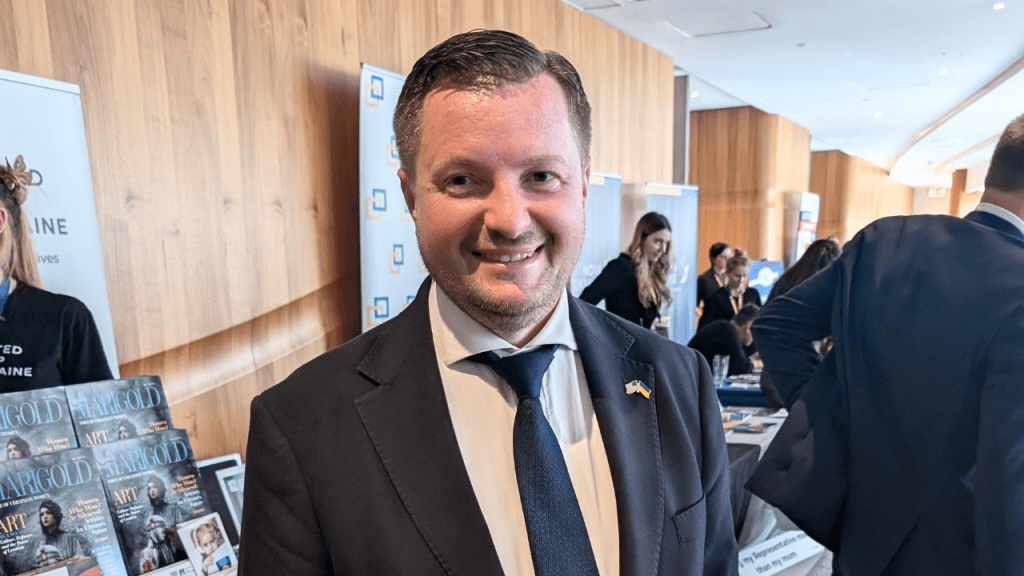
Roman Chukhvitsky stresses that building relationships with politicians takes a long time — but eventually it brings results. For example, momentum appeared after he organized a visit of American spiritual leaders to Ukraine.
“When we give them the opportunity to feel, see, and understand with their own eyes what is happening — not from social-media stories, but by allowing them to meet representatives of various churches, government bodies, businesses, the military, and chaplains — it completely changes their view and perspective. After that, it becomes much easier to convey the message that Ukraine is, above all, a Christian nation.”
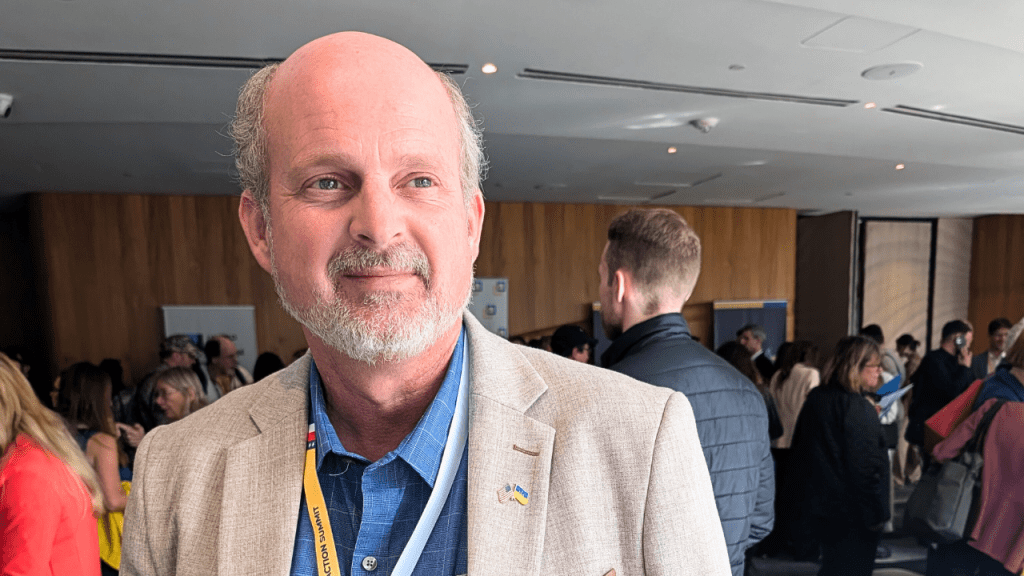
Rodney Mast, a farmer from the state of Mississippi — part of the so-called “Bible Belt” — first met Ukrainians when he adopted a seven-year-old Ukrainian girl. After Russia’s full-scale invasion of Ukraine, he hosted Ukrainian displaced families. He personally helped 200 families move to the United States, assisting them with paperwork. Now he carries out advocacy work with his legislators.
“Previously, I honestly wasn’t particularly connected with them. I attended a few meetings on agriculture, but not much more. However, I would say I have good relationships with the senator and two congressmen because I live right on the boundary of districts. Now I can write to them about an event they should know about. For example, I might say: Putin claims he wants to end the war, but I want you to understand — last night he launched 750 drones. These two things don’t align. Or there might be a bill coming up for a vote, and I want them to become its co-sponsors. Then I explain why it’s important for Ukraine, why it’s important for me as an American, and I become the voice that explains why they should support it.”
Rodney Mast emphasizes in conversations with legislators that the American South, as a Christian region, has much in common with Ukraine.
“We in the South have our identity as conservative people. We want to preserve these conservative values, remain conservative, and continue to be the Bible Belt of the South. We are a special group of people within the United States. And in the same way, Ukraine is a unique community in the Eastern European region — a nation with its own identity. If we allow Russia to destroy that identity, to crush a people, then we will be next. In other words, it must matter to me as a conservative not to let this happen in the world. Because if I don’t speak for those who need my voice, then later no one will speak for me.”
Ukrainian children abducted by Russia — a crime understood by everyone and one that provokes outrage. Experts emphasized that this issue should be raised first and foremost during advocacy meetings.
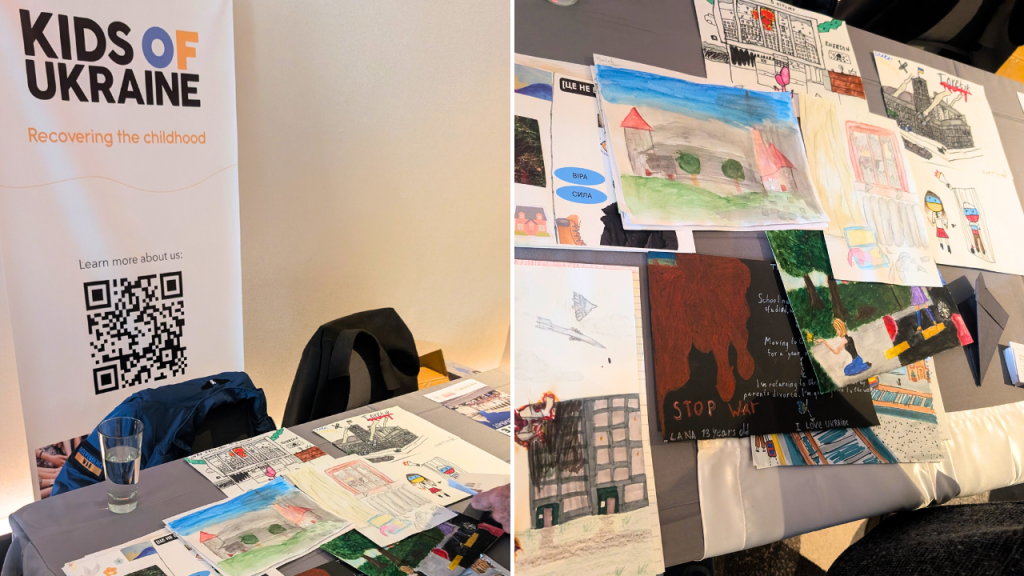
At the Summit, it was reported that a Yale University team documented 210 facilities (156 of them newly identified) used to hold Ukrainian children across Russia and in occupied areas of Ukraine. Among them, 39 facilities are directly intended for the militarization of Ukrainian children, and 49 have been significantly expanded since 2022. The “Warrior” program has also expanded noticeably, opening new facilities in Donetsk, Luhansk, Kherson, and Zaporizhzhia in 2024. A striking example is the Young Patriots Center “Snegiri”, specially built for the so-called “re-education” and militarization of Ukrainian youth. Several groups have already been trained there. Ukraine officially reports 19,536 known cases of abduction; according to Yale University estimates, the number of abducted children reaches tens of thousands.

Advocacy work is not limited to meetings with legislators. Valeria James, 17, attends school in Houston. Her father is American, her mother Ukrainian. She participates in a best-borscht competition and assists a teacher at a Ukrainian school. She says that Texas is a conservative, mostly Republican state, so she carefully selects her arguments in communication.
“I say that historically, Russia has been America’s enemy. And I think that for many Republicans, especially older ones, this is very important. I talk about the REPO Act (Rebuilding Economic Prosperity and Opportunity for Ukrainians Act) because some Republicans think: ‘Why are we funding this war when closer countries should also be spending money?’ So the issue of taxes is really a big topic. Another topic directly related to Texas is energy. It’s a powerful industry here, and introducing sanctions against Russia not only reduces interference in American industry but also helps increase our profit from it.”
Now Valeria James volunteers for the congressional campaign of Terry Virts, and she is confident that the advocacy experience she gained at the Ukraine Action Summit in Washington will contribute to her future career in national politics — and will help Ukraine as well.
About Author:
