During the Tokyo conference, partners announced more than $80 million in new funding for humanitarian demining. Governments of Japan, Colombia, Cambodia, Azerbaijan, Slovenia, and others signed cooperation memorandums to support these efforts.
Ukraine’s Ambassador to the U.S. Olha Stefanishyna emphasized that demining is key to economic recovery, safe land use, and restoring life in liberated territories. She reported that more than 30,000 square kilometers of land have already been cleared for safe use, and 80 contracts have been signed to clear over 14,000 hectares of farmland under Ukraine’s new national mine action management system.
The Ambassador underscored that nearly a quarter of Ukraine’s territory still requires clearance due to russia’s war.
“It’s crucial to accelerate these efforts — to protect both military personnel and civilians. Demining opens the way for Ukraine’s full agricultural recovery and strengthens our contribution to global food security,” Stefanishyna said.
She also called on international donors to coordinate demining projects with Ukraine’s national system through the Humanitarian Demining Center to maximize efficiency and synergy.
The panel paid special attention to technological innovations that can speed up the process
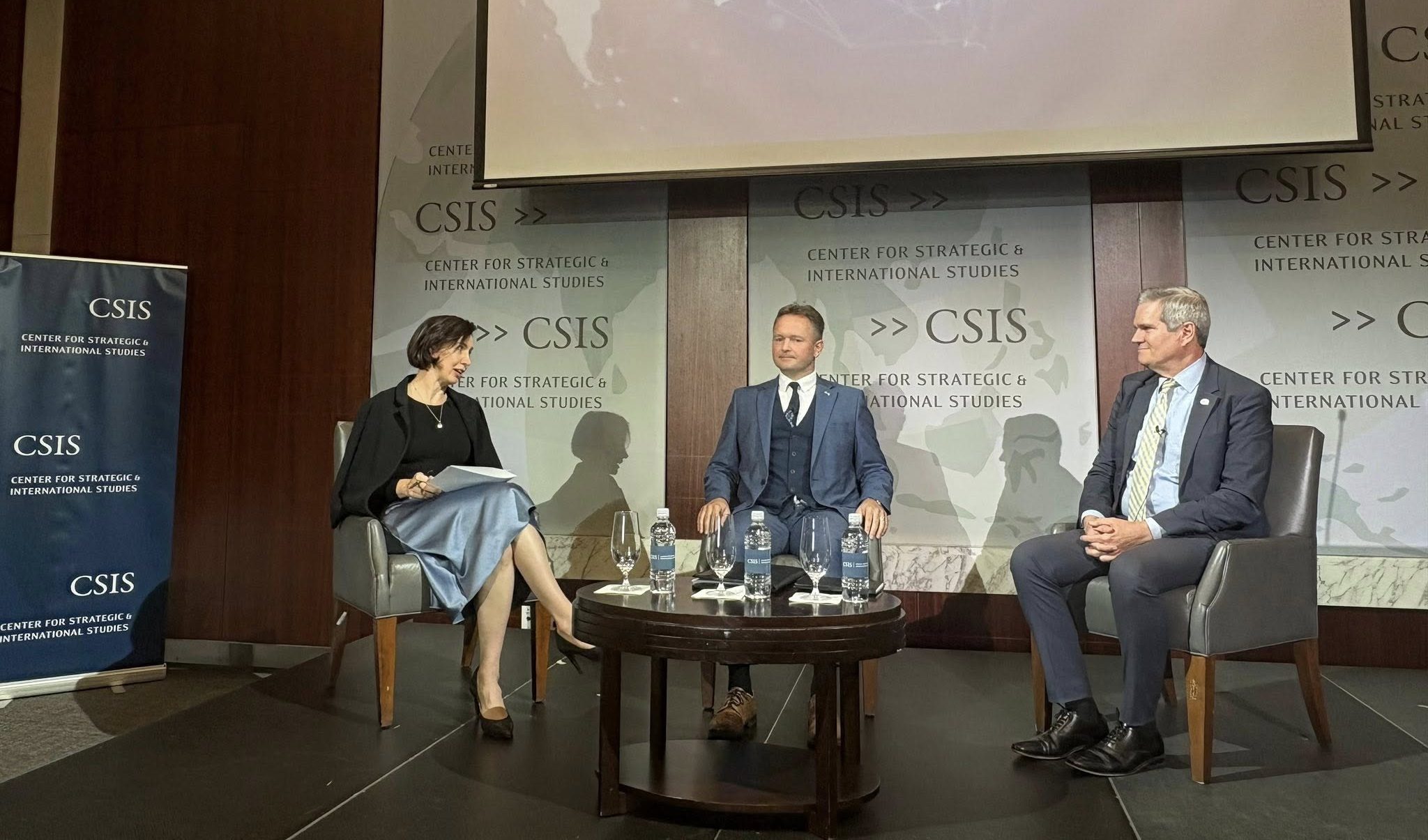
The panel paid special attention to technological innovations that can speed up the process. Speakers included Caitlin Welsh, Director of CSIS’s Global Food and Water Security Program; Takehiro Shimada, Deputy Chief of Mission at the Embassy of Japan; Ihor Baranetskyi, Economic Counselor at the Embassy of Ukraine; and Chris Whatley, Executive Director of HALO Trust USA.
HALO Trust presented examples of using drones, satellite imagery, artificial intelligence, and robotic systems to detect and neutralize mines.
According to Whatley, modern technologies could reduce the time needed to clear Ukraine’s territory from several decades to about ten years.
The discussion also addressed the impact of demining on economic and agricultural recovery. CSIS experts noted that tens of thousands of hectares of farmland remain contaminated, blocking farming activities on some of Europe’s most fertile lands. Safe clearance is essential for agricultural revival and broader economic reconstruction, including the extraction of critical minerals.
Japan reaffirmed that demining remains a core priority in its support for Ukraine and will continue implementing the Japan-Ukraine Mine Action Support Initiative.
Author: Danylo Pievchev