


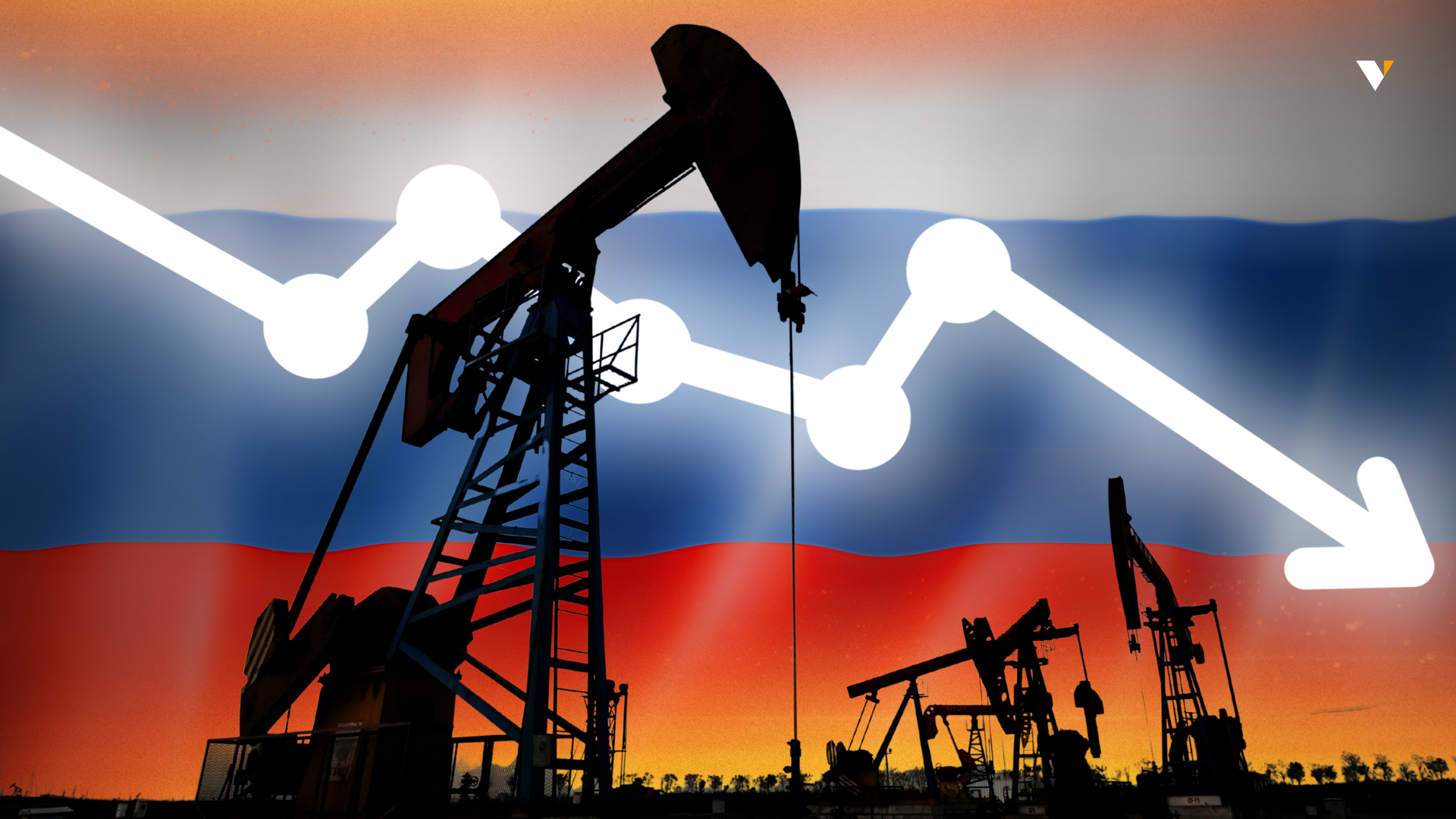
Finally Trump turned his face toward Ukraine! He imposed sanctions on the largest “purses” of Russian aggression — Lukoil and Rosneft!
Should we rejoice?
Sanctions “Danylo didn’t die — the illness choked him”?
A number of events that took place throughout October led many political scientists to the opinion that at last U.S. President Donald Trump stopped luring the Russian dictator with flattery and lucrative deals and, having become convinced that these do not work on him, resorted to carrying out his threats to apply the “stick.” Having once again become convinced that the top Russian leadership continues to lead him by the nose and does not budge from its demands, Trump delivered a triple blow.
First, he provided Ukraine with — although not “Tomahawks” — other long-range weapons. Second, he removed, albeit indirectly, the prohibition on striking Russian military targets with that weapon. “Since we sell NATO weapons, we do not care where they are used,” Trump said. Third, on October 22 the U.S. Department of the Treasury imposed sanctions on the Russian energy corporations Lukoil and Rosneft.
The wording regarding the sanctions is important, so I will quote the treasury press release in full.
“Today the U.S. Department of the Treasury’s Office of Foreign Assets Control (OFAC) is imposing additional sanctions because of Russia’s lack of serious commitment to a peaceful process to end the war in Ukraine. Today’s actions increase pressure on Russia’s energy sector and degrade the Kremlin’s ability to generate revenue for its war machine and to support its weakened economy. The United States will continue to advocate for a peaceful resolution to the war, and a durable peace depends entirely on Russia’s willingness to engage in good-faith negotiations. The Department of the Treasury will continue to use its authorities to support the peace process.
‘Now is the time to stop the killing and to call for an immediate ceasefire,’ said Secretary of the Treasury Scott Bessent. ‘Given President Putin’s refusal to end this senseless war, the U.S. Department of the Treasury is imposing sanctions on the two largest Russian oil companies that finance the Kremlin’s war machine. The Department of the Treasury stands ready to take additional actions, if necessary, to support President Trump’s efforts to end another war. We call on our allies to join us and to uphold these sanctions.’”
As before, there is no explicit designation of the Russian Federation as the aggressor, but it is clearly recognized that peace “depends entirely” on the Russian side. The sanctions are aimed at reducing funding both for the Kremlin’s “war machine” directly and — more generally — for Russia’s already “weakened economy.” It is also emphasized that the Treasury “stands ready to take additional actions” if these prove insufficient.
The press release lists by name numerous subsidiaries of these companies that are also subject to sanctions. So, supposedly, the breath has been cut off for two giants that were among the main sources of financing the aggressive war?
Are the sanctions capable of working in full?
In fact, it is not so simple, because an immediate halt of all operations with the named companies would lead to a spike in prices for petroleum products, including gasoline at U.S. pumps. Therefore, in order to mitigate the impact on the American and world markets, the U.S. Treasury issued licenses for some of Lukoil’s operations until November 21, 2025, in particular for the Caspian Pipeline Consortium and the Tengizchevroil project.
A significantly more serious obstacle to the sanctions will be the fact that a buyer for Lukoil’s assets outside Russia has already been found — the Gunvor corporation, in which a majority stake belongs to the friend of the Russian dictator Gennady Timchenko.
For Rosneft’s assets in Germany, the U.S. has made an exception to the sanctions at least until April.
The most important buyers of Russian energy — China and India — although forced to somewhat reduce their operations with these companies, will far from completely stop them.
However, the greatest resistance to the sanctions will be posed by China — the main buyer of Russian energy at preferential prices.
The Chinese factor
CNN conducteda detailed analysis of how painful the new sanctions will be, given that the main buyers of Russian energy are China and India. Here are the essential theses:
Both countries face a multi-meaning choice: on the one hand, they depend on discounted Russian energy and have established ties with Russia; on the other hand, they also depend on the U.S. market, since President Trump has already imposed tariffs on India and China and may increase them if he decides that these countries are not complying with the sanctions regime.
Both states skillfully circumvent sanctions through a network of “intermediaries” in third countries.
So far, the so-called Russian “shadow fleet” has not been defeated (although the U.S., Britain and the EU have already blacklisted hundreds of ships of this “fleet”).
“Most of this sanctioned oil will end up on the opaque Chinese market and/or be ‘washed’ through trade tricks,” said Seigle, an expert in strategic studies.
CNN quotes one of the many experts it interviewed — Clayton Seigle, head of the Energy and Geopolitics division at the Center for Strategic and International Studies — as the summary of the entire analysis:
“Most of this sanctioned oil will end up on the ‘opaque Chinese market and/or be ‘washed’ through trade tricks,’ Seigle said, an expert in strategic studies. ‘These workarounds will still hit Moscow’s revenues,’ he said, because hiding in the shadows is more expensive. The biggest X factor is not what oil traders will do, but what Washington will do to enforce the law,’” Seigle said.
These conclusions were confirmed by Trump’s meeting with Chinese leader Xi Jinping during the ASEAN summit in Seoul on October 30. The meeting was fairly short — in total 1 hour 40 minutes, including interpretation, so the “clean” conversation lasted about an hour. It is clear that if the Russia–Ukraine war was mentioned at all, it was in the context of a much broader U.S.–China agenda: from the fentanyl black market that China supplies to the U.S. to trade relations in which both sides are interdependent and intertwined.
In particular, in response to the trade war that Trump launched with China in April, Beijing refused to buy soy from American farmers. These farmers make up a significant portion of the Republican Party’s core electoral base. Tariffs on imported Chinese goods — from consumer goods to critical components of American electronic devices and modern weaponry — hit end buyers with price increases.
As a result of the meeting, Trump and Xi agreed to forgo mutually economically harmful actions. Trump will impose only 47% tariffs instead of 100%, and China will resume purchases of American soy. The trade war was postponed for a year. Of course, energy supplies were included in this truce: Trump refused to impose sanctions on China’s purchase of Russian oil and gas.
Thus, even when Trump seems to have moved to carry out his threats to strangle the Russian economy, the mechanisms of the global market are able to significantly weaken the impact of the purportedly imposed sanctions on the Russian economy, although the blow will be quite felt.
Escalation of military confrontation
In response to Trump’s policy shift, Russia conducted a demonstrative test of the long-range cruise missile “Burevestnik,” which runs on nuclear fuel and is capable of carrying nuclear warheads. According to numerous Russian media, this missile is allegedly capable of flying 14,000 km — it landed in Kamchatka. However, experts call this “wonder-weapon” a “flying Chernobyl,” because it leaves a radioactive trail along its trajectory, and if it crashes it would cause an environmental catastrophe.
In a bold act by the Russians, Trump stated: “We don’t even have to launch missiles that far to reach Russia — our two submarines are already off its shores. And let Putin focus his efforts on achieving peace, not on missile tests.”
As if in response, Russia tested the underwater drone “Poseidon,” which operates on nuclear energy. According to data from the Bulletin of the Atomic Scientists, this weapon is capable of “creating radioactive waves in the ocean that would make coastal cities uninhabitable,” note Arpan Rai and Harriet Boucher, The Independent.
In addition, one day before Trump’s arrival at the ASEAN summit and his meeting with Xi, North Korea conducted another test of its long-range missile — likely in response to Trump’s renewed offer to meet Kim Jong Un.
Directly during his tour, on the eve of the meeting with Xi, Trump ordered the Pentagon to “immediately resume” testing of the nuclear arsenal.
“The United States has more nuclear weapons than any other country. This was achieved, including with full modernization and reconstruction of existing weapons, during my first term in office. Because of the enormous destructive power I HATED doing it, but I had no choice! Russia ranks second, and China — third by a large margin, but within 5 years will be on equal footing. Because of testing programs by other countries I instructed the Department of War to begin testing our nuclear weapons on equal terms. This process will begin immediately,” Trump wrote on his social network Truth Social.
At the same time he spoke in such a way that even experts cannot precisely understand: did the president mean tests of nuclear delivery systems (missiles, launchers) or the resumption of tests of nuclear explosions underground.
“From Trump’s post it was not immediately clear whether the United States would detonate a nuclear warhead sooner than Russia or China. All three countries — and other states that possess nuclear weapons — regularly test their nuclear delivery platforms: Russia recently tested a new cruise missile with a nuclear engine and a nuclear torpedo, and the United States in May conducted a test launch of the Minuteman III nuclear missile,” note Davis Winkle and Swapna Ramaswamy, USA Today.
“Trump needs to ‘clarify what he means’ by ‘nuclear testing,’” the authors quote Andrea Stricker, a nonproliferation expert at the Foundation for Defense of Democracies. In her view, Trump “may allow low-yield nuclear tests, which Russia and China may conduct, rather than full-scale tests,” the authors cite the expert.
“Stricker hypothesized that Trump might seek to begin a new round of arms control negotiations before the expiration of the most recent U.S.–Russia arms control treaty in February 2026,” the authors of the above-cited USA Today article note.
Thus, if one means delivery systems, then they are tested continuously; if one means explosions — that is a direct violation of fundamental treaties on the control of nuclear weapons, concluded between the U.S. and the USSR in 1986 — on the ban of nuclear tests — and between the U.S. and Russia — on strategic offensive arms, signed in 2010, which expires on February 4, 2026. This treaty remains the last agreement between the U.S. and Russia on nuclear control; if it lapses, many experts believe a renewed nuclear arms race between nuclear states could begin — already at a new technological level and in a different political environment, making such an outcome far more dangerous than during the Cold War.
All this has led to the resumption of discussions that have not taken place for 33 years — since the collapse of the USSR, when it seemed that the Cold War had ended forever.
“Trump’s decision to resume nuclear testing in the United States faces domestic criticism, as well as a sharp warning that it could lead to escalation,” notes Harriet Boucher, The Independent, and provides examples.
Thus, Dina Titus, a Democratic member of Congress from Nevada, stated: she intends to introduce legislation to put an end to this.
Daryl Kimball, director of the Arms Control Association think tank, said that the U.S. would need at least three years to restore controlled underground nuclear testing at the former test site in Nevada.
“Trump is misinformed and detached from reality. The U.S. has no technical, military, or political reasons to resume nuclear detonations for the first time since 1992,” Boucher quotes Kimball’s post on social network X.
He added that Trump’s statement could “trigger a chain reaction of nuclear tests by U.S. adversaries and undermine the Treaty on the Non-Proliferation of Nuclear Weapons,” Boucher notes.
The UN Secretary-General António Guterres condemned attempts to revive the nuclear arms race: “We must never forget the catastrophic legacy of more than 2,000 nuclear tests carried out over the past 80 years. Nuclear testing can never be permitted under any circumstances” (quoted in the cited article).
According to estimates by the Federation of American Scientists as of March 2025, “Russia has 5,459 deployed and non-deployed nuclear warheads, while the United States has 5,177. Together this is about 87% of the world’s nuclear weapons,” notes Emma Burrous, Associated Press.
Against the backdrop of these talks, threats and sanctions, Russia has significantly intensified strikes on the energy infrastructure of Ukrainian cities, on thermal power plants and substations. Every day, massive Russian bombardments by drones and missiles kill or maim Ukrainian civilians, including children.
Russia has also stepped up provocative actions toward NATO countries: drones without identification markings constantly violate the airspace of the Baltic states, prompting NATO countries to discuss how to respond; Belarus also participates in provocations, launching across the border to Lithuania aerial balloons either with contraband cigarettes or so-called “meteorological” balloons. Both types of provocations, besides stirring NATO, quite likely conduct reconnaissance, strengthening suspicions that Russia is preparing for a clash with NATO, most likely in the form of a new type of hybrid warfare.
However, at the same time as the escalation of threats toward Russia, Trump ordered a reduction of the U.S. troop contingent in Romania.
This decision was made by the White House “even though Russian drones and aircraft continue to probe NATO airspace,” notes Gerdana Krasteva, the British publication Metro.
“Plans were announced by the U.S. to reduce the number of its troops in Romania, a critically important buffer zone against Russian aggression. This includes troops that were to be stationed at Mihail Kogălniceanu Air Base, which is strategically important due to its proximity to Ukraine,” the author emphasizes. A U.S. contingent of 1,000 service members will remain in Romania.
Such a spiral of threats, demonstrative actions, displays of weaponry on the verge of direct confrontation between two states with the largest nuclear arsenals — allegedly under their control — is dangerous primarily because of the high probability of a loss of control due to error and miscalculation (as already happened with the Russian dictator — his security services miscalculated Ukrainians’ capability and will to resist and the West’s reaction to a brazen violation of international laws on inviolability of borders). The “duel” of enormously inflated egos of both Putin and Trump against the existential problem of Ukraine’s existence as a state threatens the possibility of misreading intentions, steps, and actions of the two world giants, and this brings the threat of a third world war closer than ever before.
Is Trump driving himself — and his country, and the world — into a dead end?
Difficulties in foreign policy — caused both by the global economy and by the confrontation between democratic and autocratic camps — are only one side of the development of events. Unfortunately, the likelihood of escalation is further enhanced by developments inside the U.S.: there the course of events is becoming increasingly acute — at first glance disparate — which together corner Trump himself, and along with him the U.S. and the world.
The totality of these events, it seems to me, can be defined as the “Trump spiral.” I have already had to explain what is meant: the ongoing escalation of mutual enmity between Trump and his supporters, on the one hand, and his opponents, on the other. This cold civil war began on the first day of Trump’s first term and has only intensified since.
It is caused both by deep changes in American society that lead to its progressively deeper split into extreme left and extreme right political sectors, and by Trump’s policies, which further amplify the split.
In particular, Trump’s constant appeals to the Russian dictator beginning with his first speeches in 2016 caused unprecedented suspicions about his almost secret ties with Russian agents (and partly this is justified, which can be discussed in more detail in a separate article). Such suspicions led to an investigation of possible Russian interference in the 2016 election by Special Counsel Robert Mueller; subsequent actions against Trump led to the 2018 impeachment. Trump responded to these actions by opponents with unprecedented actions for the U.S.: he began to spin a theory of his personal “political persecution” as a result of alleged “personal animosity” and actions by the Democratic Party, which, with the help of some “deep state,” “politicized” all intelligence services and the FBI against him.
Despite all the absurdity, these theories found resonance, which gave him the opportunity to create a circle of almost blindly loyal people of varying qualifications and professions, including among intelligence officers (but also among the presenters of his loyal channel FOX). He also promoted a theory that looks even more absurd against the background of American democratic history: about alleged mass falsifications in the 2020 election. Despite more than 60 lost court cases regarding those elections, he continued to claim “stolen elections,” which led to the January 6, 2021 riot.
It is clear that the lost election provided opponents with the opportunity to punish Trump and the rioters — they were convicted, and Trump was hit with a whole series of legal cases. He again turned to statements about “political persecutions” of him.
The incredible happened again: despite everything, he was elected again! Now he has come much more armed, because with him is his loyal team, and he already knows how to act.
He needs to create an impregnable shield against possible new persecutions. For this:
• replace all obvious and probable opponents with his loyalists in all government agencies;
• squeeze all political opponents, from the entire Democratic Party to opponents within the Republican Party. Punish demonstratively everyone who “persecuted” him.
But in the U.S. system this means destroying the very democratic foundations: the independence of the legislative and judicial branches; the system of checks and balances; protection of minority interests, which, though having lost the election, still make up almost half of the U.S. population; protection of minority rights and fundamental rights guaranteed by the Constitution.
The checks and balances system does not cease resistance, because defeat would mean the end of the U.S. as a democratic state, turning it at minimum into a state where democracy is limited to the interests of the victorious majority, which brings this state closer to a “tyranny of the majority.” The spiral spins ever more sharply.
All this occurs against the background of the further development of complex processes that deepen the American society’s split into extreme left and extreme right.
I will cite only one example.
Thus, the U.S. Department of Justice initiated criminal proceedings against former National Security Advisor from Trump’s first term John Bolton, the New York City Attorney General Letitia James, and former FBI Director James Comey. Bolton was officially informed of suspicion of violating laws on the protection of documents containing state secrets. James and Comey were indicted by grand juries: James is charged with mortgage fraud; Comey — with lying to Congress.
All the accused are Trump’s political enemies. Bolton, having worked as an advisor and seen the Trump White House from the inside, wrote the book The Room Where It Happened, which became popular in political and political-science circles — a cautionary book about the dangers to the U.S. and to the international system of democracies that Trump has already caused and may yet cause.
However, U.S. jurisprudence provides means to counter political persecution — laws against “selective” and “vindictive” justice. These are not epithets but legal terms, and if the defense of the accused can prove in court that the charges have at least one of these two motives, the case is closed.
“Charges brought against political opponents of President Donald Trump after his public call to Attorney General Pam Bondi to hold his likely enemies accountable raise an alarming question: if the Department of Justice is no more than the president’s obedient lapdog, is anyone in America ultimately protected from its teeth?
There is one obvious legal defense for former FBI Director James Comey, New York Attorney General Letitia James or anyone else the Department of Justice has pressed at Trump’s behest: claims of vindictive or selective prosecution, which can lead to full dismissal of cases by judges. Historically these claims rarely succeed. But Trump’s behavior so exceeds permissible bounds that it could actually help those he targets,” notes Brandy Bachman, The Huffington Post.
Even Trump’s proclaimed and broadly supported fight against “illegal immigrants who committed serious crimes” acquires a sharp political coloring, because a component of the “stolen elections” theory is unfounded claims about alleged “illegals” who “voted for the Democrats.” This is nonsense in general, because only U.S. citizens registered as voters have the right to participate in presidential elections; even permanent residents with green cards do not have this right.
However, in my view, it is precisely this destructive theory that pushed Trump to turn the legitimate fight against criminal elements, including among undocumented immigrants (yes, deportation), into a genuine war against immigrants in general — a war in which, supposedly in the name of upholding the law, other, no less fundamental laws are brazenly disregarded (illegal arrests, brutal treatment, deployment of the National Guard in cities, etc.).
Thus, the struggle for America’s near future continues — will the democratic system be preserved. But it is this very system that threatens Trump personally. If in 2026 Democrats win the midterm elections to Congress, he will not avoid a new impeachment, or at least a new “political” prosecution — increasingly justified each time.
This forces Trump to take ever more destructive measures against democracy. What the outcome of the unfolding “Trump spiral” will be, no one can predict at present. Its endings could be many, and all will fall within the broadest range: from the victory of democracy as a system in the U.S. (which, in my view, would require painful compromises regarding both Trump’s further fate and the U.S. political order) and in the world (in which case the chance of victory for Ukraine would significantly increase) — to... World War III. In such a war, the question of democracies would no longer stand at all, because it would threaten the total destruction of at least large states.
About Author:
