


 Key players are simultaneously talking about peace while demonstrating deep mistrust toward one another. Ukraine insists on security guarantees, the United States is searching for a workable framework for agreements, and Russia continues to put forward conditions that effectively freeze the conflict. As a result, negotiations are moving forward not in a linear way, but through mutual contradictions, public disputes, and information maneuvers.
“Christmas” Talks in Mar-a-Lago: A Draw Without a Breakthrough or Illusions
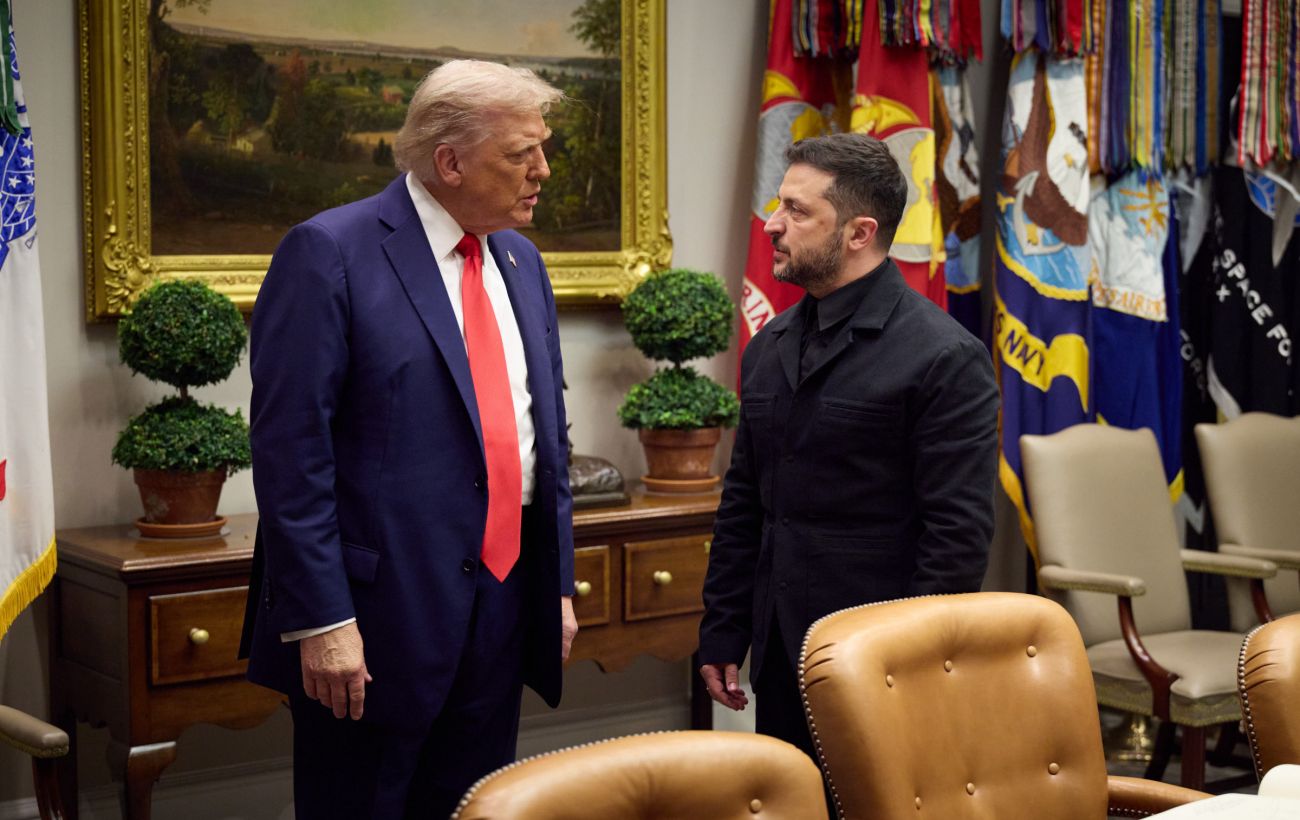
The meeting between Volodymyr Zelensky and Donald Trump in Mar-a-Lago at the end of December did not bring any public breakthroughs, but it also did not record a deterioration in the parties’ positions. As before, the so-called “90% agreed plan of 20 points” remains in place, and working groups are expected to begin detailed work as early as January. Trump’s publicly positive rhetoric toward Putin surprised media outlets and diplomats, but officially it has been left without comment. The diplomatic game between Kyiv and Moscow over responsibility for a possible collapse of the talks continues, with the United States acting as the key arbiter.
At the same time, Russia is demonstrating an unwillingness to move toward a ceasefire, rejecting the idea of a temporary pause “for elections” and spreading claims about an alleged attack on Putin’s residence. Ukraine and its European partners dismissed these accusations, suggesting the possibility of a provocation. Statements by Lavrov and Putin about revising Russia’s negotiating position look like an attempt to exit the process without taking responsibility. Against this backdrop, European leaders are showing restrained activity, trying not to lose their agency in a process that is increasingly concentrating around Washington.
Zelensky: “I Do Not Trust Putin, He Does Not Want Ukraine’s Success”
President Volodymyr Zelensky said in an interview with Fox News that he sees no signs of Putin’s readiness for peace. He emphasized: “To be honest, I don’t see it. I don’t see it because, first of all, I don’t hear it. He doesn’t talk about peace. He says he can go further. This is not a signal of peace.” According to Zelensky, pressure and sanctions from the United States, as well as the personal stance of President Trump, could play a key role in restraining Russia. He stressed that Washington has sufficient tools to influence the situation.
Zelensky also stated that he has no trust whatsoever in the Russian leadership: “I do not trust the Russians. I do not trust Putin. He does not want Ukraine’s success. I believe he can say such words to President Trump, but that is not true.” The president also cited data on high losses suffered by the Russian army, noting that this year Russia has lost about 400,000 troops. He emphasized that without U.S. support—particularly in air defense and weapons supplies—Ukraine will not be able to effectively protect its skies and continue resisting aggression.
Tusk: The U.S. Is Ready to Deploy Troops in Ukraine as Part of Security Guarantees
Polish Prime Minister Donald Tusk said, that peace in Ukraine has “appeared on the horizon” for the first time since the start of the full-scale invasion. According to him, a key outcome of the talks was a U.S. declaration of readiness to participate in security guarantees for Ukraine, including a possible presence of American troops. He noted that such statements from Washington have been voiced for the first time and could become the basis for further agreements. At the same time, Tusk stressed that full confidence in achieving peace is still a long way off.
Tusk also said that this would require difficult compromises from Ukraine, particularly on territorial issues. He emphasized the importance of a referendum as a tool for legitimizing possible decisions and linking territorial concessions to real security guarantees. The prime minister underlined that such agreements would be extremely important for Poland given the regional security situation. He added that key decisions could be made in the coming weeks and would require full coordination among Polish institutions.
The Story of an “Attack on Putin’s Residence”
Reports from Moscow about an alleged attack by Ukrainian drones on Putin’s residence appeared immediately after the meeting between Trump and Zelensky and triggered a sharp reaction from the U.S. president. Trump saidhe heard about it directly from Putin and was “very angry” about this information. Zelensky, for his part, called the story of the strike “a complete fabrication.” Moscow claimed that all drones were shot down and that there was no damage or casualties.
Analysts pointed to the absence of any independent confirmation of the incident, including videos, photos, or reports from local residents. At the same time, Russia’s Foreign Ministry used this story as a pretext to revise its negotiating position and prepare “appropriate retaliatory strikes.” In this context, it is recalled that Russia has repeatedly attempted to assassinate Zelensky and has carried out strikes on government buildings in Kyiv. Thus, the information campaign around the “attack on the residence” appears to be an element of a political game aimed at derailing or discrediting the negotiation process.
Trump’s Peace Plan and Fundamental Contradictions
U.S.-brokered negotiations to end the war have advanced further than ever before, but they remain burdened by fundamental contradictions. Lavrov saidthat Moscow will never agree to the deployment of European troops in Ukraine, calling them a “legitimate target.” At the same time, the presence of international forces is a key element of the security guarantees being promoted by Kyiv together with Washington. Trump has acknowledged that the process has turned out to be far more complex than he expected and that there are no longer any quick deadlines.
Separate unresolved issues include territorial questions, the Zaporizhzhia Nuclear Power Plant, and U.S. commitments to defend Ukraine in the event of a renewed attack. Zelensky insists on “Article 5–level guarantees,” but Trump himself avoids directly confirming such wording. Within the United States, there is also significant political resistance to the idea of rigid commitments to Ukraine. Against this background, the negotiations look like a process in which the outlines of a possible settlement are already visible, but filling those outlines with concrete substance remains extremely difficult.
Photo: rbc.ua
Author: Danylo Pievchev