


 The United States and Ukraine have intensified diplomatic efforts to bring the war closer to an end, yet Moscow’s actions continue to move in the opposite direction. Alongside trilateral negotiations, Russia is stepping up its strikes, while the West is preparing for a scenario of prolonged confrontation. Against this backdrop, key issues include security guarantees, NATO’s military presence, and economic pressure on the aggressor.
Trump Is Deeply Involved in Peace Talks Between Ukraine and Russia, the White House Says
U.S. President Donald Trump remains directly involved in the negotiation process aimed at ending Russia’s war against Ukraine. This stated by White House Press Secretary Karoline Leavitt, who emphasized that the head of state is constantly briefed by his advisers, including Jared Kushner and Special Envoy Steve Witkoff. According to her, the peace process is neither a formal nor a postponed issue for the White House. She stressed that the president is not distancing himself from the talks and is keeping the situation under his personal control.
Leavitt also commented separately on the trilateral talks between the United States, Ukraine, and Russia held on January 23–24 in Abu Dhabi. She called the meeting “historic,” despite limited media coverage. According to her, the United States succeeded in bringing the parties to the war to the same table, which is a rare and important step. At the same time, the press secretary уточнила that phone contacts between Trump and the president of Ukraine or the Russian dictator ahead of the next round of talks are not currently planned.
A New Trilateral Meeting May Take Place as Early as February 1, Zelenskyy Says
President Volodymyr Zelenskyy reportedthat the next meeting of the Ukrainian, U.S., and Russian teams could take place as early as Sunday, February 1. According to him, the Ukrainian delegation provided a full report following the previous trilateral contacts, which were the first in such a format in a long time. The meetings addressed military-related issues, including steps to end the war and mechanisms for control and monitoring. Zelenskyy noted that some topics require additional preparation before the next round of talks.
The president emphasized that Ukraine remains consistent in its pursuit of peace, while Russia, in his words, is the reason the war continues. He warned against the use of negotiations as a tool for stalling by Moscow. “Real results of diplomacy are needed,” Zelenskyy said, stressing the importance of sanctions and economic pressure. He added that it is precisely the consequences of restrictions and the blocking of Russian operations that can influence the end of the war.
Zelenskyy: Russia Still Seeks to Seize Ukrainian Territory
President Volodymyr Zelenskyy statedthat Russia continues its attempts to seize territories of the Donetsk and Luhansk regions. He said this during a press conference in Vilnius, emphasizing that Ukraine insists on respect for its territorial integrity. Zelenskyy noted that during the trilateral talks in Abu Dhabi there were many difficult issues, although their number has decreased. At the same time, the territorial issue remains key and the most sensitive.
According to the president, the positions of the parties on this issue remain fundamentally different. “The Americans are trying to find a compromise. We agree to communicate in a trilateral format,” Zelenskyy said, emphasizing the need for all sides to be ready for compromise. He also stated that Russia seeks to push Ukraine out of the eastern part of the country, but is unable to achieve this on the battlefield. Zelenskyy recalled that the trilateral talks in Abu Dhabi were the first in a long time since meetings in Saudi Arabia in March 2025.
NATO Secretary General Explains Why Ukraine Is Intercepting Fewer Russian Missiles
According to him, this is due to a shortage of interceptor missiles for air defense systems. Mark Rutte highlighted the importance of the PURL program, under which allies purchase interceptor missiles from the United States. However, he stressed that this is not enough to protect lives in Ukraine, as Russian attacks are intensifying.
“You know which countries are represented in this room and which of them have significant stocks of interceptors. Wherever you can, I ask you to put pressure on your governments to take this step. Some countries are already doing this: Norway has announced it, Canada, Turkey. Others as well. But there is still a lot of work ahead, because this is the difference between life and death day by day,” Rutte emphasized.
Within the framework of a €90 billion loan for Ukraine, NATO Secretary General Mark Rutte called on the EU to move away from purchasing exclusively European-made weapons and stressed the critical importance of supplying arms from the United States. In his view, procurement within the EU remains a priority, but without U.S. weapons supplies the EU will not be able to sustain Ukraine in its fight.
“There are two paths—‘packages’ from the United States (under the PURL program) and the use of national stockpiles,” Rutte stressed.
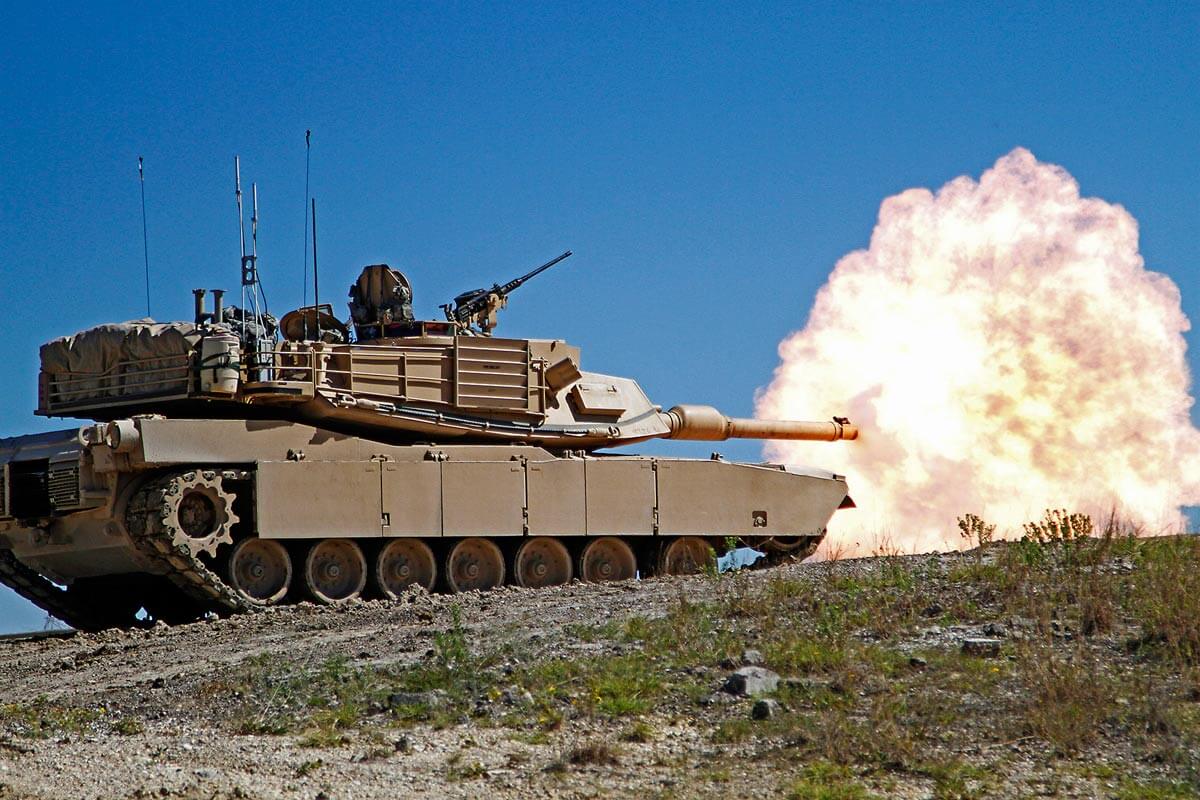
The United States Will Deploy an Abrams Tank Unit in Romania
The United States plans to deploy a unit of American troops equipped with Abrams tanks in Romania. This reported by the Chief of Defense Staff of the Romanian Armed Forces, General Gheorghiță Vlad, who noted that this concerns a rotational presence within existing U.S. commitments. According to him, this decision does not mean an increase in the number of American troops in the country. At the same time, the arrival of Abrams tanks is seen as a significant enhancement of the contingent’s combat capabilities.
General Vlad clarified that he discussed this issue with the Supreme Allied Commander Europe, General Alexus Grynkewich. According to him, the Alliance maintains its commitments to the defense of Romania in line with regional plans. He emphasized: “The United States has agreed to maintain the same level of military contingent, while also improving the quality and combat capability of the forces.” Despite the reduction of one battalion in the fall, about 1,000 American troops and around 3,500 allied troops in total remain in Romania.
Photo: Romania Journal
Author: Danylo Pievchev