Background
Volodymyr Makarenko (b. 1943) is a Ukrainian nonconformist artist working in painting, graphics, and mixed media. He gained international recognition for synthesizing Ukrainian and European artistic traditions. His work includes still lifes and figurative compositions, often on spiritual themes. He studied at the Dnipropetrovsk Art College in the studio of Ya. Kalashnyk. His diploma work “In the Blue Land” was destroyed, and the artist was accused of formalism and barred from continuing his studies in Ukraine. He later moved to Leningrad and enrolled at the Mukhina Higher School of Monumental Art (1963), receiving a degree in monumental painting in 1969. That same year, he joined the informal group of nonconformist artists known in the West as the “St. Petersburg Group.” In 1973 he moved to Tallinn, and in 1981 emigrated to Paris, where he received the Silver Medal of the City of Paris in 1987. He has exhibited in France, Germany, the United States, Canada, and Sweden, and works with European and American galleries. He lives and works in Paris. His works are held in private collections and galleries in France, Estonia, and Ukraine.
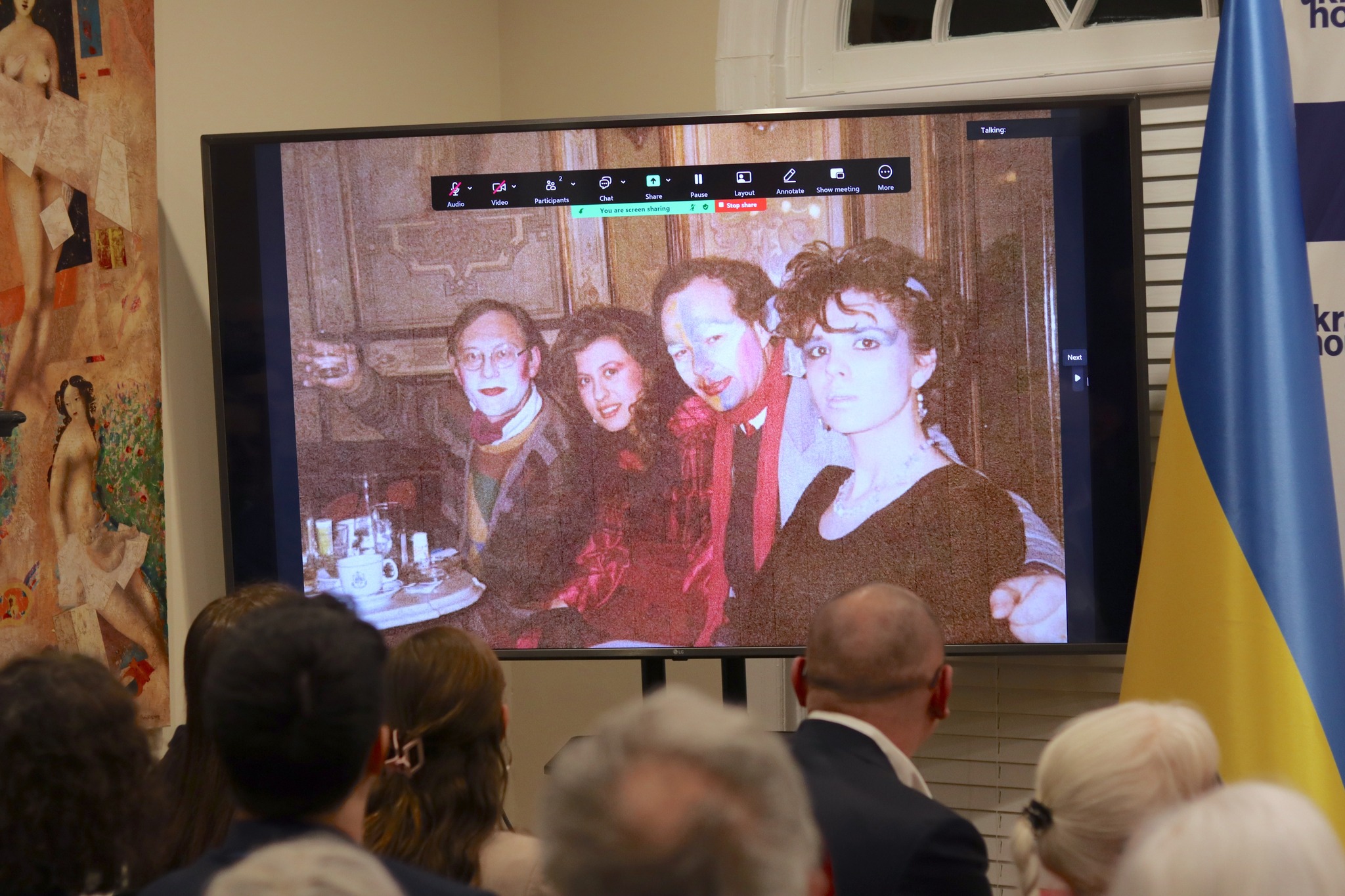
Anton Solomoukha was a Ukrainian artist and photographer who spent most of his life working in France. Known as a representative of postmodernism and the creator of the genre of “photo-painting,” he combined staged multi-figure photography with painterly composition. He received his art education in Kyiv and emigrated to France in the early 1980s. His early works drew on Soviet visual experience, mythological motifs, and biblical subjects presented through an ironic postmodern lens. His exhibitions were held in France, Belgium, Italy, the United States, and Ukraine. Solomukha believed that contemporary art requires intellectual preparation from the viewer and criticized superficial perceptions of the artistic process. His work was seen as a bridge between Ukrainian cultural tradition and the Western European art world. His legacy includes painting and artistic photography; his works are held in private collections and museums in France and Ukraine and can also be found at the New York Academy of Art.
Volodymyr Strelnikov (b. 1939, Odesa, Ukraine) is a Ukrainian artist, graphic artist, and painter, a representative of Odesa nonconformism. His work combines expressive abstraction, symbolism, and a deep connection to Ukrainian cultural tradition. He was an initiator of so-called “apartment exhibitions”—informal shows in private homes that became a hallmark of the Ukrainian underground. In 1978 he emigrated to the West and settled in Munich. His works have been exhibited in Germany, France, and Austria, and in 1979 he participated in the international exhibition “Contemporary Art from Ukraine: Munich – London – New York – Paris.” Since the 1990s, he has renewed creative ties with Ukraine, holding solo exhibitions in Odesa, Kyiv, and Khmelnytskyi. His art is characterized by a blend of abstract painting and national symbolism, with compositions often built on geometric forms, textured surfaces, and muted colors that reference nature and the archetypes of the Ukrainian steppe. His works are held at the Zimmerli Art Museum in New Jersey.
Vitaly Sazonov is a Ukrainian painter and graphic artist, a representative of nonconformist art. From 1957 he lived in Odesa, studied at the Faculty of History of Odesa State University named after I. I. Mechnikov, which he left in his fourth year to fully devote himself to art. He began painting in the late 1960s and worked as a professional artist from 1972. In the mid-1970s, he joined circles of Odesa and Moscow nonconformists and participated in “apartment” exhibitions. In 1980 he emigrated to Munich, where he continued his creative work and participated in exhibitions in Germany, France, Spain, the United States, Canada, and other countries. His works are held in numerous private collections in Ukraine and abroad. Sazonov’s art is related to abstract, non-objective painting and was influenced by the theories of Wassily Kandinsky and Kazimir Malevich, as well as by the color and compositional techniques of ancient icons. Many of his canvases are marked by a balanced, contemplative structure, layered textures, and a combination of geometric and symbolic forms that reinterpret the spiritual tradition of icon painting in a modern abstract language.
Photo: Ukraine House
Author: Inna Mikhno


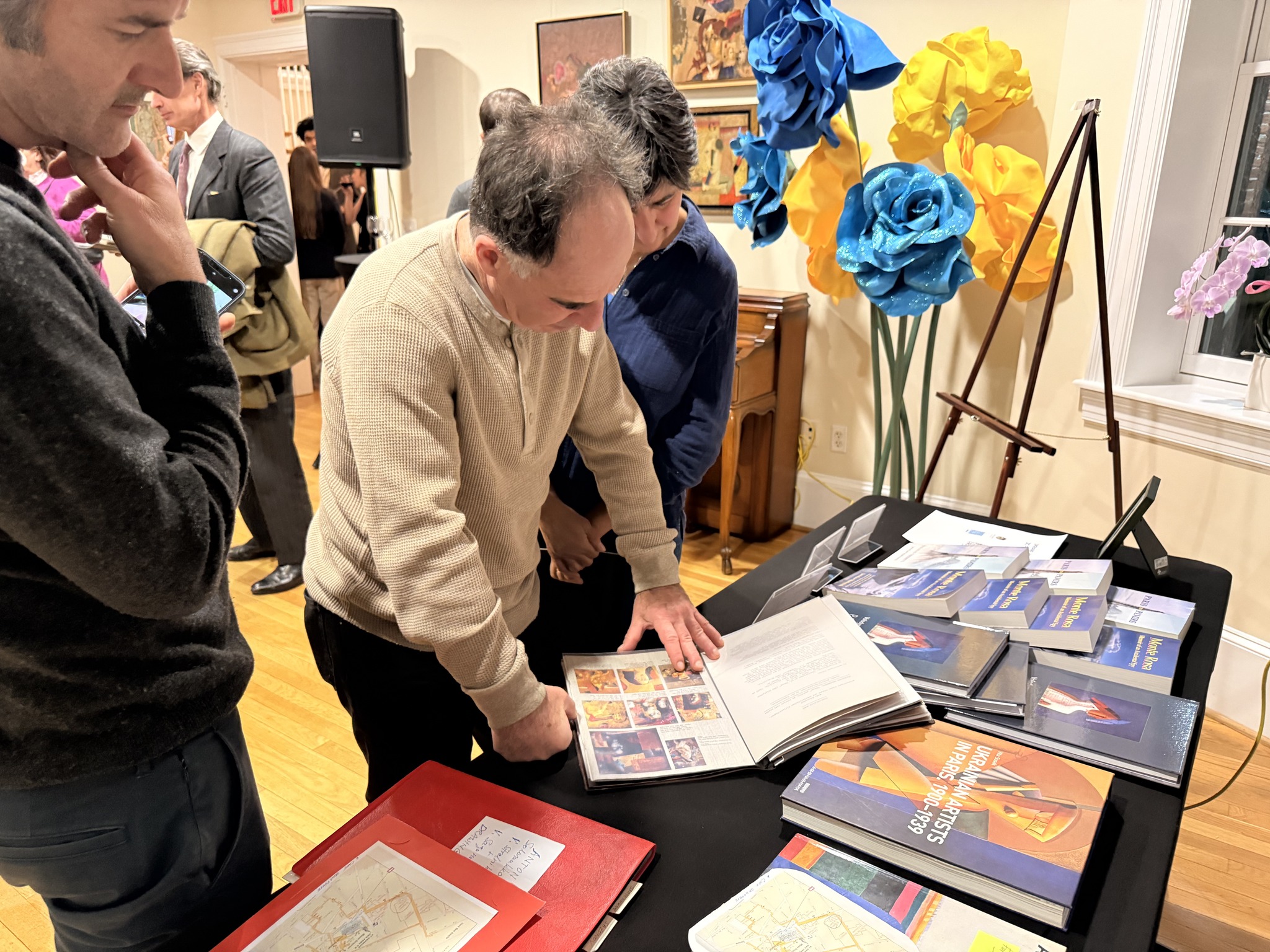
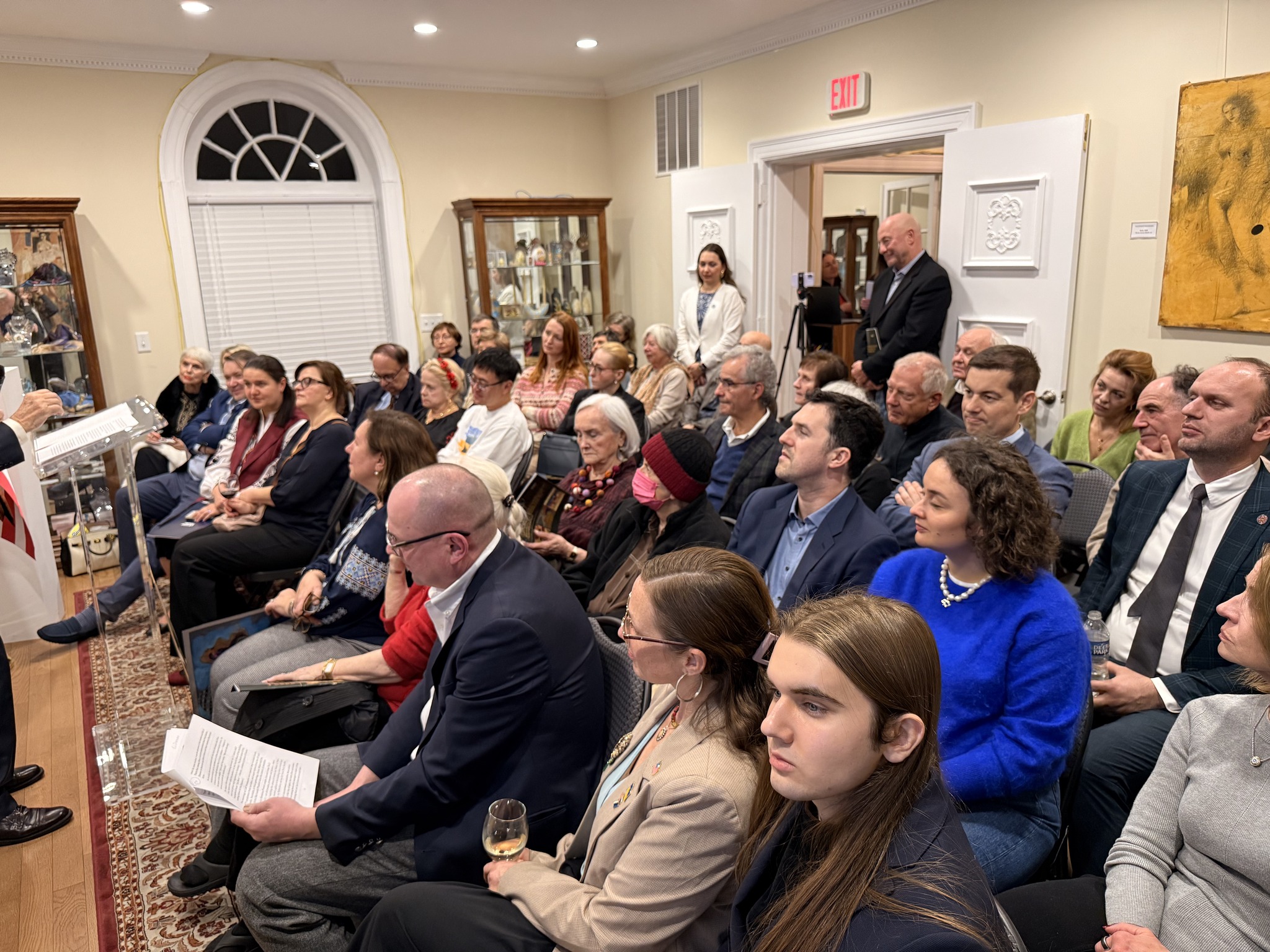
 An exhibition featuring works by four Ukrainian nonconformist artists has opened at Ukraine House. Formed within the Soviet system in the 1970s–1980s, these artists later found creative freedom in Paris, rejecting the ideological canons of the USSR.