


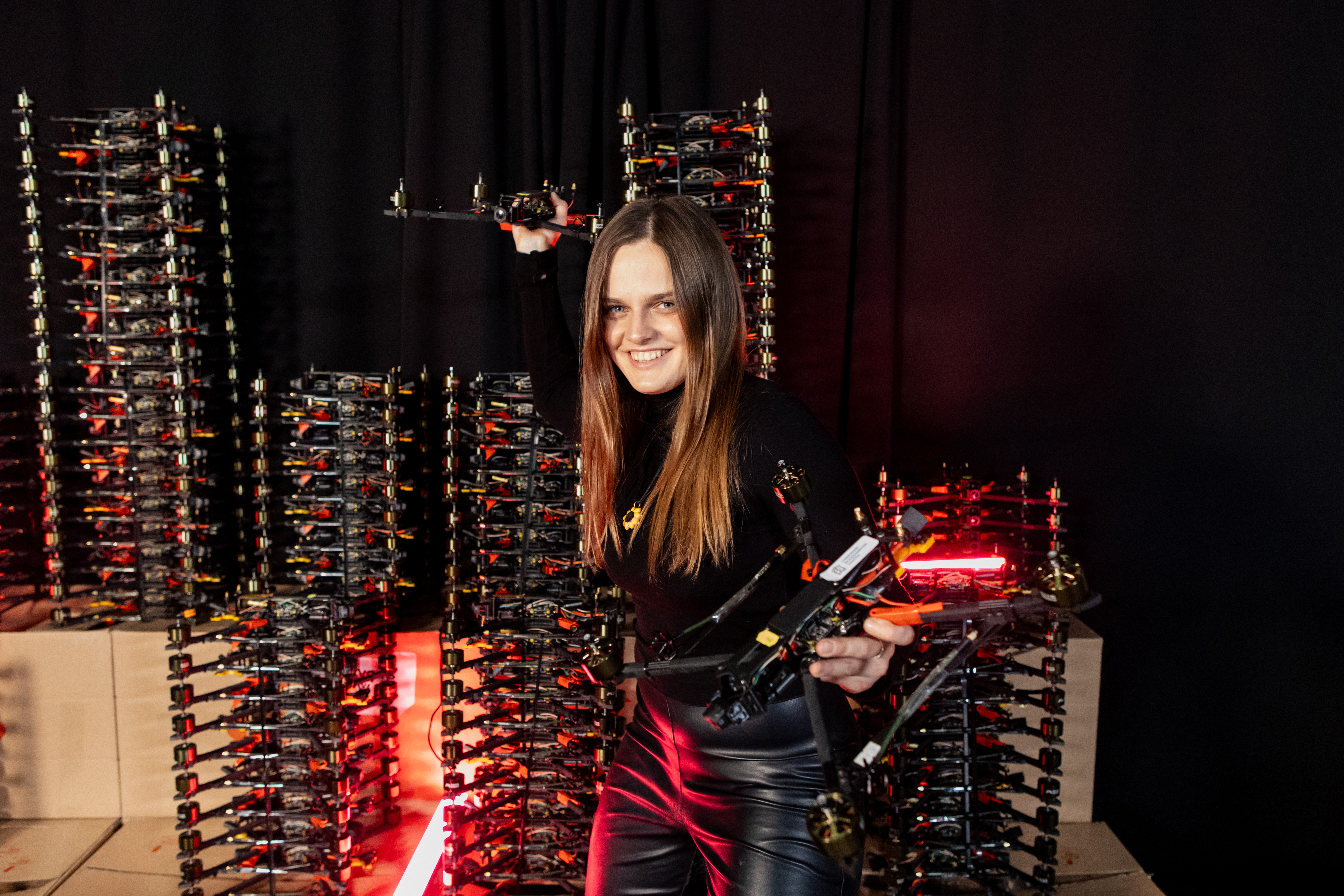
 The Dzyga’s Paw charitable foundation grew out of a volunteer initiative launched during the first months of Russia’s full-scale invasion. At first, these were personal fundraisers for service members the organizers knew, English-language posts on Twitter, and donations through PayPal. Over time, the initiative developed into a foundation that attracts support from foreigners, purchases technological equipment for Ukraine’s Defense Forces, and builds a community of donors across dozens of countries. Since its establishment, Dzyga’s Paw has raised more than $6 million in aid to support Ukraine’s front line.
Iryna Zhluktenko, co-founder and CEO of Dzyga’s Paw, spoke with Vilni Media about her journey from IT to volunteering, the first fundraisers, the origin of the name Dzyga’s Paw, working with requests from the military, earning the trust of international donors, transparency, Stanford Ignite Ukraine, and the foundation’s future after victory.
“Volunteering Became Part of My Life Back in School”
Iryna, first of all, we would like to introduce you to our readers. Please tell us about yourself: where are you from, and what did you do before the full-scale invasion?
My name is Iryna, and I am 25 years old. I am originally from Boryslav. I currently live in Lviv and have done so since I enrolled at university. I studied at the Ukrainian Catholic University’s Faculty of Applied Sciences. My educational background includes systems analysis, computer science, mathematics, and data science.
I have probably been involved in volunteering since my school years. I studied at a state gymnasium in Boryslav, where we had truly wonderful teachers. When the Maidan protests and the Revolution of Dignity began, we went with them to the central square in Boryslav, and I also traveled to Lviv with my friends. I was 13 years old at the time. I remember how we watched Hromadske’s YouTube livestreams from Independence Square at school. I found it incredibly interesting, but at the same time, it was very painful to watch. I think that was a pivotal moment for me.
Later, I became a member of the nationwide Ukrainian youth organization Sokil, which had a local branch in Boryslav. It is a sports-oriented, patriotic, and military-style organization. We were taught scouting, physical training, survival skills in the forest, and how to handle weapons. It is a historic organization that existed even before the Soviet Union and was later revived. I found it very interesting. It was there that I met many people who later joined the military—some in 2015 or 2016 and others after the beginning of the full-scale invasion. In this way, I gradually became part of a network of people who, at one point or another, made the decision to serve in the military.
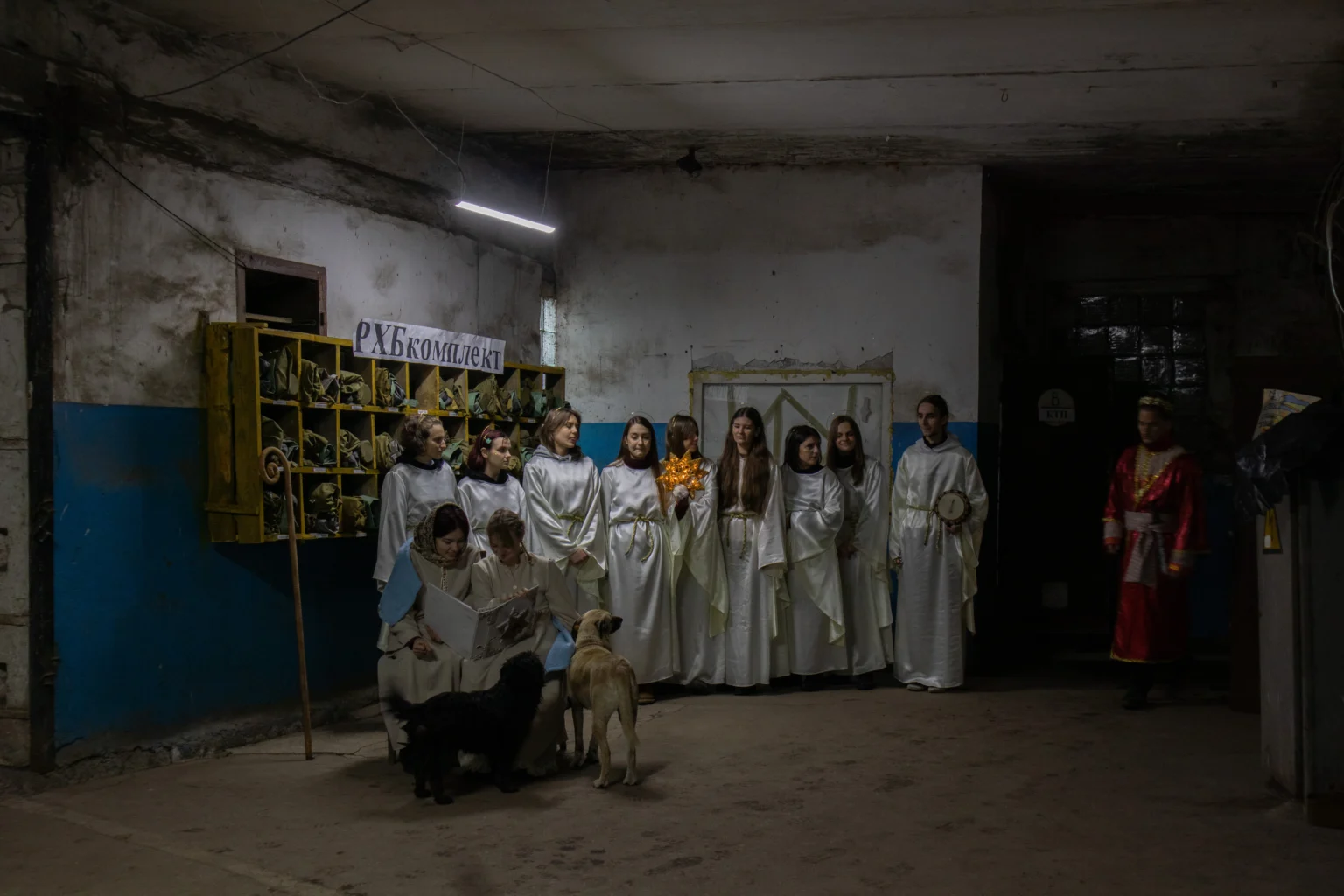
At university, we also volunteered through student organizations. We traveled to eastern Ukraine to visit children and service members, performing traditional Ukrainian nativity plays vertep and taking part in other initiatives.
 “The First Months Were Chaos: We Bought Everything They Asked For”
When the full-scale war began, how did you realize that helping the military would become your daily work?
When the full-scale invasion began, friends and acquaintances who were serving in the military started messaging us and asking for help. The requests varied greatly. The first few months were simply chaos. There was almost nothing we did not buy.
My boyfriend at the time, Dmytro, and I were simply volunteering and helping with whatever people asked for. One of the most interesting requests was for paraffin wax to make trench candles. We bought a ton of paraffin and raised nearly one million hryvnias for it. I knew people who produced it.
At the same time, Dmytro began running an English-language blog on Twitter. He simply described what was happening:“We are going to the shelter,””, ““Here is a photo from the shelter,”“Kyiv was shelled today,” and “This is what an air-raid alert is like when the sirens are sounding.” At first, he had around 200 followers, mostly colleagues from abroad, because we both worked in IT for international companies.
I think that is why his posts began gaining traction in Twitter’s algorithms. They started being shown to people abroad. Several posts went viral, and people began following him and taking an interest. Dmytro also wrote about what we were doing—for example, that we had used our own money or raised funds among friends to send two Mavic drones to service members on the front line. People then began asking how they could contribute.
In March or April 2022, Dmytro shared his PayPal account, and people began donating. That was when we realized there was demand among foreigners for a way to provide direct assistance. Many people had become disillusioned with the Red Cross, the UN, and other large organizations. But with us, they could see that we were right here: we bought something, delivered it, and shared photos with the service members.
 “An American Sent Us $10,000 or $15,000—and We Realized This Was a Different Level of Responsibility”
How did the idea of creating Dzyga’s Paw come about?
In May 2022, there came a moment when we decided that this needed to become a separate initiative and that we had to register an organization. A man from the United States whom we did not know sent Dmytro a private message and said: “I’m going to send you some money now. Use it for drones. My girlfriend in the United States has Ukrainian roots. I am deeply concerned about everything that is happening.” He sent us $10,000 or $15,000. For us, it was something incredible. We realized that this was already a different level—both of trust and responsibility. That trust had been built simply through the blog.
We then decided to register a charitable foundation so that we could provide transparent reporting. The organization was officially registered in the summer of 2022. We did not have a strategic plan for the years ahead. It was more of a reactive process: we saw that people abroad wanted to donate, and this was the right path for how everything should develop.
“Dzyga Left Her Paw Prints on the Uniforms”
Why was the foundation named Dzyga’s Paw? Who is Dzyga, and why did she become the organization’s symbol?
On the day we were thinking about what to call the foundation, we were taking photos for a report in the yard. We had another batch of uniforms: Multicam tops and trousers for men and women. We laid everything out on the grass in the garden so we could take a nice photo.
Our dog Dzyga had just been walking in the park after the rain, so her paws were muddy. She walked across the uniforms and left paw prints on them. It was cute and funny. We said, “Dzyga has marked them.” We did not wash the uniforms; we simply shook off the mud. It became a kind of trademark: she had left her paw print. That is how the name Dzyga’s Paw came about.
Some people think we work with animals or animal shelters. We do not. But for many foreigners who support the military and donate to us, the dog became their first point of connection: “Oh, you have a dog, and I have a dog too. Great, I’ll donate $50 toward a drone.” That kind of logic works too.
 “From the Outset, We Wanted to Work Not with Ukrainian Donors, but with Foreigners”
You started as a volunteer initiative and later grew into a foundation that attracts donors from more than 70 countries. What was that journey like?
We never had a goal of entering any particular countries. But from the very beginning, we understood that we did not want to raise donations from Ukrainians. Ukraine already has established organizations such as Come Back Alive that people trust. Moreover, almost every Ukrainian has someone they know serving in the military, and people often prefer to help them directly by placing assistance into their hands.
Our goal was specifically to engage foreign citizens who wanted to support Ukraine but did not know how to ensure that their assistance reached Ukrainian soldiers more quickly. We did not plan to fundraise specifically in the United States, New Zealand, or anywhere else. It simply happened that, through Dmytro’s personal blog, we communicated in English.
The first reason it worked was that it was 2022. At the time, public interest in Ukraine was extremely strong. Had we started now, I do not think it would have worked in the same way. The second reason was that we provided information that was unique within the English-language media space. Major media outlets mostly reported on major events and strategic developments. Ukrainian local media do excellent work, but they publish in Ukrainian, so that information does not reach people abroad.
What we were doing was something like citizen journalism. We live here: today we are drinking iced lattes, and in the evening, a missile strikes. Or a friend of ours is killed, and we write about it in English, in our own voices. It worked, without any investment in advertising, especially during the first year.
Dmytro’s blog now has more than 100,000 followers. The audience grew organically thanks to people who were interested in Ukraine and shared his posts. We then created a website, added donation links, and people began coming to us from different countries. Word of mouth started working: people recommended us to others. When they saw that we were officially registered and submitted financial reports, it generated greater trust.
In 2023 and 2024, foreign journalists began contacting us. They wanted to write stories about drones and volunteers. I think most of them initially found us through Dmytro’s personal brand. The fact that we communicated in English also helped greatly: we were easier to find than organizations that communicated only in Ukrainian.
Working with the media helped enormously. In 2023, an article about us featuring a photo of our dog appeared in the print edition of The Wall Street Journal,and in the summer of 2024, a documentary about us aired on the German television channel ZDF. Before that, we received an average of $5,000 to $10,000 per month in donations from Germany. After the documentary was released, people in Germany donated $70,000. Traditional media are extremely effective in this context.
The profile of donors abroad differs from that of Ukrainian donors. In Ukraine, young people often donate through fundraising jars, raffles, and merchandise campaigns. According to our statistics, donors abroad are predominantly people over the age of 45, mostly men. The ratio is approximately 60/40 or 70/30 between men and women. These are people who have already achieved a certain level of financial stability and are looking for an effective way to direct their money toward supporting Ukraine.
Who is currently part of the Dzyga’s Paw team?
At first, we were all volunteers. At the end of 2022, we hired our first two employees. We now have ten people for whom this is a full-time job. It is already a full-fledged team: we have fundraisers and people responsible for social media, media relations, public relations, procurement, and working with the military. It now operates on a different level—as an organization with a defined structure. Dmytro is currently serving in the Armed Forces of Ukraine.
 “We Decided to Focus on What We Understand—Technology”
Why did you choose to focus specifically on technological assistance for the military?
At first, all the requests came from friends. They were very personal needs: someone lacked a Mavic drone, someone else needed uniforms or proper footwear. We raised funds for everything: paraffin wax, drones, and assistance for displaced children. We traveled across the Lviv region, including to places where displaced people were living in schools, and brought children toys,food, and household essentials.
The turning point, when we realized that we wanted to focus specifically on technological equipment, came during our first trip to the front line. It was in the Kharkiv region before the counteroffensive. We spent about a week or a week and a half living with one of the units we worked with. It was Skala, which is now a well-known assault unit.
We were invited by an acquaintance with the call sign Brit. He was originally from Ternopil, had lived in the United Kingdom, and then returned to serve in Ukraine. Unfortunately, he has since been killed. He said: “Come over. You work in IT, so perhaps you can help us organize our work more effectively.” At the time, they were setting up aerial reconnaissance operations. Back then, aerial reconnaissance worked like this: a pilot would take a Mavic, fly it, return, remove the SD card, insert it into a computer, review the footage, and transfer the data onto a map. It was a very lengthy process. By the time a moving target identified during the flight was marked on the map, it was often no longer there.
We began thinking about how to speed up this process. The next time, we brought them a Starlink terminal. Initially, it was intended simply for the command post so they could maintain communications. But one of the pilots said: “What if I take the Starlink to the position?” He took it with him and streamed live from the position. Everyone was thrilled. At the time, it was something completely new. Commanders from neighboring battalions came over because they could see in real time how the artillery was operating. It significantly accelerated their work.
That was when we decided to focus on what we more or less understood. We chose to work with technology and everything that could broadly be described as such. That remains the case today. We primarily raise funds for technological equipment. More than half of it consists of drones and everything related to drones, now mostly components. We also supply electronic warfare equipment, communications equipment, radios, Starlink terminals, tablets, computers, servers, displays, and other equipment.
 “We Do Not Launch a Public Fundraiser for a New Unit If It Is Our First Time Working Together”
How do you verify military requests and determine who should receive assistance first?
Our network of units grew through personal contacts. Later, during our trips, people introduced us to others. We exchanged contact details and began working together. Today, about 60% of the requests still come from the same people, only now on a different scale. It is no longer “me and my crew,” but “me and my battalion.” For example: we need 50 Starlink terminals for next month. The rest are new requests.
We have a methodology: when working with someone for the first time, we never launch a public fundraiser. We have a pool of funds for general needs, and people donate to it because they trust us to decide whom to support. When a new request comes in, we conduct a basic check of the unit. Once everything has been verified, the limit for the first request is UAH 150,000. We fulfill the request, and the military unit then provides a photo report, a report on how the equipment was used, and all the necessary documents. If everything is in order, we continue working together.
As for prioritization, we allocate and reserve the budget every week. We usually receive two or three times more requests than we have funds available. The first criterion is the area in which the unit is operating. We receive information from our military managers. Through communication with service members, we understand the situation in different sectors, including the intensity of the fighting and the number of casualties. If we see that the situation in a particular area is especially difficult, we prioritize requests from there.
Overall, we fulfill approximately 90% of the requests. The only question is how long it will take. Sometimes people have to wait for a month or two. We currently have a queue for major fundraising campaigns extending through October. In other words, if someone approaches us now with a large request for 200 or 300 drones, the earliest we can promise to launch the fundraiser is November or December, and the funds will still need to be raised after that.
 “The Starlink Projects Were Operationally Complex, but Allowed Us to Buy Approximately 30% More Equipment”
Which projects are you especially proud of?
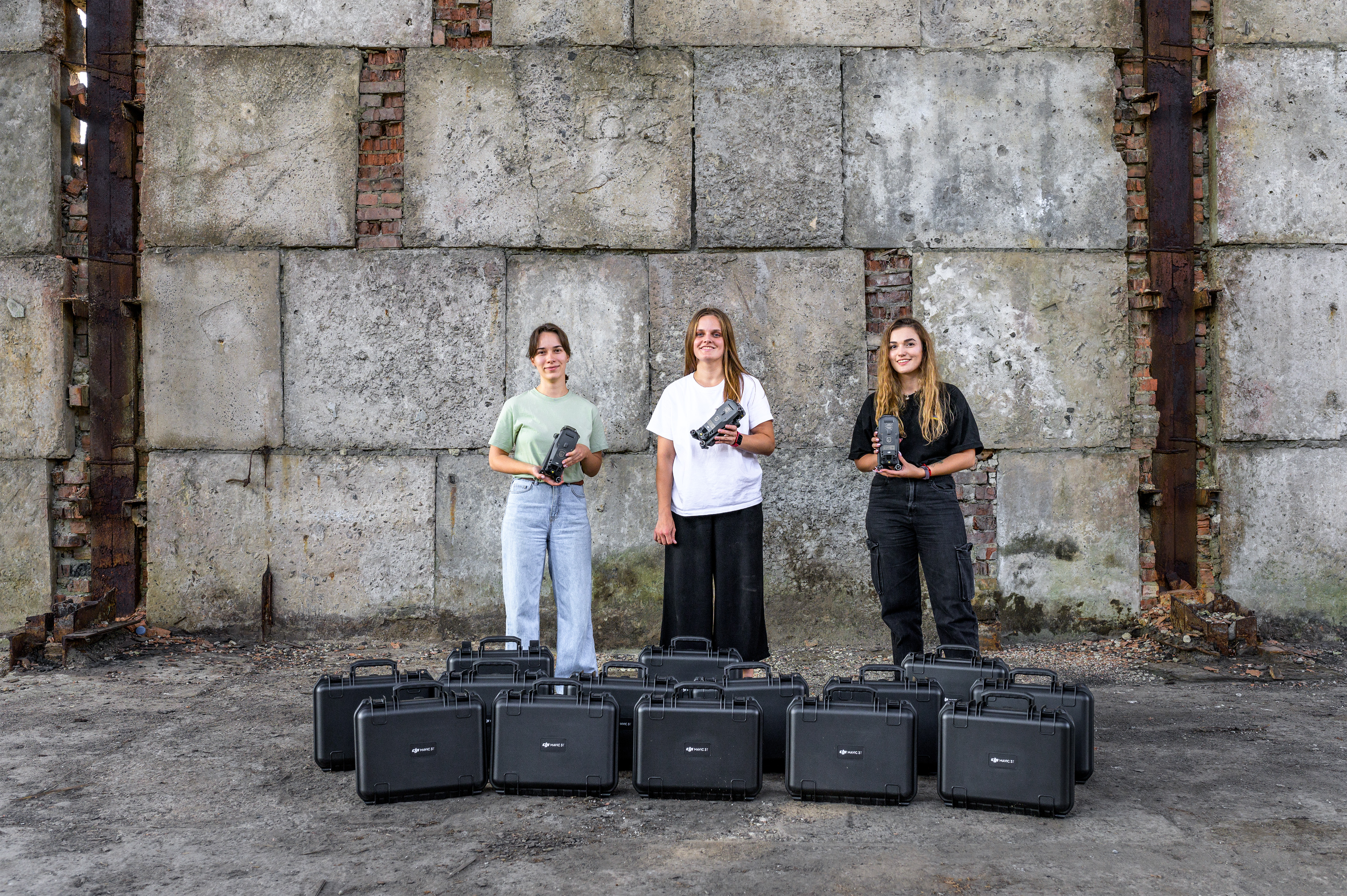
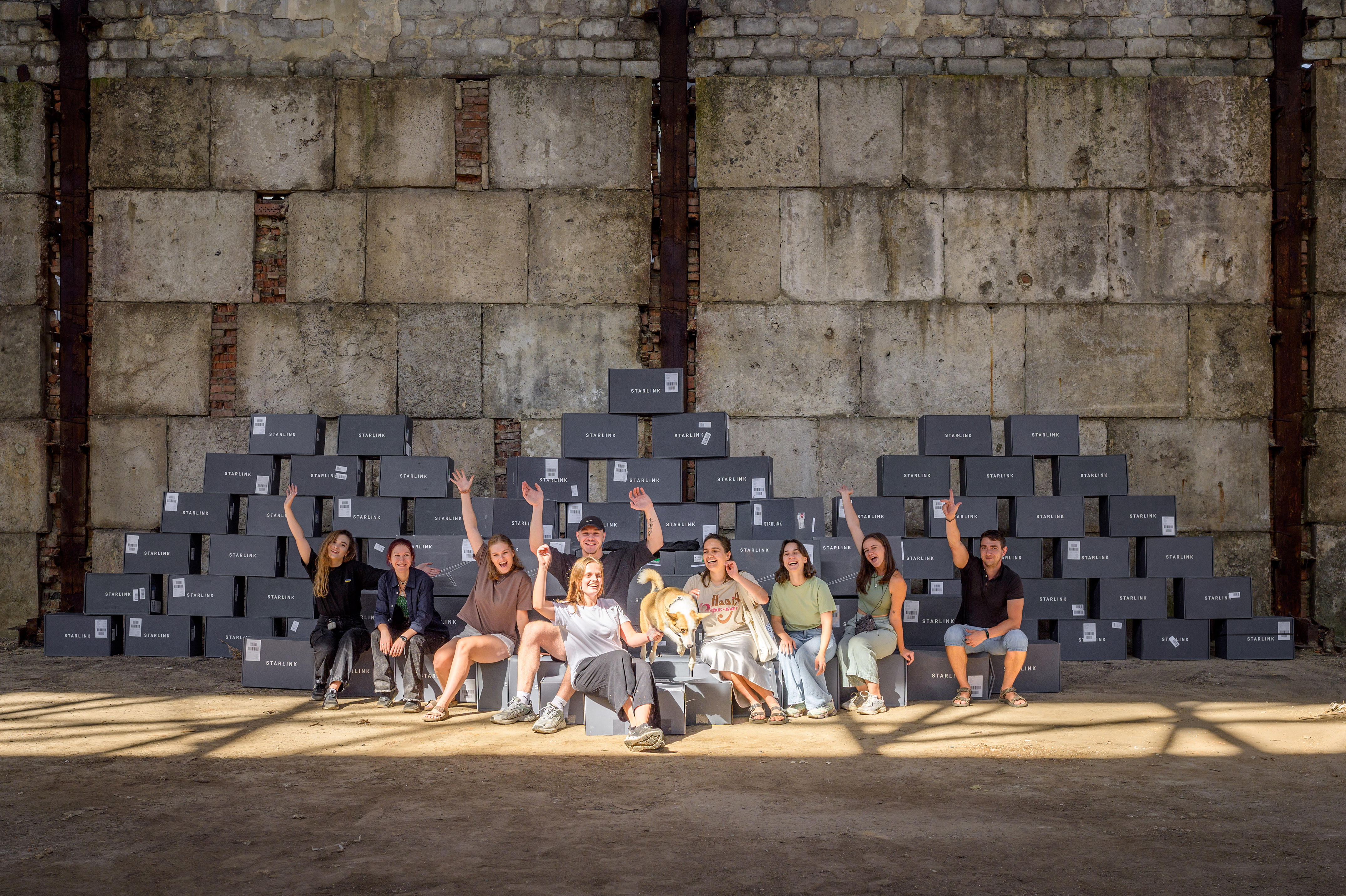
I will start with Starlink, because we have been working with it since 2022, when it was not yet so widely used, while the demand for it continues to grow. We had a tradition of running large projects called “Starlink 101”, “Starlink 202”.We saw that units constantly needed Starlink terminals: someone would request two, and two months later they would ask for another five. So we decided to combine these needs into one large fundraiser. It was not a fundraiser for a single unit, but for six military units.
We raised substantial amounts: approximately $50,000 for the first such project and then $100,000 for the next one. What made the project particularly interesting was that it was operationally complex. In Ukraine, it was not possible to buy Starlink terminals wholesale, except through resellers at significantly inflated prices. We purchased them abroad. Volunteers helped us—both Ukrainians and foreigners. They were not sold wholesale abroad either, and Ukrainian bank cards were being blocked, so we found dozens of people who placed orders through the Starlink website, electronics retailers in Germany, and French resellers. Ukrainian diaspora communities, including those based around churches in Paris and Berlin, collected the terminals in temporary storage locations and then sent them to Ukraine. Thanks to this, we were able to purchase approximately 30% more equipment with the same amount of money than we would have been able to buy in Ukraine. It was a very rewarding project for us because it demonstrated how many people wanted to help and how coordination could produce tangible results.
Tell us about the “Save the Crabs” project.
From a communications perspective, it was a very entertaining project. We spent a long time thinking about what to call it so that it would work for both donors and the media. The project involved two artillery brigades and focused on Polish Krab self-propelled artillery systems.
They are manufactured in Poland and have been used by the Ukrainian military. As FPV drones became increasingly prevalent on the battlefield, a problem emerged: a drone could strike the armor near the engine and disable the system in a single attack. The damage was not always critical, but the system still required repairs. It is a large artillery vehicle, so it has to be removed from its position and transported for repair. At the time, they could only be repaired in Poland. This meant that a system would be out of service for at least six months. The military asked us to help with electronic warfare equipment. However, these systems require very specific EW devices: powerful ones with the appropriate outputs and special connectors so that the equipment can be powered directly by the artillery system itself.
We selected a Ukrainian EW equipment manufacturer that was prepared to modify its product for the Krab. The company communicated with the military and developed a prototype solution, and we launched a fundraiser to fully equip two artillery battalions with these EW systems.
We came up with the “Save The Crab” concept as a clear marketing phrase around which we could build announcements, memes, and communications. People liked it. We also worked with Polish media. Gazeta Wyborcza covered the project. It resonated well with Polish audiences because these were their Krab systems. We explained that Poland manufactures these systems, while a $300 FPV drone can disable one. They need to be protected.
Is there a project that is personally your favorite?
Yes, it is “Secret Santa” for Ukrainian defenders. It differs slightly from everything else we do because it is not about drones or technological equipment. We organize it every winter in the run-up to Christmas. We have a community of service members and a group chat, and as part of “Secret Santa,” they write letters to St. Nicholas or Santa. We strongly encourage them not to ask for yet another EcoFlow or Starlink, but for something personal—something they might want in a different, parallel reality.
This December, there were 140 letters. We then look for “Santas” among our audience. People can visit the website, read the letters, and choose one. They either send a gift from abroad or donate the money, and we purchase the gift in Ukraine. We begin preparing this project as early as September.
For me, this is the most emotional initiative because it creates many personal connections. If both parties agree, we can share their contact details, and they continue communicating. Some people invite service members to visit them in France, while others invite them to Spain. Some send additional parcels. It is helpful that Nova Post already operates in the United Kingdom, so people there can send parcels even to the Kharkiv region.
Sometimes the gifts are things the service members never even dreamed they would receive. Someone writes that they want the latest PlayStation, which they would never buy for themselves, and someone comes forward and buys it for them. The most extraordinary letter last year said: “St. Nicholas, bring me a ring because I want to propose to my girlfriend.” A woman from Finland bought the ring and sent it. It arrived through Ukrposhta, and we delivered it to the service member. However, he had already proposed because he did not believe anyone would actually give him such a gift and decided not to wait until Valentine’s Day. This is probably my favorite project.
 “The Hardest Moments Are When You Learn That Someone Has Been Killed”
What has been the most emotionally difficult moment for you over these years? More broadly, what helps you keep going when you have to work with the subject of war constantly, every single day?
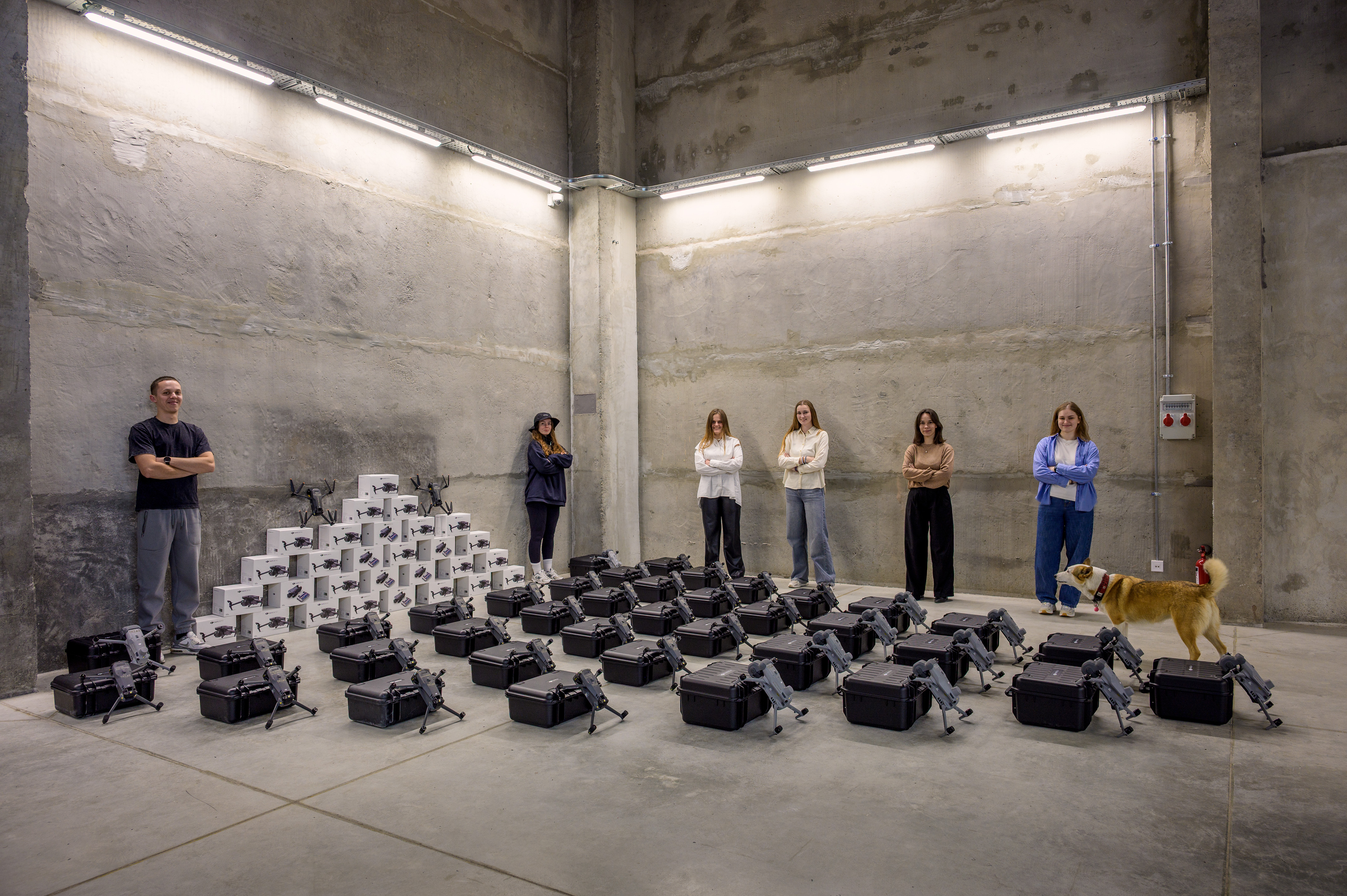
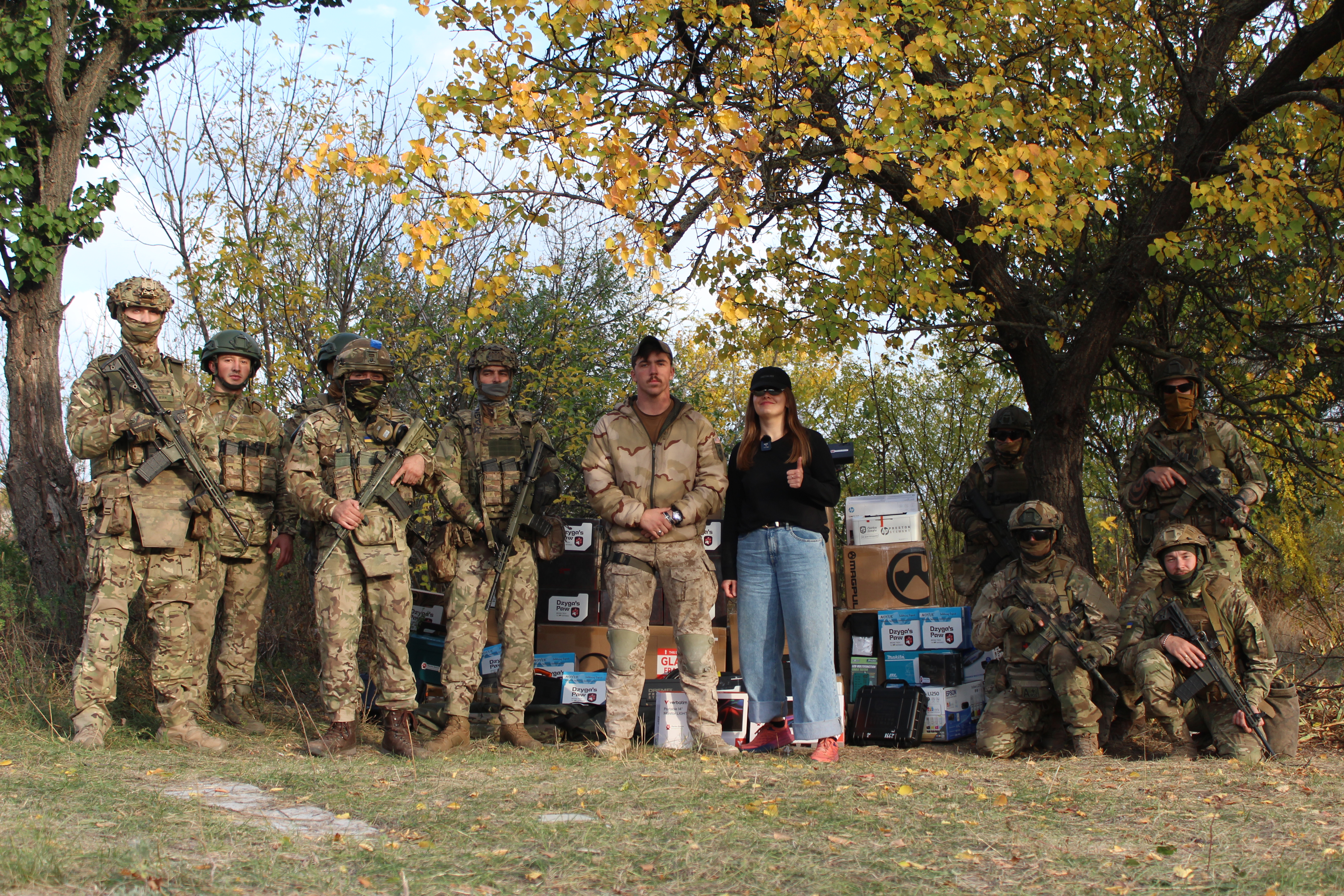
The hardest moments are when you learn that someone has been killed. Receiving a message or a phone call telling you that someone has died is always extremely difficult. We still try to keep our work highly personalized. Sometimes we provide support at the corps level—for example, we work with the Azov Corps and the Khartiia Corps—but we still do so through specific individuals. We try to meet them, have coffee, talk, and invite them to visit us. We make a point of traveling east once a month or once every two months to visit the units. The team recently returned from Sloviansk and Kramatorsk. Through these trips, we become friends with these people. That is why news of someone’s death is so difficult.
What helps us keep going? First, we are constantly immersed in this context. Everyone on the team understands very clearly that it may be emotionally difficult for us, that there may be a great deal of work, and that this may not be the job we dreamed of doing all our lives. But it is much harder for the military. We visit them and see what is happening.
For me, the answer to the question “Why keep going?” is very simple: who am I to give up? When you see the sacrifices made by our service members and speak with them, I simply cannot say no.
Trips to the east are physically exhausting. It is impossible to get a proper night’s sleep: we stay in random houses, sleeping in sleeping bags on camping mats, there may be shelling, and then there is the journey itself. But everyone returns energized. Physically, these trips drain your resources, but emotionally, they replenish them.
When we speak with service members, they often cannot even believe that the donations come from foreigners. We show them: look, these are all the different countries, and this is how many people support you. For them, it is also a source of renewed faith that we are not alone and that people have not forgotten about us. They are extremely grateful: some find flowers for us, some pack food for our journey, and others feed us. It gives us strength.
I do not think I have ever done anything else in my life that gave me such a strong sense that I was doing the right thing. I worked in IT—as a data analyst, product analyst, and in data science. It is work done on a computer, with abstract metrics and numbers. Here, you genuinely understand that you are doing useful and unique work, and that gives you the strength to keep moving forward.
Which response from the military has stayed with you the most?
It is difficult to single out just one. We have many flags, certificates of appreciation, and awards. We once even made a video showing everything we receive during a single trip to the east: coffee, signed flags, certificates, and awards. Perhaps one day we will have to open a museum (she smiles). We are especially touched when people do not simply present us with a standard certificate of appreciation from a military unit, but use our visual identity and logos to create something highly customized.
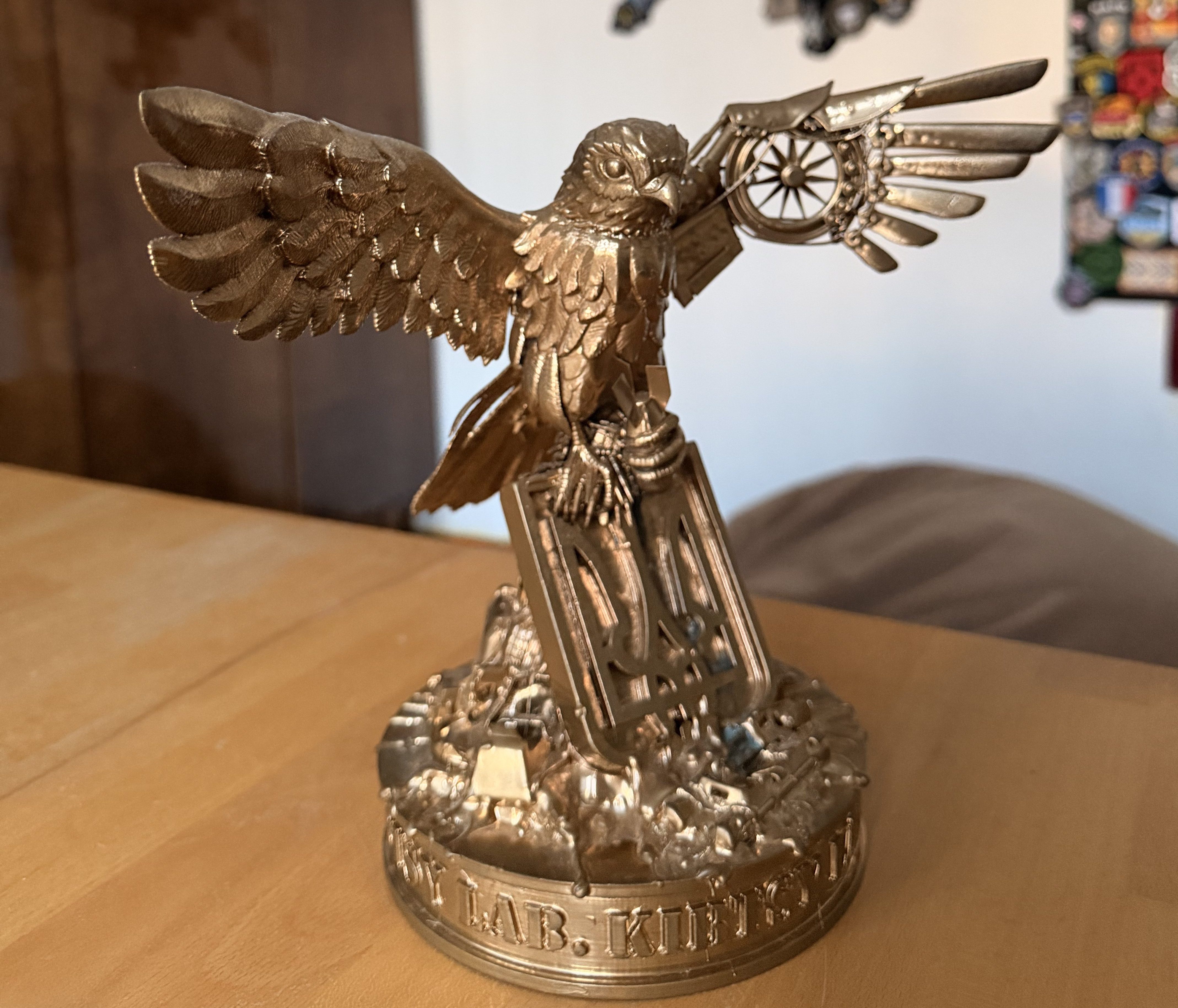
One of the drone units created a unique, one-of-a-kind piece for us. It is a figurine of a bird surrounded by depictions of everything we supplied to them: a Starlink terminal, Mavic batteries, and cables. On the back are our paw-print logo, the trident, and an inscription. The person who designed it spent approximately a week working on it after hours. It genuinely brought tears to our eyes. These people are on the front line, yet despite all their work and the immense pressure they face, they found the time to create something so personal for us.
 “We Do Not Ask People to Support Us Because We Are Poor. We Say: Ukrainians Are Experts, and It Is in Your Interest to Partner with Us”
You mentioned that if you established the foundation today, it might not work as well. Do you sense war fatigue among foreign donors?
The phenomenon does exist, but I personally see it among friends in Ukraine. That is not exactly our donor segment. Yes, there are people abroad who used to donate and have stopped. But because we are constantly working, creating content, launching new fundraisers and projects, we continue to attract new donors.
Looking at the figures, we have almost doubled our fundraising. In 2024, we raised $1 million over the course of the year; in 2025, we raised $2 million. It is therefore difficult to say that no one is interested in Ukraine anymore. I would say that we are not doing enough work in this area. Many people abroad are insufficiently informed about what is happening, why it is important to provide assistance now, and why it is necessary to address the security problem itself rather than only its consequences, such as refugees and reconstruction.
In my opinion, the most critical need right now is to address the cause of the problem. The root cause is the fighting. We need to ensure that it ends in our favor and that the active combat phase of this war reaches a just conclusion.
We can see how donors’ understanding is changing. At first, some people wrote: “I will donate, but only to something humanitarian—food or assistance for the wounded.” Now, there are Americans who donate directly toward FPV drones and ask for videos showing an FPV drone striking a Russian soldier. This is the result of the work of many people in Ukraine who are communicating the right messages.
Our positioning has changed as well. At first, we did not have a clear approach to how we presented ourselves. Now, we communicate from a position of strength. We do not say: “We are poor, we have nothing, and we do not even have enough socks.” We say that Ukrainians are now the foremost specialists and experts in modern warfare, and they are fighting for freedom. It is in your interest to be friends with Ukrainians, to support us, and to partner with us because you will need this knowledge.
Unfortunately, global dynamics are not moving in a better direction—whether in terms of different countries’ defense budgets, US policy, or Europe, which is only beginning to catch up. People are gradually realizing that they would not want to find themselves in this situation. And it is important for them to support the Ukrainian “badass boys” who are on the right side and doing this work. This is a relatively new fundraising approach because traditionally, everyone has been accustomed to sad, emotional images featuring animals, children, and victims. We work with a different message.
Foreign voices also help tremendously. We have Arina on our team, who records in-depth video interviews with service members. We are constantly looking for people who can speak about their experiences in English. Foreign volunteers—Americans and Britons who come to Ukraine—are also very effective. When people in the United States or the United Kingdom hear a British or American person say, “I am angry with my government—they are not doing enough; you need to wake up,” the level of trust is significantly higher.
Ukraine is gradually changing the paradigm: we are no longer merely recipients of assistance. We are positioning ourselves as providers of expertise, services, technology, and drones. Ukraine has, in fact, gained a great deal of expertise over these years.
 “Every Donation Appears on the Website Almost in Real Time”
You place a strong emphasis on transparency. Why is it so important?
Transparency and reporting are among the key aspects of our work. When we decided to register the foundation, we sat down and entered into a spreadsheet everything that had previously come through a personal PayPal account. At first, we tracked it manually, but then, being IT professionals, we automated the process. Our website still has a reporting system that publishes all donations in real time. If someone donates through the website, the transaction appears there within about five minutes. And we publicly take responsibility for it. We also publish all of the foundation’s expenses: from major drone purchases worth tens of thousands of dollars to milk or coffee for the office, fuel for trips to the east—anything at all. That process is automated as well.
In the long term, this proved extremely effective. In 2022 and 2023, comments such as “Ukraine is corrupt,” “they will steal your money,” and “you should not donate there” appeared frequently. We had a quick response: here is everything, you can ask about any transaction, and we will explain where the money went.
It is demanding administrative and operational work. In large organizations, entire teams maintain reporting systems. But it gives a great deal in return. We continue to invest in it. We built the system ourselves with the help of our network of friends, including software developers, data specialists, and database experts.
Transparency also works well with the media. A Business Insider journalist came to us and wrote an article, and later I noticed that she had highlighted one detail in the piece: even paper clips appear in our reporting system. In other words, even a minor transaction is published. For her, as a British journalist, it was important to emphasize this. That means people genuinely want to know where the money is, where it goes, and where the reports are. For us, transparency is one of the factors that allows us to continue operating and building trust.
 “Our Key Task Now Is to Grow and Scale”
What are the main challenges currently facing Dzyga’s Paw? What kind of support does the foundation need most—financial, expert, partnership, or media support?
Probably all of the above. The key task we have set for ourselves is to continue growing and scaling, and to increase the amount of funding we raise. We are looking for new ways to do that. There are channels that already work: we can launch a fundraiser, collaborate with a YouTube blogger, or develop partnerships and joint projects. We have tested these approaches and know that they can generate a certain predictable amount in donations.
But we are interested in finding ways to reach a new level and connect with people who have not yet heard that there is a way to directly support Ukraine and the Ukrainian military.
Publications in different media outlets are extremely helpful because they allow more people to learn about our story. Then, through direct communication with those people, we develop new fundraising formats.
We also greatly need expertise. We have a young team. I am 25; some team members are younger, while others are slightly older. We are doing all of this without previous experience in building organizations of this kind in the nonprofit sector or in management. We are learning as we go. That is why it is important for us to speak with people who have experience and can share their expertise.
Our work is very unique: we are based in Lviv and conduct most of our activities online. Sometimes it is difficult to understand how a person on another continent thinks. I met some of our donors in the United States, and it was incredible. There is a woman who has donated to us every Friday for two years. She does not have a recurring subscription—she simply remembers, opens the website, and makes a donation. Meeting people like that in person is a very powerful experience.
That is why we are considering holding events abroad. But this raises the issue of funding. We do not receive grants for administrative expenses. We are funded by people who understand that the foundation’s operations are important. Our operating costs are approximately $15,000 per month, while we raise around $200,000 per month. Operating expenses include team salaries, the office, a van, and other costs.
Holding events abroad requires significant investment. Partnerships in other countries would be very helpful—particularly with people who could provide a venue, bring an audience together, and assist with other arrangements. We are considering doing this in the autumn of this year or sometime next year.
 “A Donation for One Drone Will Effectively Provide Two”
What current foundation projects can people support?
We have launched a major fundraiser for the 80th Separate Galician Air Assault Brigade. It is a great project because we are raising funds for drones, and the Lviv Regional Military Administration will match the amount raised. The administration has a special program to support local manufacturers.
We are working with the 80th Brigade, which is also based in Lviv, and with a drone manufacturer from the Lviv region. For every hryvnia or dollar we raise, the Lviv Regional Military Administration will purchase drones for the same amount, and together we will deliver them to the 80th Brigade. This means that a donation covering one drone, which costs about $1,000, will ultimately provide two drones. The overall fundraising goal is approximately $70,000, which will turn into $140,000.
A major fundraiser with the Da Vinci Wolves will also begin in August. It will be a competition: the Da Vinci Wolves Foundation will raise funds in Ukraine, while we will fundraise among our international audience. We will have one large shared goal and compete to see who can reach it first.
How can people support the foundation today?
We have a website with aProjects”page. People can open the projects page, see which fundraisers are currently active, choose a project, and click “Donate.” There are various ways to contribute: through the website, Apple Pay, Google Pay, or with cryptocurrency through the Ukrainian service Cryptobanka. We receive the funds in the foundation’s bank account in Ukraine.
There is also another way to help—not with money, but with specific items. We have an Amazon Wishlist containing items requested by service members. We asked them directly what smaller items they needed. The list includes power banks, Starlink cables, and other supplies. A person can order an item through Amazon. Our volunteers in France receive the orders, regularly send them to us, and we deliver them to the military.
 “If Someone Breaks into Your Apartment, You Have No Choice but to Defend Yourself”
What would you say to people abroad who sympathize with Ukraine but have not yet decided to donate to military needs?
I think people are often reluctant to donate to military needs because they imagine that their contribution will be used in combat and may cause physical harm to the enemy—injury or even death. When I think about this, the best analogy for me is to imagine someone breaking into my apartment at night, intending to rob me and tying my hands. Something like this has happened in my life: my apartment was once burglarized, although, thank God, I was not at home at the time. I now live alone because my husband is serving in the military. And when I imagine this situation, I understand that I have no choice but to defend myself.
You have to take action. Otherwise, people will come and take everything you have. If you do not stop them at the initial stage, when it is easier to do so, things will only get worse because you will have made such behavior permissible and acceptable. I think we already missed the initial opportunity in 2014, followed by our second chance in 2022, when Ukraine could have been provided with far more weapons and assistance, allowing the war to end sooner. But no one believed it at the time, and expectations were completely different.
It is more difficult to do now, but it will not become any easier. We have to accept that fact. The best course of action now is to help the Armed Forces of Ukraine. They are doing this work on behalf of me, you, everyone in Ukraine, people in neighboring European countries, and the free world as a whole, while risking the most precious thing they have—their lives. We simply need to help them.
“After Victory, Dzyga’s Paw Could Become a Bridge Between the Military and the International Community”
How do you see Dzyga’s Paw after victory?
We have discussed this during strategic planning sessions. Our first thought was to thank everyone after victory and then go our separate ways. We did not create the foundation as a strategic organization intended to operate for many years. But later, we realized that, from the perspective of our personal responsibility, that would be wrong. We have brought together an incredible community of foreigners who support Ukraine. The idea for the period after victory is to continue working with both the military community and the donor community, and to use the foundation as the basis for a platform connecting these people.
I am certain that after demobilization, many service members will want either to return to their professions or to start their own businesses. Many of our donors are interested in helping not only financially but also by sharing their experience and expertise. Among them are many successful business owners who have a great deal of knowledge to offer.
We would like to create a platform where these people can find one another and connect. Perhaps it could be something like Kickstarter for Ukrainian veteran-owned businesses, but focused not only on raising money, but also on exchanging experience, mentorship, and visits to Ukraine. We receive many requests from foreigners who want to come and explore Ukraine. Some have not waited for victory and are already visiting now. We could become a bridge between them and the military.
Interview by Inna Mikhno