


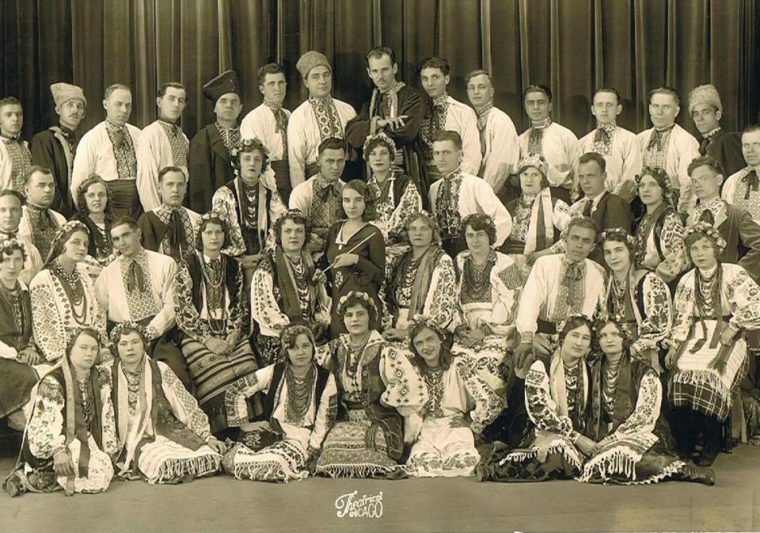
In the first half of the 20th century, choral art became a vital part of the cultural life of Ukrainians in the United States. Chicago was home to numerous choirs, as well as music and dance ensembles; festivals and concerts were held regularly, and Ukrainian artists also performed before American audiences. Figures such as Oleksandr Koshyts, Mykhailo Haivoronsky, Vasyl Avramenko, and other Ukrainian musicians and performers played a key role in this development.
This was reported by Olena Kovalchuk.
In the late 19th and early 20th centuries, dramatic arts were popular among the Ukrainian diaspora in the US. By the 1930s, however, choral and dance arts had largely taken their place. This era is particularly associated with the names of composer, conductor, and educator Mykhailo Haivoronsky, as well as Oleksandr Koshyts and Vasyl Avramenko.
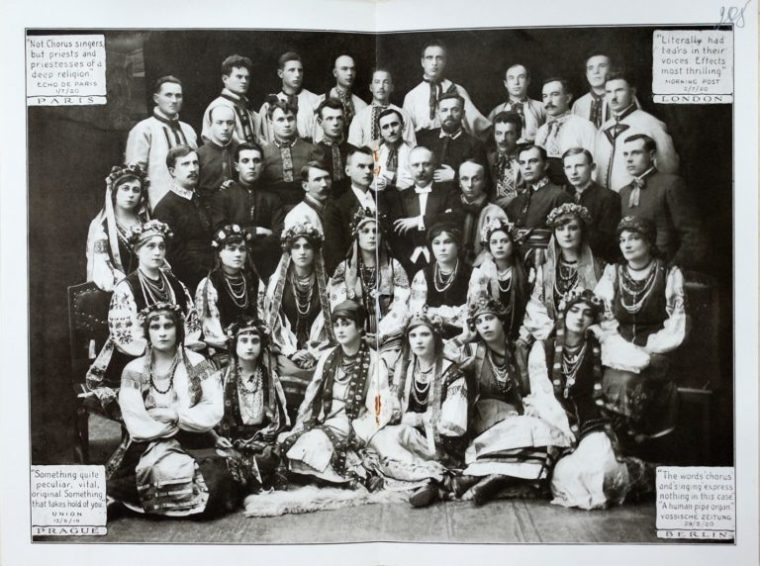
A significant event in popularizing Ukrainian art in the US was the 1923 tour of the Ukrainian National Choir under the direction of Oleksandr Koshyts. Prior to arriving in the United States, the choir had performed in numerous European countries.
During their US tour, the ensemble also performed American songs arranged by Oleksandr Koshyts. The choir frequently performed before American audiences that did not consist of Ukrainians.
On March 4, 1923, a concert in New York was attended by over four thousand people—none of whom were Ukrainian. Oleksandr Koshyts recalled: "We sang more beautifully than ever, and it was so gratifying that the audience’s reception was also magnificent." Over the course of a year and a half, the choir gave more than 400 concerts.
After the tour, Oleksandr Koshyts and some of the singers remained in the Americas. The choir’s activities fostered the development of Ukrainian choral groups in the USA. Its members included Yuriy Kyrychenko, Lev Sorochynskyi, Yuriy Benetskyi, and others who later went on to lead their own choirs.

Ukrainian Choirs in Chicago
The first Ukrainian singing organizations in Chicago emerged as early as the late 19th century. By 1909, two choirs were active in the city: the Mykola Lysenko Choir (affiliated with St. Nicholas Church) and the "Sich" Choir.
The first choir was organized by Fr. Strutynskyi and Mykhailo Kostiuk. The second was founded by Nataliya Hrynevytska, a singer from the Vienna State Opera who had arrived in Chicago in the early 20th century.
Despite their amateur status, both choirs achieved a high level of performance, largely due to the professional training of their directors.
In the 1920s, the cultural life of the Ukrainian diaspora intensified. This was driven by the training of young people born in the USA and the arrival of professionals from Ukraine.
During this period, the teacher Dmytro Atamanets settled in Chicago. Before coming to the USA, he had performed with the "Besida" folk theater in Galicia and directed a drama club.
In the 1930s, amateur artistic groups were active in Chicago; not only did they grow in size, but they also increasingly received invitations to various gatherings and celebrations.
The formation of the Ukrainian Choir was a significant event. It participated in the annual music festivals held in Chicago by the Chicago Tribune and won first place three times. The choir triumphed in 1930 and 1932 under the direction of Yuriy Benetsky, and in 1931 under the direction of Lev Sorochynsky. Before arriving in the United States, both conductors had been members of Oleksandr Koshyts’s Ukrainian Choir.
The Ukrainian Choir performed in Chicago’s most prestigious venues, and its singing was broadcast by American radio stations. One music critic wrote of Yuriy Benetsky’s ensemble: "One can write only words of praise and take away only pleasant memories. Listening to the choir sing... restored our faith in Chicago’s musical future, for with such talent... we need neither ask for nor demand a place in cultural centers. It belongs to us!"
A group of singers known as the "Young Cossacks" (*Molodi Kozaky*), led by Semen Chuba, was also active in Chicago. The group took second place at the annual Chicago festival in 1933.
In 1925, the Ivan Franko Society was established under the auspices of the Chicago branch of the Union of Ukrainian Workers' Organizations. It organized a choir whose performances drew audiences numbering in the thousands.
Subsequently, a children's drama group was established under the society's auspices, led by D. Bodnar. It staged folk-themed plays from the classic Ukrainian repertoire, such as *Oh, Don't Go, Hryts* (*Oi, ne khody Hrytsiu*), *The Matchmaking at Honcharivka* (*Svatannia na Honcharivtsi*), and others. Later, works by Ukrainian Soviet playwrights—specifically O. Korniichuk and M. Irchan—were also performed.
With the arrival of new immigrants and the intensification of SURO’s activities, the need for a dedicated facility arose. In 1928, the organization purchased a building valued at $150,000, featuring an auditorium that seated one thousand spectators.
In addition to the existing groups, a dance troupe was formed within the organization, boasting over 80 members. The choir also stepped up its activities, winning a silver cup at a choral festival in Chicago.
The 1933 Ukrainian Exhibition and "Ukrainian Week"
The Ukrainian diaspora participated in the 1933 International Exhibition in Chicago. Preparations began as early as 1932 with the formation of an organizing committee.
The organizers emphasized the opportunity to showcase Ukrainian cultural achievements. In their statement, they noted: "At the international exhibition, Ukrainian folk art will pave the way for greater recognition of the Ukrainian name and, in doing so, contribute to the liberation of its people and the creation of a Free, United Ukrainian State."
The Ukrainian pavilion was the only one at the exhibition not funded by any national government; it was created through the efforts of the Ukrainian diaspora in the United States and Canada. Ukrainians from Argentina, Brazil, European countries, and Western Ukrainian lands also participated in its organization. The pavilion's budget exceeded $20,000.
"Ukrainian Week" took place at the exhibition from August 14 to 20, 1933. Mass events featuring Ukrainian performing groups were organized daily.
A celebration of Ukrainian art was held on August 19. Performances for the American audience were given by the Chicago choir conducted by Yuriy Benetskyi, I. Barabash’s orchestra, opera singer M. Hrebinetska, dancers led by Vasyl Avramenko, and a choir led by Oleksandr Koshyts.
The celebration concluded with the singing of the Ukrainian anthem, "Ukraine Has Not Yet Perished." In his address, the Mayor of Chicago stated that Ukrainians had succeeded in showcasing their culture to the world and expressed his conviction that they deserved a place of honor at the exhibition.
The USSR—specifically the Ukrainian SSR—did not participate in the exhibition. During the exhibition, the Ukrainian blue-and-yellow flag flew alongside other national flags from the tower of the administrative building. Ukrainian and American periodicals reported on the Ukrainian pavilion, as well as the various events and concerts held there. Ukrainian songs were also broadcast on American radio.
Concerts by Ukrainian Performers
The development of Ukrainian national art on the American continent was closely linked to the work of Oleksandr Koshyts and Vasyl Avramenko. Performances by Ukrainian singers and dancers were also accessible to the younger generation of Ukrainians born in the United States.
Solo concerts by Ukrainian singers residing in the U.S. made a significant contribution to popularizing Ukrainian culture. Among these artists was Ivan Steshenko, who served as a soloist with the Chicago Opera from 1925 to 1926.

Steshenko performed within Ukrainian communities. After approaching the central committee of SURO, he proposed performing for Ukrainian workers. Subsequently, a series of concerts was organized in locations where the organization had active branches. Concert halls were packed to capacity.
The singer’s repertoire included operatic arias—which he had performed on the stages of the world's greatest theaters—as well as Ukrainian songs. He earned $200 for a single performance in American theaters. Yet, Steshenko would say: "It is not about the money, but about the satisfaction of the soul!.."
In 1932, the Soviet government invited Steshenko to return to his homeland, and he subsequently left the United States.
Vasyl Yemets, a virtuoso bandura player and a champion of this Ukrainian national instrument, played a significant role in popularizing Ukrainian art. He first arrived in North America in 1930, and his performances met with great success.
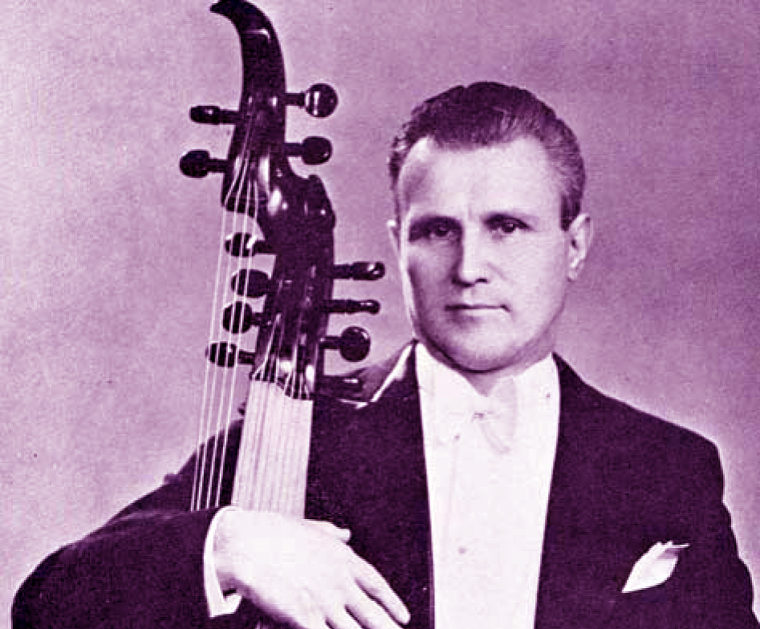
The newspaper *Svoboda* described one of Yemets’s concerts: "Many Ukrainians heard the sounds of the bandura for the first time, experiencing the priceless enchantment of ancient Cossack *dumy* (epic ballads) uniquely rendered on this Cossack instrument. Vivid scenes of Ukraine’s past—its suffering and its glory—seemed to unfold before the audience. One could almost visualize the glorious Cossack campaigns, the fearless warriors battling their foes, and the horrific torture and agony inflicted upon the devout Cossacks by their enemies. It was like a moving theater, with scene after scene passing by. The concert lasted two hours, yet to the listeners, it felt like a mere two minutes."
His performances concluded with prolonged applause. The bandurist would end his concerts by performing the national anthem, "Shche ne vmerla Ukraina" (Ukraine Has Not Yet Perished)—a song noted in the text as being banned in mainland Ukraine.
Maria Mashir and Yurii Benetskyi’s Choir
Between 1926 and 1927, Oleksandr Koshyts revived the National Choir. Opera singer Maria Mashir joined this project.
In the intervals between concerts, she prepared and recorded several songs from her repertoire. In September 1927, she recorded "Koly b meni, Hospodi," "Kari ochi," "Choho voda kalamutna," "Handzia," "Oi, kazala meni maty," "Stoiiť hora vysokaya," "Viiut vіtry," "Balamuty," "Reve ta stohne Dnipr shyrokyi," and "Koly b meni taka molodytsia"—songs performed as duets with Ivan Basmaniv.

In 1927, Maria Mashir took charge of a folk theater, where she worked as a singer, dramatic actress, and director. Under her leadership, the theater continued its work of promoting Ukrainian art in America.
In early 1929, Maria Mashir signed a contract with the Chicago Civic Opera Company and moved to Chicago with her husband and her daughter, Maria Benetska. The new opera house opened on November 29 of that year; its auditorium seated 3,563 people, making it the second-largest in the country after the Metropolitan Opera in New York.
While working at the Chicago Civic Opera, Mashir performed alongside Tito Schipa, Rosa Raisa, Forrest Lamont, John Thomas, and Mary Garden, and under the baton of conductor Giorgio Polacco and other representatives of the opera world.
Upon their arrival, the Benetskyi family organized a concert of Ukrainian songs featuring Yurii Benetskyi’s Ukrainian National Choir. The concert took place on December 28, 1930, in the opera house auditorium.
The following day, the American press published reviews and critiques of the concert. The Ukrainian newspaper *Svoboda* reported that the event was a grand celebration of Ukrainian song, held in one of America’s largest concert halls.
Yurii Benetskyi’s choir was founded on August 25, 1930—just a few months before the concert. In 1931 and 1932, the choir won gold medals twice at music festivals in Illinois, and in 1933, it performed a dedicated program at the World's Fair in Chicago.
The choir’s performances were frequently broadcast on the radio. The ensemble was well-known among both Ukrainian and American audiences. Mariia Mashir remained a soloist with the group for the rest of her life.
Photo: ukrainianpeople
Author: Danylo Pievchev