


He celebrates his birthday on the same day as Ukraine – 24 August. So who is this legendary American with Ukrainian roots, heart, and soul? Liubomyr Kormeliuk is an outstanding volleyball player and coach. The teams under his leadership achieved fantastic results, and the records he set remain unsurpassed to this day. He has trained hundreds of successful athletes – among them members of his own family and even Hollywood stars, including Tom Selleck.
I was fortunate to record an interview with Mr Liubomyr. His life story and sports career are truly unique.
– Mr Liubomyr, please tell us about your Ukrainian roots.
– – I was born in a small town about 120 kilometres from Lviv, in Pidhaitsi. I was born on a very special date – 24 August 1943. So it is very easy for my family and friends to remember, because it is also Ukraine’s Independence Day. They simply cannot forget my birthday. My mother’s name was Maria, from the Obukhovsky family. She lived in Lviv. She worked as a teacher at St George’s and taught second- and third-grade children there. My mother lived nearby, on Marka Vovchka Street. She also played volleyball whenever she could.
– Please explain why you use this particular sports terminology.
– I call it “vidbyvanka”. I do not know why, but some Ukrainians have already scolded me, because they say it is “volleyball” and not “vidbyvanka”. I use the old term “vidbyvanka” because that is what my mother taught me to call it.
– Please tell us more about your mother’s sporting traditions.
– My mother was short, but she was very fast. She loved doing sports, especially volleyball. Whenever she could, she encouraged even priests and seminarians to train, and they played with her in the gym or outside in the yard.
– Mr Liubomyr, please tell us about your father.
– My father was from Pidhaitsi. He finished the Minor Seminary in Berezhany and then moved on to the Major Seminary at St George’s in Lviv. That is where he met my mother. He finished the Major Seminary in Lviv in 1941. His rector, among others, was Josyf Slipyj. My father had many photographs, documents, and other items from Josyf Slipyj, which he gave to all the seminarians. So my mother and father got married, and then, in 1943, when I was born, attacks came from both sides on Lviv, Kyiv, and all of Ukraine. From one side came the “Moskali”, the Soviets, because they wanted Ukrainians to end up in prison. From the other side the Nazis attacked. They wanted us, our boys and men, to fight against the Soviets. So my father should already have been a priest, but he was not ordained because the war began and they postponed the ordinations. He organized nine wagons, each with three or four families. In total there were around thirty or forty people in the wagons. All of them set off to flee from both sides.
– We would like to hear more about this difficult journey.
– On one side, somewhere to the south, were the Germans, because Italy and others were there. So they had to search the maps for a route that bypassed all those places so as not to run into the army. So we set off on a dangerous journey. I know this from my parents’ stories, because I was still very small, only a few months old. During the journey my grandfather sent my father’s younger sister with us, because he did not want her to fall into the bloody hands of the occupiers. So we left in the autumn and travelled a good six or seven months across all of Europe. There were nine wagons, and every thousand or two thousand kilometres one wagon would drop out. We had to eat. So, for example, a cow was slaughtered. Then people became ill and died. Some people no longer had the strength and stayed in the countries we passed through. When we finally arrived, the Western Allied forces from Great Britain, America, and France directed us to Austria, specifically to Salzburg. There were camps where people who no longer had their own countries could live during the war. We ended up there in 1944 and stayed until 1948… After that we arrived in America.
– How did your new period of life in the USA begin?
– I lived in a small town called Bayonne near New York, about ten kilometres from the big city… As a small child, I had nothing special to do, but I was very agile – I rode my bike, jumped, ran. At school, as usual, we played the main American sports: baseball, basketball, American football. But my relatives wanted me to be a scholar, musician, teacher. Sport was “not for me”. Yet I loved all kinds of sports. So I did sports against their wishes.
– What sports did you do in the USA, and when did you decide that you wanted to focus on volleyball?
– In seventh grade, at the age of twelve, I started playing basketball. I trained every day to become better. But my relatives once again forbade me to play.
When I was fifteen, I took part in sports and educational camps of the Ukrainian Youth Association. I saw that some boys from other American cities – New York, Philadelphia, Chicago – were playing volleyball. I said to myself, “What is this?” I had never seen such a thing. In my town, nobody played it. I liked volleyball immediately. But again they laughed at me, because those boys had already been playing for two or three years. I asked them for advice, but they wanted to play, not to teach me. So at first I watched and observed, and I could only play volleyball in the summer during the camps. I also played volleyball with my friends from SUM and Plast in the park. But that was only once a week for just a few hours.

– When were you able to devote more time to volleyball?
– When I went to university in New York, my family could no longer forbid me to play volleyball, because I was already eighteen. However, due to lack of money I could not continue my university studies. I had to work hard to support myself… So I decided to go to the West of the country, three thousand kilometres from home, to Arizona. There, together with a friend, we created a school volleyball team. The team consisted of players who had never even seen a volleyball. We played school tournaments and had both victories and defeats. We earned a good reputation for ourselves. We were not the best team, but that is where I showed my abilities. The local newspaper then named me the best player in the whole state.
– You overcame many obstacles before taking up volleyball. This sport must mean a great deal to you.
– Volleyball has played a very important role in my life, because I had a sincere love for this sport in my heart… Volleyball has a special place in my heart also because my wife played as well. She not only had to understand, but also to tolerate and support my love for sport.
– What successes did you achieve in volleyball?
– My achievements in volleyball are both physical and mental. This sport is played not only with your hands and feet, but also with your head – mentally. And that is no less important than physical preparation. So, after Arizona I played for two years in a club in Washington. After that I got married and moved to New York, where I played for several teams. One of my greatest successes was in 1975–76, when I played for the volleyball team “Chaika”. I was both coach and captain of the team. We competed in various tournaments throughout the Eastern United States and Canada. At the end of one of the tournaments I received a letter from the US national Olympic team and the national volleyball federation. They invited me to join the US national team. However, due to family, financial, and work circumstances I could not accept their conditions. Sometimes I regret that I refused, but at that time that was my choice.
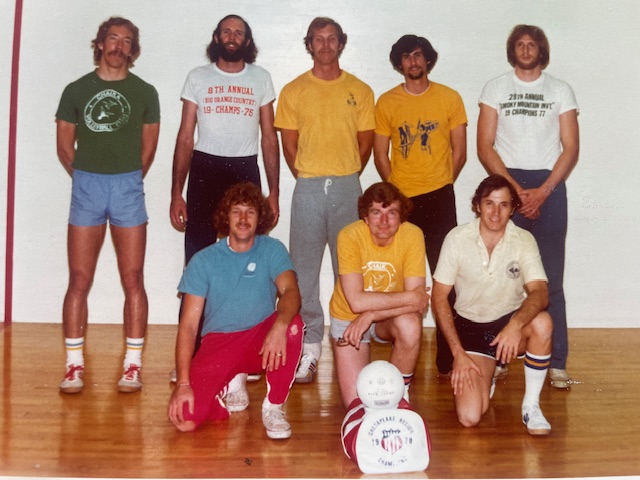
The second success came in 1978, when I was still playing for “Chaika” and was already over thirty-five. The US national team and the sports department organized a team to go on a tour of Europe. They selected twelve of us – the best players from the Eastern states. We played in five countries: France, Belgium, Luxembourg, the Netherlands, and West Germany. For the first nineteen days we played one match every day. We won every match. The purpose of this tour was to show Europe that athletes in the USA who are thirty-five and older can demonstrate a high level of fitness and skill… Every evening the hall was packed with spectators. At the beginning they were all against us, but later they changed their attitude and started supporting us as well.
My next personal success was an award at a tournament where the best clubs from the Eastern states and Canada competed. This tournament is organized by the Hall of Fame, where volleyball was founded, and it is very prestigious. We, that is “Chaika”, defeated all the other clubs, and I was recognized as the best player and received a trophy half as tall as I am.
I look back fondly on my matches from 1969 to 2009. Over those forty years I was fortunate to win many tournaments. I have more than 160 trophies, medals, distinctions, and awards for all the tournaments and my personal achievements.
– You mentioned the team “Chaika”. Please tell us more about it.
– “Chaika” was organized in the early 1970s by my friend Yurii Tovstenko. He was an engineer who had played volleyball back in Ukraine. Half of the players on “Chaika” were Ukrainians. When he found out that I was nearby, he asked if I could join the team. I gladly agreed, because I am Ukrainian. In my first year with the team we had great success. We won two tournaments. This was remarkable, because until then the team had not achieved such results. Later, due to lack of time, Yurii could no longer manage the team, so he suggested that I lead “Chaika”. I became coach, player, and manager. From 1973 to 1986 I was the leader and captain of “Chaika”. Over those thirteen years “Chaika” became the best team in the Eastern United States.

– Mr Liubomyr, under your leadership the university team achieved unprecedented results.
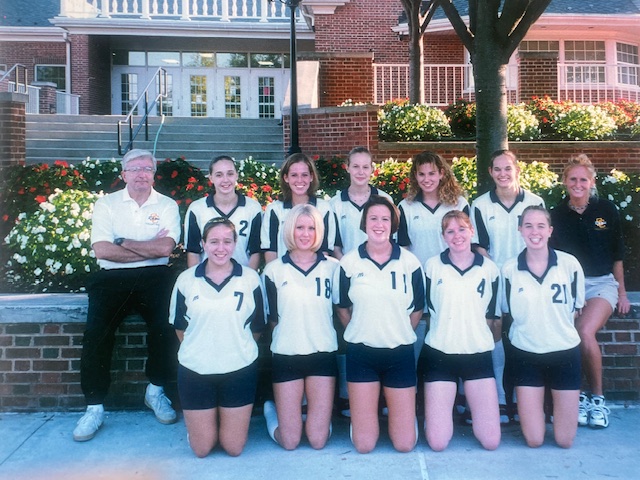
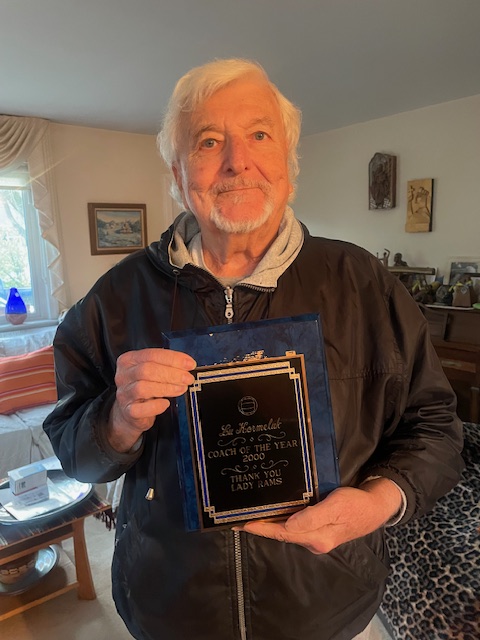
– Yes. The story goes like this. One of the participants in my volleyball lecture course received a scholarship to study at Shepherd University. At that time the coaches had resigned, and her mother was invited to coach the team. But she knew absolutely nothing about volleyball. So she turned to me and asked me to help her. I agreed to become her assistant. While I was coaching the team, their results became phenomenal. To this day no women’s or men’s team has achieved anything similar, because I taught them the mentality of winners. In 2000 I was chosen Coach of the Year.
– Mr Liubomyr, do you still play volleyball now?
– I am already over eighty years old. And last year, when I turned eighty, I went to California to visit my sons and grandchildren, and I played volleyball on the beach. People could not believe it. They said I looked, for example, sixty years old, not eighty. We even competed on the sand – and that is even harder than playing on the court.
This is how Ukrainians, even at eighty, still have strength, agility, endurance, and motivation for life and sport. We have every reason to be proud – of our people and our achievements!
Interviewer: Oleksii Liakh-Porodko