A Confession as Long as a Lifetime

What happens when a person steps onto the stage not to perform, but to speak with their own life? When words cease to be a role and instead become memory, experience, and the happiness of years lived? Then one feels the urge to come to people as one would to God—in a “Confession.” Simply, sincerely, without pathos or intrigue, barefoot, as Ivan Bernatsky did.

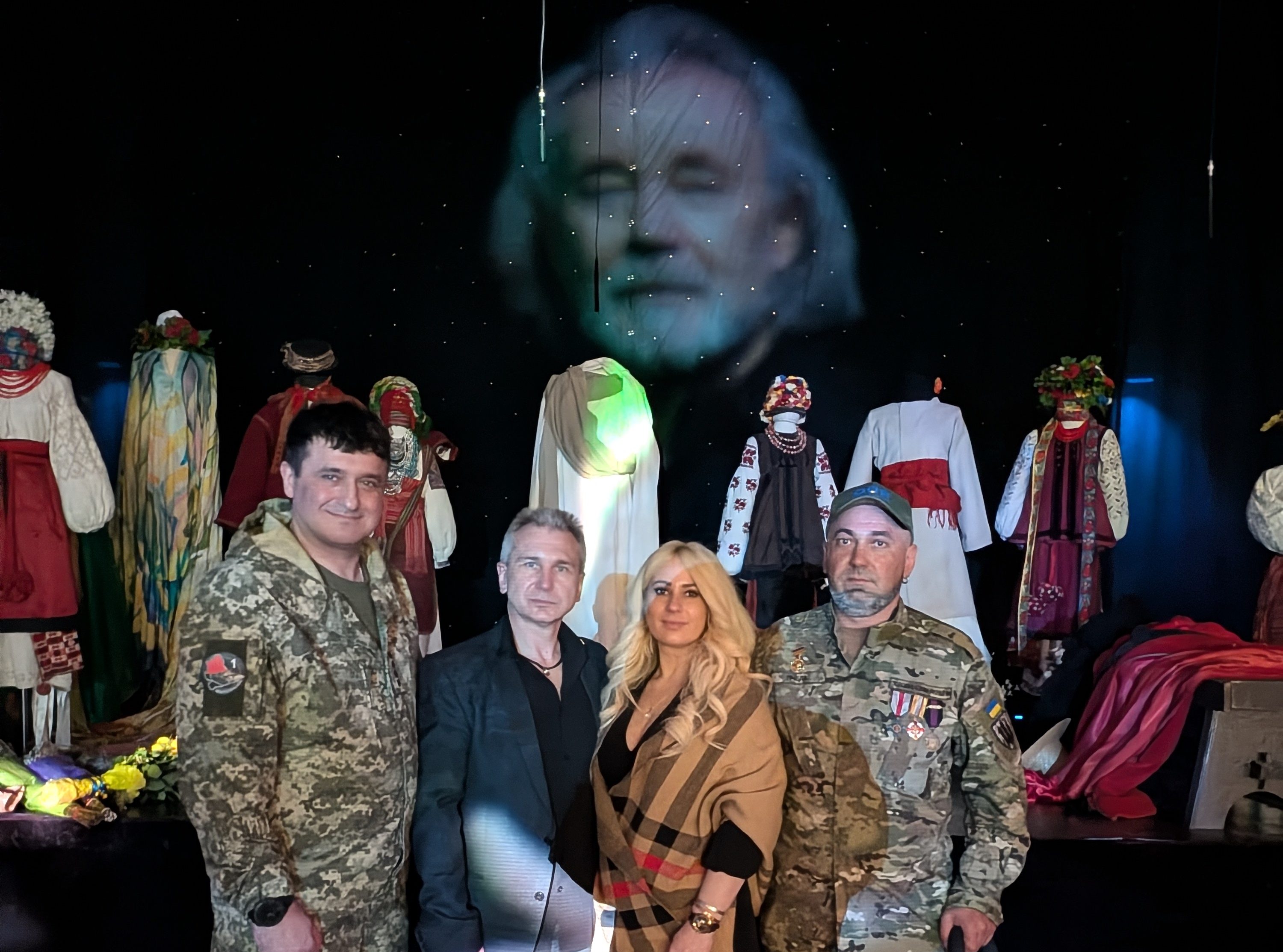
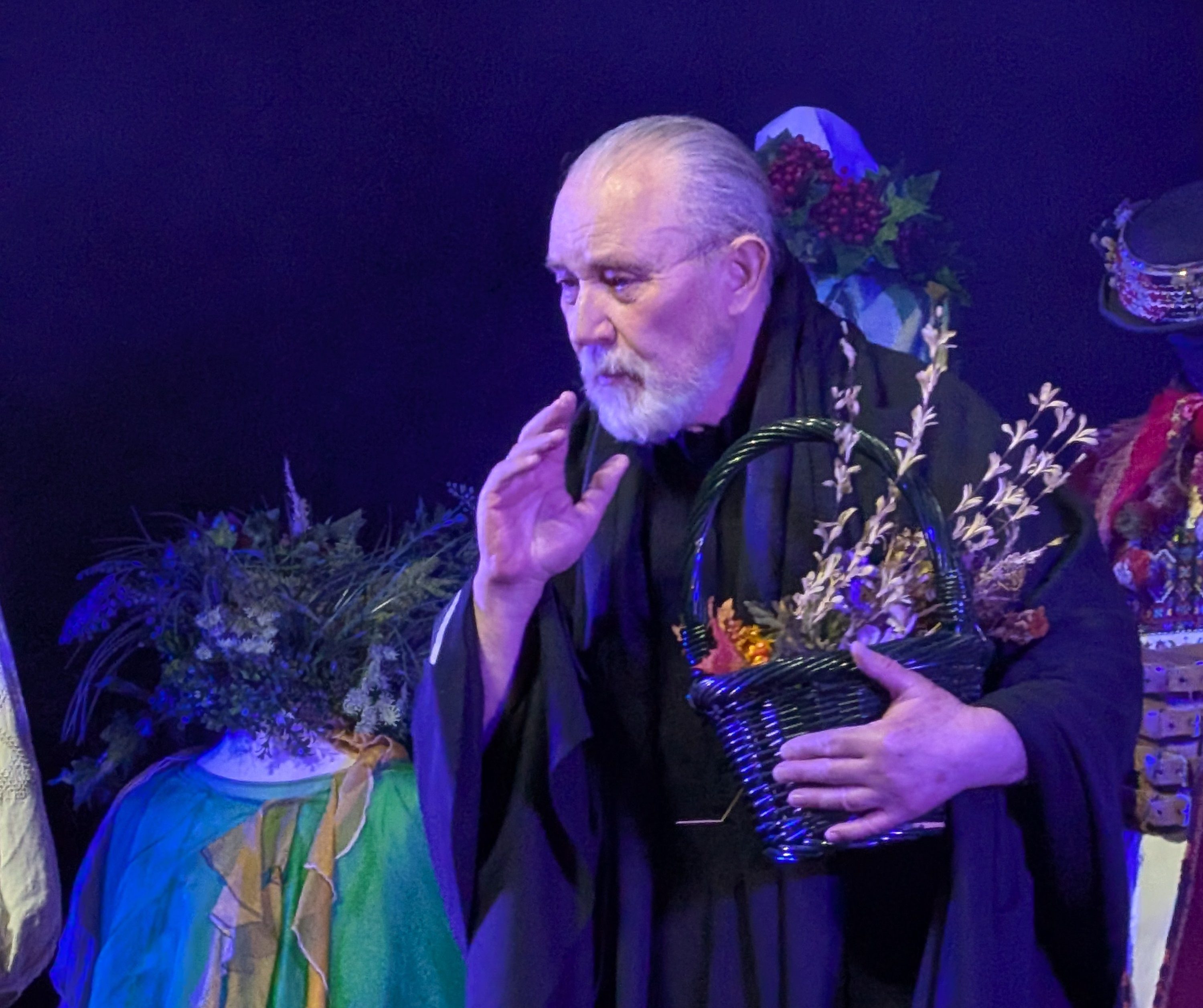
Eighty years of life and fifty-five years of artistic work came together in a single voice that sounded as though it spoke for several eras at once. The stage itself resembled a living museum of theatre: around it—a collection of costumes, silent witnesses to dozens of roles and years of творчість. And within this richness prevailed the defining quality of the evening—an ease of conversation with the audience: not a performance, but an honest meeting of old acquaintances.

There were no pauses or rules in his words—his speech wept, cried out, and embraced, trembling at the heart, stripped bare and real, as in a confession.

His feet remember theatrical calluses—the quiet price of the stage that audiences almost never see. And so he comes out barefoot—because it is easier to be truthful that way. “And also,” he says, “on stage, as on one’s own path: you are your own director, your own interlocutor. And no one can conduct this dialogue as honestly as you can yourself.”

Perhaps that is why Bernatsky spoke in one breath. And in this conversation with the audience—and even more so with himself—the roads of theatre came alive, beginning in Ukraine and continuing here, in America, where he founded a Ukrainian theatre (operating at the Ukrainian National Home in New York).

The artist says he prepared for this stripped-down monologue-performance his entire life. Behind him are dozens of roles, thousands of stages, and an entire era of theatre. That is why he chose the finest texts—combining them into a deeply emotional theatrical flow.

Thus, the stage welcomed the voices of six great writers: Lesya Ukrainka, Taras Shevchenko, Olha Kobylianska, William Shakespeare, Mykola Voronyi, and Lina Kostenko. The maestro spoke as if time had ceased to exist. In a single breath, he moved from Shevchenko to Shakespeare, from the quiet whisper of Mavka to the stormy voice of Haidamaky. In Shevchenko’s words, the figures of Yarema and Oksana came alive—as the pain and fury of an era when “Ukraine weeps.”

There was also the legendary story of love and betrayal, in which the figures of Hryts and Turkynia came to life. In a simple vest, the actor effortlessly shifted from a male to a female intonation, recreating the dialogue of two souls so naturally that it seemed a real couple stood on stage.

Then the stage filled with the poetics of Lesya Ukrainka. Wearing a hat, changing only his voice and gesture, he transformed alternately into Lukash and Mavka from The Forest Song. Without pause, without interruption, as if the very spirit of the forest spoke from the stage.

The climax came with Lina Kostenko and her Marusya Churai. In the disheveled image of a wanderer, words resounded about the road, pilgrimage, and how the histories of nations are written not only in ink—but in blood, by the plow, and along the road to Kyiv. And suddenly—almost like a cry through the centuries: “Do not look back… Kyiv is gone… my homeland is drenched in blood…”

In this scene, Marusya became a symbol of fate—as if a crucifixion each person carries in their life. Especially now, in times of bitter war, when you look back—and it feels as though your land is no longer there.

Another powerful note of the evening was the poetry of Mykola Voronyi. In a blue hat and a warm scarf, as if wrapped in a winter night, the actor recited The Silver Dream. Lines echoed about quiet Christmas nights, beloved eyes, and memory lost between years and destinies: “Those Christmas nights… those loving eyes… where have you gone, memory… frozen by an evil fate…” In this звучала not only poetry, but a nostalgia familiar to anyone living far from their homeland.

The finale of the evening became a true emotional explosion—with lines from Taras Shevchenko’s To the Dead, the Living, and the Unborn…. The words rang out as a warning across centuries: “There is no second Dnipro…”, “Come to your senses, be human…” And finally—quietly, yet with special force: “Embrace one another, my brothers, I beg you, I implore you…”

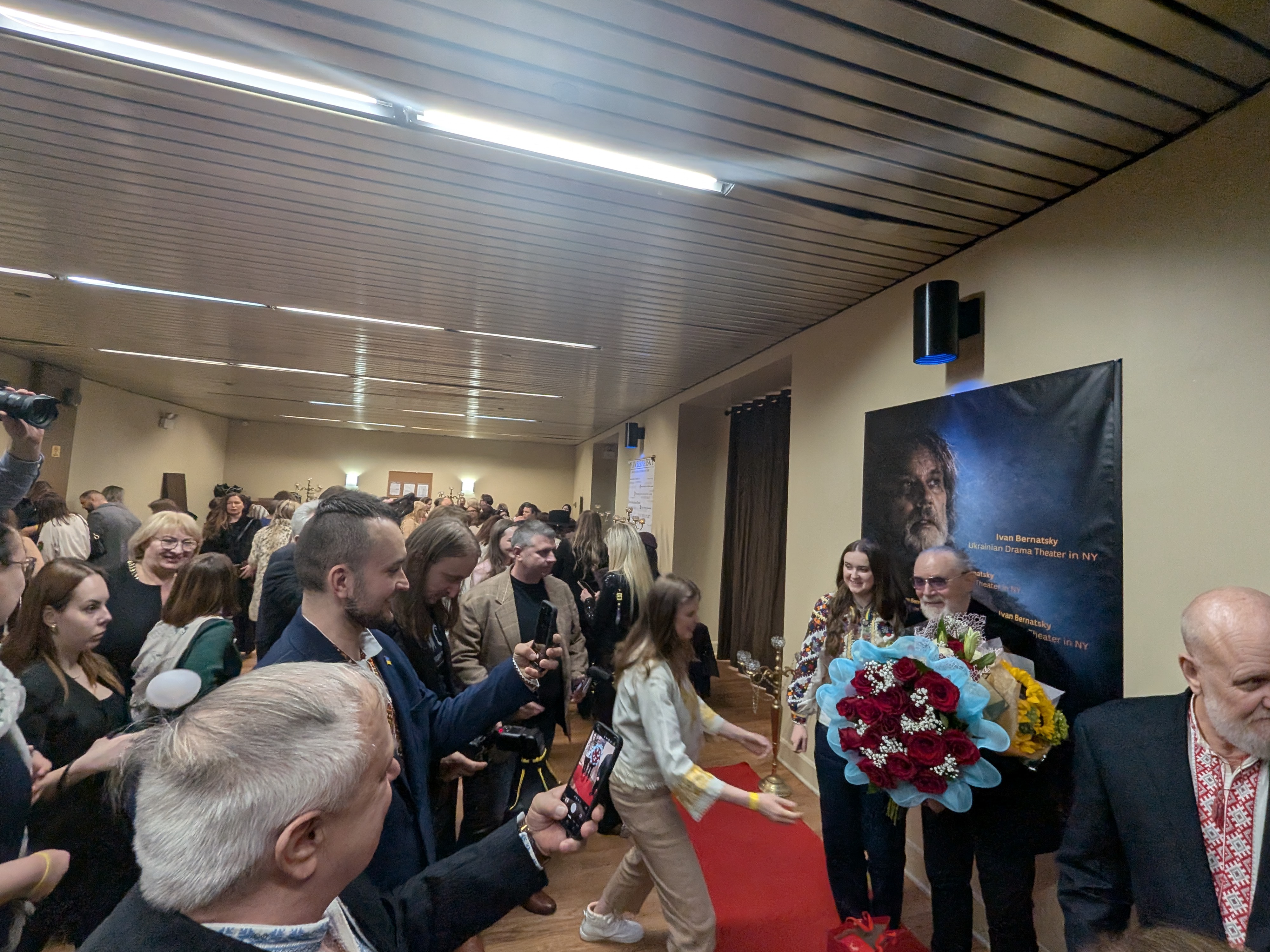
These words resonated especially sharply for Ukrainians in emigration. In them were felt both the memory of war and the pain of separation from the homeland, and at the same time—the hope that even far from the Dnipro, the Ukrainian voice continues to live. And when Shevchenko’s final words faded in the hall, silence fell for a moment. The same silence with which this March evening at the Ukrainian National Home in New York had begun.

What was it—a performance, a literary evening, or a conversation with the audience? Perhaps something much greater. Because when a person has lived on stage for fifty-five years, theatre is no longer performed—it is lived.

Yes, that evening featured well-known works. But between the lines, another story could be heard—the story of a person who walked the stage barefoot, unafraid of truth. For it was a confession as long as a lifetime.
Author: Tamara Zaiats

Tamara Zaiats is a journalist based in New Jersey and a graduate of the Faculty of Journalism at Ivan Franko National University of Lviv. For over 15 years, she worked at the Ternopil branch of Ukraine’s Public Broadcasting as a journalist, editor, program manager, and news producer. She also served as a correspondent for the Ukrainian diaspora publication Tyzhden ta Lyudy (Chicago), press secretary for the National Olympic Committee in Ternopil, and editor for several online media outlets. A recipient of multiple journalism awards and the author of television programs focused on sports, culture, and social issues, Tamara is a mother of three and an active volunteer who remains devoted to journalism regardless of distance. She is a regular contributor to Vilni Media.

Important

Відкрийте більше з Вільні Медіа - Українська громада в США

Підпишіться зараз, щоб продовжити читання та отримати доступ до повного архіву.

Продовжити читання