


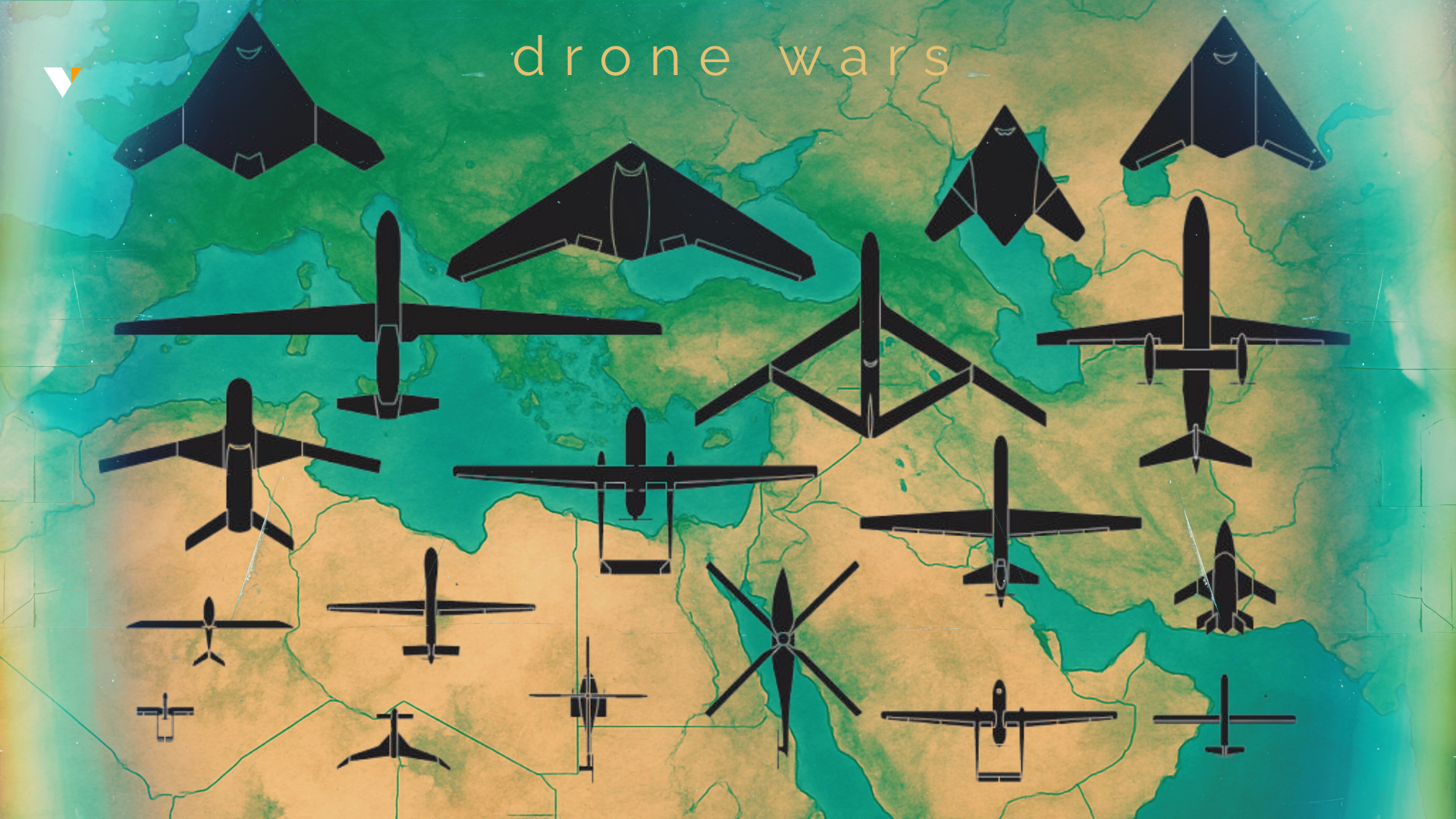
Ukraine’s strike on four Russian airfields was among the most audacious of the war, inflicting an estimated $7 billion in damage. While Donald Trump claims Ukraine holds no leverage, Kyiv proved otherwise. But it was also a warning to defense officials around the world that warfare has evolved very quickly.
In a covert 18-month operation named Operation Spiderweb Ukraine’s security service (SBU) remotely used 117 low-cost First-Person-View (FPV) drones, smuggled into Russia inside cargo trucks, to disable over 40 long-range bombers – aircraft central to Russia’s campaign of strikes on Ukrainian cities. The operation delivered not only a tactical blow but a psychological one, showingthat even Russia’s most protected assets are vulnerable.
With limited air defenses and slow Western resupply, Kyiv struck at the source. Russia, for all its bluster, may find its threats harder to carry out when its bombers no longer make it off the ground. What was once considered one of Russia’s greatest strengths – its vast territory – is increasingly proving to be one of its biggest liabilities.
After Ukraine’s Operation Spiderweb damaged multiple Russian bomber bases, Moscow was forced to relocate its Tu-95 and Tu-160 bombers to the Far East, including Anadyr and Yelizovo, pushing round-trip missile strike missions against Ukraine to nearly 23 hours.
The New York Times wrote, “A defense official in a NATO country in Europe said Ukraine’s strikes have already led to discussions as to whether allies needed to reassess their vulnerabilities.” The attack also ignited discussions about the vulnerability of American ports to similar attacks from Chinese cargo ships.
Many of the components used in Ukraine’s FPV drones, including batteries and electric motors, are manufactured in China, amplifying fears about strategic dependency and potential sabotage. While the Pentagon and NATO members are ramping up investments in counter-drone technologies, including jammers and interceptors, comprehensive protection across all potential targets remains years away. This is a facing Kyiv itself faces, as it struggles to protect its cities from waves of low-cost Russian Shahed drones.
Ukraine's small conventional navy was scrapped at the beginning of the war. But it quickly built a fleet of sea drones, creating a tech-driven force that has since destroyed or damaged a third of Russia’s Black Sea Fleet. While Russia initially blockaded Ukrainian ports, today it is Russian warships that are forced to hide in port to avoid Ukrainian drone strikes. In recent months, these sea drones, equipped with missiles, destroyed Russian helicopters and fighter jets worth tens of millions of dollars.
Much like the fireships of the age of sail, wooden vessels packed with combustibles and steered into enemy fleets to ignite chaos, Ukraine’s sea drones are reviving a centuries-old tactic with modern precision. Fireships once forced navies to break anchor or scatter formations in panic, and now Kyiv has done it once again to Moscow’s fleet.
However, the Middle East is a region where asymmetric disruption has already been a feature of conflict, and it is also likely to feel the impact of Ukraine’s disruptive innovations in warfare. Kyiv has demonstrated that the race for a technological edge on the battlefield is allowing states to wage more precise and effective asymmetric warfare than ever before. Omar Al-Ubaydli, a senior research fellow at the Mercatus Center wrote that the scale of drone warfare we are witnessing is leading Gulf States to rethink their defense doctrine.
The Middle East is already witnessing the consequences of this tactical evolution. In Yemen, Houthi rebels have shot down seven U.S. Reaper drones in a period of under six weeks, inflicting over $200 million in losses. The Trump administration quickly had to rethink the cost structure of their campaign and call it quits. “Our adversaries use $10,000 one-way drones that we shoot down with $2 million missiles,” said Army Gen. Bryan P. Fenton. “That cost benefit curve is upside down.”
Fred Kagan, a military analyst at the American Enterprise Institute asked the question: “Could those have been B-2s at the hands of Iranian drones flying out of containers, let alone Chinese?” The Saudis must be asking themselves the same question as well.
Even before Ukraine’s widespread use of drones, the Middle East had already seen the disruptive potential of unmanned systems. In 2019, a major drone attackclaimed by the Houthis forced Saudi Arabia to shut down half of its oil production, cutting about 5.7 million barrels per day – nearly 5% of global output. Following the attack, US President Donald Trump said that he did not want war.
In the future, Iran could position ships carrying containers that release a flood of drones near oil refineries to disrupt global energy flows. Sea drones could mine narrow waterways or strike tankers and naval escorts, effectively blocking access to the Persian Gulf. The US has traditionally relied on aircraft carrier strike groups to keep the region open, as demonstrated in the Millennium Challenge 2002 exercises which showed how swarming tactics could overwhelm superior forces.
The Houthis, learning from Ukraine’s use of sea drones, might deploy drone carriers to launch FPV drones against inland targets – an approach Kyiv now uses regularly with devastating impacts. The Houthis could also use sea drones to close the Bab el-Mandeb Strait, a chokepoint vital to global shipping. A true nightmare scenario would involve kamikaze drones targeting tankers or mining the narrow waterway, forcing insurers to halt operations and threatening a collapse in Red Sea maritime traffic.
Iran, meanwhile, could turn to sea drones in a direct naval confrontation with the United States if the current hostilities expanded, sending expendable vessels to disable warships and clog sea lanes.
In July 2024, the Houthis launched a long-range drone from Yemen that struck Tel Aviv after flying over 1,600 miles along an unexpected route. The attack killed one person and injured several others, exposing gaps in Israel’s air defense network.
Israel, in turn, mirrored Ukrainian-style tactics within weeks of Operation Spiderweb in Russia. Mossad smuggled parts for hundreds of explosive-laden quadcopters into Iran using trucks and commercial shipping. When the Israeli air force launched a major strike on Iran’s nuclear and military infrastructure, these drones. were deployed from within the country to disable air defenses and missile launchers. It allowed Israel to quickly establish air dominance.
Even the most expensive systems will struggle to handle the scale and adaptability of drone threats. Ukraine has shown that modern warfare is a technological contestwhere each side must continuously evolve and overcome new countermeasures to stay ahead. The systems one side bought yesterday, might already be ineffective on the battlefield the next day. Procurement must be quick, and systems scalable.
Valerii Zaluzhnyi, Ukraine’s former commander-in-chief said, “Whether you want to believe it or not, whether you have or are about to sign contracts for tanks and helicopters for the next 10 years, the nature of military power has already changed.”
Meanwhile, America’s Gulf allies are hedging their bets. Following Trump’s recent visit, Saudi Arabia agreed to invest north of $100 billion in US weapons. Qatar is also investing into expensive American systems. It’s a prudent move to buy influence and also to ensure a stable supply of air defense systems. Ukraine itself desperately needs more air defenses to protect itself.
Nonetheless, the Gulf States should look to Kyiv for inspiration and begin developing their own fleets of drones. While it's important not to overindex on lessons from the Russo-Ukrainian war, many remain relevant, especially as drone warfare is reshaping how conflicts are fought in the 21st century.
Taking lessons from the war in Ukraine, the proposed U.S. defense budget now prioritizes investment in drones and missiles, including increased funding for small drones in direct response to their battlefield effectiveness. In many ways, Ukraine is setting the pace for global defense modernization.
Ukraine turned to drones out of necessity, compensating for shortages in artillery and other critical systems. Yet even with limited resources, drones have granted smaller states unprecedented asymmetric capabilities – a lesson that all nations cannot afford to ignore.
About Author:
