


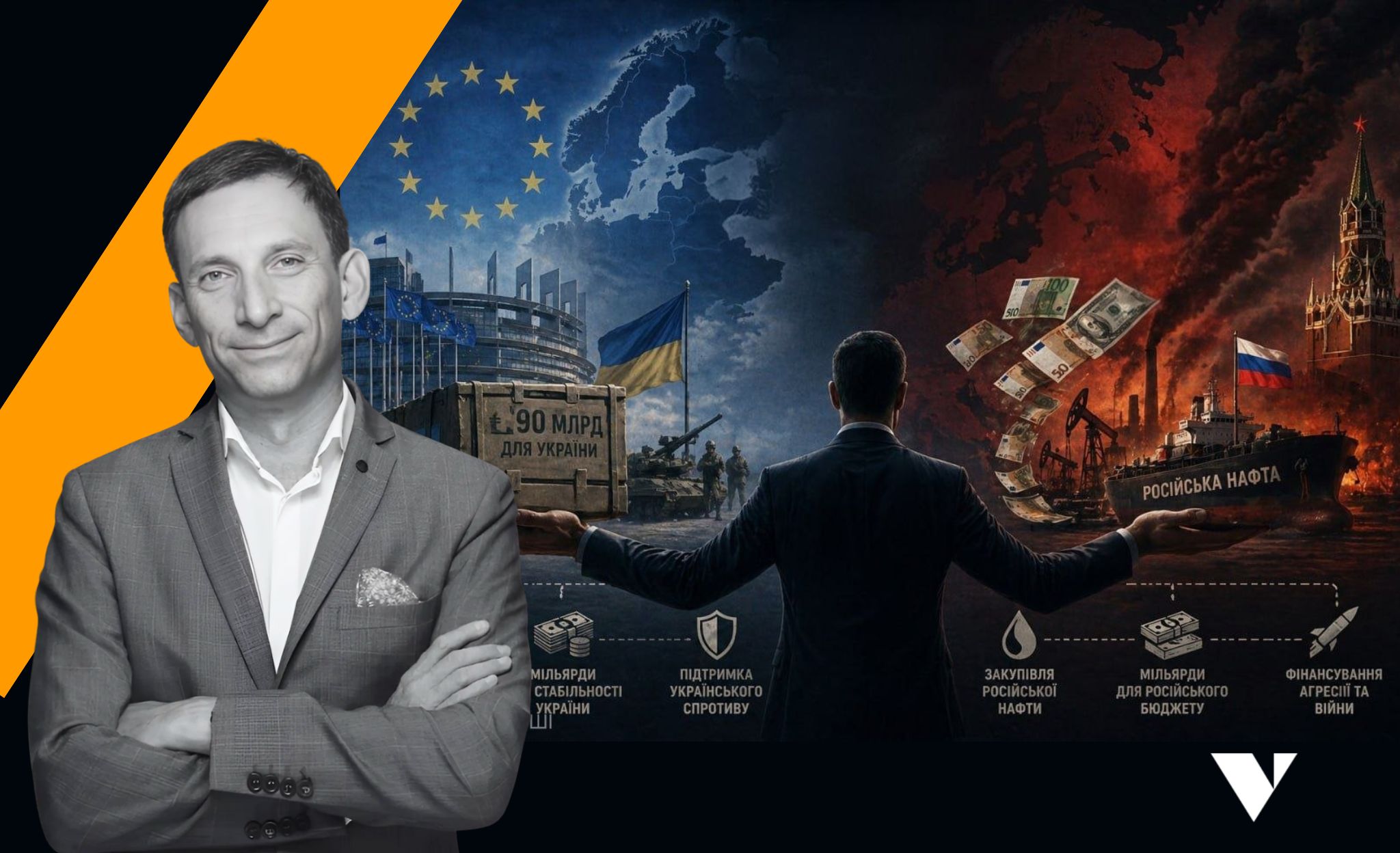
 Volodymyr Zelenskyy’s trip to Cyprus for an informal summit of European Union leaders was associated with an obvious victory. After Viktor Orbán stopped blocking the decision to allocate money to Ukraine for the next two years, the European Union was able to agree on a 90-billion-euro package.
But this is a very strange victory. After all, the decision to allocate this package had already been made at the previous EU summit. And Viktor Orbán had not opposed it. The compromise with Hungary, as well as with Slovakia and Czechia, was that these three countries would not participate financially in the loan.
However, then came the Russian strike on the Druzhba oil pipeline — and accusations that Ukraine was in no hurry to repair it. Both Orbán and Slovak Prime Minister Robert Fico emphasized that they would continue the procedure for granting the loan only after Russian oil started flowing through Druzhba again. And what is interesting is that Brussels and Kyiv fulfilled the demand of the Hungarian and Slovak prime ministers, while Orbán and Fico conceded nothing. In Brussels, there were even suggestions that Ukraine had accelerated the restart of Druzhba in order not to soon face a possible new blockade — this time from Bulgaria’s future prime minister and former president Rumen Radev, known for his pro-Russian stance during his time in the country’s highest office.
And there is a certain schizophrenia in this. On the one hand, the European Union is allocating tens of billions of dollars to Ukraine to support its macroeconomic balance. And as the Russian-Ukrainian war continues, these costs will only grow.
On the other hand, Brussels has been unable for four years to do anything about the desire of the Hungarian and Slovak governments to continue buying Russian oil. And no substantial changes are expected here. The winner of Hungary’s parliamentary elections, Péter Magyar, emphasized that he would try to diversify oil supplies — but he is also in no hurry to abandon Russian crude.
In other words, it turns out that Europeans are not only financing Ukrainian resistance to Russian aggression, but are also spending billions of dollars on that very Russian aggression — because we all understand what Putin does with Hungarian and Slovak “petrodollars.” He spends them on war. And this is not even Chinese yuan — Putin really does need money from the West.
We are now seeing similar schizophrenia in the United States. Washington continues to sell weapons under a program that provides for European purchases of American weapons for Ukraine. But in recent weeks, the U.S. Treasury Department has twice issued a license for the sale of Russian oil from tankers that are at sea. True, U.S. Treasury Secretary Scott Bessent says that the United States does not intend to extend this license in the future. However, before the previous extension of the license, the secretary made similar statements, and Russia nevertheless received the desired permission. Permission to receive tens of billions of dollars to replenish its budget and continue the war. And this despite the fact that President Donald Trump constantly emphasizes his interest in ending Russia’s war against Ukraine. But the more money Russia has, the longer the war will continue. For Putin, the ability to continue the war is, above all, a matter of resources.
Thus, we continue to observe a trend that cannot help but surprise me in recent years. The West helps Ukraine fight aggression with one hand, while financing that same aggression with the other. And given the events in the Middle East and the likelihood of an energy crisis, one cannot be certain that the situation will change substantially in the near future.
This means that the two-hand effect will remain part of the Western approach to the Russian-Ukrainian war. But I am not even sure it is merely an effect. Sometimes it seems to me that it is a real verdict — a verdict on common sense.
Author: Vitaly Portnikov
