


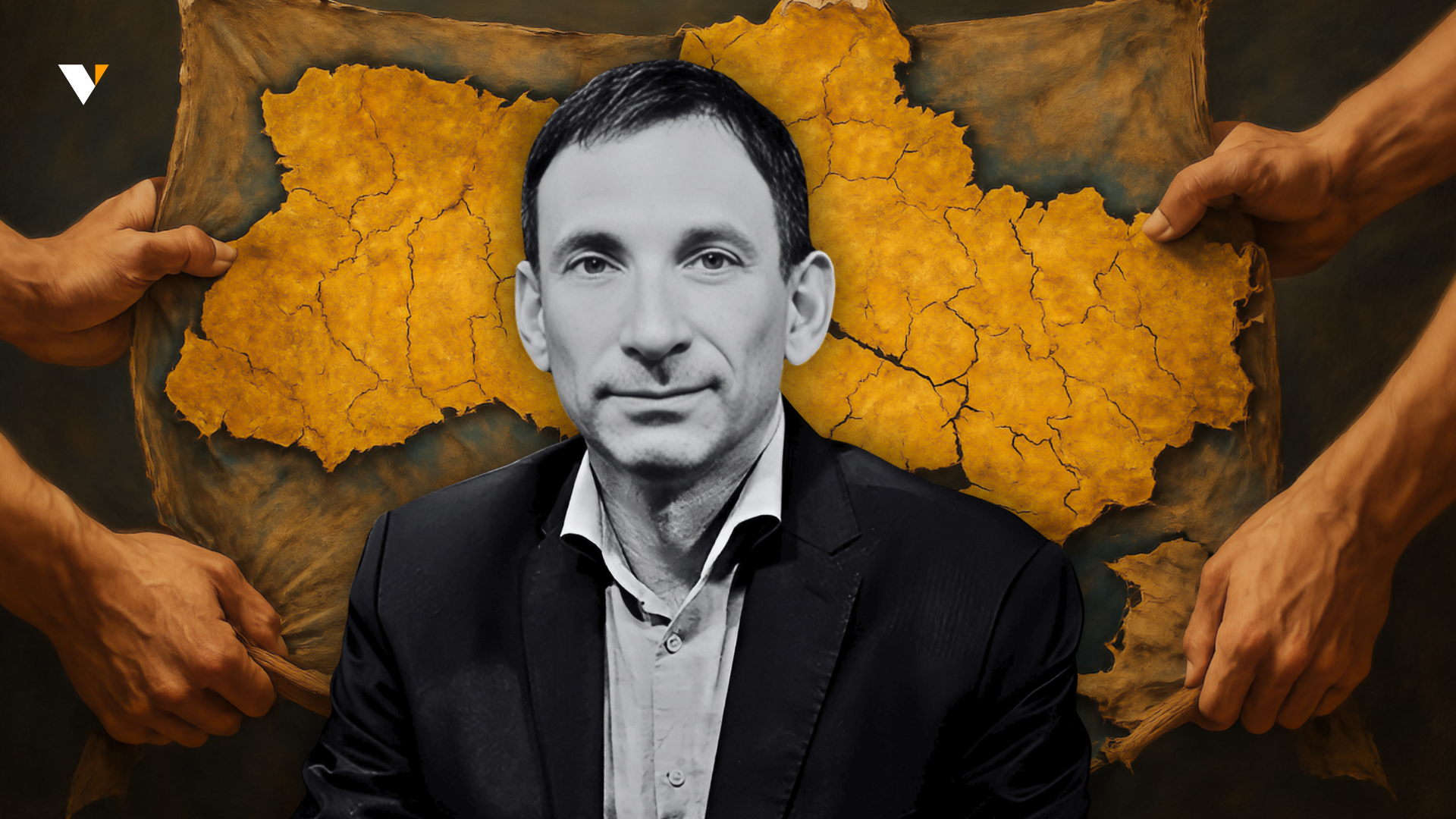
In recent weeks, Ukrainians have been waking up almost daily to the sound of air raid sirens and news of fires breaking out in major cities due to Russian shelling. Russia has adopted a new tactic that is causing extensive destruction and loss of life.
Meanwhile, along the many-kilometer Russian-Ukrainian front, a struggle is unfolding that has become an arena not only of military confrontation but also of the geopolitical ambitions of two leaders at once — U.S. President Donald Trump and President of the Russian Federation Vladimir Putin. This is not about peace negotiations but about using the situation to achieve their own political and economic goals.
From the White House, Ukraine received a new version of the so-called mineral agreement, which resembles the colonial treaties of past centuries, when great powers exploited the weakness of smaller ones. The document effectively provides for U.S. control over the Ukrainian economy, restricts Ukrainians’ ability to choose their own investors, and creates conditions under which the non-repayable aid previously provided by the Biden administration is transformed into debt obligations to Washington. If Ukraine fails to repay these funds on time, it will also be charged interest.
One can analyze the content of the agreement at length, but its essence remains the same — it is outright looting that does not fit into relations of equality among civilized states. Moreover, it contradicts the Ukrainian Constitution and the country’s course toward European integration. Such an approach is not only unfair to Ukraine but also a disgrace for the United States itself.
At the same time, three years after the start of the full-scale war, Putin is putting forward his ideas, which are also difficult to call original. He seeks to turn Ukraine into his protectorate, establish external governance, and impose a pro-Russian government that will fulfill all of the Kremlin’s demands.
How these two scenarios — the American one and the Russian one — will coincide remains an open question. In my view, Putin is unlikely to take his American counterpart’s demands seriously; he is more likely using his penchant for deals as a tool that will eventually enable him to undermine Ukrainian sovereignty.
However, both approaches ignore one key factor — the existence of the Ukrainian people.
Let’s suppose the Americans manage to impose a burdensome agreement on Ukraine, which is signed by the president and ratified by parliament (although I can hardly imagine such a situation). But how long would that agreement last? After all, any subsequent sovereign Ukrainian government would revoke it. And then what would Washington do — send troops?
The same applies to Putin. Who told him that even under external governance, Ukrainians would vote for some new Medvedchuk? And even if such a scenario were to unfold, how long could this collaborationist government remain in power? Moscow has already tried twice, through political manipulation, to install a pro-Russian regime in Ukraine. Both times, it ended with popular uprisings and the downfall of Russian agents.
During a conversation with Russian sailors in Arkhangelsk, Putin cited the situation in East Timor as an example of external governance. However, he did not take into account that the Indonesians agreed to a UN-sponsored referendum because they were certain that the inhabitants of that region would vote against independence. They miscalculated badly.
The idea of an agreement aimed at plundering Ukraine and the idea of external governance are tools from the past, to which we are now being pushed back. But it is not only about Ukraine. It is a question of whether the world can defend democracy and its own dignity.
After all, disrespect for one person’s rights usually leads to repression against many — Russians know this well, and now Americans may experience it too. Similarly, disrespect for the sovereignty of one country can become a disaster for many others. Otherwise, why has humanity already lived through two world wars and, according to the American president himself, is approaching a third?
Author: Vitaly Portnikov