


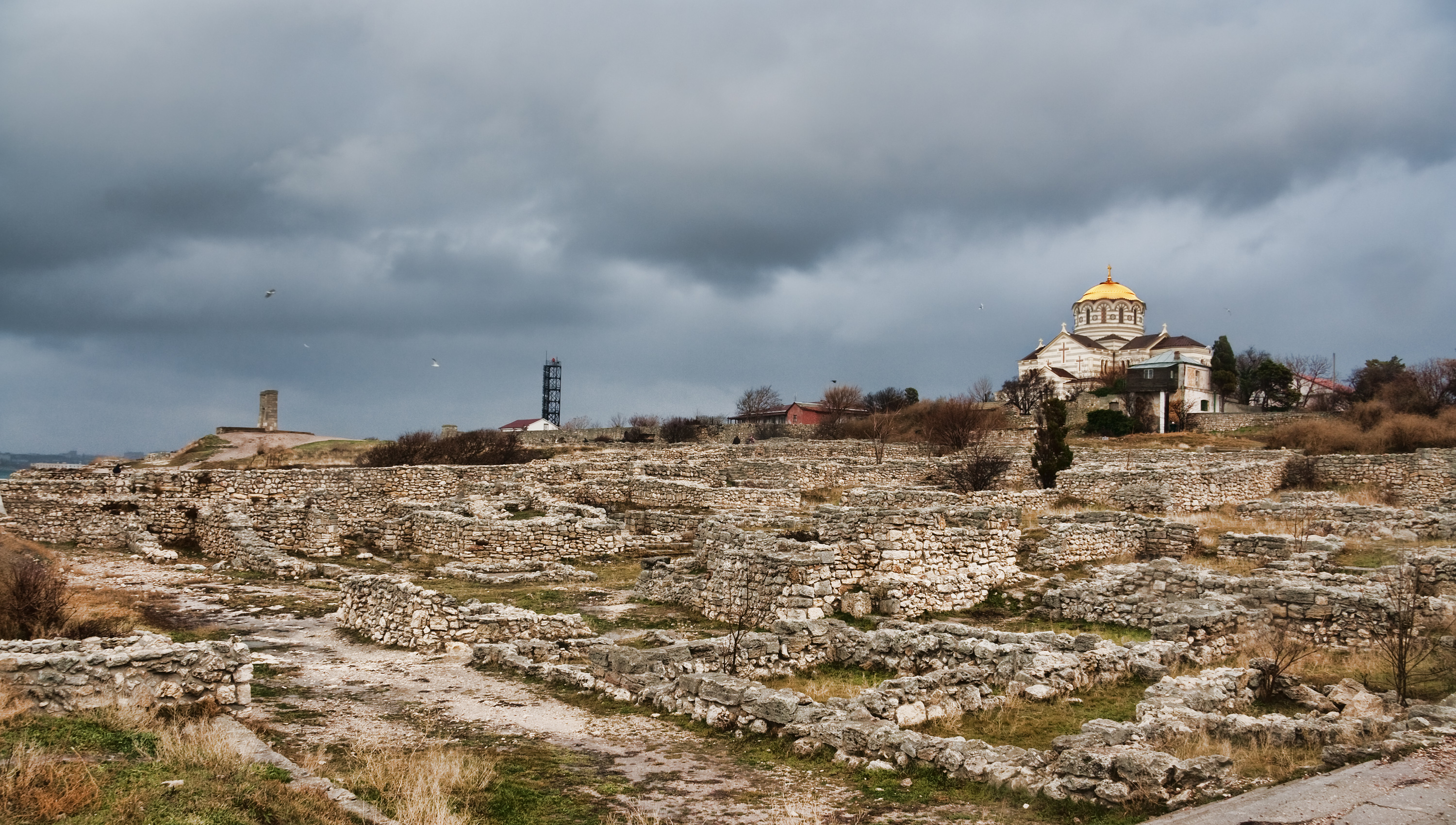
The Ancient City of Tauric Chersonese and its Chora, located in temporarily occupied Crimea, has officially been inscribed on the UNESCO List of World Heritage in Danger. The decision was adopted by the UNESCO World Heritage Committee during its 48th session in Busan, South Korea.
This was reported by the World Federation of Ukrainian Women's OrganizationsWFUWOand Ukrainian Member of Parliament Tamila Tasheva.
The “Ancient City of Tauric Chersonese and its Chora” was inscribed on the UNESCO World Heritage List as a Ukrainian heritage site in 2013, shortly before Russia’s illegal occupation of Crimea in 2014.
According to The Art Newspaper, the decision to add Chersonese to the List of World Heritage in Danger was adopted on July 22. Ukraine’s Minister of Culture, Tetiana Berezhna, described it as an important international step.
“This is an extremely important international decision that officially confirms the threats facing the site due to the temporary Russian occupation of Crimea, illegal excavations, construction, destruction of the archaeological context, and the removal of cultural property,” she said.
The minister also called for the protection of other Crimean heritage sites, including the Khan’s Palace in Bakhchisaray, an important monument of the indigenous Crimean Tatar people.
Tamila Tasheva emphasized that the World Heritage Committee’s decision is international confirmation of the crimes Russia is committing in the temporarily occupied peninsula.
“This decision is a powerful international confirmation of the terrible crimes that the Russian Federation commits every day on our peninsula. The terrorist state is cynically and systematically destroying our history. The occupiers are conducting illegal archaeological excavations, stealing priceless cultural treasures, carrying out large-scale illegal construction, and irreversibly destroying the entire archaeological context. Unfortunately, because of the occupation, we are currently unable to carry out proper physical monitoring and protection of our heritage site,” she said.
According to her, the UNESCO Committee also called for refraining from any actions that could cause further damage to Tauric Chersonese and other cultural heritage sites in the temporarily occupied territory.
“The world must unite and strengthen cooperation to stop the illegal trafficking of stolen cultural property. We must do everything possible to ensure these crimes do not go unnoticed in the international arena. And Russia will be held accountable for every destroyed monument,” Tamila Tasheva stressed.
According to The Art Newspaper, Ukraine had been providing UNESCO with evidence of threats to the site for several years, including satellite imagery and assessments by international experts. Ukraine’s permanent delegation to the Parliamentary Assembly of the Council of Europe also participated in the process.

Ukrainian PACE delegation member Yevheniia Kravchuk said that as early as 2016 UNESCO informed Ukraine of the need to provide satellite evidence.
“Thanks to satellite imagery, the International Council of Museums, and all the expert assessments we received, we now have this decision,” she said.
At the same time, Yevheniia Kravchuk noted that the situation surrounding Chersonese demonstrated the limitations of the current World Heritage Convention.
“But it also demonstrates that the 1972 Convention is, in some ways, outdated. The main idea of this list is to name and shame the country on whose territory the World Heritage site is under threat. But in conditions of war and occupation, the danger may come not from the state where the site is located, but from the aggressor state, and UNESCO cannot cope with this or do anything about it. Clearly, the consequences and mechanisms of this system need to be rethought,” she said.
According to The Art Newspaper, the 2026 report of Ukraine’s National Commission for UNESCO states that activities at Chersonese are currently managed by the Tikhon Shevkunov Foundation and the Russian Orthodox Church, rather than archaeologists or cultural heritage professionals.
The report states:
“This change in governance has led to decisions that prioritize tourism infrastructure, nationalist narratives, and military or religious events instead of heritage conservation.”
Meanwhile, Russia’s Permanent Representative to UNESCO, Rinat Alyautdinov, stated during the Committee meeting that Russia does not recognize the adopted decision. According to him, “this decision is yet another example of the politicization of the committee’s work.” He also claimed that Russia “strictly fulfills its obligations under the Convention and reaffirms its readiness to cooperate with UNESCO on this matter.”
Photo: Dmitry A. Mottl, C. Williams
Author: Danylo Pievchev